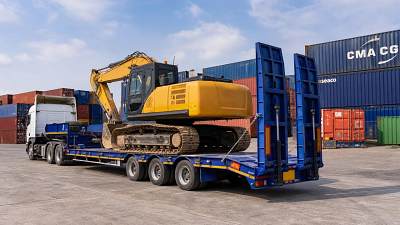
Erlianhot Highway Port Launches 24-Hour Freight Clearance
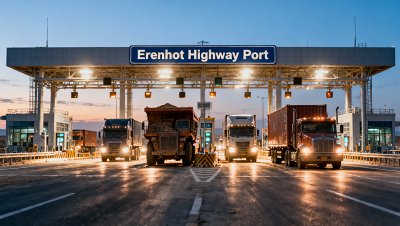
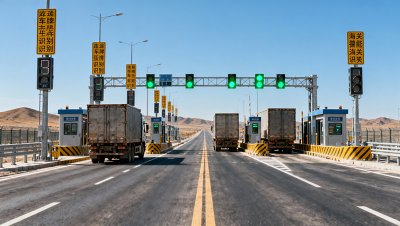
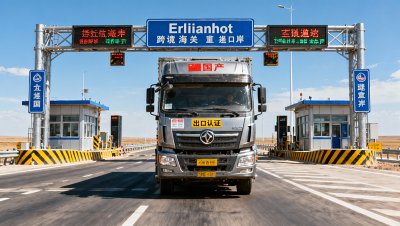
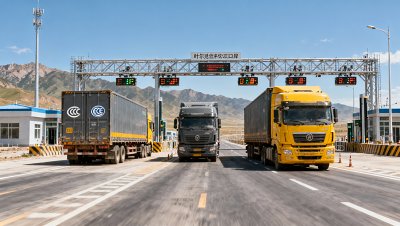
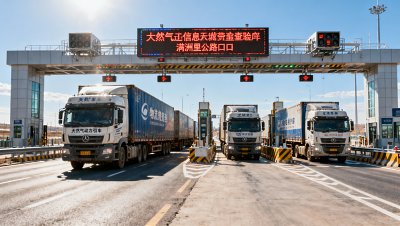
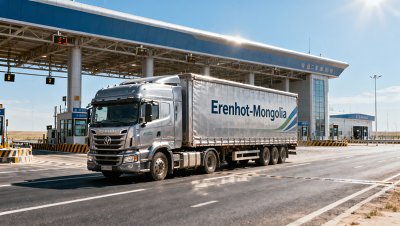
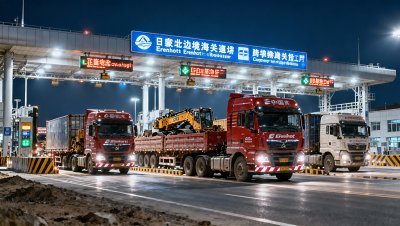
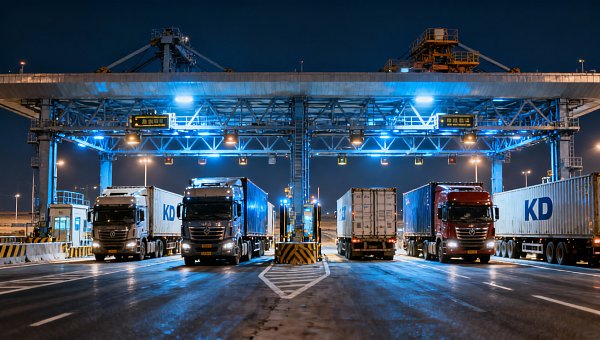
Starting April 1, 2026, Erlianhot Highway Port in Inner Mongolia has implemented round-the-clock freight customs clearance — the first land port on China’s border with Mongolia to operate 24/7 for cargo. This development is especially relevant for heavy-duty truck exporters, KD kit suppliers, Mongolian importers and engineering contractors, as it directly affects delivery predictability, border transit efficiency, and supply chain planning across the China–Mongolia trade corridor.
Event Overview
Effective April 1, 2026, Erlianhot Highway Port officially commenced常态化 24-hour freight customs clearance. It is now the first land-based freight port between China and Mongolia operating continuously without time-of-day restrictions. According to publicly confirmed information, this measure reduces average delivery lead times for heavy-duty trucks, chassis, and knock-down (KD) kits destined for Mongolia by over 35%, alleviating delays caused by border congestion and improving shipment scheduling reliability.
Industries Affected
Direct Exporters of Heavy-Duty Trucks and Chassis
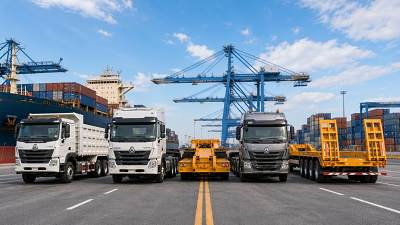
These enterprises ship fully assembled or semi-knocked-down heavy vehicles to Mongolian markets. With 24-hour clearance, their export documentation processing, vehicle staging, and cross-border handover windows are no longer constrained by daytime-only customs hours — reducing idle time at the port and enabling tighter production-to-shipment coordination.
KD Kit Manufacturers and Exporters
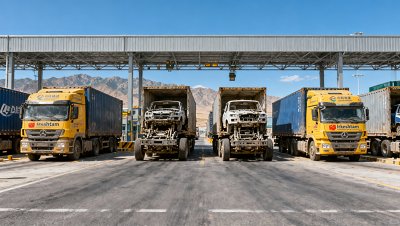
Suppliers of disassembled truck components (e.g., cabs, axles, drive trains) benefit from more predictable container release and yard turnaround. Shorter clearance cycles mean less buffer stock required at the border, lowering working capital tied up in in-transit inventory.
Mongolian Importers and Distributors
For Mongolian firms responsible for receiving, assembling, and distributing imported trucks or parts, the change improves forecast accuracy for inbound logistics. More consistent arrival intervals support better warehouse staffing, assembly line planning, and after-sales parts provisioning.
Engineering Contractors Operating in Mongolia
Contractors engaged in infrastructure, mining, or energy projects rely on timely equipment delivery. The reduction in customs-related uncertainty helps align truck deployment schedules with project milestones — particularly critical where site access windows are narrow or seasonal.
What Enterprises and Practitioners Should Monitor and Do Now
Track official implementation details beyond the launch date
While 24-hour operation began April 1, 2026, actual service scope — including whether all freight categories (e.g., hazardous goods, oversized loads), documentation types (e.g., ATA Carnets), or inspection procedures are covered — remains subject to further clarification from GACC or local customs authorities. Current more suitable to monitor announcements from the General Administration of Customs of China (GACC) and the Erlianhot Customs Office.
Assess impact on priority SKUs and transport lanes
Not all exported items will experience uniform time savings. Heavy-duty trucks and standard KD kits are explicitly cited; however, impact on other vehicle types (e.g., buses, special-purpose trucks) or non-automotive cargo is unconfirmed. Enterprises should prioritize internal analysis of current top-5 SKUs moving through Erlianhot and map them against documented clearance timelines pre- and post-April 1.
Distinguish policy announcement from operational readiness
The shift to 24-hour clearance is a regulatory decision — not an automatic upgrade of physical infrastructure or staffing levels. Analysis来看, initial throughput gains may be constrained by available inspection bays, customs officer shifts, or IT system capacity. Companies should verify real-time gate wait times via port authority dashboards or third-party logistics providers before adjusting shipping windows.
Update cross-border coordination protocols with Mongolian partners
More reliable clearance requires synchronized planning: Mongolian receiving agents must adjust yard staffing, customs broker availability, and inland transport scheduling to match extended port operating hours. Exporters should initiate joint planning sessions with local counterparts in Q2 2026 to align documentation submission deadlines, driver shift patterns, and contingency plans for technical or weather-related disruptions.
Editorial Perspective / Industry Observation
From industry angle, this initiative is best understood as an institutional signal — rather than an immediate, self-sustaining improvement — that reflects growing emphasis on China–Mongolia logistics resilience amid expanding infrastructure investment under the Belt and Road framework. Observation来看, its significance lies less in isolated time savings and more in how it enables repeatable, scalable scheduling for time-sensitive industrial exports. However, sustained impact depends on complementary upgrades: digital customs interoperability, standardized documentation acceptance between both sides, and harmonized inspection protocols. Without these, 24-hour access may remain underutilized or unevenly applied across cargo categories.
Current more appropriate to view this as an early-stage enabler — one that creates optionality for tighter supply chains, but does not eliminate variability on its own.
Conclusion
This policy marks a structural step toward de-bottlenecking a critical node in China–Mongolia automotive trade. Its primary value is enhanced schedule certainty — not just faster movement. For stakeholders, the takeaway is not that delays have disappeared, but that they have become more quantifiable, anticipatable, and manageable. It is better interpreted as a foundational upgrade supporting long-term planning — not a short-term acceleration lever.
Source Attribution
Main source: Official announcement issued by Erlianhot Customs Office and Inner Mongolia Autonomous Region Department of Commerce, effective April 1, 2026.
Areas requiring ongoing observation: Actual clearance duration per cargo category, cross-border data exchange progress, and adoption rate among Mongolian-side receiving entities.
Trending News
Tag
Recommended News
 Truck ExportDelivery Truck Supplier in USA: Cost, Lead Time, and ComplianceDelivery truck supplier in USA: compare total cost, lead time, and compliance requirements to choose a reliable partner, reduce fleet risk, and source trucks with greater confidence.
 Truck ExportIran Customs Launches New HS Code System for TrailersIran Customs' new 2026 HS code system for trailers introduces smart coupling and new-energy subcodes — vital for China-based陆路运输设备 exporters seeking faster clearance & tariff advantages.
 Truck ExportErenhot Highway Port Switches to 24-Hour Freight ClearanceErenhot Highway Port now offers 24-hour freight clearance—boosting efficiency for land transport equipment exports to Mongolia, Russia & Central Asia.
 Truck ExportIran Eases Hormuz Strait Passage, Boosting Heavy Transport Equipment ExportsHeavy transport equipment exporters gain reliability: Iran eases Hormuz Strait passage, cutting delays, insurance costs, and demurrage for GCC-bound shipments.
 Truck ExportPakistan Opens 6 Land Freight Corridors to IranPakistan opens 6 land freight corridors to Iran—key opportunity for heavy-duty truck manufacturers, semi-trailer exporters & logistics providers leveraging China–Iran transit via Gwadar.
 Truck ExportHeavy Equipment Export to Africa: Cost Risks and Market PrioritiesHeavy equipment export to Africa starts with market fit. Discover cost risks, priority sectors, and smarter sourcing strategies for trucks, trailers, and machinery.
 Truck ExportExcavator Exporter Checklist for Delivery, Parts, and ComplianceExcavator exporter checklist for delivery, parts, and compliance—learn how to reduce risk, avoid delays, and choose a reliable supplier for global equipment sourcing.
 Truck ExportErenhot-Mongolia Highway Port Hits 24-Hour Freight Clearance MilestoneErenhot-Mongolia Highway Port achieves 24-hour freight clearance — heavy-duty trucks now clear customs in just 18 minutes. Boost cross-border logistics efficiency today.
 Truck ExportIran Customs Launches 2026 HS Code System, Affecting Trailer Exports from ChinaIran's 2026 HS Code update speeds trailer exports from China—skeletal & low-bed semi-trailers now cleared 22% faster. Act now to ensure compliance & avoid delays.
 Truck Export24-Hour Full-Load Transport Covers 92% of China’s Prefectural Cities24-hour full-load transport now covers 92% of China’s prefectural cities — enabling next-day factory-to-port delivery for trailers, chassis & heavy-duty equipment.
 Truck ExportIran-Pakistan Launch 6 Round-the-Clock Land Border CrossingsIran-Pakistan launch 6 round-the-clock land border crossings—cutting heavy truck & semi-trailer clearance from 72h to <6h. Boost reliability, bypass Hormuz risks, and accelerate China-to-Middle East land freight.
 Truck ExportTruck Tipper Exporter Compliance Risks in Cross-Border DeliveriesTruck tipper exporter compliance risks can delay cross-border deliveries and raise liability. Learn key controls for safety, customs, and documentation to protect shipments.
 Truck ExportIran Launches New HS Code System, Boosting Trailer Export EfficiencyIran's new 2026 HS code system boosts trailer export efficiency—key for Chinese exporters targeting the Middle East with intelligent air-suspension and aluminum trailers.
 Truck ExportErlianhot 24-Hour Freight Clearance for Mongolia Marks One YearErlianhot 24-hour freight clearance boosts Mongolia truck exports — customs time slashed to 18 mins, lead times down 40%. Optimize your陆路运输设备 supply chain now.
 Truck ExportWater Truck Exporter Checklist for Harsh Climate and Road ConditionsWater truck exporter checklist for harsh climates and rough roads. Learn how to compare durability, compliance, chassis fit, and support to reduce risk and choose with confidence.
 Truck ExportIrkeshtam Port 24/7 Cargo Clearance Boosts Exports to Kyrgyzstan by 66%Irkeshtam Port’s 24/7 cargo clearance boosts陆路运输设备 exports to Kyrgyzstan by 66%—unlock faster customs, higher volumes & modular trailer demand.
 Truck ExportConstruction Machinery Exporter Selection: 5 Key Cost ChecksConstruction machinery exporter selection starts with 5 critical cost checks. Learn how to compare total cost, delivery risk, parts support, and warranty to source smarter.
 Truck ExportYerkeshkan Port 24-Hour Freight Clearance Boosts Heavy Vehicle Exports to KyrgyzstanYerkeshkan Port’s 24-hour freight clearance is accelerating heavy vehicle exports to Kyrgyzstan — boosting demand for semi-trailers, tankers & rugged chassis. Act now.
 Truck ExportManzhouli Highway Port Launches 24-Hour Freight ClearanceManzhouli Highway Port’s 24-hour freight clearance boosts heavy-duty truck, natural gas tractor & engineering chassis exports to Russia/CIS — faster, more reliable cross-border logistics.
 Truck ExportIrkeshtam Port’s 24-Hour Freight Clearance Boosts Exports to Kyrgyzstan by 66%Irkeshtam Port’s 24-hour freight clearance slashes border delays—boosting China-to-Kyrgyzstan auto component exports by 66%. Optimize your陆路运输设备 supply chain now.
 Truck ExportErenhot-Mongolia 24-Hour Freight Clearance Marks One-Year MilestoneErenhot-Mongolia 24-hour freight clearance boosts reliability for heavy-duty trucks, refrigerated semi-trailers & dump chassis exports — optimize your cross-border logistics now.
 Truck ExportErenhot-Mongolia 24-Hour Freight Clearance Marks First AnniversaryErenhot-Mongolia 24-hour freight clearance delivers 40% faster road freight & zero-delay customs for auto parts, machinery, and fresh produce—key for logistics and heavy-vehicle exporters.
 Truck ExportChina-Europe Railway Express Surpasses 130,000 TrainsChina-Europe Railway Express surpasses 130,000 trains — a pivotal milestone for陆路运输设备 exporters, offering faster, more reliable overland logistics amid maritime volatility.
 Truck ExportHeavy Equipment Export to Africa: Market Openings and Compliance ChallengesHeavy equipment export to Africa is accelerating as infrastructure and logistics demand grows. Explore market openings, compliance risks, and smart strategies for sustainable expansion.
 Truck ExportLow Bed Trailer Export to Southeast Asia: Specs That Meet Local DemandLow bed trailer export to Southeast Asia starts with the right specs. Discover how to match payload, axles, ramps, and compliance needs to win dealers, reduce risk, and boost sales.