Truck Lighting Upgrades Can Create Compliance Problems Abroad
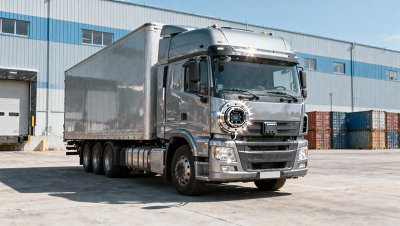
Upgrading truck lighting can improve driver visibility, but for exporters, buyers, and fleet decision-makers, the bigger issue is whether those changes remain legal once the vehicle crosses a border. In many overseas markets, lighting is not treated as a simple accessory upgrade. It is part of vehicle homologation, roadworthiness, safety certification, and in some cases military or special-use compliance. A lighting package that works well on a construction truck, mining truck, tipper trailer, or truck off road platform in one country may create import delays, registration problems, warranty disputes, or failed inspections in another. For companies involved in sourcing, distribution, or cross-border fleet deployment, the key question is not only whether brighter lights are better, but whether the modified vehicle can still be sold, registered, insured, and operated legally in the destination market.
Why truck lighting upgrades become compliance risks in international trade
Lighting systems on commercial vehicles are tightly linked to national and regional safety rules. This includes headlamps, daytime running lights, side markers, brake lamps, reversing lights, reflectors, trailer lighting interfaces, beacon lights, and auxiliary off-road lighting. When a truck is exported or sold abroad, authorities may review whether those systems match local rules on color, beam pattern, mounting position, luminous intensity, wiring, certification marks, and switching logic.
That is why an upgrade that appears minor at the workshop level can become a serious issue at the import, inspection, or fleet deployment stage. In practical terms, compliance problems usually arise in four ways:
- Type approval mismatch: The modified lighting no longer matches the original approved vehicle specification.
- Local regulation conflict: The destination country requires different lamp types, markings, or installation positions.
- Electrical system side effects: New lighting loads affect truck battery performance, CAN bus behavior, or alternator demand.
- Application-specific restrictions: Construction truck, mining truck, truck military, and truck off road use cases may have different rules from standard on-road freight vehicles.
For procurement teams and distributors, this means lighting should be treated as a compliance-controlled component rather than a purely cosmetic or performance upgrade.
What overseas buyers and fleet evaluators care about most
For the target audience of information researchers, procurement staff, business evaluators, and distributors, the most important concern is not technical novelty. It is risk control. Before approving a purchase or cross-border shipment, they usually want answers to the following questions:
- Will the truck pass registration and inspection in the destination market?
- Do the lamps carry the certification marks required by local authorities?
- Will lighting modifications affect insurance, leasing, warranty, or resale value?
- Can the electrical system support the new configuration without harming truck battery reliability?
- Are special applications such as mining truck or off road truck operation exempt, partially exempt, or more strictly controlled?
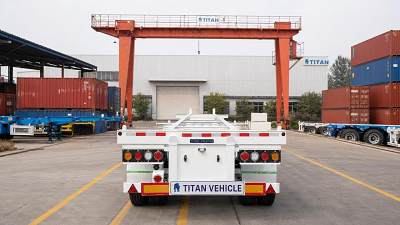
- Will trailer combinations such as a tipper trailer require separate lighting compliance review?
These concerns are especially relevant in B2B trade because a compliance failure rarely affects just one unit. It can disrupt a full shipment, delay dealer onboarding, increase landed cost, and damage trust between supplier and buyer.
Which truck lighting changes are most likely to cause problems abroad
Not every lighting change creates equal risk. Some modifications are relatively low risk if they use approved parts and maintain original specifications. Others create immediate compliance concerns. The most sensitive upgrade categories include:
- LED headlamp conversions: Especially when replacing halogen or HID systems without approved housings or beam certification.
- Auxiliary light bars: Common on truck off road and construction truck units, but often restricted on public roads.
- Beacon and warning lamps: Color and usage rules vary significantly by country and by vehicle purpose.
- Rear and side marker changes: Position, color, spacing, and reflector integration are often regulated.
- Trailer lighting interface changes: Tipper trailer and semi-trailer combinations may need specific signal synchronization and connector standards.
- Military-style blackout or tactical lighting: Truck military configurations may not be road-legal in civilian markets without conversion.
For exporters, the key takeaway is simple: the more a lighting upgrade changes beam behavior, visibility signature, or electrical load, the more carefully it must be checked against destination-market rules.
How regulations differ across countries and why that matters for sourcing
Truck lighting standards are not globally uniform. Some markets rely heavily on UNECE regulations, while others follow local or mixed systems. Even where two countries appear to accept similar standards, they may differ in enforcement, inspection detail, or documentary requirements.
Common areas of variation include:
- Certification labeling: Required lamp markings may differ by market.
- Beam pattern direction: Left-hand and right-hand traffic markets require different headlamp compatibility.
- Permitted colors: Marker, beacon, and warning light colors can be tightly controlled.
- Mounting height and spacing: Important for trailers, heavy trucks, and specialized bodies.
- Switching logic: Rules may define when auxiliary lamps can operate and whether they must auto-switch off on public roads.
- Special-use exemptions: Mining truck or off road truck units may be exempt inside closed sites but non-compliant on public access roads.
This is why buyers on an international B2B platform should not assume that a truck configured for one export region can be transferred easily to another. A distributor sourcing for multiple countries should evaluate lighting compatibility at the quotation stage, not after shipment.
How lighting upgrades can affect truck battery performance and vehicle electronics
Many buyers focus on legality, but operational reliability matters just as much. Lighting upgrades can increase electrical demand, alter load distribution, and create communication issues with modern vehicle control systems. This is especially important for heavy trucks with telematics, advanced driver assistance features, or body-builder integrations.
Potential impacts include:
- Higher power draw: Additional work lights or beacons may place extra strain on the truck battery and charging system during idle or low-speed operation.
- CAN bus errors: Improper LED retrofits can trigger fault messages or bulb-out warnings.
- Shortened component life: Poor wiring quality or inadequate waterproofing may damage connectors, relays, or control modules.
- Cold-weather vulnerability: In harsh climates, marginal electrical upgrades can contribute to starting problems.
For mining truck, municipal, and construction truck fleets that spend long periods with auxiliary lighting active, these issues can become a real maintenance cost. Procurement teams should ask not only whether the lighting is brighter, but whether the full electrical architecture has been validated for the intended duty cycle.
Why truck leasing, resale, and warranty can be affected by non-standard lighting
Lighting compliance is also a commercial issue. If a truck is under truck leasing arrangements, financed through an asset-backed structure, or intended for resale through a dealer network, unapproved lighting changes can reduce commercial flexibility.
Typical business impacts include:
- Leasing restrictions: Lessors may require vehicles to remain in an approved and easily remarketable specification.
- Warranty disputes: OEMs or authorized service networks may reject claims linked to electrical modifications.
- Lower residual value: Non-standard lighting may deter second buyers or require rework before resale.
- Insurance complications: Claims may face scrutiny if non-compliant or undeclared modifications are involved.
For dealers and distributors, this matters because a truck that is harder to finance or remarket is also harder to sell. A compliant factory-supported lighting package often has greater long-term value than a cheaper aftermarket solution.
Special attention for construction truck, mining truck, truck off road, and truck military applications
Special-use vehicles often create the most confusion. Buyers may assume that because a vehicle operates off public roads, lighting rules do not matter. In reality, the answer depends on where and how the vehicle is used.
A construction truck may be legal on a worksite with additional hazard lighting, but still need a road-compliant mode when traveling between locations. A mining truck may operate entirely within a controlled industrial area, yet require different lighting if transported or occasionally used on public access routes. Truck off road platforms often use powerful auxiliary lamps that are acceptable for site work but restricted for road use. Truck military vehicles may use blackout, convoy, or tactical lighting systems that are unsuitable for civilian registration without modification.
For these applications, the best sourcing strategy is to separate site-use lighting from road-legal lighting. Buyers should confirm whether the supplier can provide dual-mode configurations, removable auxiliary systems, or market-specific lighting packs.
A practical checklist for buyers before approving an upgraded lighting specification
To reduce compliance and commercial risk, buyers and sourcing teams should review the following points before placing an order:
- Confirm destination market rules for all required lamps, markers, reflectors, and trailer connections.
- Request certification evidence for lamps, housings, control modules, and wiring assemblies.
- Verify homologation impact and ask whether the upgrade changes the approved vehicle specification.
- Check electrical compatibility including truck battery capacity, alternator margin, and control system integration.
- Review application scenario such as on-road freight, construction truck, mining truck, or truck off road use.
- Assess commercial implications for warranty, truck leasing, insurance, and resale value.
- Evaluate trailer matching if the unit will operate with a tipper trailer or other specialized trailer body.
- Ask for market-specific configurations rather than applying one lighting design to every export market.
This checklist is especially useful for international B2B buyers comparing multiple suppliers on a global heavy truck platform, because compliance readiness is often a stronger differentiator than headline price.
How suppliers and distributors can turn compliance into a competitive advantage
For suppliers, lighting compliance should not be treated as a defensive issue only. It can be a selling point. Buyers increasingly prefer partners that can explain regional regulations, provide supporting documentation, and offer destination-specific truck configurations.
Useful value-added practices include:
- Providing country-specific lighting option sheets
- Supplying certification documents with quotations
- Offering factory-integrated rather than improvised aftermarket solutions
- Explaining battery and electrical load calculations for auxiliary systems
- Separating road-use and site-use lighting packages for specialized vehicles
In global trade, trust often comes from reducing uncertainty. A supplier that helps buyers avoid compliance problems can strengthen conversion, improve repeat business, and support distributor confidence across multiple markets.
Conclusion
Truck lighting upgrades can absolutely improve visibility and operational safety, but in cross-border business they must be judged by more than brightness or styling. For exporters, procurement teams, distributors, and business evaluators, the real issue is whether the upgraded vehicle remains compliant, reliable, financeable, and commercially usable in the destination market. This is particularly important for construction truck, mining truck, truck off road, tipper trailer, and truck military applications, where operational requirements often differ from public-road regulations.
The safest approach is to evaluate lighting as part of the full vehicle compliance package, including homologation, electrical system impact, truck battery performance, leasing implications, and local market rules. In international heavy truck trade, the best lighting upgrade is not simply the most powerful one. It is the one that helps the vehicle work legally and profitably where it will actually be used.
Trending News
- Are Energy-Saving Excavators Worth It for Long-Term Operations?
- Dump Truck Supplier With Quick Delivery: What to Verify First
- Choosing Commercial Vehicle Parts for Cold Storage Reliability
- How ISO Certification Reduces Supplier Risk in Heavy Truck Chassis
- Cab Chassis Truck for Fire Department: Key Fitment Points
Tag
Recommended News
 Policy & RegulationsMulti-Dept Launches New Freight Hub Resilience ActionMulti-Dept Freight Hub Resilience Action boosts land transport equipment intelligence—AI loading systems, cloud diagnostics & multilingual e-clearance now drive efficiency, compliance, and export readiness.
 Policy & RegulationsMOT Issues Oil-Price-Freight Coordination Mechanism NoticeMOT's Oil-Price-Freight Coordination Mechanism transforms cross-border road freight pricing—real-time diesel-linked rates at key land ports like Erenhot & Manzhouli. Learn impacts & compliance steps.
 Policy & RegulationsMOF & MOT Launch New Freight Hub Resilience InitiativeMOF & MOT launch Freight Hub Resilience Initiative—boosting multimodal connectivity, smart trailers, and cross-border rail freight for land transport equipment exporters and operators.
 Policy & RegulationsVietnam to Enforce China's Tier 6B Emission Standard for Imported Medium/Heavy Trucks from Q3 2026Vietnam to enforce China's Tier 6B emission standard for imported medium/heavy trucks from Q3 2026 — critical for exporters, certifiers & distributors. Act now.
 Policy & RegulationsEU Draft Rules Mandate V2X for Imported Commercial Trucks from 2027V2X for imported commercial trucks becomes mandatory in the EU from 2027—learn how EU draft rules impact exporters, OEMs & certification providers.
 Policy & RegulationsHow ISO Certification Reduces Risk When Choosing a Heavy Truck Chassis ManufacturerChoose a heavy truck chassis manufacturer with ISO certification to reduce compliance, quality, and safety risks. Learn how certified processes improve traceability and supplier reliability.
 Policy & RegulationsKazakhstan Extends Zero Tariff on China-Europe Express Truck Parts to 2027Kazakhstan extends zero tariff on China-Europe Express truck parts to 2027—now covering 12 intelligent control components. Boost your export edge in陆路运输设备.
 Policy & RegulationsNew Railway Freight Rules Effective May 1, 2026: 72-Hour Pre-Submission for Oversize CargoNew railway freight rules (effective May 1, 2026) require 72-hour pre-submission for oversize cargo — critical for land transport equipment shippers, EPC contractors & heavy-lift logistics providers.
 Policy & RegulationsKazakhstan Extends Zero Tariff on China’s Rail Truck Parts to 2027Kazakhstan extends zero tariff on China’s rail truck parts to 2027 — now covering 12 intelligent control system components. Boost your Central Asia market access & pricing edge.
 Policy & RegulationsTruck Chassis Supplier in Europe: Key Compliance Points Before OrderingTruck chassis supplier in Europe: learn the key compliance checks before ordering, from documents and axle loads to body integration and safety, to reduce risk and source with confidence.
 Policy & RegulationsNew Railway Cargo Rules Effective May 1, 2026: 72-Hour Pre-Submission for Oversized LoadsNew railway cargo rules (2026) require 72-hour pre-submission for oversized land transport equipment—critical for exporters, manufacturers & freight forwarders on China-Europe/Asia rail corridors.
 Policy & RegulationsLow Bed Trailer Export to Southeast Asia: Key Compliance Points to KnowLow bed trailer export to Southeast Asia requires more than pricing. Discover key compliance points on axle loads, certifications, road standards, and supplier evaluation for safer, faster sourcing.
 Policy & RegulationsEU Mandates ISO 27145-2 Compliance for Heavy-Duty Trucks from May 2026EU mandates ISO 27145-2 compliance for heavy-duty trucks from May 2026 — ensure your exports meet remote diagnostics, type approval & after-sales requirements.
 Policy & RegulationsNew China Railway Freight Rules Take Effect May 1, 2026New China railway freight rules (2026) mandate transparent pricing & service standards for land transport equipment — boosting predictability for China-Europe rail shippers.
 Policy & RegulationsHow to Evaluate a Truck Chassis Supplier in Europe for Compliance and StabilityTruck chassis supplier in Europe selection starts with compliance and stability. Discover a practical checklist to compare suppliers, reduce sourcing risk, and choose reliable long-term partners.
 Policy & RegulationsWhat Sets a Truck Trailer Exporter Apart in Regulated MarketsTruck trailer exporter selection in regulated markets goes beyond price. Learn how compliance, documentation, traceability, and service reduce risk and improve sourcing decisions.
 Policy & RegulationsNew Railway Cargo Regulations Take Effect May 1, 2026New Railway Cargo Regulations (2026) impact rail freight exporters, forwarders & importers—key for China-Europe/Asia rail logistics. Act now to ensure compliance.
 Policy & RegulationsNew Railway Cargo Rules Take Effect May 1, 2026New Railway Cargo Rules (effective May 1, 2026) reshape rail freight compliance for exporters, logistics providers & manufacturers—key updates on fees, safety, and data sharing.
 Policy & RegulationsHuanggang Port Freight Closure Shapes Shenzhen-HK Logistics PatternHuanggang Port freight closure reshapes Shenzhen-HK logistics — key implications for truck & special-purpose vehicle exporters, customs brokers, and ASEAN/Middle East supply chains.
 Policy & Regulations2026 Q1 Transport Industry Tax & Finance Policy List Released2026 Q1 transport industry tax & finance policy: 35% export credit insurance subsidy for heavy-duty & new-energy trucks — key updates for road freight and OEM exporters.
 Policy & Regulations2026 Q1 Transport Industry Tax & Finance Policy List Released2026 Q1 Transport Industry Tax & Finance Policy List: 35% export credit insurance subsidy for heavy-duty trucks, special-purpose vehicles, KD kits & chassis via China-Europe Railway, Western Land-Sea Passage & RCEP routes—key update for exporters & OEMs.
 Policy & RegulationsMOT Releases Translation Guidelines for Highway StandardsMOT's new Highway Standards Translation Guidelines impact heavy-duty truck exporters to Latin America, Central Asia & ASEAN—get compliant bilingual/trilingual technical docs now.
 Must Comply with Maritime Authority Rules") Policy & RegulationsSmall Yacht Operators (Under 12 Pax) Must Comply with Maritime Authority RulesSmall yacht operators (under 12 pax) must comply with maritime authority rules—critical for Ro-Ro logistics, port engineering & export service providers. Act now to avoid enforcement risks.
Policy & RegulationsSmall Yacht Operators (Under 12 Pax) Must Comply with Maritime Authority RulesSmall yacht operators (under 12 pax) must comply with maritime authority rules—critical for Ro-Ro logistics, port engineering & export service providers. Act now to avoid enforcement risks. Policy & RegulationsMOT Releases Guideline for Foreign-Language Translation of Highway Engineering StandardsMOT's new guideline for foreign-language translation of highway engineering standards ensures compliance for heavy-duty trucks, special-purpose vehicles & intelligent chassis exports—key for ASEAN, Middle East & LATAM market access.
 Policy & RegulationsMOT Releases Foreign-Language Translation Guidelines for Highway Engineering StandardsMOT's new Highway Engineering translation guidelines impact heavy-duty tractors, semi-trailers & chassis exporters to BRI markets—ensure certified English/Russian/Arabic docs now.