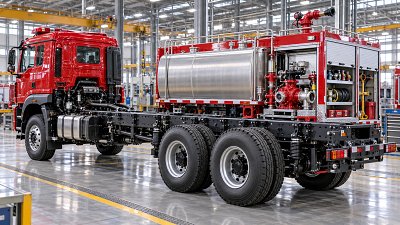
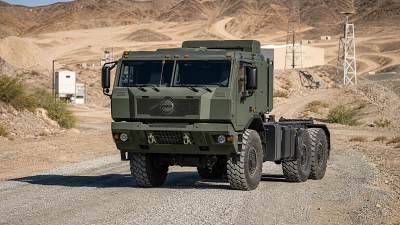
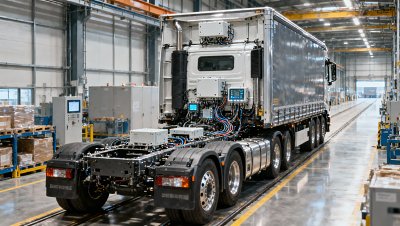
Truck Military Design Basics: Payload, Protection, and Off-Road Mobility
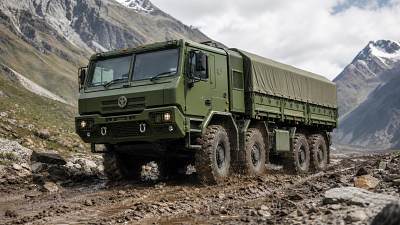
Truck military design begins with a difficult balance. A vehicle must carry meaningful payload, protect people and equipment, and still move reliably across sand, mud, rock, snow, and damaged roads.
That balance matters more today because military transport fleets increasingly operate in mixed environments. They support logistics, engineering tasks, mobile command functions, recovery work, and emergency response with limited maintenance support.
In land transport equipment, the best truck military platforms are rarely defined by one headline specification. Real value appears in how payload, protection, driveline durability, and terrain mobility work together under operational pressure.
For evaluation work, this makes design basics especially important. A clear framework helps separate marketing claims from practical vehicle capability and supports better comparison across suppliers, configurations, and mission profiles.
Why truck military design draws close attention
Military trucks sit between commercial heavy-duty engineering and specialized tactical requirements. They may share foundations with civilian platforms, yet they must tolerate harsher duty cycles and more uncertain terrain.
This is also why the truck military segment attracts wider interest across the heavy vehicle supply chain. Chassis builders, axle producers, tire makers, armor specialists, and body integrators all influence final performance.
From a market perspective, global demand for robust heavy trucks is rising alongside logistics expansion, infrastructure activity, and cross-border equipment sourcing. The same industrial ecosystem supports many military-oriented truck requirements.
Platforms such as the Global Heavy Truck Industry Platform are useful in this context. They help compare truck chassis, cabs, complete vehicles, spare parts, and supplier capabilities across regions without reducing decisions to price alone.
The core design equation
A truck military vehicle must solve three linked questions. How much can it carry, how well can it survive threats, and how consistently can it move where paved roads do not exist.
These factors are interdependent. More armor often reduces payload margin. More payload can hurt mobility. A mobility upgrade may increase weight, maintenance demands, or fuel consumption.
Simple specification sheets can hide these trade-offs. A sound assessment looks at gross vehicle weight, curb weight, axle loading, center of gravity, suspension travel, and actual mission equipment installed.
Payload is more than cargo weight
Payload includes everything added beyond the base vehicle. That can mean troops, fuel, ammunition, communication systems, shelters, cranes, recovery tools, or bridge-laying equipment.
In practice, payload quality matters as much as payload quantity. A truck military platform must carry loads without overstressing axles, braking systems, frame rails, or tire capacity.
Load distribution deserves close attention. Uneven weight placement changes steering feel, increases rollover risk, and reduces traction on soft ground. It also affects long-term chassis fatigue.
Protection starts with mission exposure
Protection in truck military design does not always mean maximum armor. It means appropriate protection for the threat environment, route profile, and operational role.
For rear-area logistics, reliability and repairability may matter more than heavy ballistic kits. For convoy support or troop transport, cab armor, blast-resistant seating, and underbody protection gain higher priority.
Protection also includes fire suppression, run-flat capability, protected fuel routing, and electrical redundancy. These details often determine whether a vehicle can continue a mission after minor damage.
Off-road mobility is system performance
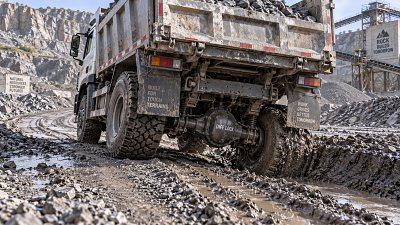
Off-road mobility depends on far more than driven axles. A truck military configuration needs the right mix of torque delivery, ground clearance, articulation, approach angle, departure angle, and tire footprint.
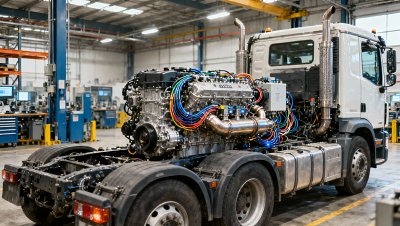
Drivetrain layout matters, but so does gearing. A powerful engine paired with unsuitable transmission ratios can struggle on steep grades or in deep sand.
Central tire inflation systems, locking differentials, beadlock solutions, and portal axles may each improve mobility. Their value depends on terrain, vehicle weight, and maintenance capability.
Typical truck military configurations and where they fit
Not every military truck serves the same role. Design priorities shift with payload class, route conditions, and equipment integration requirements.
This comparison shows why no single truck military formula fits all fleets. The best platform is the one that matches mission frequency, support infrastructure, and operating geography.
What to examine beyond headline specifications
A brochure may highlight horsepower, top speed, or payload rating. Those figures matter, but they rarely explain field performance on their own.
A more useful review checks how the truck behaves when fully equipped. Added armor, communication units, or auxiliary power systems can sharply change mass and cooling requirements.
- Confirm curb weight with mission equipment installed, not empty promotional figures.
- Review axle-by-axle loading under realistic cargo and fuel conditions.
- Check turning radius, fording depth, side-slope limits, and gradeability with full load.
- Assess brake performance after repeated downhill cycles, not one isolated stop.
- Study maintenance access for filters, driveline parts, tires, and electrical systems.
- Compare spare parts availability and regional service support across suppliers.
In real procurement activity, lifecycle support often separates strong options from risky ones. A truck military fleet with poor parts access can lose readiness even if the original design is technically capable.
Where commercial truck knowledge still matters
Many military trucks benefit from proven commercial heavy-duty components. Engines, transmissions, cabs, and brake systems based on mature production lines can improve parts availability and service familiarity.
That does not mean a civilian truck can simply be relabeled as truck military equipment. The underlying architecture must still support torsional loads, chassis accessories, environmental sealing, and rough-terrain durability.
This overlap is one reason B2B heavy vehicle platforms have practical value. Access to global truck brand directories, chassis resources, spare parts categories, and supplier comparisons can speed early technical screening.
When evaluating alternative sources, it helps to compare not only complete trucks, but also cabs, axles, suspension systems, construction-equipment components, and aftermarket support networks.
Common trade-offs in field-oriented assessment
The most frequent mistake is treating protection, payload, and mobility as separate checkboxes. In truck military design, every gain in one area usually creates pressure somewhere else.
Weight growth over program life
Vehicles often gain weight after entering service. Extra radios, armor panels, storage racks, jammers, and power systems can consume reserve capacity faster than expected.
Mobility versus maintainability
Advanced suspension or tire systems may improve off-road performance. They can also increase inspection needs, training demands, and dependence on specific replacement parts.
Protection versus transportability
Heavier protection can limit bridge crossing, rail movement, aircraft transport, and recovery options. A strong truck military design considers how the vehicle itself will be moved and supported.
A practical framework for next-step evaluation
A useful starting point is to define the mission load first. Then test whether candidate vehicles still meet mobility and survivability targets after real equipment, fuel, and environmental conditions are added.
Next, compare the support ecosystem. That includes spare parts reach, documentation quality, supplier responsiveness, and compatibility with existing fleet maintenance practices.
It is also worth reviewing adjacent product categories. Chassis and cab options, trailers, construction machinery interfaces, and recovery solutions can affect the final usefulness of a truck military platform.
The Global Heavy Truck Industry Platform can support this stage by helping structure comparisons across products, suppliers, and market information. Used carefully, that visibility improves technical judgment rather than replacing it.
In the end, the right truck military choice is rarely the highest payload or the heaviest armor. It is the platform that preserves mission reliability when load, protection, terrain, and support realities meet in the same vehicle.
A disciplined review of these basics makes the next decision clearer: narrow the mission profile, compare true operating weights, and test supplier support with the same rigor as the truck itself.
Trending News
- How to choose an off road truck for steep and unstable job sites
- How to match crane truck lifting capacity to your jobsite loads
- What drives logging truck cost beyond the base purchase price?
- How to match lowbed trailer deck height to your hauling equipment
- What documents are needed to export a low bed trailer to Southeast Asia?
Tag
Recommended News
 Truck TechnologyDoes a cab chassis truck for fire department have enough frame capacity?Cab chassis truck for fire department: assess frame strength, axle loads, tank weight, stability and compliance for a safer, reliable fire apparatus build.
 Truck TechnologyWhen does a truck off road setup need locking differentials?Truck off road setups need locking differentials when uneven, low-grip terrain causes wheelspin. Learn how to choose the right axle locks for safer, reliable mobility.
 Truck TechnologyEPA Remote-Diagnostics Rules Take Effect for Diesel EnginesEPA Remote-Diagnostics Rules take effect for diesel engines sold in the U.S. Learn how OTA updates, real-time NOx reporting, and fault-code retention may impact compliance, OEM projects, and imports.
 Truck TechnologyCab Chassis Truck for Military Use: Key Specs That Affect Mission ReadinessCab chassis truck for military use: explore the key specs that drive mission readiness, off-road mobility, integration flexibility, and lifecycle support for smarter fleet decisions.
 Truck TechnologyBULLDOZER with GPS Tracking: What Improves on Remote Job SitesBULLDOZER with GPS tracking improves remote job sites with better visibility, reduced idle time, stronger fleet coordination, and smarter earthmoving decisions across harsh terrain.
 Truck TechnologyTruck Body Materials Compared: Steel, Aluminum, or Composite?Truck body material comparison made practical: explore steel, aluminum, and composite options for payload, durability, corrosion resistance, and lifecycle cost.
 Truck TechnologyBest Cab Chassis Truck Setups for Municipal Engineering TasksCab chassis truck for municipal engineering: compare the best setups for sanitation, tanker, utility, and dump tasks to improve uptime, safety, and long-term fleet value.
 Truck TechnologyTruck Electrical System Faults: Common Causes and Fast ChecksTruck electrical system faults can cause no-starts, dim lights, and costly downtime. Learn common causes, fast checks, and practical steps to diagnose issues quickly.
 Truck TechnologyASEAN-ICV Opens Mutual Access for Connected Heavy VehiclesASEAN-ICV opens mutual access for connected heavy vehicles, cutting duplicate V2X testing across Thailand, Vietnam, Indonesia, and Malaysia. See what it means for exports, compliance, and fleet delivery.
![]() Truck TechnologyTruck Concrete Mixer Basics: Capacity, Drum Type, and Jobsite FitTruck concrete mixer basics explained: compare capacity, drum type, and jobsite fit to improve pour efficiency, cut delays, and choose the right mixer truck with confidence.
Truck TechnologyTruck Concrete Mixer Basics: Capacity, Drum Type, and Jobsite FitTruck concrete mixer basics explained: compare capacity, drum type, and jobsite fit to improve pour efficiency, cut delays, and choose the right mixer truck with confidence. Truck TechnologyBrazil Requires Dual-Mode Tracking on Imported Heavy TrucksBrazil requires dual-mode tracking on imported heavy trucks. Learn how BeiDou+GPS, SISFROTA, and ABNT NBR 16501:2025 rules affect licensing, compliance, and market access.
 Truck TechnologyWater Truck OEM Options: Tank Size, Pump Output, and Road ConditionsWater truck OEM selection starts with the right match of tank size, pump output, and road conditions. Learn how to compare specs, improve uptime, and choose a fleet-ready solution.
 Truck TechnologyChile Requires Remote Diagnostics on Imported Heavy TrucksChile Requires Remote Diagnostics on Imported Heavy Trucks: learn how NCh3871:2026, OTA, ISO 22161, and VHMP rules will impact truck imports, registration, and fleet planning.
 Truck TechnologyHow to Compare Logging Truck OEM Specs for Drivetrain and Load StabilityLogging truck OEM specs compared the right way: learn how to evaluate drivetrain torque, axle ratios, suspension, and load stability for safer forestry hauling.
 Truck TechnologyIndia Drafts BS-VI Phase II Remote OBD Upload RuleIndia Drafts BS-VI Phase II Remote OBD Upload Rule: learn how India’s new real-time OBD upload proposal could impact truck exporters, T-Box upgrades, certification timelines, and market access.
 Truck TechnologyMilitary Truck Payload vs Mobility: What Matters in Harsh TerrainMilitary truck performance in harsh terrain depends on more than payload. Discover how mobility, traction, axle load, and suspension affect real-world mission success.
 Truck TechnologyLogging Truck OEM Options: Key Specs for Harsh Forestry RoutesLogging truck OEM options for forestry routes: compare axle layouts, frame strength, traction, braking, and service support to choose a durable, high-uptime truck.
 Truck TechnologyVietnam to Require VCA Checks for Imported Heavy TrucksVietnam to Require VCA Checks for Imported Heavy Trucks from August 1, 2026. Learn how VCA testing, CAN, HVIL, and OBD-II rules could impact truck exports, certification, and delivery planning.
 Truck TechnologyMexico Enforces CAN FD Rule for Imported TrucksMexico Enforces CAN FD Rule for Imported Trucks: learn how NOM-042-SEMARNAT-2026 impacts OBD-II+, ANCE verification, ECU strategy, and Mexico-bound truck compliance.
 Truck TechnologyBrazil ANP Rule Requires H₂ Leak Sensors on Imported Gas TractorsBrazil ANP rule requires H₂ leak sensors on imported gas tractors from Oct 1, 2026. Learn the compliance impact, IEC 60079-29-1 standard, and what exporters must do now.
 Truck TechnologyTruck Brake System Basics: Components, Failure Risks, and Safety ChecksTruck brake system basics explained: key components, common failure risks, and practical safety checks to improve fleet uptime, compliance, and road safety.
 Truck TechnologySupply Chain Expo Opens With Focus on Heavy Truck Core SystemsHeavy truck core systems take center stage at the Supply Chain Expo, spotlighting battery systems, electric drive axles, and by-wire technologies shaping export opportunities.
 Truck TechnologyTruck Control Unit Failures: Common Symptoms and Fix StrategiesTruck control unit failures often start with small warning signs. Learn key symptoms, root causes, and smart repair strategies to cut downtime and avoid costly misdiagnosis.
 Truck TechnologyEU V2X Rule Sets 2027 Deadline for New Heavy Truck ApprovalEU V2X Rule Sets 2027 Deadline for New Heavy Truck Approval: learn how ETSI EN 302 637-2 and UN R155 reshape EU truck compliance, certification, sourcing, and export planning.
 Truck TechnologyEU Draft Targets V2X as Standard for New Heavy TrucksV2X is moving toward a standard for new EU heavy trucks. Learn how the draft rule may affect certification, ETSI EN 302 637-2 compliance, open API access, and export planning.