Iran Launches New HS Code System, Boosting China Trailer Clearance
Effective May 16, 2026, Iran’s customs authority implemented the 23rd edition of the Harmonized System (HS) code, introducing targeted revisions for trailer classifications. The update directly impacts Chinese exporters of semi-trailers and skeletal trailers—key components in cross-border heavy transport supply chains—by streamlining classification logic and enabling faster clearance for technologically compliant units.
Event Overview
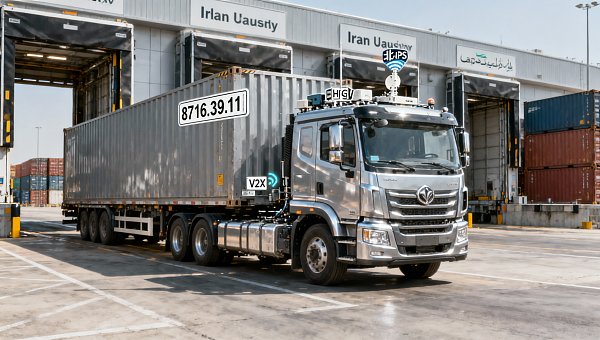
Starting May 16, 2026, Iranian Customs fully adopted the revised HS Code 23rd Edition. Two new subheadings were added under heading 8716.39: ‘Smart Connected Semi-Trailers’ (8716.39.11) and ‘New Energy-Compatible Skeletal Trailers’ (8716.39.12). Eligibility for these codes requires verified integration of BeiDou/GPS dual-mode positioning and V2X communication interfaces. Units meeting these criteria are automatically routed to a customs fast-track lane, reducing average clearance time from 9.2 days to 7.2 days—a 22% improvement. The revision also establishes a formal pathway for differentiated certification and labeling upgrades tailored to Chinese exporters.
Industries Affected
Direct Export Trading Enterprises
Exporters of Chinese-made trailers face immediate classification re-evaluation under the new HS structure. Those previously grouped under generic 8716.39 entries must now determine eligibility for the new subcodes. Impact manifests in three areas: (1) revised tariff treatment and preferential access conditions; (2) mandatory technical documentation for fast-track qualification; and (3) increased demand for pre-clearance conformity verification—shifting some compliance burden upstream.
Raw Material Procurement Enterprises
Suppliers of structural steel, aluminum alloys, wiring harnesses, and embedded electronics (e.g., GNSS modules, V2X transceivers) experience indirect but tangible pressure. Demand is rising for certified components that meet Iranian technical annexes—particularly those with traceable dual-mode positioning firmware and automotive-grade V2X interface compliance. Procurement teams must now verify not only material specs but also embedded system interoperability certifications aligned with Iran’s updated import requirements.
Manufacturing Enterprises
Trailer OEMs and Tier-1 assemblers must adapt production control plans to accommodate label differentiation, software validation protocols, and modular hardware integration standards required for 8716.39.11/12 classification. This includes revising BOMs, updating quality checklists for communication interface functionality, and implementing post-assembly GNSS/V2X functional testing. While not mandating full redesign, it introduces incremental engineering and documentation overhead tied to export destination.
Supply Chain Service Providers
Cargo agents, customs brokers, and logistics integrators serving China–Iran trailer trade must upgrade their HS classification databases and train staff on new subcode eligibility rules. Misclassification now carries higher operational risk—not just tariff penalties, but delays in accessing the 22%-faster clearance lane. Providers offering value-added services (e.g., pre-submission technical dossier review or labeling compliance audits) are seeing increased client inquiries, signaling a nascent market shift toward certified advisory support.
Key Considerations and Recommended Actions
Conduct Immediate HS Code Reassessment
Exporters should audit current trailer models against the newly defined technical thresholds for 8716.39.11 and 8716.39.12—including GNSS module firmware version, antenna gain specifications, and V2X interface protocol conformance (e.g., ETSI EN 302 637-2). Retrospective classification may affect shipments cleared after May 16, 2026.
Update Export Documentation and Labeling
Certification statements, technical data sheets, and shipping labels must explicitly reference the applicable subcode and list qualifying features (e.g., ‘Dual-mode BeiDou/GPS positioning, ISO 20077-2-compliant V2X interface’). Generic ‘smart trailer’ claims no longer suffice for fast-track eligibility.
Engage Iranian Customs-Authorized Third-Party Verifiers
Iranian authorities recognize only designated conformity assessment bodies for pre-clearance verification. Chinese exporters should identify and contract with such entities early—lead times for technical dossier review currently average 14 working days.
Editorial Perspective / Industry Observation
Observably, this HS revision reflects Iran’s broader strategic pivot toward conditionally opening non-oil import channels based on verifiable technological capability—not just origin or price. Analysis shows the inclusion of V2X and dual-GNSS requirements signals intent to align infrastructure-readiness with vehicle imports, potentially foreshadowing future mandates for telematics data sharing or over-the-air update capabilities. From an industry standpoint, the move is better understood as a selective modernization lever than a blanket facilitation measure: it rewards digital readiness while raising the bar for entry-level exporters. Current more relevant implications lie in how quickly Chinese manufacturers can standardize modular connectivity platforms across product lines—rather than treating each export destination as a discrete certification project.
Conclusion
This HS update does not represent a wholesale liberalization of Iranian trailer import policy—but rather a calibrated recalibration toward performance-based classification. For Chinese exporters, the 22% clearance gain is real, yet contingent on demonstrable, auditable technical integration. The longer-term significance lies in its precedent: it signals growing willingness among emerging-market customs authorities to use HS granularity as a tool for industrial policy alignment—making technical compliance not just a regulatory hurdle, but a competitive differentiator.
Source Attribution
Official announcement published by the Islamic Republic of Iran Customs Administration (IRICA), Circular No. IRICA/HS/23/2026-05, dated May 10, 2026. Technical annexes referenced include Annex 4B (Telematics Interface Specifications) and Annex 7F (GNSS Firmware Validation Protocol). Note: Implementation guidance for third-party verification procedures remains pending publication; stakeholders are advised to monitor IRICA’s official portal for updates through Q3 2026.
Trending News
- How to match lowbed trailer deck height to your hauling equipment
- What documents are needed to export a low bed trailer to Southeast Asia?
- What to verify before choosing a delivery truck supplier for school transportation
- What an excavator manufacturer catalog should show before you compare models
- What to check before appointing a bulldozer distributor
Tag
Recommended News
 Policy & RegulationsGermany Ends EV Subsidy ExtensionGermany ends EV subsidy extension, reshaping EV and commercial vehicle plans in Europe. See how importers, distributors, and Chinese NEV suppliers should respond.
 Policy & RegulationsEU Rule Sets LCA Certification for Truck ImportsEU Rule Sets LCA Certification for Truck Imports: learn how the new EU LCA and EPD compliance rule will affect truck approvals, export timelines, costs, and delivery planning.
 Policy & RegulationsEU Requires LCA Reports for Imported HDVs from Oct 2026EU LCA reports for imported HDVs become mandatory from Oct 2026. Learn how the new EU heavy-duty vehicle carbon compliance rule affects exporters, suppliers, costs, and delivery readiness.
 Policy & RegulationsChina Tightens Export Filing for New Energy Heavy TrucksChina Tightens Export Filing for New Energy Heavy Trucks: learn how new HS code rules and CNAS carbon-footprint reports may impact customs clearance, compliance, and delivery timelines.
 Policy & RegulationsEU Updates CO2 Rules for Heavy-Duty Vehicle ApprovalEU Updates CO2 Rules for Heavy-Duty Vehicle Approval: learn how new lifecycle carbon and battery due diligence requirements affect EU market access, approval timing, and compliance costs.
 Policy & RegulationsChina Customs Adds New Export Fields for Road Transport EquipmentChina Customs adds new export fields for road transport equipment from Aug 15, 2026. Learn how drive type and certification data may affect compliance, clearance speed, and export planning.
 Policy & RegulationsEU Tightens Truck WVTA Brake and Lighting TestsEU Tightens Truck WVTA Brake and Lighting Tests: learn how Regulation (EU) 2026/1387 reshapes brake response, headlamp compliance, certification timing, and EU market access.
 Policy & RegulationsEU Sets CO2 Rules for New Heavy Trucks from 2027EU Sets CO2 Rules for New Heavy Trucks from 2027: learn how new EU CO2 limits, OBD, and remote data upload requirements could reshape type approval, costs, and delivery planning.
 Policy & RegulationsEU Brings Forward Cybersecurity Approval for Heavy TrucksEU heavy truck cybersecurity approval moves to August 1, 2026. Learn how WVTA, UNECE R155, OTA and telematics rules will impact EU exports, type approval and delivery plans.
 Policy & RegulationsEU Moves Truck Cybersecurity WVTA Forward to Aug 1, 2026EU truck cybersecurity WVTA moves to Aug 1, 2026. Learn how UN R155 and EU 2022/1426 affect heavy truck type approval, exports, suppliers, and compliance planning.
 Policy & RegulationsEU Brings Forward WVTA Cybersecurity Approval for TrucksEU Brings Forward WVTA Cybersecurity Approval for Trucks: learn how the 2026 deadline impacts heavy truck exports, retrofit projects, supplier compliance, costs, and EU market-entry planning.
 Policy & RegulationsEU Brings Forward WVTA Cybersecurity Approval for Heavy TrucksEU heavy truck WVTA cybersecurity approval now starts on August 1, 2026. Learn how EU type approval, CSMS audits, ADAS, OTA, and registration risks affect exporters and manufacturers.
 Policy & RegulationsEU Cybersecurity Approval Rule Takes Effect for Heavy TrucksEU Cybersecurity Approval Rule now reshapes heavy trucks market access. Learn how CSMS, UNECE R155, and WVTA deadlines could impact certification, delivery, and EU export readiness.
 Policy & RegulationsEU Requires EN 15038 Declarations for Truck ImportsEU Requires EN 15038 Declarations for Truck Imports: learn how the new EU rule affects heavy truck customs clearance, compliance timing, and export readiness.
 Policy & RegulationsEU Rule Brings SCIP Filing to Imported Truck Battery PartsSCIP filing for imported truck battery parts becomes critical in the EU from Oct 1, 2026. Learn how the rule impacts heavy-duty truck exports, aftermarket parts, and customs compliance.
 Policy & RegulationsEU REACH Expands to Truck Battery PartsEU REACH expands to truck battery parts, covering lithium-ion battery modules, BMS units, and thermal systems. Learn how SCIP filing, SVHC disclosure, and EU export compliance may affect truck suppliers.
 Policy & RegulationsEU Sets Battery Footprint Rule for Heavy TrucksEU Sets Battery Footprint Rule for Heavy Trucks: learn how the 2027 EU battery carbon footprint requirement could impact type approval, customs clearance, and truck exports.
 Policy & RegulationsEU Requires Certified V2X Modules in Heavy TrucksEU Requires Certified V2X Modules in Heavy Trucks from July 22, 2026. Learn how UN R155 and ETSI EN 303 648 rules will impact EU type approval, registration, and exports.
 Policy & RegulationsEU Tightens V2X Approval for Heavy TrucksHeavy trucks entering the EU face tougher V2X approval from July 22, 2026. Learn how UNECE R155/R156 and EU Type Approval will affect registration, exports, and delivery readiness.
 Policy & RegulationsEU Rule Takes Effect: Heavy Trucks Need V2X from July 22, 2026Heavy trucks entering the EU from July 22, 2026 need V2X modules and UN R155 approval. Learn how this rule impacts compliance, certification, exports, and delivery.
 Policy & RegulationsEU Opens Euro 7 Transition for Heavy TrucksEU Opens Euro 7 Transition for Heavy Trucks: learn how new filing rules, battery carbon footprint declarations, and OBD II checks will impact EU truck exports and compliance planning.
 Policy & RegulationsEPA Update Removes Seven Chinese Diesel Engine ModelsEPA Update Removes Seven Chinese Diesel Engine Models: learn how this EPA compliance change could affect North American truck exports, sourcing, certification, and delivery planning.
 Policy & RegulationsEU Enforces Euro 7 for New Heavy TrucksEU Enforces Euro 7 for New Heavy Trucks: learn how stricter NOx, NH₃, and brake particle certification impacts EU market access, registration timing, and exporter compliance costs.
 Policy & RegulationsLight Duty Truck Manufacturer in USA: Key Compliance ChecksLight duty truck manufacturer in USA selection starts with compliance. Learn the key checks for FMVSS, emissions, load ratings, and traceability before you buy.
 Policy & RegulationsEU Enforces Euro 7 Upgrade for Heavy Truck ImportsEU Enforces Euro 7 Upgrade for Heavy Truck Imports: learn how new PN, NH3, brake and tire wear tests affect certification, customs clearance, and on-time EU delivery.