SASO Updates EMC Standard for Heavy-Duty Trucks
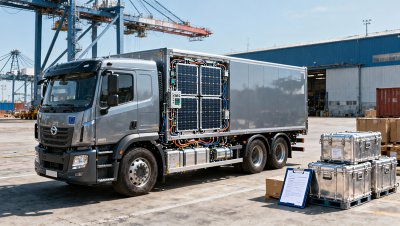
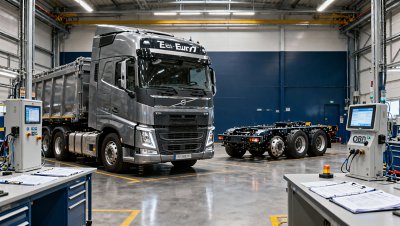
Saudi Arabia’s Standards, Metrology and Quality Organization (SASO) has introduced a revised electromagnetic compatibility (EMC) requirement for heavy-duty commercial vehicles—specifically targeting tractor units exported from China. Effective 20 May 2026, the newly issued SASO IEC 61000-4-23:2026 Edition 2 mandates high-frequency burst immunity testing on cab wiring harnesses and ADAS controllers, with full enforcement scheduled from 1 September 2026. This update directly impacts China’s heavy-vehicle export supply chain to the Gulf Cooperation Council (GCC) market, where regulatory alignment increasingly shapes product design, certification timelines, and logistics planning.
Event Overview
SASO published SASO IEC 61000-4-23:2026 Edition 2 on 20 May 2026. The standard introduces a new mandatory test requirement—‘high-frequency burst immunity’—aligned with IEC 61000-4-23, specifically applied to tractor cab wiring harnesses and ADAS control units. Enforcement begins 1 September 2026. As of publication, only three accredited testing laboratories in China hold official SASO authorization to perform this test; exporters are advised to secure test slots well in advance to avoid shipment delays.
Industries Affected
Direct Exporters (OEMs & Trading Companies): Tractor manufacturers and export trading firms supplying to Saudi Arabia must now validate compliance before customs clearance. Non-compliant units risk rejection at port or mandatory rework—including redesign of harness shielding, filter integration, or controller firmware hardening. Lead time extension is expected due to limited lab capacity and test duration (typically 5–7 working days per configuration).
Raw Material Suppliers: Cable and connector suppliers—particularly those providing shielded multi-core harnesses or EMI-filtered power modules—face increased technical specification requests. Buyers are now explicitly requiring documentation of pulse-burst resilience (e.g., Class 3 or higher per IEC 61000-4-23), shifting procurement criteria from basic electrical ratings to transient immunity performance data.
Manufacturing Contractors (Tier 1 & Tier 2 Suppliers): EMS providers assembling ADAS control units or integrating cab electronics must revise their design validation protocols. This includes pre-compliance EMC screening during PCB layout (e.g., decoupling network optimization, ground plane continuity checks) and revising production-line ESD/EMI test checkpoints—not just final-system-level verification.
Supply Chain Service Providers (Certification Agencies, Logistics Integrators): Certification consultants and freight forwarders with GCC compliance expertise are seeing rising demand for ‘pre-audit gap assessments’ and coordinated test scheduling across multiple labs. Some logistics partners now offer bundled services including test booking, document translation, and SASO CoC submission support—reflecting growing complexity in end-to-end regulatory handover.
Key Considerations and Recommended Actions
Confirm Lab Authorization Status Before Scheduling
Only three Chinese laboratories currently hold SASO’s formal accreditation for IEC 61000-4-23 testing. Exporters should verify authorization via SASO’s official Accredited Laboratories Portal, not third-party claims. Unaccredited tests will not be accepted for CoC issuance.
Review Harness and Controller Design Against Burst Parameters
The updated standard specifies 5 kHz repetition rate, 100 V–1 kV test levels, and coupling via capacitive clamp. Manufacturers should audit existing designs for susceptibility points—especially near CAN/LIN bus terminations, power input filters, and sensor interface circuits—and implement mitigation (e.g., ferrite beads, TVS diodes, common-mode chokes) prior to formal testing.
Integrate Test Planning into Product Launch Timelines
Given current lab backlogs (average wait time: 4–6 weeks), companies launching new tractor models for GCC delivery after Q3 2026 must embed IEC 61000-4-23 validation into early-stage development—not as a late-stage compliance checkpoint. Parallel testing across prototype variants is advisable to compress cycle time.
Editorial Insight / Industry Observation
Observably, SASO’s move reflects a broader regional shift: GCC regulators are no longer adopting international standards passively but actively layering application-specific requirements—especially where safety-critical systems (e.g., ADAS) intersect with harsh electrical environments (e.g., diesel engine ignition noise, alternator ripple). Analysis shows this is less about harmonization and more about localized risk profiling. From an industry perspective, it signals that ‘EMC compliance’ is evolving from a box-ticking exercise into a cross-functional engineering discipline spanning hardware design, software diagnostics, and supply chain traceability. Current evidence suggests similar updates may follow for braking system ECUs and telematics gateways in 2027.
Conclusion
This regulatory update underscores how rapidly emerging-market technical regulations can reshape global automotive supply chains—not through sweeping bans, but through targeted, technically granular requirements that expose latent weaknesses in design maturity and test infrastructure. For Chinese exporters, the implication is clear: proactive EMC engineering investment—rather than reactive certification—is becoming a competitive differentiator in high-growth markets like Saudi Arabia.
Source Attribution
Official source: SASO IEC 61000-4-23:2026 Edition 2 Announcement (published 20 May 2026).
Note: SASO has not yet published transitional provisions for legacy-certified models. This remains under observation and will be updated upon official clarification.
Trending News
- How to choose an off road truck for steep and unstable job sites
- How to match crane truck lifting capacity to your jobsite loads
- What drives logging truck cost beyond the base purchase price?
- How to match lowbed trailer deck height to your hauling equipment
- What documents are needed to export a low bed trailer to Southeast Asia?
Tag
Recommended News
 Policy & RegulationsGermany Ends EV Subsidy ExtensionGermany ends EV subsidy extension, reshaping EV and commercial vehicle plans in Europe. See how importers, distributors, and Chinese NEV suppliers should respond.
 Policy & RegulationsEU Rule Sets LCA Certification for Truck ImportsEU Rule Sets LCA Certification for Truck Imports: learn how the new EU LCA and EPD compliance rule will affect truck approvals, export timelines, costs, and delivery planning.
 Policy & RegulationsEU Requires LCA Reports for Imported HDVs from Oct 2026EU LCA reports for imported HDVs become mandatory from Oct 2026. Learn how the new EU heavy-duty vehicle carbon compliance rule affects exporters, suppliers, costs, and delivery readiness.
 Policy & RegulationsChina Tightens Export Filing for New Energy Heavy TrucksChina Tightens Export Filing for New Energy Heavy Trucks: learn how new HS code rules and CNAS carbon-footprint reports may impact customs clearance, compliance, and delivery timelines.
 Policy & RegulationsEU Updates CO2 Rules for Heavy-Duty Vehicle ApprovalEU Updates CO2 Rules for Heavy-Duty Vehicle Approval: learn how new lifecycle carbon and battery due diligence requirements affect EU market access, approval timing, and compliance costs.
 Policy & RegulationsChina Customs Adds New Export Fields for Road Transport EquipmentChina Customs adds new export fields for road transport equipment from Aug 15, 2026. Learn how drive type and certification data may affect compliance, clearance speed, and export planning.
 Policy & RegulationsEU Tightens Truck WVTA Brake and Lighting TestsEU Tightens Truck WVTA Brake and Lighting Tests: learn how Regulation (EU) 2026/1387 reshapes brake response, headlamp compliance, certification timing, and EU market access.
 Policy & RegulationsEU Sets CO2 Rules for New Heavy Trucks from 2027EU Sets CO2 Rules for New Heavy Trucks from 2027: learn how new EU CO2 limits, OBD, and remote data upload requirements could reshape type approval, costs, and delivery planning.
 Policy & RegulationsEU Brings Forward Cybersecurity Approval for Heavy TrucksEU heavy truck cybersecurity approval moves to August 1, 2026. Learn how WVTA, UNECE R155, OTA and telematics rules will impact EU exports, type approval and delivery plans.
 Policy & RegulationsEU Moves Truck Cybersecurity WVTA Forward to Aug 1, 2026EU truck cybersecurity WVTA moves to Aug 1, 2026. Learn how UN R155 and EU 2022/1426 affect heavy truck type approval, exports, suppliers, and compliance planning.
 Policy & RegulationsEU Brings Forward WVTA Cybersecurity Approval for TrucksEU Brings Forward WVTA Cybersecurity Approval for Trucks: learn how the 2026 deadline impacts heavy truck exports, retrofit projects, supplier compliance, costs, and EU market-entry planning.
 Policy & RegulationsEU Brings Forward WVTA Cybersecurity Approval for Heavy TrucksEU heavy truck WVTA cybersecurity approval now starts on August 1, 2026. Learn how EU type approval, CSMS audits, ADAS, OTA, and registration risks affect exporters and manufacturers.
 Policy & RegulationsEU Cybersecurity Approval Rule Takes Effect for Heavy TrucksEU Cybersecurity Approval Rule now reshapes heavy trucks market access. Learn how CSMS, UNECE R155, and WVTA deadlines could impact certification, delivery, and EU export readiness.
 Policy & RegulationsEU Requires EN 15038 Declarations for Truck ImportsEU Requires EN 15038 Declarations for Truck Imports: learn how the new EU rule affects heavy truck customs clearance, compliance timing, and export readiness.
 Policy & RegulationsEU Rule Brings SCIP Filing to Imported Truck Battery PartsSCIP filing for imported truck battery parts becomes critical in the EU from Oct 1, 2026. Learn how the rule impacts heavy-duty truck exports, aftermarket parts, and customs compliance.
 Policy & RegulationsEU REACH Expands to Truck Battery PartsEU REACH expands to truck battery parts, covering lithium-ion battery modules, BMS units, and thermal systems. Learn how SCIP filing, SVHC disclosure, and EU export compliance may affect truck suppliers.
 Policy & RegulationsEU Sets Battery Footprint Rule for Heavy TrucksEU Sets Battery Footprint Rule for Heavy Trucks: learn how the 2027 EU battery carbon footprint requirement could impact type approval, customs clearance, and truck exports.
 Policy & RegulationsEU Requires Certified V2X Modules in Heavy TrucksEU Requires Certified V2X Modules in Heavy Trucks from July 22, 2026. Learn how UN R155 and ETSI EN 303 648 rules will impact EU type approval, registration, and exports.
 Policy & RegulationsEU Tightens V2X Approval for Heavy TrucksHeavy trucks entering the EU face tougher V2X approval from July 22, 2026. Learn how UNECE R155/R156 and EU Type Approval will affect registration, exports, and delivery readiness.
 Policy & RegulationsEU Rule Takes Effect: Heavy Trucks Need V2X from July 22, 2026Heavy trucks entering the EU from July 22, 2026 need V2X modules and UN R155 approval. Learn how this rule impacts compliance, certification, exports, and delivery.
 Policy & RegulationsEU Opens Euro 7 Transition for Heavy TrucksEU Opens Euro 7 Transition for Heavy Trucks: learn how new filing rules, battery carbon footprint declarations, and OBD II checks will impact EU truck exports and compliance planning.
 Policy & RegulationsEPA Update Removes Seven Chinese Diesel Engine ModelsEPA Update Removes Seven Chinese Diesel Engine Models: learn how this EPA compliance change could affect North American truck exports, sourcing, certification, and delivery planning.
 Policy & RegulationsEU Enforces Euro 7 for New Heavy TrucksEU Enforces Euro 7 for New Heavy Trucks: learn how stricter NOx, NH₃, and brake particle certification impacts EU market access, registration timing, and exporter compliance costs.
 Policy & RegulationsLight Duty Truck Manufacturer in USA: Key Compliance ChecksLight duty truck manufacturer in USA selection starts with compliance. Learn the key checks for FMVSS, emissions, load ratings, and traceability before you buy.
 Policy & RegulationsEU Enforces Euro 7 Upgrade for Heavy Truck ImportsEU Enforces Euro 7 Upgrade for Heavy Truck Imports: learn how new PN, NH3, brake and tire wear tests affect certification, customs clearance, and on-time EU delivery.