Fuel tank truck vapor recovery systems: compliance checklist for US state regs
Fuel Tank Truck Vapor Recovery Systems: Compliance Checklist for US State Regs
Ensuring compliance with U.S. state-level vapor recovery regulations is critical for fuel tank truck operators—and impacts related equipment like mixer truck, truck refrigerated, and truck container fleets handling volatile fuels. This checklist helps procurement professionals, distributors, and industry evaluators verify system readiness across jurisdictions, while connecting seamlessly with Global Heavy Truck Industry Platform’s vetted suppliers of fuel tank truck systems, truck turbocharger, truck gearbox, and other mission-critical components. Stay audit-ready, avoid penalties, and source compliant solutions efficiently.
Why This Checklist Matters — Not Just for Emissions Officers, But for Your Procurement & Supply Chain Decisions
If you’re evaluating or specifying fuel tank truck vapor recovery systems—whether for fleet renewal, cross-state expansion, or supplier qualification—you’re not just checking a regulatory box. You’re making a high-stakes operational decision that affects capital expenditure, maintenance workflows, resale value, insurance eligibility, and even contract eligibility with major fuel distributors (e.g., Chevron, ExxonMobil, or regional co-ops). Unlike federal EPA standards—which set baseline design requirements—U.S. state vapor recovery rules vary sharply in scope, enforcement rigor, testing frequency, and certification pathways. A system certified in California may fail inspection in Colorado; one approved for gasoline may be noncompliant for ethanol-blended fuels in Minnesota. For procurement teams and distributors, this means: “Compliant” isn’t universal—it’s jurisdiction-specific, application-specific, and often retroactively enforceable.
The 5 Non-Negotiable Verification Steps Before You Source or Deploy
Forget generic “compliance overviews.” Here’s what your team must validate—practically, documentably, and before signing any purchase order or service agreement:
- Confirm the exact state(s) of operation—not just registration, but where loading, unloading, and idle time occur. Example: A Texas-registered tanker delivering to retail stations in New Mexico must meet NMED’s Stage II vapor recovery specs (not Texas TCEQ), including pressure/vacuum interlock verification during every delivery cycle.
- Verify which fuel types trigger regulation—and whether your blend falls under it. California’s CARB Rule 1171 applies to gasoline ≥1% ethanol; Oregon DEQ adds diesel exhaust fluid (DEF) transfer points; Illinois EPA includes aviation gasoline (AVGAS). If your fleet handles E15, E85, or renewable diesel blends, check additive volatility thresholds—they often reset compliance requirements.
- Identify the required system architecture: Stage I (bulk plant), Stage II (retail dispensing), or hybrid (e.g., California’s CARB-certified “Stage I/II Integrated” for transport-to-retail). Misalignment here causes costly retrofits: A Stage I-only system won’t pass Maryland MDE inspections at terminals serving MARAD-compliant marinas.
- Validate third-party certification status—not just “meets EPA 40 CFR Part 63,” but active state-specific approvals. Check CARB’s Executive Order database (EO#), Colorado APCD’s Certified Equipment List, or NY DEC’s VOC Control Device Registry. Note expiration dates: Many EO#s require retesting every 3 years—and CARB now mandates annual leak detection reports for onboard VRUs.
- Review maintenance & recordkeeping obligations tied to your contract terms. Florida DEP requires 12-month calibration logs for pressure sensors; Pennsylvania DEP mandates quarterly visual inspection records signed by a licensed technician. If your distributor or leasing partner doesn’t provide auditable digital logs, your company bears liability—even if the hardware is certified.
How State Rules Actually Impact Your Sourcing Strategy (Not Just Engineering)
For procurement and distributor teams, vapor recovery compliance isn’t a technical footnote—it reshapes sourcing logic:
- Supplier vetting must go beyond ISO 9001 or CE marking. Ask for: (a) state-specific test reports (not summaries), (b) evidence of field validation in your target states (e.g., “3+ years operating in CA, CO, and NY”), and (c) documented support for regulatory updates (e.g., CARB’s 2024 VRU software patch rollout).
- Lease vs. buy decisions shift when compliance carries lifecycle cost. A $12,000 VRU system may save $48,000/year in avoided fines and downtime—but only if the lessor guarantees firmware updates, sensor recalibration, and audit-ready reporting. Verify contractual language on “regulatory obsolescence coverage.”
- Distributor margins compress—or expand—based on compliance agility. Suppliers who pre-certify units for top-5 vapor-regulated states (CA, CO, NY, IL, MN) command 12–18% premium—but reduce your onboarding lead time from 14 weeks to 3. Use the Global Heavy Truck Industry Platform’s filter for “CARB EO# verified,” “Colorado APCD listed,” or “NY DEC VOC-compliant” to shortlist only pre-vetted vendors.
What’s NOT Covered (and Why That’s Strategic)
This checklist intentionally omits:
- Federal EPA rule history (e.g., 40 CFR Part 60 Subpart XX)—you need state-level execution, not policy context;
- Engineering schematics or component-level specs (valve flow rates, carbon bed sizing)—those belong in OEM datasheets, not procurement briefings;
- State-by-state tables listing every regulation—these become outdated within months and distract from actionable verification steps;
- Legal disclaimers about “consult your attorney”—your legal team needs this checklist as input, not substitution.
Instead, we focus on what moves the needle for your role: reducing procurement risk, accelerating due diligence, and enabling confident supplier selection across volatile regulatory terrain.
Final Takeaway: Compliance Is a Sourcing Filter—Not an Afterthought
Vapor recovery compliance for fuel tank trucks isn’t a static certification—it’s a dynamic, jurisdictional, and operational requirement embedded in every stage of your supply chain. For procurement professionals and distributors, treating it as a late-stage verification invites cost overruns, delivery delays, and reputational exposure. Use this checklist not as a one-time audit tool, but as a recurring filter: apply it during RFP development, supplier onboarding, fleet specification updates, and contract renewals. And leverage the Global Heavy Truck Industry Platform’s compliance-tagged supplier directory to identify partners whose certifications are current, jurisdictionally mapped, and operationally supported—not just technically sound. Because in today’s regulated heavy transport market, the most valuable specification isn’t horsepower or payload—it’s audit-ready, state-validated, and vendor-guaranteed compliance.
Recommended News
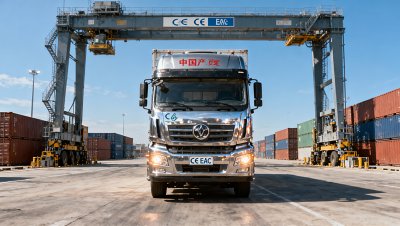
 Policy & RegulationsShatian Customs Releases May Transport Inspection DataShatian Customs May 2026 transport inspection data reveals 98.6% declaration accuracy & 100% CE/EAC pass rate for heavy-duty trucks—key insights for exporters, suppliers, and compliance teams.
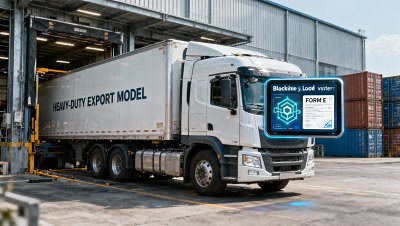
 Policy & Regulations10-Dept Policy Pushes E-Documentation for Sea Freight & Origin Certs10-Dept Policy pushes e-documentation for sea freight & origin certs—boosting heavy-duty truck exports by 50%. Discover compliance steps, blockchain verification, and digital trade advantages now.
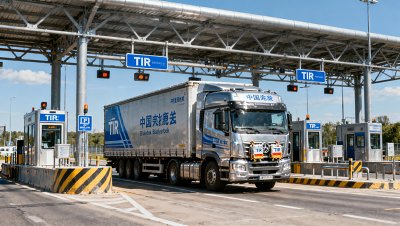
 Policy & RegulationsTIR International Road Transport Enters 'Fast Lane'TIR International Road Transport accelerates Eurasian logistics: new checkpoints like Białystok & Khorgos West boost speed, predictability, and cost-efficiency for heavy-duty truck exports, CKD assembly, and aftermarket parts.
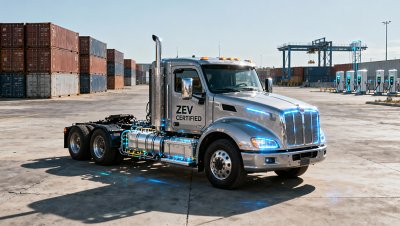
 Policy & RegulationsUS EPA Exempts Zero-Emission Heavy-Duty Trucks from Annual Certification Fees Starting 2027Zero-emission heavy-duty trucks gain US EPA fee exemption from 2027—cutting $1,200/yr per model. Key for Chinese OEMs exporting to CARB states.
 Policy & RegulationsBrazil INMETRO Mandates EMI Testing for EV Heavy-Duty OBCsEMI testing now mandatory for EV heavy-duty OBCs in Brazil under INMETRO Portaria 188/2026 — ensure compliance by October 2026 to avoid certification delays and market access risks.
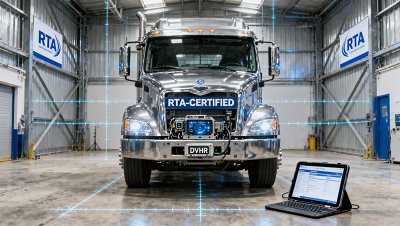
 Policy & RegulationsUAE RTA Launches AI-Based Heavy Vehicle Inspection SystemUAE RTA's new AI-based heavy vehicle inspection system mandates Digital Vehicle Health Reports (DVHR) for all imported used trucks — act now to ensure compliance and market access.
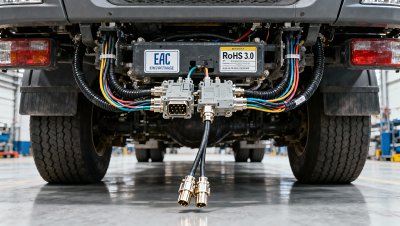
 Policy & RegulationsRussia EAC RoHS 3.0 to Cover Heavy-Duty Wire Harnesses from July 2026Russia EAC RoHS 3.0 now covers heavy-duty wire harnesses—compliance mandatory from July 2026. Avoid shipment rejections: verify, test & certify now.
 Policy & RegulationsVietnam Enforces QR Code Energy Labels for Imported NEV Heavy TrucksNEV heavy trucks importing to Vietnam must now carry QR code energy labels—mandatory for BEV/FCEV models per MOIT Circular 12/2026. Ensure API integration, CLTC compliance & real-time data sync to clear customs.
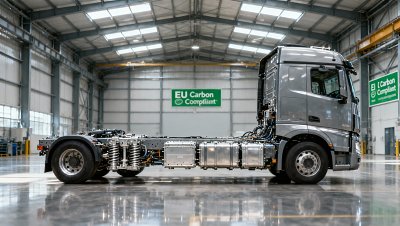
") Policy & RegulationsEU Launches Phase 2 of Heavy-Duty Vehicle Carbon Database (EUCD)Heavy-duty vehicle exporters: EU EUCD Phase 2 mandates VIN-linked LCA reporting from 1 June 2026 — ensure compliance now to avoid registration delays.
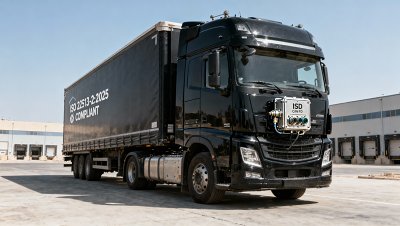
Policy & RegulationsEU Launches Phase 2 of Heavy-Duty Vehicle Carbon Database (EUCD)Heavy-duty vehicle exporters: EU EUCD Phase 2 mandates VIN-linked LCA reporting from 1 June 2026 — ensure compliance now to avoid registration delays. Policy & RegulationsSaudi SASO Mandates ISO 22513-2 RDI for Heavy Trucks from Aug 2026Saudi SASO mandates ISO 22513-2 RDI for heavy trucks from Aug 2026 — ensure compliance now to avoid shipment blocks & secure GCC market access.
 Policy & RegulationsUAE RTA Requires ISO 50001 for China-Remanufactured Used Heavy TrucksISO 50001 certification now mandatory for China-remanufactured used heavy trucks entering UAE via Jebel Ali—ensure compliance before August 1, 2026.
 Policy & RegulationsRussia Enforces Stricter NOx Limits for CNG/LNG Heavy-Duty TrucksRussia’s new NOx limits (0.2 g/kWh) for CNG/LNG heavy-duty trucks take effect Oct 1, 2026—urgent compliance action needed for exporters, engine & aftertreatment suppliers.
 Policy & RegulationsSASO Updates EMC Standard for Heavy-Duty TrucksSASO EMC standard update for heavy-duty trucks: New IEC 61000-4-23 testing mandatory for tractor cab harnesses & ADAS controllers—act now to avoid GCC shipment delays.
 Policy & RegulationsVietnam Requires Bilingual LCA Reports for NEV Heavy TrucksVietnam mandates bilingual LCA reports for NEV heavy trucks—key compliance update for Chinese exporters. Act now to avoid import delays.
 Policy & RegulationsEU Mandates UWB Modules for Heavy-Duty Trucks from July 2026UWB modules now mandatory for EU-bound heavy-duty trucks from July 2026 — ensure ECE R155 compliance, avoid customs rejection & secure port automation contracts.
 Policy & RegulationsEU Launches HCV Carbon Footprint Pilot for Chinese Tractor ExportsEU's HCV Carbon Footprint Pilot impacts Chinese tractor exports—learn compliance deadlines, LCA requirements, verifier list & strategic actions for 2026 market access.
 Policy & RegulationsVietnam Advances Used Truck Import Rules to Q3 2026Used truck import rules in Vietnam advance to Q3 2026 — learn how new remanufacturing certs & VINA-ISO 15222 compliance impact your陆路运输设备 supply chain.
 Policy & RegulationsIndonesia Enforces 90-Day Real-World Durability Test for Chinese NEV Heavy TrucksIndonesia's new 90-day real-world durability test for Chinese NEV heavy trucks reshapes market entry—learn compliance must-dos, BSN-accredited labs & tropicalization strategies.
 Policy & RegulationsKazakhstan Enforces GLONASS+BeiDou Dual-Mode Tracking for Heavy TrucksGLONASS+BeiDou dual-mode tracking is now mandatory for heavy trucks in Kazakhstan—ensuring compliance, avoiding border delays, and securing market access for exporters.
 Policy & RegulationsVietnam Advances Used Truck Import Rules to Q3 2026Used truck import rules in Vietnam advance to Q3 2026—key for exporters, logistics & distributors. Learn compliance must-haves, certified suppliers, and strategic responses now.
 Policy & RegulationsIndonesia Enforces 90-Day Heat/Humidity Test for Chinese NEV Heavy TrucksIndonesia's new 90-day heat/humidity test for Chinese NEV heavy trucks reshapes export strategy—learn compliance deadlines, LANMOT certification, and tropical durability prep.
 Policy & RegulationsKazakhstan Enforces GLONASS/BeiDou Dual-Mode Mandate for Chinese Tractor UnitsGLONASS/BeiDou dual-mode mandate for Chinese tractor units in Kazakhstan—key compliance insights, impact on exporters & OEMs, and actionable steps ahead of May 2026 enforcement.
 Policy & RegulationsEU Launches HCV Carbon Footprint Pilot for Chinese Tractor ExportsEU's new HCV carbon footprint pilot directly impacts Chinese tractor exports—learn mandatory LCA requirements, compliance deadlines & strategic response measures.
 Policy & RegulationsVietnam to Enforce Used Truck Import Rules in Q3 2026Used truck import rules in Vietnam tighten: Q3 2026 enforcement requires ISO 50001 & Chinese remanufacturing certification — act now to secure compliance and market access.
 Policy & RegulationsIndonesia Mandates Local Durability Testing for Imported Chinese NEV Heavy TrucksIndonesia mandates local durability testing for imported Chinese NEV heavy trucks—90-day real-world validation in tropical conditions. Ensure compliance & market access now.