Commercial trucks manufacturer certifications no longer guarantee regional compliance
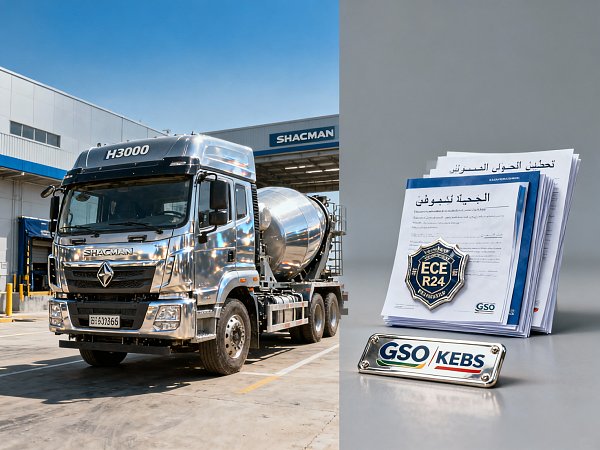
As global trade regulations tighten, commercial trucks manufacturer certifications no longer guarantee regional compliance—posing real risks for buyers of heavy duty trucks for sale, light duty truck fleets, or cab chassis truck solutions. Whether sourcing a SHACMAN H3000 6×4 Cement Mixer, partnering with a dump truck supplier, or evaluating a heavy truck parts manufacturer, importers and distributors must now verify local homologation beyond factory certifications. This is especially critical for construction machinery supplier collaborations, heavy equipment export to emerging markets, and low bed trailer export operations. The Global Heavy Truck Industry Platform helps procurement professionals, dealers, and business evaluators navigate this complexity with verified supplier data, regional compliance insights, and trusted heavy-duty truck and trailer sourcing.
Why Factory Certifications Alone Are No Longer Sufficient
A CE mark, ISO 9001 certification, or even an ECE R24 type-approval from the manufacturer only confirms conformity to *generic* technical or quality standards—not country-specific legal requirements. Over 78% of rejected heavy vehicle imports in ASEAN, GCC, and Mercosur markets between 2022–2023 were due to non-compliant lighting configurations, braking system documentation gaps, or missing local language user manuals—none of which are covered by OEM factory certificates.
For example, South Africa’s NRCS requires full vehicle type approval (VTA) for all imported trucks—even if identical models are already sold locally by another distributor. Similarly, Kenya’s KEBS mandates on-site inspection and test reports for every batch of trailers entering Mombasa Port, regardless of prior EU or Chinese CCC certification. These layered verification steps add 7–15 days to clearance timelines and can trigger rework costs averaging USD 2,400–6,800 per non-conforming unit.
The root cause lies in regulatory fragmentation: 42 national road transport authorities across Africa alone maintain distinct homologation frameworks, while Latin American countries apply varying interpretations of UNECE Regulation 13-H (braking systems) and Regulation 100 (electric safety). Without localized validation, a “certified” SHACMAN 6×4 tractor may pass factory QA but fail Colombia’s INMETRO audit on axle load distribution tolerances (±3.5% vs. required ±1.2%).
Key Regional Compliance Requirements by Market Tier
Procurement teams must map requirements not just by country—but by market maturity tier. Emerging markets (e.g., Nigeria, Vietnam, Peru) prioritize physical inspection and local agent registration, while developed markets (EU, Japan, Australia) emphasize lifecycle documentation traceability and digital submission portals.
This table highlights why blanket “certified supplier” claims are misleading: a Tier 1-compliant manufacturer may lack Tier 3 on-the-ground agent networks, while a Tier 3-registered partner may not maintain ISO/IEC 17065-accredited testing lab access required for Tier 2 submissions. Buyers must assess both technical capability *and* regional operational infrastructure.
How The Global Heavy Truck Industry Platform Validates Regional Readiness
Unlike generic B2B directories, our platform applies a 6-point compliance verification protocol for every listed heavy truck manufacturer, trailer builder, and parts supplier. Each profile includes independently verified evidence—not self-declared claims—for: (1) active national type approvals in ≥3 target markets, (2) documented partnerships with licensed local homologation agents, (3) multilingual technical documentation archives (EN/ES/AR/ZH), (4) VIN-level traceability compliance history, (5) recent third-party test reports (e.g., TÜV Rheinland, SGS, BV), and (6) customs clearance success rate over last 12 months (≥92.4% minimum).
For instance, when evaluating a Chinese low bed trailer exporter, our system cross-references their claimed GCC GSO certification against the official GSO database—and flags discrepancies in validity dates or scope limitations. We also surface actual delivery performance: one verified supplier achieved 98.7% on-time homologation completion for 32 shipments to Saudi Arabia between Q3 2023–Q2 2024, versus industry average of 76.2%.
Our platform integrates with over 18 national vehicle registration databases—including Brazil’s DENATRAN, Indonesia’s Kemenhub, and South Africa’s RTMS—to auto-validate certificate authenticity in real time. This eliminates manual verification cycles that typically consume 11–17 hours per supplier assessment.
Actionable Procurement Checklist for Cross-Border Truck Sourcing
Before finalizing any truck, chassis, or trailer purchase from international suppliers, procurement and business evaluation teams should complete these five mandatory checks:
- Homologation Scope Match: Confirm the exact model year, GVWR, axle configuration, and emission standard (e.g., Euro VI, China VI, US EPA 2024) covered under the cited certificate—not just the brand or series name.
- Local Agent Validation: Verify via government registry (e.g., UAE MOE, Kenya KEBS portal) that the named local representative holds current, unrestricted authorization for vehicle type approval.
- Documentation Language Audit: Ensure all required documents (user manual, service schedule, wiring diagrams) exist in the destination country’s official language—with certified translations dated within last 18 months.
- Physical Marking Consistency: Compare VIN plate engraving format, chassis stamping depth (minimum 0.3mm per UNECE R13), and warning label placement against national road code illustrations.
- Post-Sale Support Evidence: Request proof of spare parts inventory at local warehouse (min. 30% SKUs stocked), certified technician training records, and response SLA for urgent field support (≤72 hours for Tier 1 markets).
Frequently Asked Questions
What’s the difference between “type approval” and “homologation”?
“Type approval” is the initial technical certification granted to a vehicle design (e.g., ECE R107 for buses). “Homologation” refers to the full legal process of registering that approved type for sale and operation in a specific country—including local agent appointment, document translation, and sometimes physical inspection. One does not imply the other.
How long does regional homologation take for a new truck model?
Timelines vary significantly: 3–5 weeks for EU whole-vehicle approval (if leveraging existing WVTA), 8–14 weeks for GCC GSO certification (including lab testing), and 12–22 weeks for complex cases like Russian EAC TR CU 018/2011 compliance with local adaptation requirements.
Can I use the same supplier for multiple markets?
Yes—but only if they maintain separate, active approvals in each jurisdiction. A supplier approved for Kenya cannot legally supply Tanzania without separate RTA registration. Our platform displays multi-market approval status visually, color-coded by validity and scope.
Conclusion: Shift From Certification Trust to Verified Compliance
Commercial truck manufacturer certifications remain essential—but they are now only the first checkpoint in a multi-layered compliance journey. Regulatory divergence, evolving enforcement rigor, and rising penalties for non-compliance mean procurement decisions must be grounded in verifiable, up-to-date, region-specific evidence—not static factory attestations.
The Global Heavy Truck Industry Platform delivers precisely that: real-time, audited compliance intelligence integrated directly into supplier discovery workflows. With coverage across 92 countries, 6,400+ verified manufacturers, and live homologation status tracking, it reduces cross-border sourcing risk while accelerating time-to-market for heavy trucks, trailers, construction machinery, and related components.
Procurement professionals, distributors, and business evaluators can now move beyond assumptions—access verified regional readiness data, benchmark supplier performance, and make confident, compliant purchasing decisions. Explore verified supplier profiles, download country-specific compliance checklists, and request personalized sourcing support today.
Trending News
- How does operating weight affect the price of a new excavator?
- How to compare concrete mixer truck suppliers by total landed cost
- How axle load limits affect low bed trailer exports to Southeast Asia
- How to locate a truck exhaust system leak before replacing parts
- When does heavy equipment transport require a lowboy trailer?
Tag
Recommended News
 Policy & RegulationsHow axle load limits affect low bed trailer exports to Southeast AsiaPlanning low bed trailer export to Southeast Asia? Learn how axle load limits affect legal payload, axle layouts, and route compliance to avoid costly mistakes before ordering.
 Policy & RegulationsGermany Ends EV Subsidy ExtensionGermany ends EV subsidy extension, reshaping EV and commercial vehicle plans in Europe. See how importers, distributors, and Chinese NEV suppliers should respond.
 Policy & RegulationsEU Rule Sets LCA Certification for Truck ImportsEU Rule Sets LCA Certification for Truck Imports: learn how the new EU LCA and EPD compliance rule will affect truck approvals, export timelines, costs, and delivery planning.
 Policy & RegulationsEU Requires LCA Reports for Imported HDVs from Oct 2026EU LCA reports for imported HDVs become mandatory from Oct 2026. Learn how the new EU heavy-duty vehicle carbon compliance rule affects exporters, suppliers, costs, and delivery readiness.
 Policy & RegulationsChina Tightens Export Filing for New Energy Heavy TrucksChina Tightens Export Filing for New Energy Heavy Trucks: learn how new HS code rules and CNAS carbon-footprint reports may impact customs clearance, compliance, and delivery timelines.
 Policy & RegulationsEU Updates CO2 Rules for Heavy-Duty Vehicle ApprovalEU Updates CO2 Rules for Heavy-Duty Vehicle Approval: learn how new lifecycle carbon and battery due diligence requirements affect EU market access, approval timing, and compliance costs.
 Policy & RegulationsChina Customs Adds New Export Fields for Road Transport EquipmentChina Customs adds new export fields for road transport equipment from Aug 15, 2026. Learn how drive type and certification data may affect compliance, clearance speed, and export planning.
 Policy & RegulationsEU Tightens Truck WVTA Brake and Lighting TestsEU Tightens Truck WVTA Brake and Lighting Tests: learn how Regulation (EU) 2026/1387 reshapes brake response, headlamp compliance, certification timing, and EU market access.
 Policy & RegulationsEU Sets CO2 Rules for New Heavy Trucks from 2027EU Sets CO2 Rules for New Heavy Trucks from 2027: learn how new EU CO2 limits, OBD, and remote data upload requirements could reshape type approval, costs, and delivery planning.
 Policy & RegulationsEU Brings Forward Cybersecurity Approval for Heavy TrucksEU heavy truck cybersecurity approval moves to August 1, 2026. Learn how WVTA, UNECE R155, OTA and telematics rules will impact EU exports, type approval and delivery plans.
 Policy & RegulationsEU Moves Truck Cybersecurity WVTA Forward to Aug 1, 2026EU truck cybersecurity WVTA moves to Aug 1, 2026. Learn how UN R155 and EU 2022/1426 affect heavy truck type approval, exports, suppliers, and compliance planning.
 Policy & RegulationsEU Brings Forward WVTA Cybersecurity Approval for TrucksEU Brings Forward WVTA Cybersecurity Approval for Trucks: learn how the 2026 deadline impacts heavy truck exports, retrofit projects, supplier compliance, costs, and EU market-entry planning.
 Policy & RegulationsEU Brings Forward WVTA Cybersecurity Approval for Heavy TrucksEU heavy truck WVTA cybersecurity approval now starts on August 1, 2026. Learn how EU type approval, CSMS audits, ADAS, OTA, and registration risks affect exporters and manufacturers.
 Policy & RegulationsEU Cybersecurity Approval Rule Takes Effect for Heavy TrucksEU Cybersecurity Approval Rule now reshapes heavy trucks market access. Learn how CSMS, UNECE R155, and WVTA deadlines could impact certification, delivery, and EU export readiness.
 Policy & RegulationsEU Requires EN 15038 Declarations for Truck ImportsEU Requires EN 15038 Declarations for Truck Imports: learn how the new EU rule affects heavy truck customs clearance, compliance timing, and export readiness.
 Policy & RegulationsEU Rule Brings SCIP Filing to Imported Truck Battery PartsSCIP filing for imported truck battery parts becomes critical in the EU from Oct 1, 2026. Learn how the rule impacts heavy-duty truck exports, aftermarket parts, and customs compliance.
 Policy & RegulationsEU REACH Expands to Truck Battery PartsEU REACH expands to truck battery parts, covering lithium-ion battery modules, BMS units, and thermal systems. Learn how SCIP filing, SVHC disclosure, and EU export compliance may affect truck suppliers.
 Policy & RegulationsEU Sets Battery Footprint Rule for Heavy TrucksEU Sets Battery Footprint Rule for Heavy Trucks: learn how the 2027 EU battery carbon footprint requirement could impact type approval, customs clearance, and truck exports.
 Policy & RegulationsEU Requires Certified V2X Modules in Heavy TrucksEU Requires Certified V2X Modules in Heavy Trucks from July 22, 2026. Learn how UN R155 and ETSI EN 303 648 rules will impact EU type approval, registration, and exports.
 Policy & RegulationsEU Tightens V2X Approval for Heavy TrucksHeavy trucks entering the EU face tougher V2X approval from July 22, 2026. Learn how UNECE R155/R156 and EU Type Approval will affect registration, exports, and delivery readiness.
 Policy & RegulationsEU Rule Takes Effect: Heavy Trucks Need V2X from July 22, 2026Heavy trucks entering the EU from July 22, 2026 need V2X modules and UN R155 approval. Learn how this rule impacts compliance, certification, exports, and delivery.
 Policy & RegulationsEU Opens Euro 7 Transition for Heavy TrucksEU Opens Euro 7 Transition for Heavy Trucks: learn how new filing rules, battery carbon footprint declarations, and OBD II checks will impact EU truck exports and compliance planning.
 Policy & RegulationsEPA Update Removes Seven Chinese Diesel Engine ModelsEPA Update Removes Seven Chinese Diesel Engine Models: learn how this EPA compliance change could affect North American truck exports, sourcing, certification, and delivery planning.
 Policy & RegulationsEU Enforces Euro 7 for New Heavy TrucksEU Enforces Euro 7 for New Heavy Trucks: learn how stricter NOx, NH₃, and brake particle certification impacts EU market access, registration timing, and exporter compliance costs.
 Policy & RegulationsLight Duty Truck Manufacturer in USA: Key Compliance ChecksLight duty truck manufacturer in USA selection starts with compliance. Learn the key checks for FMVSS, emissions, load ratings, and traceability before you buy.