Semi Trailer Bulk Order Checklist for Delivery Risk and Lead Time
A successful semi trailer bulk order depends on more than price—it requires clear planning for production, delivery risk, and lead time control. For project managers and engineering leaders, a structured checklist can reduce delays, prevent supplier miscommunication, and keep transport equipment aligned with project schedules. This guide outlines the key points to review before confirming large-volume trailer procurement.
Why does a semi trailer bulk order often fail at the delivery stage?
In road transport equipment procurement, the biggest mistake is treating a semi trailer bulk order as a simple unit-price negotiation. Large-volume trailer purchasing affects project timelines, cargo planning, regulatory compliance, fleet compatibility, and after-sales support.
For engineering projects, mining logistics, municipal works, and infrastructure contractors, late trailer delivery can delay material movement, idle tractors, and disrupt site sequencing. The cost of delay is often far higher than the savings from a lower quotation.
This is why project teams need a structured approach. A semi trailer bulk order checklist should evaluate supplier capacity, technical fit, lead time reliability, documentation readiness, and shipment coordination before purchase confirmation.
- Production risk: factory load, steel supply, axle availability, painting queue, and customization complexity may all extend manufacturing time.
- Delivery risk: port congestion, inland transport disruption, chassis shortages, and export document errors can affect dispatch schedules.
- Technical risk: mismatched kingpin height, axle configuration, suspension type, or deck dimensions may make trailers unsuitable for operating conditions.
- Commercial risk: unclear payment milestones, ambiguous specifications, and missing acceptance standards create disputes late in the process.
What should project managers verify before placing a semi trailer bulk order?
Before issuing a purchase order, project managers should convert operational requirements into measurable procurement criteria. This step is essential when the semi trailer bulk order includes multiple trailer types or destination markets.
Core technical checks
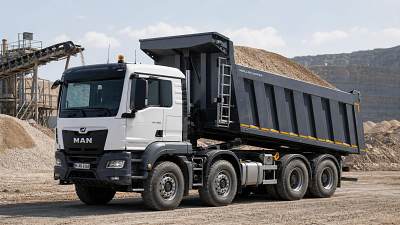
- Define trailer application clearly: container transport, aggregate haulage, machinery transport, fuel logistics, or general cargo distribution require different structures.
- Confirm gross vehicle weight, payload target, axle count, tire specification, suspension type, and brake system before RFQ comparison.
- Review road condition assumptions. Highway operations, quarry access roads, and cross-border haul routes place different demands on frame reinforcement and suspension durability.
- Check compatibility with existing tractor heads, workshop tools, spare parts stock, and driver operating habits.
Commercial and execution checks
- Request a production schedule broken into engineering approval, raw material preparation, fabrication, assembly, testing, and dispatch stages.
- Define inspection points, document list, packaging method, and shipping terms early to avoid last-minute negotiation.
- Clarify whether the supplier can support destination-country certification, homologation requirements, or customs documentation.
The table below helps procurement teams turn broad needs into a practical review framework for a semi trailer bulk order.
For bulk procurement, the best supplier is not simply the one with the shortest quoted lead time. It is the one that can explain bottlenecks, document assumptions, and maintain predictable execution from factory to destination.
How to control lead time in a semi trailer bulk order
Lead time control starts long before production begins. In many cases, delays occur because the buyer confirms volume without freezing specifications. Every design change after approval may affect steel cutting, axle procurement, electrical layout, or paint sequencing.
Lead time drivers that matter most
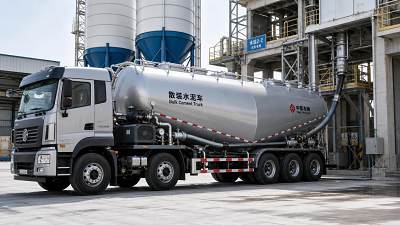
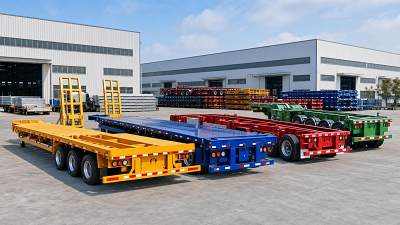
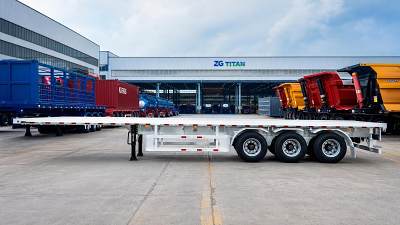
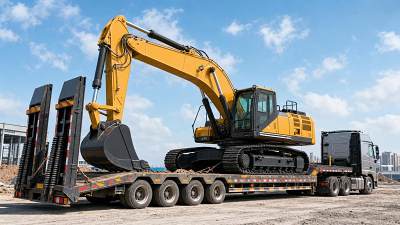
- Configuration complexity: standard flatbeds and skeletal trailers usually move faster than specialized lowbeds, side dump units, or tanker trailers.
- Supplier component sourcing: axles, landing gear, braking components, and tires may have separate lead times from the main trailer frame.
- Order splitting: one large order may be faster if delivered in phased batches instead of waiting for all units to finish together.
- Inspection and approval timing: delayed drawing approval or postponed pre-shipment inspection can stop dispatch even when production is complete.
A disciplined semi trailer bulk order plan should include milestone dates, decision owners, and fallback options. Project teams should not rely on a single final delivery date without stage visibility.
The following table shows a practical lead time checklist for project-driven trailer procurement.
For large projects, staged delivery is often safer than a single all-at-once shipment. Early units can begin operation, while later batches absorb manageable production or logistics variation.
Which delivery risks deserve the closest attention?
Not all delivery risks carry the same weight. Project managers should focus on high-impact risks that affect commissioning dates, legal operation, or site readiness. A semi trailer bulk order becomes vulnerable when responsibilities are unclear between engineering, procurement, factory, and freight parties.
High-priority risk areas
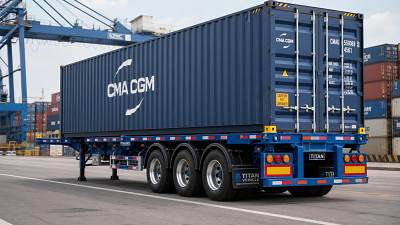
- Specification drift after order confirmation. Small changes in deck height, twist lock position, ramp structure, or tool box placement can require rework.
- Weak component traceability. If critical parts are substituted without notice, maintenance and compliance issues may appear after arrival.
- Incomplete export documents. Packing lists, invoices, certificates of origin, or inspection records must match shipment reality.
- Poor shipment packaging or securing. Corrosion, light damage, hose exposure, and accessory loss can occur during long-distance sea and inland transport.
Risk mitigation actions
- Assign one technical approval owner and one schedule owner on the buyer side.
- Use a signed specification matrix instead of relying only on email descriptions.
- Request progress evidence at agreed milestones, such as frame fabrication, axle installation, and final assembly.
- Match shipping method to trailer type, destination infrastructure, and unloading capability.
The Global Heavy Truck Industry Platform helps buyers reduce these risks by giving access to supplier information, product categories, industry resources, and buying references in one place. For cross-border sourcing, that visibility supports better supplier screening and faster issue escalation.
How should buyers compare suppliers for a semi trailer bulk order?
A proper supplier comparison should balance manufacturing capability, export experience, technical communication, and total operating value. Short-term savings may disappear if trailers arrive late or require extensive rework.
The table below compares common supplier evaluation dimensions used in semi trailer bulk order decisions.
For project buyers using a B2B sourcing platform, the advantage is speed and comparability. Instead of searching fragmented markets, teams can review product scope, supplier positioning, and category relevance more efficiently.
What compliance and documentation points are easy to overlook?
Many semi trailer bulk order delays are not caused by manufacturing problems but by paperwork gaps. In cross-border heavy equipment trade, buyers should confirm document needs early, especially when trailers must be registered or operated under local transport rules.
- Check whether destination authorities require specific lighting configuration, reflective markings, VIN or chassis identification format, or braking declarations.
- Confirm whether the order needs pre-shipment inspection reports, conformity statements, or component-origin records.
- Review customs documentation consistency across invoice, packing list, HS code usage, and product description.
- For long-term fleet operation, request maintenance manuals and consumable part references in advance.
The safest approach is to align engineering, logistics, and compliance requirements at RFQ stage. That prevents a technically acceptable trailer from becoming a delivery problem at destination.
Semi trailer bulk order FAQ for project-driven procurement
How many suppliers should be compared before finalizing a bulk trailer purchase?
For most projects, comparing three qualified suppliers is practical. Fewer than three reduces negotiation visibility. Too many can slow decision-making without adding useful clarity. Focus on technical alignment, lead time credibility, and export execution, not just headline pricing.
What is a realistic lead time for a semi trailer bulk order?
There is no single answer because lead time depends on trailer type, quantity, customization level, component sourcing, and shipping route. Standard units typically move faster than custom engineering configurations. Buyers should request a stage-based schedule rather than relying on one total number.
Should project managers split one large order into several batches?
Often yes. Batch delivery lowers startup risk and allows operational feedback from the first units before the entire fleet arrives. It also reduces exposure if logistics disruption affects one shipment window. This method is especially useful for infrastructure and mining projects with phased mobilization plans.
What are the most common mistakes in semi trailer bulk order negotiation?
The main mistakes are incomplete technical annexes, no milestone-based delivery plan, unclear inspection rules, and no spare parts strategy. Another common issue is approving a low quotation that excludes key components or documentation expected by the buyer.
Why choose us for semi trailer sourcing and delivery planning?
The Global Heavy Truck Industry Platform supports project managers and engineering buyers with a more structured way to manage semi trailer bulk order decisions. Our focus is not limited to listing products. We help buyers navigate supplier discovery, product comparison, market information, and cross-border sourcing coordination within the commercial vehicle and heavy equipment sector.
- If you need parameter confirmation, we can help organize key specification points before supplier discussion.
- If you are comparing trailer options, we can support category screening based on application scenarios such as logistics transport, infrastructure delivery, or industrial hauling.
- If delivery timing is critical, we can help you review lead time assumptions, batch shipment logic, and sourcing alternatives.
- If your project has certification or destination compliance concerns, we can help you identify the documentation topics that should be clarified with suppliers early.
- If you need quotation communication or customized sourcing support, we can help align technical needs, supplier responses, and procurement priorities.
For buyers managing tight schedules and complex transport equipment needs, a well-prepared semi trailer bulk order reduces uncertainty across production, logistics, and field deployment. Contact us to discuss trailer selection, technical matching, delivery cycle planning, document requirements, spare parts preparation, or supplier comparison for your next project.
Recommended News
 Buying GuideBulk Cement Tanker Selection: Capacity, Unloading Speed, and DowntimeBulk cement tanker selection affects payload, unloading speed, and downtime. Learn how to compare capacity, discharge efficiency, and serviceability for better fleet performance.
 Buying GuideHow to Evaluate a Commercial Trucks Manufacturer Before OrderingCommercial trucks manufacturer evaluation guide: learn how to compare quality, certifications, customization, delivery control, and after-sales support before ordering with confidence.
 Buying GuideContainer Trailer Buying Guide: Payload, Axles, and Cost FactorsContainer trailer buying guide covering payload, tandem vs tri-axle options, and total cost factors. Compare specs, improve compliance, and choose the right trailer with confidence.
 Buying GuideDump Truck Buying Guide: Payload, Fuel Use, and Maintenance RisksDump truck buying guide covering payload, fuel use, and maintenance risks. Learn how to compare real operating cost, uptime, and supplier support before you buy.
 Buying GuideTruck Crane Selection Guide for Lifting Capacity and Jobsite SafetyTruck crane selection guide covering lifting capacity, radius, boom reach, and jobsite safety. Learn how to compare models and choose the right crane for efficient, compliant project performance.
 Buying GuideTruck Tipper OEM Checklist: Build Quality, Lead Time, and SupportTruck tipper OEM checklist for buyers: compare build quality, lead time, and after-sales support to reduce risk, control total cost, and choose a supplier with confidence.
 Buying GuideHow to Choose a Truck Cement Distributor for Steady OutputTruck cement distributor selection affects unloading speed, residue, and uptime. Learn how to compare tank design, discharge performance, cost, and supplier support.
 Buying GuideSemi Trailer Supplier Comparison: Specs, Warranty, DeliverySemi trailer supplier comparison guide covering specs, warranty, and delivery. Learn how to reduce sourcing risk, compare suppliers smarter, and choose reliable long-term partners.
 Buying GuideTruck Trailer Sourcing: 7 Risks to Check Before OrderingTruck trailer sourcing starts with risk control. Discover 7 critical checks on specs, compliance, build quality, parts, and total cost before you place an order.
 Buying GuideHow to Evaluate a Light Duty Truck Manufacturer in USALight duty truck manufacturer in USA evaluation guide: compare quality, compliance, service, and total cost to choose a reliable supplier and make smarter fleet purchasing decisions.
 Buying GuideHeavy Duty Trucks for Sale: 7 Checks Before You Compare OffersHeavy duty trucks for sale: compare offers smarter with 7 essential checks on specs, condition, compliance, supplier trust, and total cost before you buy.
 Buying GuideHow to Choose a Reliable Excavator Supplier in 2026Excavator supplier selection in 2026 goes beyond price. Learn how to verify quality, delivery, service, and parts support to choose a reliable partner with confidence.
 Buying GuideWhat to Check in an Excavator Manufacturer CatalogExcavator manufacturer catalog guide: learn what to check in specs, hydraulics, durability, emissions, attachments, and service support to compare suppliers with confidence.
 Buying GuideHow to Choose a Light Duty Truck With a Durable EngineLight duty truck with durable engine buying guide: compare engine durability, fuel economy, supplier support, and lifecycle cost to choose a reliable truck that reduces downtime.
 Buying GuideTruck Pump Selection: Flow, Pressure, and Duty CycleTruck pump selection starts with the right flow, pressure, and duty cycle. Learn how to match real truck applications for better uptime, efficiency, and longer service life.
 Buying GuideHow to Choose a Cab Chassis Truck for Construction ProjectsCab chassis truck for construction buying guide: learn how to match axle layout, wheelbase, frame strength, and lifecycle cost to project needs for smarter fleet decisions.
 Buying GuideExcavator Manufacturer Supplier Comparison: Quality Control Points That MatterExcavator manufacturer supplier comparison guide: learn the quality control points that reduce risk, improve reliability, and help buyers choose with confidence.
 Buying GuideHeavy Truck Chassis Manufacturer Checklist for Durability and Axle LayoutHeavy truck chassis manufacturer checklist covering durability, axle layout, quality control, and lifecycle cost. Compare suppliers smarter and choose a chassis built for long-term fleet performance.
 Buying GuideHow to Evaluate an Excavator Manufacturer in USA for Long-Term Parts SupportExcavator manufacturer in USA selection should go beyond specs. Learn how to assess long-term parts support, dealer strength, and uptime protection before you buy.
 Buying GuideWhat to Check Before Choosing a Construction Machinery SupplierConstruction machinery supplier selection starts with the right checks. Learn how to compare quality, certifications, delivery, and after-sales support to reduce risk and buy with confidence.
 Buying GuideHow to Choose a Bulldozer for Construction Site ConditionsBulldozer for construction selection starts with site conditions. Learn how to match size, blade, tracks, and cost factors to boost productivity and reduce downtime.
 Buying GuideTruck Trailer Bulk Order: How to Compare Price, Lead Time, and QualityTruck trailer bulk order decisions should go beyond the lowest quote. Learn how to compare price, lead time, quality, and supplier reliability for better fleet value.
 Buying GuideHow to Choose a Light Commercial Vehicle for Last Mile DeliveryLearn how to choose a light commercial vehicle for last mile delivery by comparing payload, cargo space, powertrain, and total cost to improve urban efficiency and fleet ROI.
![]() Buying GuideHow to Choose a Delivery Truck Supplier in USA Without Costly DelaysDelivery truck supplier in USA selection affects uptime, compliance, and delivery speed. Learn how to avoid costly delays, compare suppliers smarter, and choose a lower-risk fleet partner.
Buying GuideHow to Choose a Delivery Truck Supplier in USA Without Costly DelaysDelivery truck supplier in USA selection affects uptime, compliance, and delivery speed. Learn how to avoid costly delays, compare suppliers smarter, and choose a lower-risk fleet partner. Buying GuideHow to Evaluate a Crane Truck Supplier for Fleet ReliabilityCrane truck supplier selection affects uptime, parts access, and long-term fleet performance. Learn how to compare quality, support, and export capability with confidence.