Dump Truck Buying Guide: Payload, Fuel Use, and Maintenance Risks
Dump Truck Buying Guide: Payload, Fuel Use, and Maintenance Risks
Choosing the right dump truck requires more than comparing price tags.
Payload capacity, fuel efficiency, and maintenance risk shape real operating cost.
They also affect uptime, driver productivity, and jobsite reliability.
A dump truck that looks affordable upfront can become expensive later.
That usually happens through poor matching between machine capability and duty cycle.
This guide breaks down how to evaluate a dump truck with practical, decision-focused criteria.
Start with the Real Job Profile
Before comparing brands, define the actual workload.
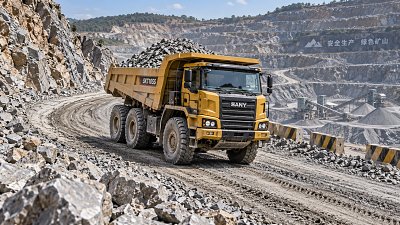
A dump truck for urban construction faces different demands than one for mining haul roads.
Material density, route grade, hauling distance, and daily cycles matter more than brochure claims.
In practical procurement work, this is where many costly mistakes begin.
A dump truck moving sand, rock, demolition waste, or wet clay will not behave the same way.
Questions to lock down early
- What material will the dump truck carry most often?
- How many tons per trip are required?
- Will the truck run on paved roads, soft ground, or mixed terrain?
- How steep are the ramps or haul routes?
- How many loading and unloading cycles happen each day?
- What local axle, weight, and emissions rules apply?
Once this profile is clear, dump truck selection becomes much more precise.
How to Evaluate Payload Without Overestimating Value
Payload is often the first metric buyers compare.
But rated payload alone does not show whether a dump truck is commercially efficient.
The better question is simple: how much legal, repeatable payload can it move every day?
That depends on curb weight, body design, axle layout, and material type.
Key payload checkpoints
- Compare gross vehicle weight rating with empty vehicle weight.
- Check whether body volume matches material density.
- Review axle load balance under full load.
- Confirm legal road limits in target markets.
- Assess whether suspension supports repeated heavy cycles.
For example, a dump truck with a larger body may look attractive.
Yet low-density material favors volume, while dense aggregates quickly hit weight limits.
This also means body material matters.
A lighter body can improve useful payload, but durability must stay acceptable.
Payload should be measured against cycle output
A dump truck carrying slightly less per trip may still deliver more tons per day.
That happens when acceleration, turnaround time, and unloading speed are better.
Daily throughput often matters more than maximum theoretical payload.
Fuel Use: Look Beyond Published Consumption Numbers
Fuel use is one of the biggest lifetime cost drivers for any dump truck.
Still, brochure numbers rarely reflect real mixed-duty operation.
Fuel performance changes with terrain, idling, overloading, traffic, and driver habits.
A useful evaluation should connect engine output to the actual work performed.
What affects dump truck fuel efficiency
- Engine displacement and torque curve matching
- Transmission gearing and shift strategy
- Axle ratio selection for speed and gradeability
- Vehicle tare weight
- Idle time during loading queues
- Tire rolling resistance and inflation control
In real fleet comparisons, fuel should be tracked per ton moved, not only per kilometer.
That gives a clearer view of dump truck efficiency across different payload conditions.
It also prevents underpowered trucks from appearing efficient while lowering productivity.
A practical fuel review checklist
- Request fuel data from similar duty cycles.
- Separate loaded, unloaded, and idle fuel consumption.
- Compare fuel per ton-kilometer where possible.
- Check whether telematics supports fuel behavior analysis.
- Confirm local fuel quality compatibility for the engine system.
This level of review gives a more honest picture of dump truck operating economics.
Maintenance Risks Often Decide the True Cost
Maintenance risk is where many buying decisions succeed or fail.
A dump truck with attractive specifications can still create long downtime.
That usually comes from weak parts supply, poor service access, or mismatched component durability.
Recent market shifts make this even more important for cross-border sourcing.
High-risk maintenance areas in a dump truck
- Hydraulic hoist system seals, pumps, and cylinders
- Suspension, leaf springs, and bushings
- Axle housings, differentials, and hub components
- Brake systems under heavy downhill operation
- Body floor and sidewall wear from abrasive material
- Electrical connectors exposed to dust, water, and vibration
Maintenance risk should be scored before purchase, not after field failure.
Ask for service intervals, failure history, and recommended spare parts lists.
A reliable dump truck needs both strong hardware and a supportable service ecosystem.
Do not ignore repair accessibility
Fast maintenance depends on design access.
Check how easily technicians can reach filters, hydraulic lines, brake components, and electrical points.
If simple repairs require excessive disassembly, downtime costs rise quickly.
For a hard-working dump truck, maintainability is a core buying factor, not a secondary detail.
Match Chassis and Powertrain to the Duty Cycle
A dump truck performs well when its chassis and powertrain fit the operating environment.
This sounds obvious, but it is often underestimated during sourcing.
The right axle configuration, engine rating, and transmission choice reduce both fuel use and failures.
Configuration points to compare
- 4x2, 6x4, 8x4, or off-road drive layout
- Manual, AMT, or automatic transmission
- Engine horsepower versus torque availability at working speed
- Steel suspension versus more comfort-oriented options
- Body dimensions matched to route restrictions and loading tools
On rough sites, under-specifying the chassis increases structural fatigue.
On normal roads, over-specifying may add unnecessary tare weight and fuel cost.
The best dump truck is rarely the biggest one. It is the best-matched one.
Supplier Evaluation Matters as Much as Vehicle Evaluation
A dump truck purchase is also a supplier risk decision.
This is especially true in international B2B procurement.
The platform approach is valuable because it helps compare products, suppliers, and support resources together.
That makes dump truck selection more transparent and easier to validate.
Supplier checks that reduce procurement risk
- Export experience in similar markets
- Availability of technical drawings and configuration data
- Response speed for parts and warranty claims
- Factory quality controls and inspection options
- Ability to support localized compliance requirements
In actual sourcing projects, supplier capability often determines long-term fleet stability.
A good dump truck backed by weak support can become a poor investment.
A Practical Decision Framework for Dump Truck Selection
To make comparison easier, use a weighted scoring method.
This helps turn technical review into a defendable purchase decision.
This framework works well across logistics, construction, municipal work, and mining support operations.
It also keeps dump truck decisions focused on measurable outcomes, not sales language.
Final Takeaway
The right dump truck should fit the job, not just the budget.
Payload, fuel use, and maintenance risks need to be reviewed together.
When these factors are assessed in context, buying decisions become more accurate and more profitable.
A structured comparison also helps identify reliable suppliers across the global heavy truck market.
For teams sourcing a dump truck internationally, that clarity is a major advantage.
Use this guide as a working checklist during evaluation, quotation review, and supplier comparison.
That approach leads to a dump truck choice that supports uptime, compliance, and long-term operating value.
Trending News
- How to verify a truck trailer OEM's claimed payload capacity
- How does operating weight affect the price of a new excavator?
- How to compare concrete mixer truck suppliers by total landed cost
- How axle load limits affect low bed trailer exports to Southeast Asia
- How to locate a truck exhaust system leak before replacing parts
Tag
Recommended News
 Buying GuideHow to verify a truck trailer OEM's claimed payload capacityVerify a truck trailer OEM's payload claim with tare records, load calculations, and structural evidence. Learn key checks to avoid costly mistakes and buy with confidence.
 Buying GuideHow does operating weight affect the price of a new excavator?See how operating weight affects excavator price, transport costs, and productivity. Compare configurations and uncover the best value for your next equipment purchase.
 Buying GuideHow to compare concrete mixer truck suppliers by total landed costCompare truck cement mixer supplier quotes by total landed cost, including freight, duties, and delivery. Uncover hidden charges and choose the best-value truck for your fleet.
 Buying GuideWhen does heavy equipment transport require a lowboy trailer?Does your heavy equipment need a lowboy trailer? Discover how loaded height, weight distribution, loading access, and route limits determine the right choice for safe transport.
 Buying GuideHow to choose an off road truck for steep and unstable job sitesChoose the right off road truck for steep, unstable job sites. Compare traction, braking, stability, clearance, payload, and route-test essentials.
 Buying GuideHow to match crane truck lifting capacity to your jobsite loadsCrane truck capacity planning made clear: calculate gross load, radius, rigging, outriggers, and ground conditions to select safer, job-ready lifting equipment.
 Buying GuideHow to match lowbed trailer deck height to your hauling equipmentLowbed trailer deck height guide: match equipment clearance, ramp geometry, axle loads, tractor fit, and route limits for safer, more efficient hauling.
 Buying GuideWhat to verify before choosing a delivery truck supplier for school transportationDelivery truck supplier for school transportation: verify route fit, payload, safety, compliance, service support, and total cost before choosing a reliable partner.
 Buying GuideWhat an excavator manufacturer catalog should show before you compare modelsExcavator manufacturer catalog guide: verify supplier identity, configurations, hydraulics, compliance, parts support, and delivery readiness before comparing models.
 Buying GuideWhat to check before appointing a bulldozer distributorBulldozer distributor selection guide: evaluate service, parts availability, warranty, pricing, compliance, and lifecycle value to reduce downtime and protect fleet investment.
 Buying GuideWhat to verify before choosing a truck cement mixer supplierTruck cement mixer supplier checklist: verify chassis fit, drum quality, hydraulics, compliance, spare parts, and after-sales support before you buy.
 Buying GuideHow to verify a truck spare parts supplier before placing a bulk orderTruck spare parts supplier verification made practical: learn how to check part specifications, factory control, test records, samples, pricing, and delivery capability before placing a bulk order.
 Buying GuideWhat size truck container is right for a typical freight load?Truck container sizing made simple: compare payload, volume, pallet layouts, route access, and loading needs to choose the most efficient freight solution.
 Buying GuideWhat drives semi trailer price differences between similar models?Semi trailer price differences come down to frame materials, axles, suspension, coating, and configuration. Compare specifications line by line to choose lasting value.
 Buying GuideHow to compare excavator manufacturer price lists before requesting quotesCompare an excavator manufacturer price list with confidence. Learn to normalize configurations, calculate landed costs, assess options and service, and create stronger RFQs.
 Buying GuideHow to choose a mixer truck drum capacity for your concrete pourMixer truck capacity guide: match drum size to pour rate, legal payload, site access, and delivery cycles for efficient, reliable concrete placement.
 Buying GuideHow to size a bulldozer for construction site grading workBulldozer for construction sizing guide: match weight, blade, traction, grade control, and transport needs to improve grading productivity and costs.
 Buying GuideHow to assess a truck cement manufacturer’s build quality before orderingTruck cement manufacturer build quality: assess tank steel, welding, chassis integration, pneumatic systems, factory QC, and inspection evidence before ordering.
 Buying GuideWhen does a truck trailer OEM make sense for private-label fleets?Truck trailer OEM programs help private-label fleets cut lifecycle costs, standardize operations, and improve uptime. Learn when customization delivers real commercial value.
 Buying GuideWhat to verify before choosing a water truck OEM for your fleetWater truck OEM selection guide: verify chassis compatibility, tank quality, pump performance, compliance, and service support to build a safer, more reliable fleet.
 Buying GuideHow to size a cab chassis truck for a fire department apparatusCab chassis truck for fire department sizing guide: balance GVWR, axle loads, wheelbase, water tank placement, and mission needs for safer apparatus design.
 Buying GuideWhat to verify before choosing a truck chassis supplierChoose the right truck chassis supplier with a practical checklist for application fit, axle ratings, body integration, quality control, delivery reliability, and after-sales support.
 Buying GuideHow to choose a logging truck for steep and rough forest roadsLogging truck selection for steep, rough forest roads: compare traction, braking, gearing, chassis strength, tires, and supplier support for safer, more reliable hauling.
 Buying GuideHow to choose a flatbed trailer deck length for oversized loadsFlatbed trailer deck length guide for oversized loads: balance cargo support, axle weight, securement space, overhang, and route access for safer transport.
 Buying GuideHow to assess a truck chassis supplier for trailer manufacturingTruck chassis supplier for trailer manufacturing: learn how to assess technical fit, quality control, engineering support, and delivery reliability for smarter sourcing.