Container Trailer Buying Guide: Payload, Axles, and Cost Factors
Container Trailer Buying Guide: Payload, Axles, and Cost Factors
Choosing the right container trailer shapes daily efficiency, compliance, and long-term operating cost.
For most buyers, the challenge is not finding a container trailer.
The real challenge is choosing one that matches payload, route conditions, axle limits, and budget.
This guide explains the key cost and performance factors behind container trailer selection.
It also helps compare suppliers more clearly and reduce sourcing risk before placing an order.
Why the Right Container Trailer Matters
A container trailer is a core asset in port logistics, inland transport, construction supply chains, and industrial cargo movement.
A poor choice can limit payload, increase tire wear, trigger compliance issues, and raise maintenance cost.
A well-matched container trailer improves turnaround time and supports safer, more predictable operations.
In practical sourcing, purchase price alone rarely tells the full story.
Common Use Cases
- Port-to-warehouse transport for 20ft, 40ft, and high-cube containers.
- Cross-border logistics where axle regulation differs by country.
- Infrastructure projects moving containerized equipment or materials.
- Industrial transport with heavy, dense, and time-sensitive loads.
Start With Payload, Not Just Trailer Size
Payload is often the first filter when buying a container trailer.
Still, many decisions focus too heavily on overall dimensions or frame appearance.
What matters more is how much legal and practical cargo the trailer can carry under real operating conditions.
This includes tare weight, axle load distribution, road limits, and tractor compatibility.
Key Payload Questions
- What is the typical cargo density inside the container?
- Will the container trailer handle 20ft containers, 40ft containers, or both?
- Are most trips highway-based, urban, or mixed terrain?
- Do local laws limit gross combination weight or axle load more strictly?
Dense cargo changes the buying decision quickly.
For example, a 20ft container filled with heavy materials can stress axle groups more than a lighter 40ft load.
That is why a container trailer should be evaluated by load profile, not only by container length.
How Axle Configuration Affects Performance and Compliance
Axle layout directly affects legal payload, stability, tire wear, and suspension behavior.
This is one of the most important technical choices in any container trailer purchase.
In most markets, buyers compare tandem axle and tri-axle container trailer options first.
Tandem Axle vs Tri-Axle
The best container trailer is not always the one with more axles.
If routes are short, loads are light, and regulations are moderate, a simpler setup may create better total value.
If cargo is heavy and road enforcement is strict, extra axle support can protect both uptime and compliance.
Other Axle-Related Buying Points
- Mechanical suspension often costs less upfront and suits rough-duty conditions.
- Air suspension can improve ride quality and protect sensitive cargo.
- Axle brand, bearing quality, and brake parts availability influence service cost later.
- Lift axles may help in specific markets, but regulation and maintenance must be reviewed carefully.
Container Trailer Types and Structural Choices
Not every container trailer uses the same frame design.
Structural design affects tare weight, durability, loading flexibility, and repair complexity.
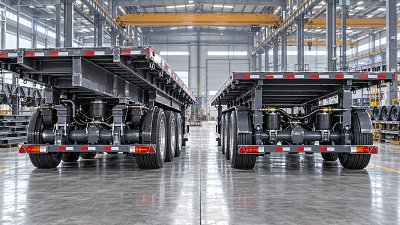
The most common buying categories include skeleton trailers, flatbed container trailer models, and extendable variants.
Main Options
- Skeleton container trailer models are lighter and efficient for standard container transport.
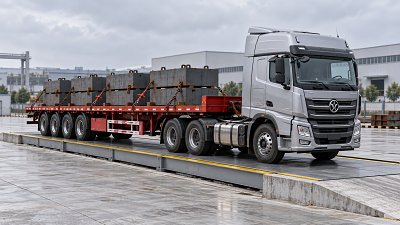
- Flatbed container trailer designs offer more cargo flexibility beyond containers.
- Extendable container trailer units support special container lengths or mixed operations.
- Gooseneck structures can help manage center of gravity and deck geometry.
The right design depends on whether the trailer will carry containers only or support multiple cargo tasks.
Multi-use fleets often accept slightly higher tare weight for broader operating flexibility.
Cost Factors Beyond the Quoted Price
The quoted price of a container trailer is only the starting point.
Smart buying decisions compare total ownership cost across the expected service life.
This is where many low-price offers become less attractive.
Main Cost Drivers
- Steel grade and frame thickness.
- Axle quantity, axle brand, and suspension type.
- Brake system specification and tire quality.
- Surface treatment, coating durability, and corrosion resistance.
- Spare parts access in the destination market.
- Lead time, shipping cost, and import duties.
In recent market conditions, material cost volatility has made specification comparison even more important.
Two container trailer offers may look similar in photos but differ greatly in fatigue life and maintenance frequency.
That also means buyers should ask for a full configuration sheet, not only a brochure.
A Simple Total Cost View
When evaluating a container trailer, review these cost layers together:
- Purchase price and freight cost.
- Registration, compliance, and local adaptation cost.
- Expected tire, brake, and suspension maintenance.
- Downtime risk and spare parts lead time.
- Residual value after several years of use.
Supplier Evaluation Checklist for Safer Sourcing
A good container trailer specification still needs a reliable supplier behind it.
In real procurement work, supplier capability often decides whether the project stays on schedule.
This is especially true for export orders and customized container trailer configurations.
What to Confirm Before Ordering
- Manufacturing experience with the same container trailer type.
- Availability of drawings, VIN records, and quality inspection reports.
- Certification support for the destination market.
- Customization capability for twist locks, landing gear, and axle setup.
- After-sales response process and spare parts support.
- Export packaging, shipping coordination, and documentation accuracy.
It is also useful to compare supplier responses to technical questions.
Fast and precise answers usually signal stronger production control and better project coordination.
Practical Buying Tips for Better Decisions
A structured buying process reduces mistakes and improves price-to-performance results.
Before final selection, use these practical steps.
- Define your main container size mix and average cargo weight.
- Match the container trailer axle setup to legal load rules on actual routes.
- Request full specifications for steel, axles, suspension, tires, and brakes.
- Compare total cost, not only the initial offer.
- Check spare parts access and service response in your operating region.
- Review supplier export experience before confirming payment terms.
The best container trailer choice is usually the one that fits daily operations with the fewest hidden compromises.
That includes legal payload, lifecycle cost, serviceability, and supplier reliability.
As global logistics and industrial transport continue to expand, more buyers are seeking clearer data before placing orders.
Using a specialized industry platform can make that process faster and more transparent.
When comparing your next container trailer options, start with payload, verify axle compliance, and calculate total cost before choosing a supplier.
Trending News
- How to verify spare parts availability with a crane truck supplier
- How to verify a truck trailer OEM's claimed payload capacity
- How does operating weight affect the price of a new excavator?
- How to compare concrete mixer truck suppliers by total landed cost
- How axle load limits affect low bed trailer exports to Southeast Asia
Tag
Recommended News
 Buying GuideHow to verify spare parts availability with a crane truck supplierChoosing a crane truck supplier? Learn how to verify spare parts stock, compatibility, delivery times, and support commitments to reduce downtime and buy with confidence.
 Buying GuideHow to verify a truck trailer OEM's claimed payload capacityVerify a truck trailer OEM's payload claim with tare records, load calculations, and structural evidence. Learn key checks to avoid costly mistakes and buy with confidence.
 Buying GuideHow does operating weight affect the price of a new excavator?See how operating weight affects excavator price, transport costs, and productivity. Compare configurations and uncover the best value for your next equipment purchase.
 Buying GuideHow to compare concrete mixer truck suppliers by total landed costCompare truck cement mixer supplier quotes by total landed cost, including freight, duties, and delivery. Uncover hidden charges and choose the best-value truck for your fleet.
 Buying GuideWhen does heavy equipment transport require a lowboy trailer?Does your heavy equipment need a lowboy trailer? Discover how loaded height, weight distribution, loading access, and route limits determine the right choice for safe transport.
 Buying GuideHow to choose an off road truck for steep and unstable job sitesChoose the right off road truck for steep, unstable job sites. Compare traction, braking, stability, clearance, payload, and route-test essentials.
 Buying GuideHow to match crane truck lifting capacity to your jobsite loadsCrane truck capacity planning made clear: calculate gross load, radius, rigging, outriggers, and ground conditions to select safer, job-ready lifting equipment.
 Buying GuideHow to match lowbed trailer deck height to your hauling equipmentLowbed trailer deck height guide: match equipment clearance, ramp geometry, axle loads, tractor fit, and route limits for safer, more efficient hauling.
 Buying GuideWhat to verify before choosing a delivery truck supplier for school transportationDelivery truck supplier for school transportation: verify route fit, payload, safety, compliance, service support, and total cost before choosing a reliable partner.
 Buying GuideWhat an excavator manufacturer catalog should show before you compare modelsExcavator manufacturer catalog guide: verify supplier identity, configurations, hydraulics, compliance, parts support, and delivery readiness before comparing models.
 Buying GuideWhat to check before appointing a bulldozer distributorBulldozer distributor selection guide: evaluate service, parts availability, warranty, pricing, compliance, and lifecycle value to reduce downtime and protect fleet investment.
 Buying GuideWhat to verify before choosing a truck cement mixer supplierTruck cement mixer supplier checklist: verify chassis fit, drum quality, hydraulics, compliance, spare parts, and after-sales support before you buy.
 Buying GuideHow to verify a truck spare parts supplier before placing a bulk orderTruck spare parts supplier verification made practical: learn how to check part specifications, factory control, test records, samples, pricing, and delivery capability before placing a bulk order.
 Buying GuideWhat size truck container is right for a typical freight load?Truck container sizing made simple: compare payload, volume, pallet layouts, route access, and loading needs to choose the most efficient freight solution.
 Buying GuideWhat drives semi trailer price differences between similar models?Semi trailer price differences come down to frame materials, axles, suspension, coating, and configuration. Compare specifications line by line to choose lasting value.
 Buying GuideHow to compare excavator manufacturer price lists before requesting quotesCompare an excavator manufacturer price list with confidence. Learn to normalize configurations, calculate landed costs, assess options and service, and create stronger RFQs.
 Buying GuideHow to choose a mixer truck drum capacity for your concrete pourMixer truck capacity guide: match drum size to pour rate, legal payload, site access, and delivery cycles for efficient, reliable concrete placement.
 Buying GuideHow to size a bulldozer for construction site grading workBulldozer for construction sizing guide: match weight, blade, traction, grade control, and transport needs to improve grading productivity and costs.
 Buying GuideHow to assess a truck cement manufacturer’s build quality before orderingTruck cement manufacturer build quality: assess tank steel, welding, chassis integration, pneumatic systems, factory QC, and inspection evidence before ordering.
 Buying GuideWhen does a truck trailer OEM make sense for private-label fleets?Truck trailer OEM programs help private-label fleets cut lifecycle costs, standardize operations, and improve uptime. Learn when customization delivers real commercial value.
 Buying GuideWhat to verify before choosing a water truck OEM for your fleetWater truck OEM selection guide: verify chassis compatibility, tank quality, pump performance, compliance, and service support to build a safer, more reliable fleet.
 Buying GuideHow to size a cab chassis truck for a fire department apparatusCab chassis truck for fire department sizing guide: balance GVWR, axle loads, wheelbase, water tank placement, and mission needs for safer apparatus design.
 Buying GuideWhat to verify before choosing a truck chassis supplierChoose the right truck chassis supplier with a practical checklist for application fit, axle ratings, body integration, quality control, delivery reliability, and after-sales support.
 Buying GuideHow to choose a logging truck for steep and rough forest roadsLogging truck selection for steep, rough forest roads: compare traction, braking, gearing, chassis strength, tires, and supplier support for safer, more reliable hauling.
 Buying GuideHow to choose a flatbed trailer deck length for oversized loadsFlatbed trailer deck length guide for oversized loads: balance cargo support, axle weight, securement space, overhang, and route access for safer transport.