How to Evaluate a Light Duty Truck Manufacturer in USA
How to Evaluate a Light Duty Truck Manufacturer in USA
Choosing the right light duty truck manufacturer in USA is a critical step for procurement teams seeking reliable products, stable supply, and long-term value.
With many suppliers offering different capabilities, certifications, and service levels, buyers need a practical evaluation method.
This guide explains how to compare manufacturers, reduce sourcing risk, and make stronger purchasing decisions with confidence.
In real buying situations, the best choice is not always the lowest quote. It is the supplier that fits your operating goals.
Start with Your Operational Requirements
Before comparing any light duty truck manufacturer in USA, define what the truck must do every day.
This sounds obvious, but many sourcing problems begin with a vague requirement list.
Look at payload, route distance, road type, stop frequency, cargo dimensions, and loading methods.
Also confirm whether the truck will support urban delivery, utility work, municipal service, or regional distribution.
A manufacturer that performs well in last-mile delivery may not be ideal for mixed commercial applications.
At this stage, it helps to create a basic scorecard.
- Required GVWR range
- Engine and fuel preferences
- Body compatibility needs
- Expected annual mileage
- Service and uptime targets
This first step makes the rest of the evaluation far more objective.
Assess Manufacturing Capability, Not Just Brochures
A serious light duty truck manufacturer in USA should show more than polished marketing materials.
What matters is production consistency, quality control, and the ability to meet specifications at scale.
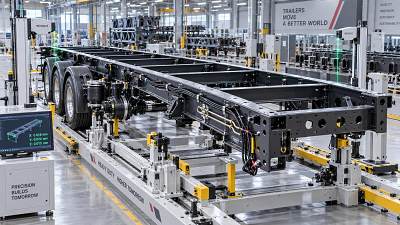
Ask direct questions about plant capacity, lead times, production lines, and component sourcing.
More importantly, verify whether their supply chain is stable during seasonal demand changes.
A supplier may offer a good model today, but miss delivery windows when order volume rises.
Useful evaluation points include the following.
- Whether assembly processes are standardized
- How incoming parts are inspected
- How defects are tracked and corrected
- Whether output can support repeat orders
- How the manufacturer handles urgent schedule changes
In practice, reliable manufacturing discipline often tells you more than a long feature list.
Check Compliance, Certifications, and Market Readiness
When evaluating a light duty truck manufacturer in USA, compliance should never be treated as a minor detail.
It directly affects registration, road legality, environmental alignment, and fleet deployment speed.
Review EPA and DOT related requirements, safety standards, VIN documentation, and emissions alignment.
If the trucks will operate across multiple states, ask whether any regional compliance issues apply.
This is especially important for specialized bodies, refrigerated units, or utility conversions.
It also helps to check whether the manufacturer supports complete documentation for export or cross-border trade.
If a supplier cannot provide clear compliance records, treat that as an early warning sign.
Compare Product Quality Through Real Use Factors
Product quality is more than paint finish, cabin appearance, or a smooth presentation.
A strong light duty truck manufacturer in USA should prove durability under real operating conditions.
Look closely at frame strength, powertrain reliability, brake performance, suspension design, and body integration quality.
Ask for maintenance data, warranty claim patterns, and known failure points by model.
If possible, request field references from fleets using similar routes and payload profiles.
A short test drive is helpful, but lifecycle evidence is more valuable.
Focus on the questions that affect total cost over time.
- How often do components need replacement?
- Are parts shared across multiple models?
- How easy is routine service access?
- What is the expected resale position?
These details often separate a decent truck from a smart procurement decision.
Look Beyond Price to Total Cost of Ownership
A low quotation can be attractive, but it rarely tells the full story.
When choosing a light duty truck manufacturer in USA, total cost of ownership should guide the comparison.
This includes acquisition cost, fuel efficiency, maintenance frequency, parts pricing, downtime risk, and residual value.
From recent market changes, uptime has become an even stronger cost driver than before.
That means a slightly higher purchase price may still deliver better long-term value.
Use a structured cost model during supplier comparison.
- Estimate service intervals over three to five years
- Compare fuel or energy consumption by duty cycle
- Calculate parts replacement exposure
- Assess downtime cost per day
- Review warranty coverage and exclusions
This approach makes negotiations more practical and less emotional.
Evaluate Service Network and Parts Availability
Even a well-built truck becomes costly if support is slow.
That is why service capability is a core test for any light duty truck manufacturer in USA.
Review the service network by region, response time, training level, and parts stocking strategy.
In actual operations, the problem is rarely one major repair. It is repeated small delays.
Ask suppliers how they support preventive maintenance, emergency repair, and technical troubleshooting.
Also confirm whether digital diagnostics or remote support tools are available.
- Local parts inventory levels
- Average order fulfillment time
- Warranty claim handling speed
- Availability of trained technicians
- Escalation process for urgent failures
Better support usually leads to better fleet continuity, which directly protects business performance.
Review Supplier Stability and Communication Quality
A capable light duty truck manufacturer in USA should also be stable as a business partner.
Financial strength, management responsiveness, and communication discipline matter more than many buyers expect.
This becomes even more important for repeat sourcing, customization projects, and long-term framework agreements.
Pay attention to how the supplier answers technical questions and how quickly issues are clarified.
Clear communication usually reflects stronger internal systems.
On the other hand, inconsistent answers often point to deeper operational risk.
A dependable supplier should make specification review, order updates, and after-sales coordination feel straightforward.
Use a Practical Evaluation Framework Before Final Selection
To compare options fairly, use a weighted evaluation framework.
This keeps decisions aligned with actual business priorities rather than sales pressure.
You can score each light duty truck manufacturer in USA across the categories below.
This method creates a clear shortlist and makes internal approval easier.
It also supports better discussions with stakeholders across operations, finance, and technical teams.
Final Thoughts on Choosing the Right Supplier
Finding the right light duty truck manufacturer in USA takes more than comparing product sheets.
The strongest choice usually combines technical fit, dependable quality, responsive service, and stable long-term support.
A careful review process helps reduce sourcing risk and improves the chance of smooth fleet performance.
That is especially valuable in a market where uptime, compliance, and cost control matter more each year.
If you are comparing manufacturers globally, a specialized industry platform can make the process faster and more transparent.
The Global Heavy Truck Industry Platform helps buyers explore suppliers, compare capabilities, and access practical market insights.
Start with clear requirements, verify the facts, and choose a supplier that supports performance well beyond delivery day.
Trending News
- How axle load limits affect low bed trailer exports to Southeast Asia
- How to locate a truck exhaust system leak before replacing parts
- When does heavy equipment transport require a lowboy trailer?
- When does a light commercial vehicle for urban delivery save fleet costs?
- How to choose an off road truck for steep and unstable job sites
Tag
Recommended News
 Buying GuideWhen does heavy equipment transport require a lowboy trailer?Does your heavy equipment need a lowboy trailer? Discover how loaded height, weight distribution, loading access, and route limits determine the right choice for safe transport.
 Buying GuideHow to choose an off road truck for steep and unstable job sitesChoose the right off road truck for steep, unstable job sites. Compare traction, braking, stability, clearance, payload, and route-test essentials.
 Buying GuideHow to match crane truck lifting capacity to your jobsite loadsCrane truck capacity planning made clear: calculate gross load, radius, rigging, outriggers, and ground conditions to select safer, job-ready lifting equipment.
 Buying GuideHow to match lowbed trailer deck height to your hauling equipmentLowbed trailer deck height guide: match equipment clearance, ramp geometry, axle loads, tractor fit, and route limits for safer, more efficient hauling.
 Buying GuideWhat to verify before choosing a delivery truck supplier for school transportationDelivery truck supplier for school transportation: verify route fit, payload, safety, compliance, service support, and total cost before choosing a reliable partner.
 Buying GuideWhat an excavator manufacturer catalog should show before you compare modelsExcavator manufacturer catalog guide: verify supplier identity, configurations, hydraulics, compliance, parts support, and delivery readiness before comparing models.
 Buying GuideWhat to check before appointing a bulldozer distributorBulldozer distributor selection guide: evaluate service, parts availability, warranty, pricing, compliance, and lifecycle value to reduce downtime and protect fleet investment.
 Buying GuideWhat to verify before choosing a truck cement mixer supplierTruck cement mixer supplier checklist: verify chassis fit, drum quality, hydraulics, compliance, spare parts, and after-sales support before you buy.
 Buying GuideHow to verify a truck spare parts supplier before placing a bulk orderTruck spare parts supplier verification made practical: learn how to check part specifications, factory control, test records, samples, pricing, and delivery capability before placing a bulk order.
 Buying GuideWhat size truck container is right for a typical freight load?Truck container sizing made simple: compare payload, volume, pallet layouts, route access, and loading needs to choose the most efficient freight solution.
 Buying GuideWhat drives semi trailer price differences between similar models?Semi trailer price differences come down to frame materials, axles, suspension, coating, and configuration. Compare specifications line by line to choose lasting value.
 Buying GuideHow to compare excavator manufacturer price lists before requesting quotesCompare an excavator manufacturer price list with confidence. Learn to normalize configurations, calculate landed costs, assess options and service, and create stronger RFQs.
 Buying GuideHow to choose a mixer truck drum capacity for your concrete pourMixer truck capacity guide: match drum size to pour rate, legal payload, site access, and delivery cycles for efficient, reliable concrete placement.
 Buying GuideHow to size a bulldozer for construction site grading workBulldozer for construction sizing guide: match weight, blade, traction, grade control, and transport needs to improve grading productivity and costs.
 Buying GuideHow to assess a truck cement manufacturer’s build quality before orderingTruck cement manufacturer build quality: assess tank steel, welding, chassis integration, pneumatic systems, factory QC, and inspection evidence before ordering.
 Buying GuideWhen does a truck trailer OEM make sense for private-label fleets?Truck trailer OEM programs help private-label fleets cut lifecycle costs, standardize operations, and improve uptime. Learn when customization delivers real commercial value.
 Buying GuideWhat to verify before choosing a water truck OEM for your fleetWater truck OEM selection guide: verify chassis compatibility, tank quality, pump performance, compliance, and service support to build a safer, more reliable fleet.
 Buying GuideHow to size a cab chassis truck for a fire department apparatusCab chassis truck for fire department sizing guide: balance GVWR, axle loads, wheelbase, water tank placement, and mission needs for safer apparatus design.
 Buying GuideWhat to verify before choosing a truck chassis supplierChoose the right truck chassis supplier with a practical checklist for application fit, axle ratings, body integration, quality control, delivery reliability, and after-sales support.
 Buying GuideHow to choose a logging truck for steep and rough forest roadsLogging truck selection for steep, rough forest roads: compare traction, braking, gearing, chassis strength, tires, and supplier support for safer, more reliable hauling.
 Buying GuideHow to choose a flatbed trailer deck length for oversized loadsFlatbed trailer deck length guide for oversized loads: balance cargo support, axle weight, securement space, overhang, and route access for safer transport.
 Buying GuideHow to assess a truck chassis supplier for trailer manufacturingTruck chassis supplier for trailer manufacturing: learn how to assess technical fit, quality control, engineering support, and delivery reliability for smarter sourcing.
 Buying GuideIs the SHACMAN H3000 6×4 Cement Mixer suitable for large projects?SHACMAN H3000 6×4 Cement Mixer: assess payload, cycle time, traction, and service support to see if it can keep large concrete projects moving efficiently.
 Buying GuideHow to evaluate heavy duty trucks for sale in Russia before buyingHeavy duty trucks for sale in Russia: learn how to compare specifications, winter readiness, service support, supplier reliability, and total ownership costs before buying.
 Buying GuideWhat to verify before choosing a logging truck producerChoose a logging truck producer with confidence: verify chassis strength, load security, compliance, service support, and delivery control for demanding forestry routes.