Why Truck Off Road Performance Drops Faster Under Heavy Loads
When an off road truck operates under heavy loads, performance usually drops faster because extra weight amplifies every weak point in the vehicle system at once. Tire grip changes, rolling resistance rises, the suspension works harder, driveline stress increases, braking distances grow, and truck battery and power system demand can also climb in modern heavy-duty applications. For buyers, dealers, and procurement teams, this is not just a technical issue. It directly affects uptime, fuel use, maintenance cost, component life, and suitability for mining, construction, and rough-terrain transport jobs.
For commercial decision-makers, the key takeaway is simple: off road capability should never be evaluated on unloaded specifications alone. A truck that performs well on paper or on light-duty demonstration routes may lose traction, stability, climbing ability, and operating efficiency much faster once it carries real working loads. The right purchasing decision depends on understanding how load affects the entire vehicle system and how to compare trucks, components, and suppliers for demanding environments.
What buyers are really asking when they search this topic
Behind the search term Why Truck Off Road Performance Drops Faster Under Heavy Loads, the main user intent is usually practical rather than academic. Buyers and market researchers want to know whether a truck can still deliver reliable off road performance in real operating conditions, not only in ideal test scenarios.
For procurement teams, distributors, and business evaluators, the most common concerns are:
- Why a loaded truck loses traction and mobility more quickly on mud, gravel, sand, slopes, or uneven terrain
- Which systems fail or wear faster under heavy load
- How load affects fuel efficiency, uptime, and maintenance budgets
- What specifications matter most when comparing heavy truck suppliers
- How to match a construction truck, mining truck, or transport chassis to actual terrain and payload conditions
This means the most valuable content is not a broad overview of off road driving. It is a decision-focused explanation of load-related performance loss, the risks it creates, and the evaluation points that help buyers avoid costly mistakes.
Why heavy loads reduce off road truck performance so quickly
Heavy loads do not just make a truck “work harder.” They change how the truck interacts with terrain. In off road conditions, small changes in weight distribution, tire deformation, axle load, and suspension travel can have a large effect on mobility.
The main reasons performance drops faster include:
1. Ground pressure increases and traction becomes less predictable
As payload rises, the truck pushes harder into soft ground. On surfaces such as mud, sand, loose gravel, or wet soil, this higher ground pressure can cause deeper sinking and more rolling resistance. Although more weight can sometimes improve contact force at the tire surface, in many off road conditions the result is actually reduced usable traction because the tire cannot maintain an efficient footprint.
2. Weight transfer worsens on slopes and uneven terrain
Off road routes rarely provide flat, stable surfaces. Under heavy loads, uphill climbing, side slopes, and articulation zones can shift weight unevenly across axles. This reduces balance, overloads some tires, and leaves others with less effective grip. The truck may spin, bog down, or feel unstable sooner than expected.
3. Suspension travel is consumed more quickly
A loaded truck has less available suspension margin to absorb bumps, ruts, rocks, and dips. Once suspension movement is reduced, the tires cannot maintain consistent contact with the ground. This hurts traction, ride control, and component durability. In rough construction or mining environments, that translates into faster fatigue of springs, bushings, dampers, mounts, and frame-related parts.
4. Driveline stress rises sharply
More load means the engine, transmission, transfer case, driveshafts, differentials, and axle shafts all face higher torque demand. In low-speed off road work, where trucks repeatedly start, stop, climb, and crawl, this stress builds quickly. If the drivetrain is not sized correctly for both terrain and payload, performance drops and failure risk rises.
5. Braking and control margins shrink
Heavier trucks need more stopping force and more stable brake modulation, especially on loose or downhill surfaces. Under load, control becomes more sensitive to brake balance, retarder effectiveness, ABS calibration, and tire condition. In practical terms, a truck that feels acceptable when empty may become harder to control safely when fully loaded.
Which truck systems are most affected under heavy off road loads
For purchasing and supplier evaluation, it helps to look beyond the headline issue of “off road performance” and identify the systems most affected by payload.
Tires and wheels
Tires are often the first visible point of performance loss. Under heavy loads, they experience more heat, sidewall stress, tread deformation, and puncture risk. Incorrect tire selection can quickly reduce traction, flotation, and durability. Buyers should pay close attention to tire size, ply rating, tread pattern, inflation strategy, and compatibility with terrain type.
Axles and differentials
Axles carry more than static weight. They also absorb dynamic shock loads from uneven ground. Under heavy load, axle housing strength, differential lock performance, reduction ratio, and sealing quality become critical. In mining truck and construction truck applications, axle reliability often has a direct effect on uptime.
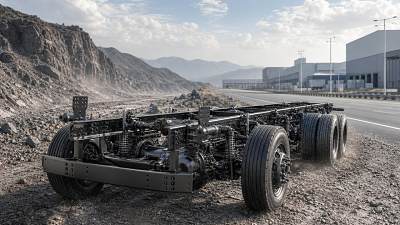
Suspension and frame
These components determine whether the truck can keep tires in contact with the ground while surviving repeated impact. A chassis that is too rigid for the route may lose contact and traction, while one that is too weak for the payload may fatigue prematurely. Matching suspension design to both load profile and terrain is essential.
Powertrain and cooling system
Heavy loads in off road environments force the engine and transmission to operate longer under high torque and low-speed conditions. This raises thermal stress. Trucks that are poorly matched in gear ratio, torque curve, or cooling system capacity can lose performance due to overheating, inefficient power delivery, or excessive fuel burn.
Electrical system and truck battery demand
Modern trucks increasingly depend on electrical systems for engine management, sensors, lighting, safety functions, telematics, auxiliary hydraulics, and cab systems. In severe operating environments, truck battery performance matters more than many buyers assume. Repeated starts, vibration, temperature swings, and accessory load can all shorten battery life and reduce reliability if the charging and electrical systems are not robust enough.
Why the problem is especially important in construction truck and mining truck applications
Not every off road application places the same demands on a truck. The reason load-related performance decline gets more attention in construction truck and mining truck fleets is that these vehicles often operate in the harshest combination of factors:
- Unimproved or constantly changing road surfaces
- High payload utilization
- Frequent stop-start cycles
- Steep grades and loose ground
- Long operating hours
- High penalties for downtime
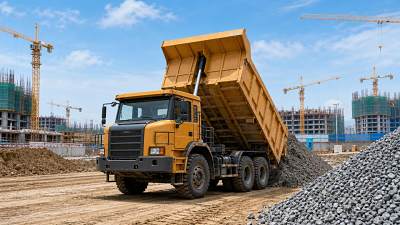
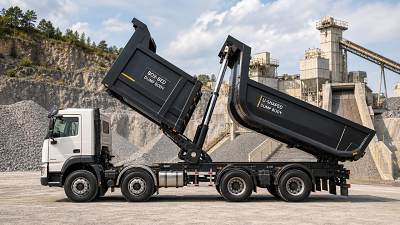
In a construction environment, trucks may need to haul aggregates, earth, steel, concrete-related materials, or equipment across temporary access roads. In mining, the demands are even more severe, with abrasive surfaces, sharp rocks, deep rutting, dust, and extreme vehicle loading cycles. In both cases, small weaknesses become expensive quickly.
This is why fleet buyers often evaluate a truck not by maximum stated payload alone, but by how consistently it can maintain cycle times, traction, and component life under actual working load.
How heavy loads affect operating cost, not just mobility
One of the most important business points is that declining off road performance is closely tied to total cost of ownership. When a truck struggles under load, the effect spreads across the operation.
Higher fuel consumption
A loaded truck working harder in soft or uneven ground uses more fuel, especially if wheel slip increases or gear matching is poor. Frequent bogging, reduced momentum, and longer cycle times all raise consumption.
Faster tire wear and more tire damage
Tire replacement is a major cost in off road fleets. Overloaded or poorly matched tires wear faster, run hotter, and suffer more cuts, separations, and sidewall failures.
More unscheduled maintenance
Suspension joints, brakes, bearings, driveline parts, cooling systems, and electrical components all face more severe stress under heavy loads. If the truck is not designed for the duty cycle, maintenance events become more frequent.
Lower productivity
If a truck cannot maintain traction or travel speed when fully loaded, cycle time suffers. In quarry, mining, and infrastructure projects, lower cycle efficiency can affect the output of the entire site.
Greater downtime risk
Stuck vehicles, brake overheating, axle failures, tire damage, and battery-related starting issues can all take vehicles out of service. For dealers and fleet managers, reliability under load is often more valuable than an impressive empty-condition specification sheet.
What procurement teams should check before choosing an off road truck for heavy-load work
To make a better sourcing or purchasing decision, buyers should evaluate trucks based on real-duty performance factors rather than marketing claims alone.
1. Check the real payload-to-terrain match
Ask whether the truck is designed for the combination of payload, slope, surface condition, and duty cycle in your operation. A truck suitable for light site work may not be appropriate for deep mud, quarry hauling, or mine access roads.
2. Review axle configuration and driveline setup
Look at axle load ratings, hub reduction options, locking differential availability, transfer case design, and final drive ratio. These directly influence traction, gradeability, and durability under load.
3. Assess tire suitability, not just tire size
Large tires alone do not guarantee better off road performance. Buyers should confirm tread design, sidewall strength, load index, and whether the tire is appropriate for rock, mud, sand, or mixed surfaces.
4. Examine suspension and frame durability data
Ask suppliers about frame reinforcement, articulation tolerance, suspension type, maintenance intervals, and field performance in similar projects. This is especially important for construction machinery support transport and mining-related use.
5. Evaluate cooling, braking, and electrical robustness
In heavy off road work, thermal management and electrical reliability are essential. Confirm cooling system capacity, brake system configuration, retarder options where relevant, alternator output, and truck battery specification for severe service conditions.
6. Request real application references
Supplier credibility improves when they can provide case studies, export records, or customer references in similar terrains and payload conditions. For B2B buyers, this is often more useful than generic brochures.
How dealers, distributors, and sourcing platforms can help buyers reduce risk
For international buyers, evaluating heavy truck suitability is often complicated by limited site access, cross-border communication gaps, and inconsistent specification standards. This is where experienced distributors, agents, and professional B2B platforms can add real value.
A high-quality sourcing platform can help buyers:
- Compare truck models across multiple manufacturers
- Verify supplier capabilities and product categories
- Review component compatibility, spare parts access, and after-sales support
- Understand application fit across logistics, mining, infrastructure, and municipal engineering
- Shortlist suppliers that can support long-term fleet reliability, not only initial pricing
In the global heavy truck market, successful procurement increasingly depends on combining technical understanding with supplier evaluation. Buyers need both product data and industry context to make the right decision.
A practical way to judge whether a truck will hold up under heavy off road loads
If you need a simple framework, focus on these five questions:
- What is the actual payload range, including overload risk in daily use?
- What terrain conditions will the truck face for most of its operating life?
- Which components are most likely to become cost drivers: tires, axles, suspension, brakes, or electrical systems?
- Can the supplier demonstrate proven use in comparable construction truck or mining truck scenarios?
- Is spare parts and service support strong enough to protect uptime?
If the answer to these questions is unclear, then the buyer is still evaluating a truck at too general a level. Heavy-load off road performance is highly application-specific, and sourcing errors are costly.
Conclusion
Truck off road performance drops faster under heavy loads because payload affects traction, suspension movement, driveline stress, braking control, tire behavior, and overall system durability at the same time. In real operating environments, especially for construction truck and mining truck applications, this directly influences productivity, fuel use, maintenance cost, and downtime risk.
For buyers, dealers, and market researchers, the right approach is to evaluate trucks based on loaded working conditions rather than unloaded specifications. The most reliable purchasing decisions come from matching payload, terrain, and duty cycle with the right axle setup, tire package, suspension design, powertrain strength, and electrical reliability, including truck battery performance in severe service. When these factors are assessed carefully, businesses can choose equipment and suppliers that deliver stronger off road reliability and better long-term value.
Trending News
- Are Energy-Saving Excavators Worth It for Long-Term Operations?
- Dump Truck Supplier With Quick Delivery: What to Verify First
- Choosing Commercial Vehicle Parts for Cold Storage Reliability
- How ISO Certification Reduces Supplier Risk in Heavy Truck Chassis
- Cab Chassis Truck for Fire Department: Key Fitment Points
Tag
Recommended News
 Truck TechnologyWhat Advanced Technology Means in Heavy Truck Chassis PerformanceHeavy truck chassis manufacturer with advanced technology: discover how smarter frame design, suspension tuning, and braking integration improve stability, uptime, and long-term operating value.
 Truck TechnologyHigh-Strength Flatbed Trailers: Where Stronger Steel Pays OffFlatbed trailer supplier with high strength expertise helps fleets cut tare weight, improve durability, and lower lifecycle cost. See what specs matter most before you buy.
 Truck TechnologyBulldozer for Construction: Matching Blade Type to Ground ConditionsBulldozer for construction guide: learn how to match S, U, and SU blades to soil, clay, rock, and mixed ground for better productivity, lower fuel use, and smarter equipment selection.
 Truck TechnologyWhen Fireproof Materials Add Real Value in Semi Trailer ManufacturingSemi trailer manufacturer with fireproof materials: discover how fire-resistant designs improve cargo safety, reduce risk, and support smarter sourcing decisions.
 Truck TechnologyWhat a Durable Engine Really Means in a Light Duty TruckLight duty truck with durable engine: learn how real engine durability improves uptime, fuel savings, and lower maintenance across delivery, construction, rural, and municipal work.
 Truck TechnologySemi Trailer Manufacturer With Lightweight Design: Pros, Trade-Offs, and Use CasesSemi trailer manufacturer with lightweight design: explore key benefits, trade-offs, and best-fit use cases to improve payload efficiency, durability, and lifecycle ROI.
 Truck TechnologyTruck Tipper for Construction: Key Specs That Affect Daily ProductivityTruck tipper for construction buying guide: learn which specs most affect payload, fuel use, unloading speed, and uptime to choose a safer, more productive model.
 Truck TechnologyWhy Logging Truck Manufacturer Design Matters in Tough TerrainLogging truck manufacturer design shapes safety, traction, and uptime in tough terrain. Learn what features matter most for forestry hauling and choose trucks built for real-world performance.
 Truck TechnologyAre Fireproof Materials Worth It in a Semi Trailer ManufacturerSemi trailer manufacturer with fireproof materials: discover if the added cost delivers real safety, lower risk, and better cargo protection with a practical supplier evaluation checklist.
 Truck TechnologyWhy High-Strength Design Matters in a Flatbed Trailer SupplierFlatbed trailer supplier with high strength: learn why structural design, material quality, and fatigue resistance matter for safer transport, longer service life, and lower operating costs.
 Truck TechnologyAdvanced Technology in Heavy Truck Chassis Manufacturing: What to Look ForHeavy truck chassis manufacturer with advanced technology: learn how to assess welding, materials, precision, and validation for long-haul, construction, mining, and special-purpose fleets.
 Truck TechnologyCan Fireproof Materials Improve Semi Trailer Safety in Logisticssemi trailer manufacturer with fireproof materials solutions can reduce cargo loss, improve fleet safety, and support reliable logistics. Discover how to choose the right fire-resistant trailer design.
 Truck TechnologyWhy Advanced Technology Matters in Heavy Truck Chassis ManufacturingHeavy truck chassis manufacturer with advanced technology: learn how digital design, precision welding, and rigorous testing improve durability, safety, and sourcing confidence.
 Truck TechnologyKazakhstan Extends Zero-Tariff List for China-Europe Rail Truck Parts to 2027Kazakhstan extends zero-tariff status for China-Europe rail truck parts to 2027—boosting ADAS, CAN-FD, and EBS component exports. Act now to optimize logistics & compliance.
 Truck TechnologyKazakhstan Extends Zero-Tariff for China’s Truck Parts to 2027Kazakhstan extends zero-tariff for China’s truck parts to 2027—now covering 12 intelligent vehicle control components. Boost exports, cut costs, and accelerate rail freight along the China-Europe corridor.
 Truck TechnologyWhy Lightweight Semi Trailer Design Matters More in Long-Haul OperationsSemi trailer manufacturer with lightweight design expertise helps long-haul fleets boost payload, cut fuel costs, and improve ROI with durable, compliant trailer solutions.
 Truck TechnologyTruck Trailer OEM Selection: Key Specs That Affect Service LifeTruck trailer OEM selection starts with the specs that define service life. Compare steel, axles, welding, suspension, and corrosion protection to reduce risk and choose smarter.
 Truck TechnologyTruck Tipper OEM Options Compared by Body Design and Payload NeedsTruck tipper OEM options compared by body design and payload needs. Discover the best-fit tipper for construction, mining, and transport with expert selection insights.
 Truck TechnologySASO Releases New Cybersecurity Standard for Commercial Trucks in Saudi ArabiaSASO IEC 62443-3-3:2026 mandates OTA firmware auditing for connected commercial trucks in Saudi Arabia — critical for exporters, cybersecurity providers & telematics integrators. Act now to meet Q3 2026 compliance.
 Truck TechnologyTC521 Advances Smart Heavy-Duty Truck Remote Diagnostics StandardTC521 advances smart heavy-duty truck remote diagnostics standard—aligning with ISO 27145 & EU GDPR. Critical for OEMs, telematics providers, and exporters targeting EU, ME & AU markets.
 Truck TechnologyFireproof Semi Trailers: Where the Materials Matter Most in Daily TransportSemi trailer manufacturer with fireproof materials: discover how safer flooring, wall panels, cable protection, and heat shielding reduce risk, protect cargo, and improve daily transport reliability.
 Truck TechnologyHow High-Strength Flatbed Trailers Reduce Repair Risk in Heavy Cargo TransportFlatbed trailer supplier with high strength solutions help reduce repair risk in heavy cargo transport through better durability, safer load support, and lower downtime.
 Truck TechnologyKey Build Features to Compare in a Logging Truck ManufacturerLogging truck manufacturer comparison guide: explore chassis strength, payload, drivetrain, hydraulics, durability, and service support to choose a truck built for harsh forestry work.
 Truck TechnologyChina Advances Smart Heavy-Duty Truck Remote Diagnostics Standard for EU ComplianceSmart heavy-duty truck remote diagnostics standard advances for EU compliance—key for exporters, OEMs & Tier 1 suppliers. Act now to align with Uptime Consortium 2.0.
 Truck TechnologyWhy Modular Flatbed Trailer Design Matters for Mixed CargoFlatbed trailer supplier with modular design: learn how modular flatbed architecture improves mixed cargo safety, flexibility, maintenance efficiency, and long-term transport value.