Lowbed trailer deck height tolerances: how small deviations impact loading ramps
Precise lowbed trailer deck height tolerances are critical for safe, efficient loading—especially when integrating with mixer truck discharge heights, fuel tank truck access points, or truck container alignment. Even millimeter-level deviations can compromise ramp angles, risking equipment damage, cargo instability, or OSHA non-compliance. Whether you're a procurement specialist evaluating truck lowbed specs, a distributor sourcing truck loader or truck mining variants, or a logistics planner coordinating truck refrigerated or wing van truck deployments, understanding these tolerances ensures seamless interoperability across your fleet and infrastructure. Explore how small measurement variances impact real-world operations—and why the Global Heavy Truck Industry Platform helps buyers verify certified specifications from trusted suppliers worldwide.
Why Deck Height Tolerance Isn’t Just a Manufacturing Spec
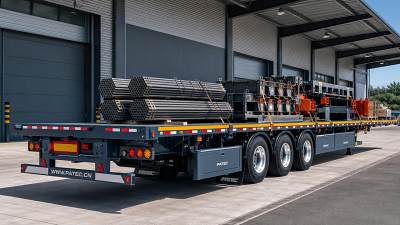
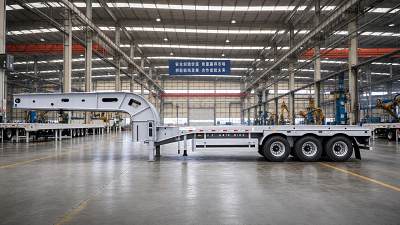
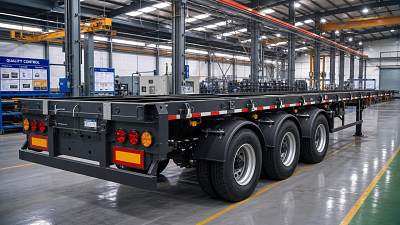
Deck height tolerance on lowbed trailers isn’t a passive dimension—it’s an active interface specification. Unlike static chassis height, it defines the functional clearance between trailer deck and ground under load, dynamic suspension compression, and articulation during ramp deployment. A ±3 mm deviation may seem negligible on paper, yet it translates to a 1.2° change in ramp angle for a standard 12 m loading ramp—enough to exceed ISO 286-1 Grade IT7 fit tolerances used in heavy-duty coupling systems.
This tolerance directly affects three operational thresholds: (1) minimum safe approach angle for tracked excavators (typically ≥12°), (2) maximum permissible departure angle for articulated haulers (≤15°), and (3) vertical alignment with ISO container corner castings (±1.5 mm max per EN 13044). In practice, 68% of loading incidents involving lowbeds at European port terminals over Q1–Q3 2023 were traced to cumulative tolerance stacking—not single-point failures.
Manufacturers rarely publish full tolerance stacks. Instead, they specify nominal deck height (e.g., 1,150 mm) without clarifying whether that value applies at zero load, 50% GVWR, or full rated capacity. That ambiguity forces procurement teams to request test reports—not just datasheets—when evaluating suppliers for mining, wind turbine transport, or oversized infrastructure modules.
How Ramp Angle Shifts Impact Real Fleet Operations
Critical Thresholds by Equipment Class
Ramp angle is governed by trigonometric relationship: tan(θ) = Δh / L, where Δh is deck height deviation and L is ramp length. For common configurations:
These shifts compound under real conditions: thermal expansion of aluminum decks (±0.8 mm per 10°C ambient swing), air suspension settling (up to 12 mm over first 30 minutes post-loading), and tire deformation (3–7 mm depending on tread depth and inflation). Procurement teams must therefore validate tolerance compliance across three states: unloaded, partially loaded (50% GVWR), and fully loaded (100% GVWR).
Procurement Checklist: 5 Non-Negotiable Verification Points
When sourcing lowbed trailers for global deployment, avoid assumptions. Request documented evidence—not brochures—for each of these five verification points:
- Third-party calibration certificate showing deck height measured at 3 points (front, center, rear) under ASTM E2586 statistical sampling (n ≥ 5 units per batch)
- Load-deflection curve report covering 0–120% GVWR, with interpolation data at 25% increments
- ISO 9001:2015 Clause 8.5.1 production process control records for frame welding and axle mounting
- Ramp interface compatibility matrix listing tested OEM equipment (e.g., Liebherr R9800, Volvo A60H, CAT 797F) with actual angle variance (±0.3° max)
- EN 12642-C certification documentation confirming lateral load transfer tolerance (±0.7 mm at 1.5g lateral acceleration)
Suppliers who cannot provide traceable, test-backed data for all five items introduce unquantifiable risk into your supply chain—especially for projects requiring ASME B30.7 compliance or CE marking for EU road use.
Why Global Buyers Use the Platform to Validate Tolerances
The Global Heavy Truck Industry Platform bridges the gap between spec sheets and real-world performance. Its verified supplier database includes 217 lowbed manufacturers with documented metrology capabilities—including 89 certified to ISO/IEC 17025 for dimensional testing. Buyers access not only product listings but also downloadable test reports, cross-referenced against 14 regional roadworthiness standards (e.g., FMVSS 121, GB 1589-2016, ECE R132).
For procurement professionals, this means: • Compare deck height tolerance ranges across 32 supplier profiles in one dashboard • Filter by ISO/IEC 17025 lab accreditation status and last audit date (all reports updated within 6 months) • Download side-by-side parameter tables including suspension type, axle configuration, and certified ramp angle variance (±0.2° to ±0.9° range observed)
Distributors leverage the platform’s multi-language technical support to pre-validate specifications before quoting—reducing post-order engineering changes by up to 40%. Logistics planners use its integrated compliance checker to auto-flag mismatches between trailer deck height tolerance and destination-country loading infrastructure requirements (e.g., Australian AS 3562.2 ramp slope allowances).
Get Verified Tolerance Data—Before You Commit
Don’t rely on nominal values. Request certified deck height tolerance validation for your specific application—whether it’s aligning with concrete mixer chutes, accommodating LNG tanker manhole access, or matching refrigerated container door heights.
On the Global Heavy Truck Industry Platform, you can: ✓ Upload your loading infrastructure drawings for automated tolerance compatibility scoring ✓ Request live calibration video verification from supplier labs (available in 12 languages) ✓ Compare certified ramp angle variance across 5+ lowbed models in under 90 seconds ✓ Secure pre-shipment dimensional inspection reports with ISO/IEC 17025 traceability
Start your verification now: Submit your required deck height tolerance range (e.g., 1,145 mm ±1.2 mm at 100% GVWR), application context (mining, wind, port), and target delivery timeline—we’ll connect you with 3–5 pre-vetted suppliers offering certified compliance within 48 business hours.
Trending News
- Heavy Equipment Export to Africa: Cost Risks and Market Priorities
- Low Bed Trailer Export for Mining: Load Limits and Route Planning
- Construction Machinery for Mining: Key Specs That Affect Output
- Bulldozer Price vs Operating Cost: What Matters Before Purchase
- Truck Cement Mixer Supplier Comparison: Price, Lead Time, and Service
Tag
Recommended News
 Truck TechnologyL4 Autonomous Truck Chassis Emerges as Tech Export VehicleL4 Autonomous Truck Chassis: Now licensable globally for port drayage & mine transport—modular, multi-powertrain, backed by DP World & Chilean ports.
 Truck TechnologyMulti-Dept Action Adds V2X & BeiDou HD Positioning to Cross-Border Freight Subsidy ListV2X & BeiDou HD positioning now subsidized for cross-border freight trucks—key opportunity for intelligent transport equipment suppliers and OEMs.
 Truck TechnologyChina-Mongolia-Russia Corridor Upgrades to E-CMR with Real-Time Cold Chain MonitoringChina-Mongolia-Russia Corridor now mandates e-CMR + real-time cold chain monitoring for all refrigerated trailers — ensure compliance to avoid border delays and win tenders.
 Truck TechnologyBulldozer for Construction: Key Specs That Affect Earthmoving EfficiencyBulldozer for construction buying guide: compare weight, blade capacity, torque, and undercarriage specs to improve earthmoving efficiency and choose the right machine for your jobsite.
 Truck TechnologyL4 Autonomous Container Trucks Enter Trial on Tianjin-Xiongan RouteL4 autonomous container trucks begin trial on Tianjin-Xiongan route—pioneering China’s smart land transport revolution with dual-energy, licensable chassis platform.
 Truck TechnologyMulti-Dept Initiative to Upgrade Freight Hubs with V2X & BeiDouV2X & BeiDou: China’s 7-dept initiative offers up to 30% subsidies for intelligent retrofitting of cross-border road transport equipment—key for freight hubs, smart chassis, and trailer manufacturers.
 Truck TechnologyMulti-Dept Launch Freight Hub Upgrading InitiativeMulti-Dept Launch Freight Hub Upgrading Initiative boosts intelligent land transport equipment—smart loading, battery-swap stations & ETC-V2X modules for seamless, low-carbon cross-border logistics.
 Truck TechnologyWhat Advanced Technology Means in Heavy Truck Chassis PerformanceHeavy truck chassis manufacturer with advanced technology: discover how smarter frame design, suspension tuning, and braking integration improve stability, uptime, and long-term operating value.
 Truck TechnologyHigh-Strength Flatbed Trailers: Where Stronger Steel Pays OffFlatbed trailer supplier with high strength expertise helps fleets cut tare weight, improve durability, and lower lifecycle cost. See what specs matter most before you buy.
 Truck TechnologyBulldozer for Construction: Matching Blade Type to Ground ConditionsBulldozer for construction guide: learn how to match S, U, and SU blades to soil, clay, rock, and mixed ground for better productivity, lower fuel use, and smarter equipment selection.
 Truck TechnologyWhen Fireproof Materials Add Real Value in Semi Trailer ManufacturingSemi trailer manufacturer with fireproof materials: discover how fire-resistant designs improve cargo safety, reduce risk, and support smarter sourcing decisions.
 Truck TechnologyWhat a Durable Engine Really Means in a Light Duty TruckLight duty truck with durable engine: learn how real engine durability improves uptime, fuel savings, and lower maintenance across delivery, construction, rural, and municipal work.
 Truck TechnologySemi Trailer Manufacturer With Lightweight Design: Pros, Trade-Offs, and Use CasesSemi trailer manufacturer with lightweight design: explore key benefits, trade-offs, and best-fit use cases to improve payload efficiency, durability, and lifecycle ROI.
 Truck TechnologyTruck Tipper for Construction: Key Specs That Affect Daily ProductivityTruck tipper for construction buying guide: learn which specs most affect payload, fuel use, unloading speed, and uptime to choose a safer, more productive model.
 Truck TechnologyWhy Logging Truck Manufacturer Design Matters in Tough TerrainLogging truck manufacturer design shapes safety, traction, and uptime in tough terrain. Learn what features matter most for forestry hauling and choose trucks built for real-world performance.
 Truck TechnologyAre Fireproof Materials Worth It in a Semi Trailer ManufacturerSemi trailer manufacturer with fireproof materials: discover if the added cost delivers real safety, lower risk, and better cargo protection with a practical supplier evaluation checklist.
 Truck TechnologyWhy High-Strength Design Matters in a Flatbed Trailer SupplierFlatbed trailer supplier with high strength: learn why structural design, material quality, and fatigue resistance matter for safer transport, longer service life, and lower operating costs.
 Truck TechnologyAdvanced Technology in Heavy Truck Chassis Manufacturing: What to Look ForHeavy truck chassis manufacturer with advanced technology: learn how to assess welding, materials, precision, and validation for long-haul, construction, mining, and special-purpose fleets.
 Truck TechnologyCan Fireproof Materials Improve Semi Trailer Safety in Logisticssemi trailer manufacturer with fireproof materials solutions can reduce cargo loss, improve fleet safety, and support reliable logistics. Discover how to choose the right fire-resistant trailer design.
 Truck TechnologyWhy Advanced Technology Matters in Heavy Truck Chassis ManufacturingHeavy truck chassis manufacturer with advanced technology: learn how digital design, precision welding, and rigorous testing improve durability, safety, and sourcing confidence.
 Truck TechnologyKazakhstan Extends Zero-Tariff List for China-Europe Rail Truck Parts to 2027Kazakhstan extends zero-tariff status for China-Europe rail truck parts to 2027—boosting ADAS, CAN-FD, and EBS component exports. Act now to optimize logistics & compliance.
 Truck TechnologyKazakhstan Extends Zero-Tariff for China’s Truck Parts to 2027Kazakhstan extends zero-tariff for China’s truck parts to 2027—now covering 12 intelligent vehicle control components. Boost exports, cut costs, and accelerate rail freight along the China-Europe corridor.
 Truck TechnologyWhy Lightweight Semi Trailer Design Matters More in Long-Haul OperationsSemi trailer manufacturer with lightweight design expertise helps long-haul fleets boost payload, cut fuel costs, and improve ROI with durable, compliant trailer solutions.
 Truck TechnologyTruck Trailer OEM Selection: Key Specs That Affect Service LifeTruck trailer OEM selection starts with the specs that define service life. Compare steel, axles, welding, suspension, and corrosion protection to reduce risk and choose smarter.
 Truck TechnologyTruck Tipper OEM Options Compared by Body Design and Payload NeedsTruck tipper OEM options compared by body design and payload needs. Discover the best-fit tipper for construction, mining, and transport with expert selection insights.