CAAC Releases New ATC License Rules, Impacts Smart Tug Systems
On April 17, 2026, China’s Ministry of Transport issued the Civil Aviation Air Traffic Controller License Management Rules (MOT Order No. 9 of 2026), formally integrating AI-driven scheduling algorithms, multi-source positioning redundancy verification, and low-latency V2X communication into the technical evaluation framework for air traffic controller licensing. Though directed at civil aviation personnel, the rule’s validation logic is rapidly extending to airport logistics—particularly intelligent tractor units, AGV yard trucks, and smart logistics park dispatch systems. Exporters and integrators serving international logistics infrastructure projects should note its emerging role as a de facto technical benchmark.
Event Overview
On April 17, 2026, the Ministry of Transport promulgated MOT Order No. 9 of 2026, titled Civil Aviation Air Traffic Controller License Management Rules. The regulation explicitly incorporates three technical elements into the qualification assessment system for air traffic controllers: (1) AI-driven operational scheduling algorithms; (2) multi-source positioning redundancy verification; and (3) low-latency V2X communication. While the rule applies to civil aviation personnel certification, its underlying technical validation methodology is being adopted—by industry practice—as a reference for evaluating intelligent ground vehicle dispatch systems in airport and logistics environments.
Industries Affected by This Development
Export-Oriented Intelligent Vehicle Manufacturers
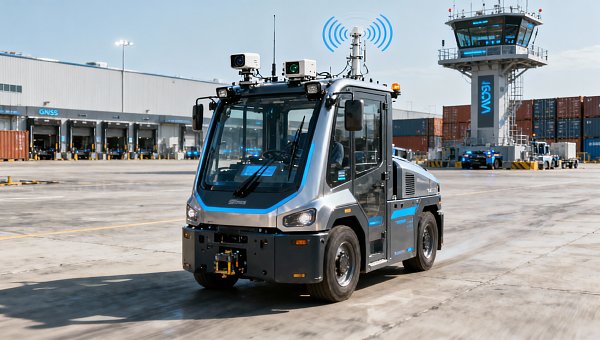
These firms supply AI-enabled airport tractors and AGV yard trucks to overseas airports, logistics hubs, and port terminals. The new rule does not mandate compliance for ground vehicles—but because it establishes a nationally endorsed, technically rigorous framework for algorithmic robustness and communication security, overseas buyers increasingly cite it during procurement due diligence. Impact manifests in tender documentation requirements, third-party verification scopes, and post-sale technical audits.
Smart Logistics Park System Integrators
Integrators deploying end-to-end yard management platforms—including centralized dispatch, real-time vehicle tracking, and dynamic task allocation—are encountering client requests to align system architecture with the validation principles in MOT Order No. 9. Specifically, clients now ask for evidence of redundant localization (e.g., GNSS + UWB + visual odometry fusion) and sub-100ms V2X latency under load—criteria originally defined for ATC-grade reliability.
Domestic Airport Ground Support Equipment (GSE) Suppliers
Suppliers upgrading legacy tractor fleets or bidding for new smart GSE contracts at Chinese airports face indirect pressure: airport authorities are beginning to reference the rule’s technical logic in RFPs—even where not legally binding. This shifts evaluation weight toward demonstrable algorithm resilience (e.g., handling concurrent runway incursions and baggage train rerouting) and certified secure V2X handshaking protocols.
What Enterprises and Practitioners Should Monitor and Do Now
Track official implementation guidance and cross-sectoral interpretations
The Ministry of Transport has not yet published application notes specifying how the rule’s technical criteria apply beyond air traffic control. Stakeholders should monitor announcements from the Civil Aviation Administration of China (CAAC) and national standardization bodies (e.g., SAC/TC 267) for clarifications on terminology alignment—such as whether ‘low-latency V2X’ refers to DSRC, C-V2X PC5, or hybrid stacks.
Review current product documentation against the rule’s three core technical pillars
Manufacturers and integrators should conduct an internal gap assessment focused strictly on the three validated elements: (1) whether their scheduling algorithm includes formal failure-mode analysis and fallback logic under partial sensor loss; (2) whether positioning uses ≥3 independent sources with automated inconsistency detection; and (3) whether V2X message round-trip latency remains ≤80ms at 99.9% quantile under peak concurrency (e.g., 50+ vehicles active).
Distinguish policy signal from regulatory requirement in procurement contexts
When foreign buyers reference MOT Order No. 9, it functions as a technical credibility marker—not a legal compliance obligation. Enterprises should avoid treating it as a new certification standard. Instead, treat it as a benchmark for articulating existing capabilities: e.g., mapping documented V2X test reports to the rule’s ‘low-latency’ definition, or citing ISO/IEC 27001-certified communication modules when addressing its implied security expectations.
Prepare technical dossiers for export tenders—not certifications
No conformity assessment body currently issues MOT Order No. 9–aligned certificates for ground vehicles. However, forward-looking exporters are compiling modular dossiers: algorithm white papers with fault-injection test results, positioning redundancy schematics, and V2X latency measurement logs under standardized traffic loads. These support claims of equivalent robustness without misrepresenting regulatory status.
Editorial Observation / Industry Perspective
From an industry perspective, MOT Order No. 9 represents a formal codification of technical maturity thresholds—not an immediate regulatory shift for logistics automation. Its significance lies in signaling institutional recognition of AI scheduling and V2X as mission-critical enablers, not experimental features. Analysis来看, this elevates baseline expectations among technically sophisticated buyers, especially in markets where Chinese infrastructure standards increasingly inform procurement norms (e.g., Southeast Asia, Middle East, Latin America). Current more appropriate understanding is that the rule serves as a *technical reference anchor*, not a compliance gate. Its influence grows not through enforcement, but through adoption as a shared language for reliability assurance across aviation-adjacent domains.
Conclusion: MOT Order No. 9 does not create new legal obligations for logistics equipment providers. Rather, it crystallizes widely accepted engineering best practices into a nationally endorsed framework—making those practices more visible, citable, and operationally relevant for global procurement. For stakeholders, the pragmatic response is not certification pursuit, but capability articulation: clearly demonstrating how existing systems meet—or exceed—the three technical pillars outlined in the rule, using verifiable, test-based evidence.
Source: Ministry of Transport of the People’s Republic of China, Civil Aviation Air Traffic Controller License Management Rules (MOT Order No. 9 of 2026), effective April 17, 2026. Note: Cross-sectoral application guidance and official interpretation documents remain pending and are subject to ongoing observation.
Trending News
- Are Energy-Saving Excavators Worth It for Long-Term Operations?
- Dump Truck Supplier With Quick Delivery: What to Verify First
- Choosing Commercial Vehicle Parts for Cold Storage Reliability
- How ISO Certification Reduces Supplier Risk in Heavy Truck Chassis
- Cab Chassis Truck for Fire Department: Key Fitment Points
Tag
Recommended News
 Truck TechnologyWhat Advanced Technology Means in Heavy Truck Chassis PerformanceHeavy truck chassis manufacturer with advanced technology: discover how smarter frame design, suspension tuning, and braking integration improve stability, uptime, and long-term operating value.
 Truck TechnologyHigh-Strength Flatbed Trailers: Where Stronger Steel Pays OffFlatbed trailer supplier with high strength expertise helps fleets cut tare weight, improve durability, and lower lifecycle cost. See what specs matter most before you buy.
 Truck TechnologyBulldozer for Construction: Matching Blade Type to Ground ConditionsBulldozer for construction guide: learn how to match S, U, and SU blades to soil, clay, rock, and mixed ground for better productivity, lower fuel use, and smarter equipment selection.
 Truck TechnologyWhen Fireproof Materials Add Real Value in Semi Trailer ManufacturingSemi trailer manufacturer with fireproof materials: discover how fire-resistant designs improve cargo safety, reduce risk, and support smarter sourcing decisions.
 Truck TechnologyWhat a Durable Engine Really Means in a Light Duty TruckLight duty truck with durable engine: learn how real engine durability improves uptime, fuel savings, and lower maintenance across delivery, construction, rural, and municipal work.
 Truck TechnologySemi Trailer Manufacturer With Lightweight Design: Pros, Trade-Offs, and Use CasesSemi trailer manufacturer with lightweight design: explore key benefits, trade-offs, and best-fit use cases to improve payload efficiency, durability, and lifecycle ROI.
 Truck TechnologyTruck Tipper for Construction: Key Specs That Affect Daily ProductivityTruck tipper for construction buying guide: learn which specs most affect payload, fuel use, unloading speed, and uptime to choose a safer, more productive model.
 Truck TechnologyWhy Logging Truck Manufacturer Design Matters in Tough TerrainLogging truck manufacturer design shapes safety, traction, and uptime in tough terrain. Learn what features matter most for forestry hauling and choose trucks built for real-world performance.
 Truck TechnologyAre Fireproof Materials Worth It in a Semi Trailer ManufacturerSemi trailer manufacturer with fireproof materials: discover if the added cost delivers real safety, lower risk, and better cargo protection with a practical supplier evaluation checklist.
 Truck TechnologyWhy High-Strength Design Matters in a Flatbed Trailer SupplierFlatbed trailer supplier with high strength: learn why structural design, material quality, and fatigue resistance matter for safer transport, longer service life, and lower operating costs.
 Truck TechnologyAdvanced Technology in Heavy Truck Chassis Manufacturing: What to Look ForHeavy truck chassis manufacturer with advanced technology: learn how to assess welding, materials, precision, and validation for long-haul, construction, mining, and special-purpose fleets.
 Truck TechnologyCan Fireproof Materials Improve Semi Trailer Safety in Logisticssemi trailer manufacturer with fireproof materials solutions can reduce cargo loss, improve fleet safety, and support reliable logistics. Discover how to choose the right fire-resistant trailer design.
 Truck TechnologyWhy Advanced Technology Matters in Heavy Truck Chassis ManufacturingHeavy truck chassis manufacturer with advanced technology: learn how digital design, precision welding, and rigorous testing improve durability, safety, and sourcing confidence.
 Truck TechnologyKazakhstan Extends Zero-Tariff List for China-Europe Rail Truck Parts to 2027Kazakhstan extends zero-tariff status for China-Europe rail truck parts to 2027—boosting ADAS, CAN-FD, and EBS component exports. Act now to optimize logistics & compliance.
 Truck TechnologyKazakhstan Extends Zero-Tariff for China’s Truck Parts to 2027Kazakhstan extends zero-tariff for China’s truck parts to 2027—now covering 12 intelligent vehicle control components. Boost exports, cut costs, and accelerate rail freight along the China-Europe corridor.
 Truck TechnologyWhy Lightweight Semi Trailer Design Matters More in Long-Haul OperationsSemi trailer manufacturer with lightweight design expertise helps long-haul fleets boost payload, cut fuel costs, and improve ROI with durable, compliant trailer solutions.
 Truck TechnologyTruck Trailer OEM Selection: Key Specs That Affect Service LifeTruck trailer OEM selection starts with the specs that define service life. Compare steel, axles, welding, suspension, and corrosion protection to reduce risk and choose smarter.
 Truck TechnologyTruck Tipper OEM Options Compared by Body Design and Payload NeedsTruck tipper OEM options compared by body design and payload needs. Discover the best-fit tipper for construction, mining, and transport with expert selection insights.
 Truck TechnologySASO Releases New Cybersecurity Standard for Commercial Trucks in Saudi ArabiaSASO IEC 62443-3-3:2026 mandates OTA firmware auditing for connected commercial trucks in Saudi Arabia — critical for exporters, cybersecurity providers & telematics integrators. Act now to meet Q3 2026 compliance.
 Truck TechnologyTC521 Advances Smart Heavy-Duty Truck Remote Diagnostics StandardTC521 advances smart heavy-duty truck remote diagnostics standard—aligning with ISO 27145 & EU GDPR. Critical for OEMs, telematics providers, and exporters targeting EU, ME & AU markets.
 Truck TechnologyFireproof Semi Trailers: Where the Materials Matter Most in Daily TransportSemi trailer manufacturer with fireproof materials: discover how safer flooring, wall panels, cable protection, and heat shielding reduce risk, protect cargo, and improve daily transport reliability.
 Truck TechnologyHow High-Strength Flatbed Trailers Reduce Repair Risk in Heavy Cargo TransportFlatbed trailer supplier with high strength solutions help reduce repair risk in heavy cargo transport through better durability, safer load support, and lower downtime.
 Truck TechnologyKey Build Features to Compare in a Logging Truck ManufacturerLogging truck manufacturer comparison guide: explore chassis strength, payload, drivetrain, hydraulics, durability, and service support to choose a truck built for harsh forestry work.
 Truck TechnologyChina Advances Smart Heavy-Duty Truck Remote Diagnostics Standard for EU ComplianceSmart heavy-duty truck remote diagnostics standard advances for EU compliance—key for exporters, OEMs & Tier 1 suppliers. Act now to align with Uptime Consortium 2.0.
 Truck TechnologyWhy Modular Flatbed Trailer Design Matters for Mixed CargoFlatbed trailer supplier with modular design: learn how modular flatbed architecture improves mixed cargo safety, flexibility, maintenance efficiency, and long-term transport value.