Wheel Loader vs Excavator: Which Handles Mixed Jobsite Loading Better
Wheel Loader vs Excavator: Which Handles Mixed Jobsite Loading Better
On mixed jobsites, equipment choice affects more than cycle time.
It shapes fuel use, truck waiting time, ground traffic, and crew coordination.
That is why the wheel loader versus excavator question matters early, not after delays appear.
Both machines load material well, but they do it in very different ways.
A wheel loader thrives on mobility, short travel, and fast truck spotting.
An excavator shines when digging depth, reach, and controlled loading matter most.
In real projects, the better option depends on surface conditions, material type, haul layout, and daily output targets.
This comparison breaks down where each machine performs best on mixed loading tasks.
What Mixed Jobsite Loading Really Involves
Mixed jobsites rarely involve one material, one truck type, or one loading point.
A morning may start with soil removal, shift to aggregate handling, then move into site cleanup.
That variety changes what “better loading” actually means.
Sometimes speed is the main target.
Sometimes precision matters more because trucks, stockpiles, and utilities sit close together.
In other cases, the key issue is whether one machine can cover several roles without disrupting transport flow.
This is where the wheel loader often enters the discussion first.
It can scoop, carry, reload, and clean up with limited repositioning delays.
Still, an excavator may outperform it when material must be dug before it can be loaded.
Where a Wheel Loader Has the Advantage
A wheel loader is usually stronger in high-movement loading environments.
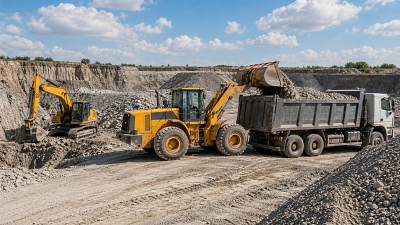
If material sits above grade and trucks rotate quickly, loading cycles can be very efficient.
The machine can travel between pile, hopper, and truck without needing a transport trailer.
That flexibility is useful on road building, municipal works, quarry yards, and staging areas.
A wheel loader also handles rehandling tasks well.
When stockpiles need constant reshaping, it keeps the site organized while maintaining truck loading capacity.
From a coordination standpoint, that reduces idle time across the transport chain.
- Fast travel speed between work points
- Strong performance on loose material and aggregate
- Efficient truck loading from surface stockpiles
- Useful for cleanup, backfilling, and material transfer
- Easy adaptation with buckets, forks, or quick couplers
On sites with repeated short hauls, the wheel loader often improves overall rhythm.
It keeps material moving instead of waiting for repositioning.
That can matter more than theoretical bucket volume.
Where an Excavator Handles Loading Better
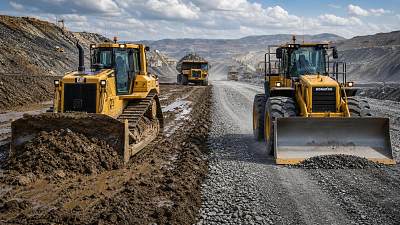
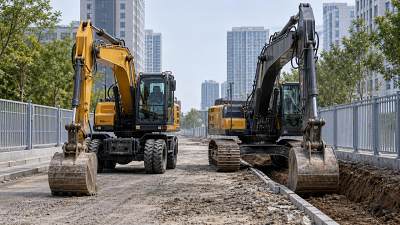
An excavator becomes the better loading machine when digging and loading happen in one sequence.
That includes trench spoil removal, basement excavation, rock face loading, and deep cut operations.
Because the machine works from a fixed position, it can load trucks with good control and consistent swing cycles.
This makes an excavator especially effective in tighter zones.
It also handles uneven ground better when undercarriage stability matters.
More importantly, it can reach below grade without extra benching or push support.
In practical terms, that reduces double handling.
- Best for digging and loading in one operation
- Better reach over obstacles or into confined areas
- More controlled loading for fragile haul roads or edge work
- Strong performance with sticky soil, trench spoil, or blasted rock
- Suitable when truck access must stay outside the dig zone
So while a wheel loader is versatile, an excavator can be more productive when the face itself is the loading source.
Comparing Key Decision Factors
A direct comparison helps when both machines seem viable.
Looking at recent project trends, cycle efficiency is no longer the only priority.
Fuel cost, machine utilization, and truck synchronization now have equal weight.
That often strengthens the case for a wheel loader on mixed support duties.
But if the workflow is excavation-led, the excavator still delivers cleaner production logic.
Fuel, Labor, and Site Coordination Considerations
Equipment selection should connect to total operating cost, not purchase price alone.
A wheel loader may burn more or less fuel than an excavator depending on travel distance and material density.
The important point is fuel per loaded truck, not fuel per engine hour.
Labor planning matters too.
A wheel loader can replace part of the support work that otherwise requires another machine.
That includes pile management, site cleanup, pallet movement, or quick material relocation.
An excavator, however, can reduce rework when the material starts in a trench or cut.
This also means fewer passes before loading is complete.
From a project control angle, fewer passes usually means lower wear and more predictable scheduling.
How to Choose for Different Jobsite Conditions
The fastest way to decide is to match the machine to the dominant loading condition.
- Choose a wheel loader when loading comes from surface piles or processed material.
- Choose a wheel loader when trucks move frequently between several short loading points.
- Choose a wheel loader when one machine must cover loading and site support tasks.
- Choose an excavator when material must be dug, lifted, and loaded from below grade.
- Choose an excavator when truck access is restricted near the work face.
- Choose an excavator when precision, reach, or slope stability matters more than travel speed.
There is also a hybrid reality on many projects.
An excavator may handle primary digging, while a wheel loader manages stockpiles and truck queuing support.
When budget allows, that pairing often delivers the smoothest loading system.
Final Decision: Which One Handles Mixed Loading Better?
For most mixed jobsites, the wheel loader handles loading better when mobility and task variety drive performance.
It is usually the more flexible choice for aggregate, loose soil, short transfer work, and fast truck service.
That makes the wheel loader a strong decision for dynamic site conditions.
Still, the excavator handles mixed loading better when the site is excavation-heavy and access is constrained.
The right answer depends on where loading begins and how material moves after pickup.
Before ordering equipment, review cycle paths, truck spacing, material condition, and the share of digging versus rehandling.
A clear loading map usually reveals whether a wheel loader or an excavator will return better project value.
For broader equipment sourcing, supplier comparison, and heavy machinery buying insight, the Global Heavy Truck Industry Platform can support more informed selection decisions across transport and construction operations.
Trending News
- What drives logging truck cost beyond the base purchase price?
- How to match lowbed trailer deck height to your hauling equipment
- What documents are needed to export a low bed trailer to Southeast Asia?
- What to verify before choosing a delivery truck supplier for school transportation
- What an excavator manufacturer catalog should show before you compare models
Tag
Recommended News
 Truck ReviewsBulk Trailer Capacity vs Stability: What Matters Most on SiteBulk trailer decisions are not just about capacity. Learn how stability, axle setup, tipping safety, and site conditions affect real productivity and smarter fleet performance.
 Truck ReviewsSHACMAN X5000 6×4 Dump Truck: Payload, Fuel Use, and Site Fit ExplainedSHACMAN X5000 6×4 Dump truck guide covering payload, fuel use, and site fit. See how this heavy-duty model supports smarter hauling decisions and lower operating risk.
 Truck ReviewsMixer Truck Capacity Guide: Choosing the Right Size for Jobsite EfficiencyMixer truck capacity guide for better jobsite efficiency. Learn how to choose the right size to reduce trips, improve concrete delivery flow, and compare supplier options with confidence.
 Truck ReviewsWheel Loader vs Excavator: Which Handles Mixed Jobsite Loading BetterWheel loader or excavator? Discover which machine handles mixed jobsite loading better, cuts delays, improves truck flow, and delivers stronger site efficiency.
 Truck ReviewsHow to Choose a Log Truck for Steep Terrain and Long HaulsLog truck selection guide for steep terrain and long hauls. Learn how to compare drivetrain, braking, payload, and durability to cut risk, improve uptime, and choose the right truck.
 Truck ReviewsTruck Dozer vs Wheel Dozer: Which Fits Tough Jobsite ConditionsTruck dozer vs wheel dozer: discover which machine performs better in soft ground, rock, slopes, and fast cycles, and choose the right fit for tough jobsites with confidence.
 Truck ReviewsCurtain Side Trailer vs Box Trailer for Mixed Cargo LoadsCurtain side trailer vs box trailer: discover which option handles mixed cargo loads better for faster loading, stronger protection, and more efficient multi-stop deliveries.
 Truck ReviewsTruck Tipper for Construction: Key Specs That Affect Loading EfficiencyTruck tipper for construction buying guide: compare body volume, hydraulics, chassis strength, axle setup, and tipping angle to improve loading efficiency and jobsite output.
 Truck ReviewsSHACMAN X5000 6×4 Dump Truck: Payload, Fuel Use, and Jobsite FitSHACMAN X5000 6×4 Dump truck insights on payload, fuel use, and jobsite fit. See how it performs in construction, quarry, and infrastructure work before you buy.
 Truck ReviewsHeavy Duty Trucks for Sale: Compare Payload, Fuel Use, and Service LifeHeavy duty trucks for sale: compare payload, fuel use, and service life to find reliable, cost-efficient transport solutions and smarter global sourcing options.
 Truck ReviewsTruck Excavator vs Standard Digger for Tight Job SitesTruck excavator or standard digger for tight job sites? Compare mobility, stability, setup speed, and real productivity to choose the smarter machine.
 Truck ReviewsSHACMAN X5000 6×4 Dump Truck Review for Heavy HaulSHACMAN X5000 6×4 Dump truck review for heavy haul: compare performance, payload, durability, safety, costs, and sourcing tips for demanding projects.
 Truck ReviewsLight Duty Truck With Durable Engine: What Matters MostLight duty truck with durable engine: discover the key checks for uptime, lower fuel costs, smarter maintenance, and reliable performance before you buy.
 Truck ReviewsWhat Makes a Truck Tipper for Construction Perform Better On-Site?Truck tipper for construction performance depends on site conditions, body strength, hydraulics, and traction. Learn how to choose the right model for safer, faster, more efficient jobs.
 Truck ReviewsLogging Truck Producer Comparison: Durability Issues That Affect UptimeLogging truck producer comparison guide: discover the durability issues that impact uptime, repair costs, and safety, and learn how to choose a truck built for harsh forestry transport.
 Truck ReviewsTruck Tipper for Construction: When Payload Matters More Than PriceTruck tipper for construction buying guide: learn why payload, durability, and cycle efficiency matter more than price to cut costs, boost uptime, and improve site productivity.
 Truck ReviewsCrane Truck Manufacturer Comparison for Urban Lifting and Narrow SitesCrane truck manufacturer comparison for urban lifting: discover how to choose compact, safe, high-efficiency models for narrow sites, faster setup, and reliable support.
 Truck ReviewsTruck Cement Mixer Manufacturer Comparison: Drum Design, Output, and ServiceTruck cement mixer manufacturer comparison guide covering drum design, real output, and after-sales service. Help your team compare suppliers, reduce sourcing risk, and choose with confidence.
 Truck ReviewsTruck Tipper Manufacturer Comparison: Build Quality Points That MatterTruck tipper manufacturer comparison guide: discover the build quality points that truly affect durability, payload stability, maintenance, and long-term operating cost.
 Truck ReviewsTruck Cement for Sale: How to Judge Value From Photos and Spec SheetsTruck cement for sale buyers can learn to judge true value from photos and spec sheets. Spot wear, compare capacity, and avoid costly mistakes before you contact sellers.
 Truck ReviewsLogging Truck Producer Comparison: Features That Matter in Tough TerrainLogging truck producer comparison for tough terrain: discover the features that impact traction, stability, durability, and uptime to choose the right forestry truck with confidence.
 Truck ReviewsLogging Truck Producer Comparison: Capacity, Durability, and ServiceLogging truck producer comparison guide covering capacity, durability, and service. Compare real-world fit, reduce fleet risk, and choose reliable suppliers for forestry transport.
 Truck ReviewsFlatbed Trailer Supplier With High Strength: What Really MattersFlatbed trailer supplier with high strength: learn how to assess materials, structure, compliance, and lifecycle value to choose reliable trailer partners with confidence.
 Truck ReviewsDoes Quick Installation Really Matter When Choosing an Excavator ManufacturerExcavator manufacturer with quick installation: learn why fast setup only matters when paired with reliable performance, lower downtime, operator support, and long-term jobsite efficiency.
 Truck ReviewsWhat Makes a Truck Tipper for Construction Easier to Maintain On SiteTruck tipper for construction models with easy hydraulic access, modular parts, and clear service points cut downtime, lower repair costs, and keep demanding jobsites running.