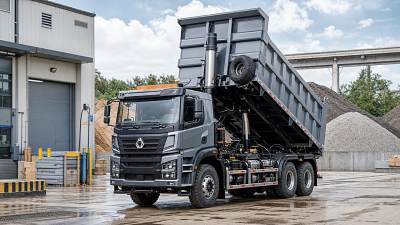
Truck Excavator vs Standard Digger for Tight Job Sites
Truck Excavator vs Standard Digger for Tight Job Sites: what really changes on site?
When access is narrow, equipment choice affects far more than digging speed.
A truck excavator may save transport time and reduce repositioning delays.
A standard digger may offer better stability, deeper breakout force, and wider attachment compatibility.
The better option depends on road travel, surface conditions, turning room, and daily work cycles.
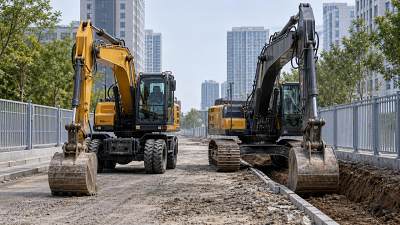
In urban utility work, roadside trenching, and municipal repair zones, this comparison becomes especially practical.
That is why the truck excavator question appears so often in heavy equipment sourcing discussions.
Across global B2B equipment platforms, buyers increasingly compare machine mobility with actual jobsite productivity.
The most useful approach is not asking which machine is universally better.
It is asking which machine creates fewer delays, lower risk, and cleaner execution in confined conditions.
Is a truck excavator just a wheeled digger, or is the difference more practical?
The simple answer is that the truck excavator is defined by road mobility and fast relocation.
It can travel between nearby sites with less dependence on trailers or secondary transport equipment.
A standard digger usually refers to a conventional crawler excavator or similar tracked machine.
That design favors traction, lifting stability, and stronger performance on rough or soft ground.
So the distinction is not only wheels versus tracks.
It is mobility pattern versus ground performance.
On tight job sites, this matters because setup windows are often short.
Road closure permits, nearby traffic, and limited staging areas leave little margin for slow deployment.
A truck excavator often enters, stabilizes, works, and exits faster in these scenarios.
However, if the surface is uneven, muddy, or broken, speed on arrival may not mean speed during operation.
That is where many selection mistakes begin.
Which machine fits narrow urban and roadside work more naturally?
In dense urban corridors, the truck excavator often feels more efficient from a logistics standpoint.
It can move between service points without waiting for a low-bed trailer.
That helps in drainage repair, cable trenching, guardrail foundation work, and municipal maintenance.
The machine is especially useful where multiple short tasks happen within one shift.
A standard digger is usually stronger when the site itself is the main challenge.
Think of unpaved compounds, deep trench edges, demolition zones, or partially prepared infrastructure sites.
Its advantage grows when digging force and undercarriage grip decide cycle time.
A helpful way to judge fit is to count movement types.
- If the machine must travel on public roads several times daily, a truck excavator gains value.
- If it stays on one constrained site for long hours, a standard digger may work better.
- If ground support is weak, tracked equipment usually carries less operational risk.
- If nearby traffic management is strict, faster entry and exit may justify the truck excavator.
In actual sourcing decisions, site maps are often more useful than general machine brochures.
What should you compare first: mobility, reach, setup speed, or stability?
These factors should be compared together, because tight sites rarely punish only one weakness.
The table below summarizes the most common evaluation points.
If only one factor is compared, the conclusion can be misleading.
For example, a truck excavator may win on dispatch speed but lose productivity on unstable shoulders.
A standard digger may cost more to move, yet complete the task with fewer work interruptions.
Where do operators and evaluators most often make the wrong call?
One common mistake is treating all tight job sites as identical.
A narrow downtown lane is different from a narrow muddy access trench.
Both are constrained, but they reward different machine characteristics.
Another mistake is focusing only on machine dimensions.
Actual efficiency also depends on outrigger deployment, counterweight swing, attachment clearance, and spoil placement.
A compact truck excavator can still struggle if stabilizer space is restricted.
A standard digger can still fit if the work zone allows controlled repositioning inside the footprint.
There is also a cost illusion that appears in short projects.
Lower transport effort makes the truck excavator look cheaper at first glance.
But if the machine needs repeated stabilization checks, productivity may fall.
By contrast, a standard digger may have higher mobilization cost yet better hourly output.
The wrong call usually comes from ignoring the full work cycle.
- Arrival and permit time
- Setup and stabilization time
- Effective digging time
- Repositioning frequency
- Exit and road reopening time
How do cost, service support, and sourcing affect the final decision?
Purchase price alone rarely settles the truck excavator debate.
Parts availability, local service capability, axle compliance, tire wear, and attachment support matter just as much.
This is especially true for cross-border equipment evaluation.
A machine that looks efficient on paper can become expensive if support is weak.
That is why many buyers now use digital heavy equipment marketplaces more strategically.
On a global commercial vehicle and construction machinery platform, the value is not just seeing listings.
The stronger benefit is comparing suppliers, machine categories, service reach, and spare parts ecosystems in one place.
For equipment linked to road transport and infrastructure work, that visibility reduces sourcing uncertainty.
A platform that connects heavy truck, trailer, chassis, and construction machinery resources is useful here.
It helps connect machine choice with transport method, job application, and supplier credibility.
When reviewing a truck excavator, it is smart to confirm these points early.
- Road travel speed and legal operating limits
- Stabilizer configuration for confined work zones
- Boom options and working radius
- Common spare parts lead times
- Hydraulic compatibility with planned attachments
- After-sales support across the intended region
Those details often decide whether the machine remains efficient after delivery.
So, when should a truck excavator win, and when should it not?
A truck excavator usually wins when the project includes frequent road travel and short work durations per stop.
It is a strong fit for municipal repairs, roadside utility access, and distributed maintenance routes.
It also makes sense where minimizing transport equipment improves scheduling flexibility.
A standard digger remains the better choice when the ground is difficult or digging loads stay consistently high.
It is also safer when the work zone demands firm footing more than fast relocation.
If the decision still feels close, compare the site by hours lost rather than machine labels.
How many hours are spent moving, setting up, stabilizing, waiting, and restoring traffic flow?
That calculation usually reveals whether the truck excavator brings real value.
Before moving forward, list the actual site constraints, travel pattern, surface conditions, and attachment needs.
Then compare supplier information, service capacity, and lifecycle support alongside machine specifications.
A well-structured comparison leads to better equipment selection than relying on general preference.
For tight job sites, the right answer is rarely abstract. It is operational, measurable, and specific to the route and ground.
Trending News
- How to choose a refrigerated truck for multi-stop urban deliveries
- Tata Motors Returns to Q2 Profit on Strong Commercial Vehicle Demand
- How to load an excavator onto a lowbed trailer without tipping
- China’s New Energy Heavy Truck Sales Share Exceeds 50% in September 2026
- CATL Unveils Heavy-Truck Battery Range Extension, Signs Deals for 13,000 Vehicles
Tag
Recommended News
 Truck ReviewsBulk Trailer Capacity vs Stability: What Matters Most on SiteBulk trailer decisions are not just about capacity. Learn how stability, axle setup, tipping safety, and site conditions affect real productivity and smarter fleet performance.
 Truck ReviewsSHACMAN X5000 6×4 Dump Truck: Payload, Fuel Use, and Site Fit ExplainedSHACMAN X5000 6×4 Dump truck guide covering payload, fuel use, and site fit. See how this heavy-duty model supports smarter hauling decisions and lower operating risk.
 Truck ReviewsMixer Truck Capacity Guide: Choosing the Right Size for Jobsite EfficiencyMixer truck capacity guide for better jobsite efficiency. Learn how to choose the right size to reduce trips, improve concrete delivery flow, and compare supplier options with confidence.
 Truck ReviewsWheel Loader vs Excavator: Which Handles Mixed Jobsite Loading BetterWheel loader or excavator? Discover which machine handles mixed jobsite loading better, cuts delays, improves truck flow, and delivers stronger site efficiency.
 Truck ReviewsHow to Choose a Log Truck for Steep Terrain and Long HaulsLog truck selection guide for steep terrain and long hauls. Learn how to compare drivetrain, braking, payload, and durability to cut risk, improve uptime, and choose the right truck.
 Truck ReviewsTruck Dozer vs Wheel Dozer: Which Fits Tough Jobsite ConditionsTruck dozer vs wheel dozer: discover which machine performs better in soft ground, rock, slopes, and fast cycles, and choose the right fit for tough jobsites with confidence.
 Truck ReviewsCurtain Side Trailer vs Box Trailer for Mixed Cargo LoadsCurtain side trailer vs box trailer: discover which option handles mixed cargo loads better for faster loading, stronger protection, and more efficient multi-stop deliveries.
 Truck ReviewsTruck Tipper for Construction: Key Specs That Affect Loading EfficiencyTruck tipper for construction buying guide: compare body volume, hydraulics, chassis strength, axle setup, and tipping angle to improve loading efficiency and jobsite output.
 Truck ReviewsSHACMAN X5000 6×4 Dump Truck: Payload, Fuel Use, and Jobsite FitSHACMAN X5000 6×4 Dump truck insights on payload, fuel use, and jobsite fit. See how it performs in construction, quarry, and infrastructure work before you buy.
 Truck ReviewsHeavy Duty Trucks for Sale: Compare Payload, Fuel Use, and Service LifeHeavy duty trucks for sale: compare payload, fuel use, and service life to find reliable, cost-efficient transport solutions and smarter global sourcing options.
 Truck ReviewsTruck Excavator vs Standard Digger for Tight Job SitesTruck excavator or standard digger for tight job sites? Compare mobility, stability, setup speed, and real productivity to choose the smarter machine.
 Truck ReviewsSHACMAN X5000 6×4 Dump Truck Review for Heavy HaulSHACMAN X5000 6×4 Dump truck review for heavy haul: compare performance, payload, durability, safety, costs, and sourcing tips for demanding projects.
 Truck ReviewsLight Duty Truck With Durable Engine: What Matters MostLight duty truck with durable engine: discover the key checks for uptime, lower fuel costs, smarter maintenance, and reliable performance before you buy.
 Truck ReviewsWhat Makes a Truck Tipper for Construction Perform Better On-Site?Truck tipper for construction performance depends on site conditions, body strength, hydraulics, and traction. Learn how to choose the right model for safer, faster, more efficient jobs.
 Truck ReviewsLogging Truck Producer Comparison: Durability Issues That Affect UptimeLogging truck producer comparison guide: discover the durability issues that impact uptime, repair costs, and safety, and learn how to choose a truck built for harsh forestry transport.
 Truck ReviewsTruck Tipper for Construction: When Payload Matters More Than PriceTruck tipper for construction buying guide: learn why payload, durability, and cycle efficiency matter more than price to cut costs, boost uptime, and improve site productivity.
 Truck ReviewsCrane Truck Manufacturer Comparison for Urban Lifting and Narrow SitesCrane truck manufacturer comparison for urban lifting: discover how to choose compact, safe, high-efficiency models for narrow sites, faster setup, and reliable support.
 Truck ReviewsTruck Cement Mixer Manufacturer Comparison: Drum Design, Output, and ServiceTruck cement mixer manufacturer comparison guide covering drum design, real output, and after-sales service. Help your team compare suppliers, reduce sourcing risk, and choose with confidence.
 Truck ReviewsTruck Tipper Manufacturer Comparison: Build Quality Points That MatterTruck tipper manufacturer comparison guide: discover the build quality points that truly affect durability, payload stability, maintenance, and long-term operating cost.
 Truck ReviewsTruck Cement for Sale: How to Judge Value From Photos and Spec SheetsTruck cement for sale buyers can learn to judge true value from photos and spec sheets. Spot wear, compare capacity, and avoid costly mistakes before you contact sellers.
 Truck ReviewsLogging Truck Producer Comparison: Features That Matter in Tough TerrainLogging truck producer comparison for tough terrain: discover the features that impact traction, stability, durability, and uptime to choose the right forestry truck with confidence.
 Truck ReviewsLogging Truck Producer Comparison: Capacity, Durability, and ServiceLogging truck producer comparison guide covering capacity, durability, and service. Compare real-world fit, reduce fleet risk, and choose reliable suppliers for forestry transport.
 Truck ReviewsFlatbed Trailer Supplier With High Strength: What Really MattersFlatbed trailer supplier with high strength: learn how to assess materials, structure, compliance, and lifecycle value to choose reliable trailer partners with confidence.
 Truck ReviewsDoes Quick Installation Really Matter When Choosing an Excavator ManufacturerExcavator manufacturer with quick installation: learn why fast setup only matters when paired with reliable performance, lower downtime, operator support, and long-term jobsite efficiency.
 Truck ReviewsWhat Makes a Truck Tipper for Construction Easier to Maintain On SiteTruck tipper for construction models with easy hydraulic access, modular parts, and clear service points cut downtime, lower repair costs, and keep demanding jobsites running.