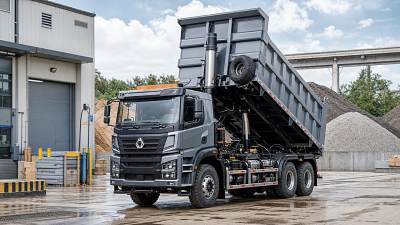
Bulk Trailer Capacity vs Stability: What Matters Most on Site
Bulk Trailer Capacity vs Stability: What Matters Most on Site
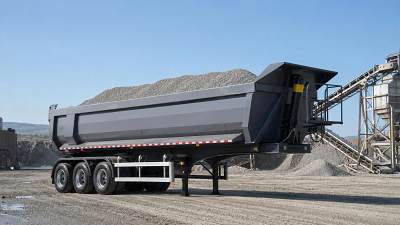
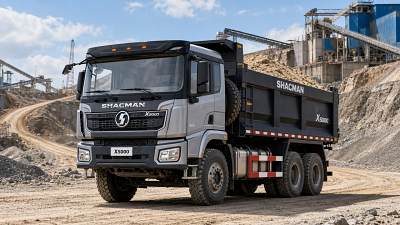
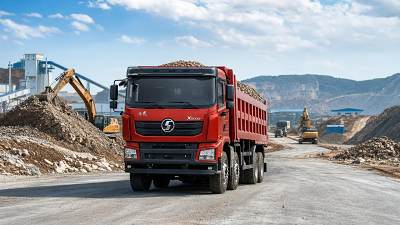
When choosing a bulk trailer for demanding job sites, capacity usually gets the spotlight first.
Bigger numbers look attractive on paper, especially when material volume is rising and delivery windows are tight.
But on real ground, stability often decides whether a bulk trailer performs efficiently or becomes a daily risk.
That difference shows up during loading, hauling, tipping, braking, and turning across uneven surfaces.
A high-capacity bulk trailer may move more product per trip.
Still, if balance, axle layout, suspension response, and center of gravity are poorly matched, that extra capacity can hurt productivity.
In practice, the best choice is rarely about capacity alone.
It is about how much a bulk trailer can carry safely, repeatedly, and smoothly under actual site conditions.
Why Capacity Gets So Much Attention
Capacity is easy to compare.
Buyers see body volume, payload rating, and expected trips per day, then calculate cost per ton.
That makes sense, especially for sand, grain, cement powder, aggregates, or mining materials.
A larger bulk trailer can reduce fuel use per delivered unit when routes are stable and loading conditions are controlled.
It can also improve fleet utilization by cutting empty cycles and reducing queue pressure at loading points.
From a planning angle, high capacity looks like an immediate efficiency win.
The problem is that site work rarely stays ideal for long.
Road shoulders soften, ramps change shape, moisture shifts material flow, and hurried loading creates uneven distribution.
Once those variables enter the picture, bulk trailer stability starts to matter more than raw capacity figures.
What Stability Really Means for a Bulk Trailer
Stability is not one single feature.
It is the combined result of structure, suspension, axle spacing, load placement, tire condition, and operating behavior.
For a bulk trailer, stability shows up in four key moments.
- During loading, the trailer must accept material without severe side bias.
- During travel, it must stay planted through corners, braking zones, and rough tracks.
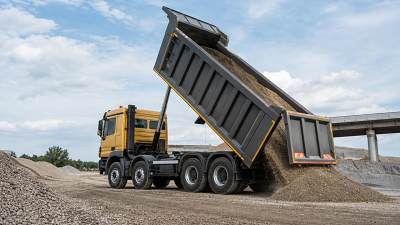
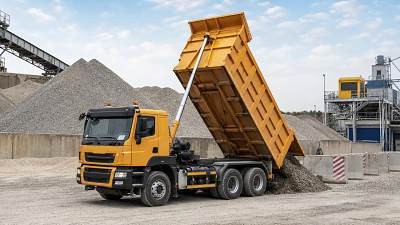
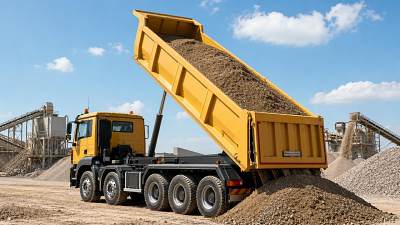
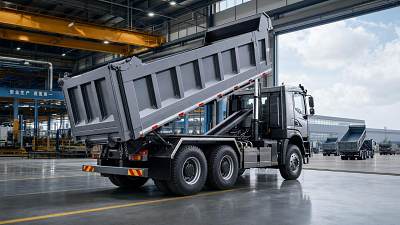
- During tipping, it must resist lean and sudden weight transfer.
- During unloading, it must release material predictably, without hang-up or sudden slide.
A bulk trailer can have impressive volume and still feel unstable if those moments are not properly engineered.
That is why experienced site teams often ask about chassis strength and center of gravity before asking about cubic meters.
When More Capacity Starts Working Against You
More capacity is useful only when the trailer can control the load.
As a bulk trailer body becomes taller or longer, load movement has more influence on balance.
That can create problems in common site situations.
- Loose material piles higher and raises the center of gravity.
- Wet or sticky loads discharge unevenly during tipping.
- Soft ground lets one side sink, increasing rollover risk.
- Tight turns amplify lateral force on a fully loaded bulk trailer.
- Uneven loader technique places excess weight on one axle group.
In these cases, higher payload potential does not guarantee better daily output.
A slightly smaller bulk trailer with stronger stability may complete more usable cycles with fewer delays and less damage.
That matters because real productivity is measured across the shift, not only on the spec sheet.
Key Design Factors That Improve Bulk Trailer Stability
If stability is the priority, several design details deserve close attention.
1. Center of Gravity
A lower center of gravity usually gives a bulk trailer better control on slopes and during turns.
Body shape, floor height, and sidewall design all influence this.
2. Axle Configuration
Axle spacing affects load sharing and turning behavior.
A well-matched axle setup helps a bulk trailer stay balanced over rough ground and reduces concentrated stress.
3. Suspension Type
Suspension is not only about ride comfort.
It controls how the bulk trailer reacts to bumps, side loads, and sudden shifts in terrain.
Poor suspension tuning can make a loaded trailer feel unsettled even at modest speed.
4. Chassis Rigidity
A rigid frame supports better alignment between body, axles, and tipping components.
For a bulk trailer used in mining or construction, frame distortion can quickly become a safety issue.
5. Body Geometry and Material Flow
The internal shape of a bulk trailer affects discharge behavior.
Smooth unloading lowers the chance of one-sided hang-up, which is a common cause of tipping accidents.
How Site Conditions Change the Right Answer
There is no universal winner between capacity and stability.
The right bulk trailer depends on where and how it works.
On paved logistics routes with uniform cargo, higher capacity often makes financial sense.
On mixed terrain, temporary roads, quarries, and municipal construction sites, stability usually deserves more weight.
This becomes even clearer when weather changes daily.
Mud, standing water, frozen patches, and loose shoulders can turn a routine route into a rollover hazard.
In actual operations, a stable bulk trailer protects uptime because it tolerates more variation without forcing constant compromises.
A Practical Buying Checklist for Bulk Trailer Decisions
When comparing a bulk trailer, simple questions can reveal more than headline payload claims.
- What material will the bulk trailer carry most often?
- How often will it tip on sloped or soft ground?
- How sensitive is the load to shifting or sticking?
- Is the route mostly paved, mixed, or off-road?
- How consistent is loading accuracy from shift to shift?
- Can the tow vehicle and braking system control full payload safely?
- Does the trailer design support even discharge in wet conditions?
These questions move the discussion from theoretical capacity to usable capacity.
That is a much better way to judge the long-term value of a bulk trailer.
So, What Matters Most on Site?
If the site is controlled, flat, and predictable, capacity can lead the decision.
If the site is rough, variable, or unloading-heavy, stability matters more.
For most demanding operations, stability is what protects both safety and output.
A bulk trailer that carries slightly less but stays composed through every cycle often delivers better real-world performance.
That also means fewer interruptions, lower maintenance stress, and more predictable scheduling.
When evaluating the next bulk trailer, do not ask only how much it can hold.
Ask how confidently it can load, travel, tip, and return under your actual site conditions.
That is usually where the smartest bulk trailer decision becomes obvious.
Trending News
- XCMG Unveils Cabless L4 Autonomous Electric Yard Truck Concept
- How order size affects wholesale pricing for cement mixer trucks
- Commercial Vehicle Leaders Hold Firm in Q1–Q3 2026 Automotive Influence Index
- How to choose a refrigerated truck for multi-stop urban deliveries
- Tata Motors Returns to Q2 Profit on Strong Commercial Vehicle Demand
Tag
Recommended News
 Truck ReviewsBulk Trailer Capacity vs Stability: What Matters Most on SiteBulk trailer decisions are not just about capacity. Learn how stability, axle setup, tipping safety, and site conditions affect real productivity and smarter fleet performance.
 Truck ReviewsSHACMAN X5000 6×4 Dump Truck: Payload, Fuel Use, and Site Fit ExplainedSHACMAN X5000 6×4 Dump truck guide covering payload, fuel use, and site fit. See how this heavy-duty model supports smarter hauling decisions and lower operating risk.
 Truck ReviewsMixer Truck Capacity Guide: Choosing the Right Size for Jobsite EfficiencyMixer truck capacity guide for better jobsite efficiency. Learn how to choose the right size to reduce trips, improve concrete delivery flow, and compare supplier options with confidence.
 Truck ReviewsWheel Loader vs Excavator: Which Handles Mixed Jobsite Loading BetterWheel loader or excavator? Discover which machine handles mixed jobsite loading better, cuts delays, improves truck flow, and delivers stronger site efficiency.
 Truck ReviewsHow to Choose a Log Truck for Steep Terrain and Long HaulsLog truck selection guide for steep terrain and long hauls. Learn how to compare drivetrain, braking, payload, and durability to cut risk, improve uptime, and choose the right truck.
 Truck ReviewsTruck Dozer vs Wheel Dozer: Which Fits Tough Jobsite ConditionsTruck dozer vs wheel dozer: discover which machine performs better in soft ground, rock, slopes, and fast cycles, and choose the right fit for tough jobsites with confidence.
 Truck ReviewsCurtain Side Trailer vs Box Trailer for Mixed Cargo LoadsCurtain side trailer vs box trailer: discover which option handles mixed cargo loads better for faster loading, stronger protection, and more efficient multi-stop deliveries.
 Truck ReviewsTruck Tipper for Construction: Key Specs That Affect Loading EfficiencyTruck tipper for construction buying guide: compare body volume, hydraulics, chassis strength, axle setup, and tipping angle to improve loading efficiency and jobsite output.
 Truck ReviewsSHACMAN X5000 6×4 Dump Truck: Payload, Fuel Use, and Jobsite FitSHACMAN X5000 6×4 Dump truck insights on payload, fuel use, and jobsite fit. See how it performs in construction, quarry, and infrastructure work before you buy.
 Truck ReviewsHeavy Duty Trucks for Sale: Compare Payload, Fuel Use, and Service LifeHeavy duty trucks for sale: compare payload, fuel use, and service life to find reliable, cost-efficient transport solutions and smarter global sourcing options.
 Truck ReviewsTruck Excavator vs Standard Digger for Tight Job SitesTruck excavator or standard digger for tight job sites? Compare mobility, stability, setup speed, and real productivity to choose the smarter machine.
 Truck ReviewsSHACMAN X5000 6×4 Dump Truck Review for Heavy HaulSHACMAN X5000 6×4 Dump truck review for heavy haul: compare performance, payload, durability, safety, costs, and sourcing tips for demanding projects.
 Truck ReviewsLight Duty Truck With Durable Engine: What Matters MostLight duty truck with durable engine: discover the key checks for uptime, lower fuel costs, smarter maintenance, and reliable performance before you buy.
 Truck ReviewsWhat Makes a Truck Tipper for Construction Perform Better On-Site?Truck tipper for construction performance depends on site conditions, body strength, hydraulics, and traction. Learn how to choose the right model for safer, faster, more efficient jobs.
 Truck ReviewsLogging Truck Producer Comparison: Durability Issues That Affect UptimeLogging truck producer comparison guide: discover the durability issues that impact uptime, repair costs, and safety, and learn how to choose a truck built for harsh forestry transport.
 Truck ReviewsTruck Tipper for Construction: When Payload Matters More Than PriceTruck tipper for construction buying guide: learn why payload, durability, and cycle efficiency matter more than price to cut costs, boost uptime, and improve site productivity.
 Truck ReviewsCrane Truck Manufacturer Comparison for Urban Lifting and Narrow SitesCrane truck manufacturer comparison for urban lifting: discover how to choose compact, safe, high-efficiency models for narrow sites, faster setup, and reliable support.
 Truck ReviewsTruck Cement Mixer Manufacturer Comparison: Drum Design, Output, and ServiceTruck cement mixer manufacturer comparison guide covering drum design, real output, and after-sales service. Help your team compare suppliers, reduce sourcing risk, and choose with confidence.
 Truck ReviewsTruck Tipper Manufacturer Comparison: Build Quality Points That MatterTruck tipper manufacturer comparison guide: discover the build quality points that truly affect durability, payload stability, maintenance, and long-term operating cost.
 Truck ReviewsTruck Cement for Sale: How to Judge Value From Photos and Spec SheetsTruck cement for sale buyers can learn to judge true value from photos and spec sheets. Spot wear, compare capacity, and avoid costly mistakes before you contact sellers.
 Truck ReviewsLogging Truck Producer Comparison: Features That Matter in Tough TerrainLogging truck producer comparison for tough terrain: discover the features that impact traction, stability, durability, and uptime to choose the right forestry truck with confidence.
 Truck ReviewsLogging Truck Producer Comparison: Capacity, Durability, and ServiceLogging truck producer comparison guide covering capacity, durability, and service. Compare real-world fit, reduce fleet risk, and choose reliable suppliers for forestry transport.
 Truck ReviewsFlatbed Trailer Supplier With High Strength: What Really MattersFlatbed trailer supplier with high strength: learn how to assess materials, structure, compliance, and lifecycle value to choose reliable trailer partners with confidence.
 Truck ReviewsDoes Quick Installation Really Matter When Choosing an Excavator ManufacturerExcavator manufacturer with quick installation: learn why fast setup only matters when paired with reliable performance, lower downtime, operator support, and long-term jobsite efficiency.
 Truck ReviewsWhat Makes a Truck Tipper for Construction Easier to Maintain On SiteTruck tipper for construction models with easy hydraulic access, modular parts, and clear service points cut downtime, lower repair costs, and keep demanding jobsites running.