Bulldozer Price Breakdown: What Drives Total Ownership Cost in 2026
Bulldozer Price Breakdown: What Drives Total Ownership Cost in 2026
Understanding bulldozer price is no longer just about the initial purchase.
In 2026, the smarter question is total ownership cost over the machine’s working life.
A low sticker price can look attractive, then become expensive through fuel burn, downtime, and weak resale.
That is why bulldozer price now sits inside a wider sourcing and risk-control discussion.
From recent market shifts, buyers are comparing ownership models more carefully than before.
More visible signals include tighter project margins, rising parts expectations, and longer equipment utilization cycles.
This also means bulldozer price must be reviewed alongside supplier reliability, after-sales support, and equipment fit.
In practical sourcing work, the cheapest machine is rarely the lowest-cost machine over time.
Why Bulldozer Price Has Become a Total Cost Question
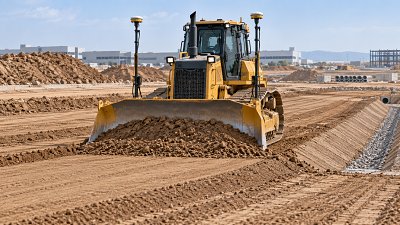
Bulldozers serve demanding jobs in earthmoving, mining, road building, and site preparation.
These applications put constant pressure on engines, undercarriage systems, blades, and hydraulic components.
As a result, bulldozer price must be linked to workload, terrain, operating hours, and maintenance intensity.
A machine for light municipal work follows a different cost pattern than one used in quarry operations.
The same base model can produce very different ownership outcomes depending on jobsite conditions.
This is where many bulldozer price comparisons go wrong.
They compare machine quotations without mapping the full cost profile of real use.
A sound decision starts with expected annual hours, blade type, engine power, and undercarriage design.
The Main Drivers Behind Bulldozer Price in 2026
Several cost factors are shaping bulldozer price more directly in 2026.
Some are visible in quotations.
Others only appear after delivery.
1. Machine size and configuration
Larger horsepower and operating weight usually raise bulldozer price significantly.
Track width, blade style, ripper options, and cabin features also change the final quotation.
A specification that exceeds job needs often creates unnecessary ownership cost.
2. Emissions and engine technology
Engines meeting stricter compliance standards can push up bulldozer price at purchase stage.
However, they may improve fuel efficiency and market acceptance in regulated regions.
That tradeoff matters in cross-border procurement and fleet planning.
3. Steel, components, and logistics
Raw material volatility still affects bulldozer price, especially for heavy structural parts.
Imported hydraulic systems, electronics, and drivetrain components can add further pressure.
Freight costs and delivery lead times also remain part of the price equation.
4. Brand position and supplier support
A premium brand often carries a higher bulldozer price, but support depth may justify it.
Dealer coverage, technical training, warranty response, and spare parts speed all carry financial value.
When uptime matters, these items should not be treated as soft benefits.
Cost Items That Matter After Purchase
The real ownership story begins after the bulldozer arrives on site.
This is where bulldozer price should be tested against operating reality.
Fuel consumption
Fuel remains one of the biggest recurring costs in bulldozer ownership.
Even small differences in hourly fuel burn become substantial across long operating cycles.
A slightly higher bulldozer price may be justified by better engine efficiency.
Undercarriage wear
Undercarriage replacement is a major cost driver, especially in abrasive ground conditions.
Track chains, rollers, idlers, and shoes can absorb a large share of lifecycle spending.
Ignoring this while focusing only on bulldozer price creates a distorted comparison.
Maintenance and parts availability
Scheduled maintenance is predictable.
Unplanned repairs are not.
That makes parts supply one of the most practical ownership concerns.
A lower bulldozer price loses appeal fast when a machine sits idle waiting for components.
Downtime risk
Downtime has a direct operating cost and an indirect project cost.
It delays schedules, affects labor use, and can increase subcontractor exposure.
This is one reason experienced buyers treat bulldozer price as only one input.
How to Compare Bulldozer Price Across Suppliers
Comparing supplier offers requires more than placing quotations side by side.
The goal is to build an equal basis for evaluation.
That is the only way to interpret bulldozer price accurately.
- Confirm the same horsepower, blade capacity, track type, and cab specification.
- Check what is included in warranty scope and warranty duration.
- Ask for recommended spare parts packages and local stock availability.
- Review service response time and technician support coverage.
- Estimate fuel cost using expected annual operating hours.
- Request delivery schedule, installation support, and operator training details.
These checkpoints reveal whether a lower bulldozer price is genuinely competitive or simply incomplete.
In global sourcing, they also help control hidden import and commissioning costs.
A Practical Ownership Cost Framework
A simple framework can make bulldozer price analysis much more actionable.
- Start with purchase price, taxes, freight, and commissioning.
- Add annual fuel consumption based on realistic work cycles.
- Include routine maintenance, filters, fluids, and wear parts.
- Estimate undercarriage replacement using site conditions and hours.
- Model downtime risk through expected repair frequency and delay cost.
- Subtract projected resale value at the end of ownership.
This approach turns bulldozer price into a lifecycle metric instead of a one-time figure.
It also improves internal approval discussions because tradeoffs become visible and measurable.
Why Resale Value Changes the Decision
Resale value is often underestimated in bulldozer price discussions.
Yet it can offset a meaningful share of total ownership cost.
Machines with strong brand recognition and broad parts support usually keep value better.
Clean maintenance records also improve resale confidence.
So when two quotations show a similar bulldozer price, resale potential may become the deciding factor.
This matters even more for fleets that renew equipment on a planned cycle.
What a Smarter 2026 Buying Decision Looks Like
In 2026, a good decision is not based on bulldozer price alone.
It comes from matching machine capability with utilization goals, support expectations, and exit value.
That broader view reduces sourcing risk and improves long-term equipment efficiency.
For companies exploring international suppliers, a structured platform can shorten the evaluation process.
Access to product data, supplier profiles, and market insight makes bulldozer price comparison more reliable.
The key is to treat every quotation as the start of analysis, not the end of it.
When bulldozer price is connected to fuel, maintenance, uptime, and resale, the final choice becomes much clearer.
Use that lens, and total ownership cost becomes a controllable business decision rather than a surprise after delivery.
Trending News
- How to match crane truck lifting capacity to your jobsite loads
- What drives logging truck cost beyond the base purchase price?
- How to match lowbed trailer deck height to your hauling equipment
- What documents are needed to export a low bed trailer to Southeast Asia?
- What to verify before choosing a delivery truck supplier for school transportation
Tag
Recommended News
 Buying GuideHow to match crane truck lifting capacity to your jobsite loadsCrane truck capacity planning made clear: calculate gross load, radius, rigging, outriggers, and ground conditions to select safer, job-ready lifting equipment.
 Buying GuideHow to match lowbed trailer deck height to your hauling equipmentLowbed trailer deck height guide: match equipment clearance, ramp geometry, axle loads, tractor fit, and route limits for safer, more efficient hauling.
 Buying GuideWhat to verify before choosing a delivery truck supplier for school transportationDelivery truck supplier for school transportation: verify route fit, payload, safety, compliance, service support, and total cost before choosing a reliable partner.
 Buying GuideWhat an excavator manufacturer catalog should show before you compare modelsExcavator manufacturer catalog guide: verify supplier identity, configurations, hydraulics, compliance, parts support, and delivery readiness before comparing models.
 Buying GuideWhat to check before appointing a bulldozer distributorBulldozer distributor selection guide: evaluate service, parts availability, warranty, pricing, compliance, and lifecycle value to reduce downtime and protect fleet investment.
 Buying GuideWhat to verify before choosing a truck cement mixer supplierTruck cement mixer supplier checklist: verify chassis fit, drum quality, hydraulics, compliance, spare parts, and after-sales support before you buy.
 Buying GuideHow to verify a truck spare parts supplier before placing a bulk orderTruck spare parts supplier verification made practical: learn how to check part specifications, factory control, test records, samples, pricing, and delivery capability before placing a bulk order.
 Buying GuideWhat size truck container is right for a typical freight load?Truck container sizing made simple: compare payload, volume, pallet layouts, route access, and loading needs to choose the most efficient freight solution.
 Buying GuideWhat drives semi trailer price differences between similar models?Semi trailer price differences come down to frame materials, axles, suspension, coating, and configuration. Compare specifications line by line to choose lasting value.
 Buying GuideHow to compare excavator manufacturer price lists before requesting quotesCompare an excavator manufacturer price list with confidence. Learn to normalize configurations, calculate landed costs, assess options and service, and create stronger RFQs.
 Buying GuideHow to choose a mixer truck drum capacity for your concrete pourMixer truck capacity guide: match drum size to pour rate, legal payload, site access, and delivery cycles for efficient, reliable concrete placement.
 Buying GuideHow to size a bulldozer for construction site grading workBulldozer for construction sizing guide: match weight, blade, traction, grade control, and transport needs to improve grading productivity and costs.
 Buying GuideHow to assess a truck cement manufacturer’s build quality before orderingTruck cement manufacturer build quality: assess tank steel, welding, chassis integration, pneumatic systems, factory QC, and inspection evidence before ordering.
 Buying GuideWhen does a truck trailer OEM make sense for private-label fleets?Truck trailer OEM programs help private-label fleets cut lifecycle costs, standardize operations, and improve uptime. Learn when customization delivers real commercial value.
 Buying GuideWhat to verify before choosing a water truck OEM for your fleetWater truck OEM selection guide: verify chassis compatibility, tank quality, pump performance, compliance, and service support to build a safer, more reliable fleet.
 Buying GuideHow to size a cab chassis truck for a fire department apparatusCab chassis truck for fire department sizing guide: balance GVWR, axle loads, wheelbase, water tank placement, and mission needs for safer apparatus design.
 Buying GuideWhat to verify before choosing a truck chassis supplierChoose the right truck chassis supplier with a practical checklist for application fit, axle ratings, body integration, quality control, delivery reliability, and after-sales support.
 Buying GuideHow to choose a logging truck for steep and rough forest roadsLogging truck selection for steep, rough forest roads: compare traction, braking, gearing, chassis strength, tires, and supplier support for safer, more reliable hauling.
 Buying GuideHow to choose a flatbed trailer deck length for oversized loadsFlatbed trailer deck length guide for oversized loads: balance cargo support, axle weight, securement space, overhang, and route access for safer transport.
 Buying GuideHow to assess a truck chassis supplier for trailer manufacturingTruck chassis supplier for trailer manufacturing: learn how to assess technical fit, quality control, engineering support, and delivery reliability for smarter sourcing.
 Buying GuideIs the SHACMAN H3000 6×4 Cement Mixer suitable for large projects?SHACMAN H3000 6×4 Cement Mixer: assess payload, cycle time, traction, and service support to see if it can keep large concrete projects moving efficiently.
 Buying GuideHow to evaluate heavy duty trucks for sale in Russia before buyingHeavy duty trucks for sale in Russia: learn how to compare specifications, winter readiness, service support, supplier reliability, and total ownership costs before buying.
 Buying GuideWhat to verify before choosing a logging truck producerChoose a logging truck producer with confidence: verify chassis strength, load security, compliance, service support, and delivery control for demanding forestry routes.
 Buying GuideHow to choose a truck excavator for confined construction sitesTruck excavator selection for confined sites: explore access, reach, stability, attachments, and safety factors to choose a productive, space-efficient solution.
 Buying GuideHow to choose a bulk trailer for high-volume aggregate haulingBulk trailer selection guide for high-volume aggregate hauling—optimize payload, body type, safety, compliance, and total cost for reliable fleet performance.