XCMG Unveils Cabless L4 Autonomous Electric Yard Truck Concept
XCMG’s SDA411 concept puts cabless, autonomous electric transport in focus for industrial parks and ports. The event timing is not explicitly specified in the supplied event-time field, although the accompanying summary states October 25, 2026; that date remains subject to verification. The supplied information identifies no new policy, standard, certification requirement or trade rule. From an industry perspective, the announcement instead raises questions about how buyers, equipment integrators and service providers might assess operating permissions, safety evidence and delivery requirements for a vehicle designed without a traditional cab.
A Cabless Concept for Enclosed Logistics Operations
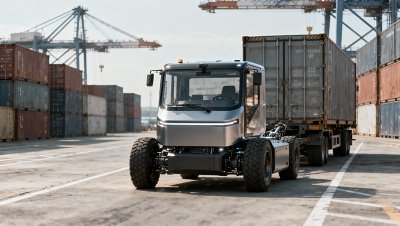
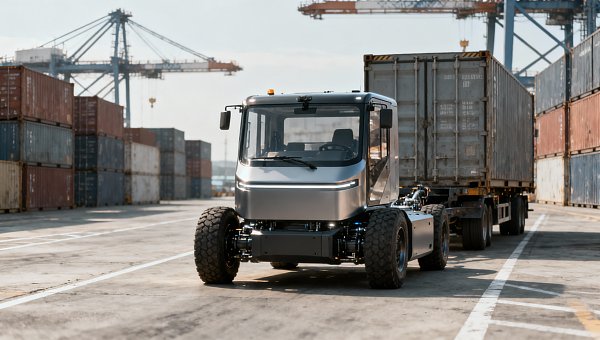
The supplied summary describes XCMG’s introduction of the SDA411 as a pure-electric yard truck concept. The vehicle removes the traditional driver’s cab and incorporates an L4 autonomous driving system.
Its stated application is unmanned logistics in enclosed environments, including industrial parks and ports. The concept uses a battery-electric drive system and is intended to improve the efficiency and safety of transport within these sites. These are stated development objectives; the supplied information contains no operational results demonstrating those improvements.
Procurement and Integration Questions Move Beyond the Vehicle
Site operators may need more specific acceptance criteria
Analysis suggests that industrial park and port operators considering a cabless truck would need to examine how the proposed system fits their actual transport tasks. Procurement discussions could address permitted operating areas, interactions with other site traffic, responses to interruptions and arrangements for recovering a stopped vehicle. These are suggested evaluation topics, not requirements confirmed by the announcement.
The supplied information does not establish that the concept has received approval for deployment at any particular site. Buyers should therefore distinguish the announced technical concept from evidence supporting a specific operating permission or procurement acceptance decision.
Integrators could face broader documentation needs
From an integration perspective, removing the cab may shift attention toward the relationship between vehicle controls, site infrastructure and operational support. Equipment integrators could need clearer descriptions of system interfaces, operating limits and responsibilities when the vehicle encounters conditions outside its intended use.
Analysis also suggests that battery and electric-drive suppliers may face requests for documentation relevant to the proposed duty cycle, charging arrangements and maintenance access. The announcement does not confirm supplier selection, technical specifications or changes to existing supply contracts.
Testing and service providers may receive new assessment requests
As a possible commercial implication, testing providers could be asked to help buyers evaluate evidence supporting autonomous operation and the claimed safety objectives. Service providers may also need to assess how diagnostics, maintenance and vehicle recovery would work without a conventional cab. No mandatory test scheme, certification route or service arrangement is identified in the input.
What Buyers Could Clarify Before Setting Delivery Terms
Separate the L4 description from approval evidence
As a procurement recommendation, buyers could request documentation explaining the scope and limits of the stated L4 capability. They could also check which permissions, assessments or certifications apply to their intended deployment and what evidence the supplier can provide. The supplied L4 description alone does not establish approval for a particular application.
Translate the proposed application into a site specification
Analysis suggests that tender documents would benefit from a precise description of the intended routes, operating conditions, interactions with personnel and other equipment, and procedures for interrupted operation. Any acceptance criteria should be agreed against the proposed application. The input provides no confirmed operating envelope, acceptance protocol or delivery specification.
Request evidence behind efficiency and safety objectives
Prospective purchasers could seek relevant test reports, demonstration records and technical documentation before relying on the concept’s stated benefits in an investment decision. Such requests would help establish whether the evidence matches the buyer’s site conditions. This is a suggested verification step; no supporting performance data is included in the supplied material.
Clarify readiness, support and responsibility
As a commercial precaution, buyers could verify product availability, delivery schedules, charging needs, maintenance support and responsibility for operational incidents before committing to procurement. Where a cross-border transaction is contemplated, applicable documentation and approval requirements would also need separate review. The announcement establishes no export eligibility, customs treatment or delivery commitment.
The Announcement Is a Development Signal, Not Evidence of a Rule Change
At this stage, it is more appropriate to understand the SDA411 as a product-development signal with potential implications for procurement and operational assessment. The supplied information does not identify an enacted regulatory change, a revised standard or an implemented certification requirement.
From an editorial perspective, the key issue is how the cabless concept might eventually be translated into documented operating conditions and accountable delivery arrangements. Further manufacturer disclosures, applicable official guidance and any subsequent tender requirements could help clarify that process. Their content and timing cannot be inferred from this announcement.
Commercial Decisions Depend on Deployment Evidence
Analysis suggests that the SDA411 could encourage closer examination of how enclosed-site transport equipment is specified, assessed and supported. Its relevance to the industry lies in the procurement and compliance questions raised by the proposed operating model, while its practical effect remains dependent on verified capabilities and deployment conditions.
For now, businesses can treat the announcement as a reason to prepare focused technical and commercial questions. The available information does not support conclusions that certification has been obtained, operating permissions have changed or routine commercial delivery has begun.
Basis of This Article and Items Still to Verify
This article is based solely on the user-provided news title, event-time field and event summary. No specific official source link was provided in the input, and continued verification is needed. The event-time field leaves the timing unspecified, while the summary gives October 25, 2026; the announcement date therefore also requires confirmation.
Relevant materials for subsequent verification could include an official manufacturer announcement, applicable regulatory publications, standards documents and procurement specifications. These are potential source categories, not sources independently consulted for this article. Further observation should focus on any applicable policy details, certification interpretations, changes to tender documents, deployment evidence, trade implementation where relevant, and feedback from operators and suppliers.
Trending News
- XCMG Unveils Cabless L4 Autonomous Electric Yard Truck Concept
- How order size affects wholesale pricing for cement mixer trucks
- Commercial Vehicle Leaders Hold Firm in Q1–Q3 2026 Automotive Influence Index
- How to choose a refrigerated truck for multi-stop urban deliveries
- Tata Motors Returns to Q2 Profit on Strong Commercial Vehicle Demand
Tag
Recommended News
 Autonomous TrucksXCMG Unveils Cabless L4 Autonomous Electric Yard Truck ConceptExplore XCMG’s SDA411 cabless L4 autonomous electric yard truck concept for ports and industrial parks, plus key safety, integration and procurement questions buyers should ask.
 Autonomous TrucksHong Kong Expo Highlights New Export Checks for L3+ Truck SystemsHong Kong Expo highlights new export checks for L3+ truck systems, from compliance files to delivery readiness. See what overseas fleet buyers and Tier 1 integrators may require next.
 Autonomous TrucksChina Enacts Unified L3 Truck Rule on June 10China Enacts Unified L3 Truck Rule on June 10: learn how the new L3 autonomous truck rule, V2X mandate, and liability shift reshape compliance, exports, and fleet risk.
 Autonomous TrucksChina Sets Unified Rules for L3 Autonomous TrucksChina sets unified rules for L3 autonomous trucks, defining accident liability within ODD conditions. Explore what it means for truck makers, fleets, compliance, and export growth.
 Autonomous TrucksNational Rule for L3 Autonomous Trucks Takes EffectNational Rule for L3 Autonomous Trucks takes effect nationwide, clarifying liability, insurance, compliance, and supplier risk. Learn what fleets, buyers, and operators must review now.
 Autonomous TrucksCodelco's L4 Mining Truck Tender Requires ISO 34502 ValidationCodelco's L4 mining truck tender mandates ISO 34502 validation — the first global operational use of this standard. Discover compliance insights, supplier impacts, and strategic actions for陆路运输设备 exporters and OEMs.
 Autonomous TrucksLuKai Alpha 125 Mining Transport Robot Enters Mass DeliveryLuKai Alpha 125 mining transport robot enters mass delivery — GNSS-denied, KAZMINE-2026 certified autonomous haulage for copper mines in Kazakhstan.
 Autonomous TrucksL4 Autonomous Container Tractor Chassis Emerges as New Export Vehicle for China's Smart Shipping StrategyL4 autonomous container tractor chassis: China's new export-ready smart shipping solution for global logistics—modular, UN R156-precompliant, and infrastructure-adaptive.
 Autonomous TrucksLuKai Alpha 125 Mining Robot Enters Mass DeliveryLuKai Alpha 125 mining robot — L4 autonomous haulage, 90-ton payload, GNSS-free navigation — now in mass delivery for global mines.
 Autonomous TrucksLuKai Alpha 125 Autonomous Mining Truck Enters Mass DeliveryLuKai Alpha 125 autonomous mining truck enters mass delivery — L4-level, 90-ton payload, −40°C certified. First units deployed in Kazakhstan copper mine.
 Autonomous TrucksBeijing to Open L4 Smart Truck Platoon Test Roads in Q3 2026L4 smart truck platoon testing lanes launching Q3 2026 on Beijing’s JingTai & JingXiong Expressways — key opportunity for V2X, platoon algorithms & smart logistics exporters.
 Autonomous TrucksBeijing to Open L4 Smart Truck Platooning Test on Jingxiong Expressway in 2026L4 smart truck platooning tests launch on Jingxiong Expressway in 2026—key opportunity for global transport tech integrators and fleet operators to validate C-V2X + BeiDou compliance.
 Autonomous TrucksPony.ai Launches Europe's First Commercial Robotaxi Service in CroatiaPony.ai launches Europe's first commercial Robotaxi service in Croatia, showcasing China's L4 autonomous driving tech meeting EU safety standards. A milestone for AV, logistics & transport industries.
 Autonomous TrucksInner Mongolia Pilot Zone Launches Cross-Border Autonomous Transport ChannelInner Mongolia's cross-border autonomous transport channel launches, revolutionizing logistics with smart vehicle tech. Key for automotive, logistics, and trade sectors under China-Mongolia-Russia Economic Corridor.
 Autonomous TrucksNeolix L4 Autonomous Delivery Vehicle Debuts at AMR Expo, Accelerating Global Smart LogisticsNeolix's L4 autonomous delivery vehicle debuts at AMR Expo, featuring temperature control & V2X tech. Approved for road tests in UAE, Singapore & Germany, revolutionizing global smart logistics for last-mile delivery.
 Autonomous TrucksNeolix L4 Autonomous Delivery Vehicle Debuts at AMR Expo, Accelerating 'Last Mile' SolutionsNeolix's L4 autonomous delivery vehicle debuts at AMR Expo, revolutionizing last-mile solutions with CE pre-assessment & UN-R155 certification. Discover how this smart logistics innovation cuts costs 15-20% for e-commerce and cross-border trade.
 Autonomous TrucksInner Mongolia Free Trade Zone Approved, Exploring Cross-Border Autonomous TransportChina's Inner Mongolia Free Trade Zone approval boosts autonomous cross-border transport, creating opportunities for L4 truck makers and Eurasian logistics. Explore policy impacts on smart freight and trade routes.
 Autonomous TrucksInner Mongolia Free Trade Zone Approved, Exploring Cross-Border Autonomous TransportChina's Inner Mongolia Free Trade Zone approved for autonomous cross-border transport, boosting smart logistics & Eurasian trade. Explore key impacts on autonomous driving, freight efficiency, and tech partnerships.
 Autonomous TrucksBeijing-Xiongan Commuter Express Launches with L4 Autonomous ShuttlesDiscover how the Beijing-Xiongan Commuter Express with L4 autonomous shuttles revolutionizes smart mobility. Learn about China's advanced AV technology and export potential for global buyers in transit solutions.
 Autonomous TrucksWhat autonomous driving readiness levels are supported by current GPS-tracked bulldozer platforms?BULLDOZER with GPS tracking supports Level 1–2 autonomy for precision pipeline & infrastructure work. Explore EXCAVATOR for pipeline installation, heavy truck chassis supplier for heavy haulage, and more on The Global Heavy Truck Industry Platform.