Codelco's L4 Mining Truck Tender Requires ISO 34502 Validation
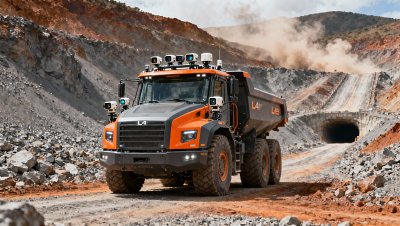
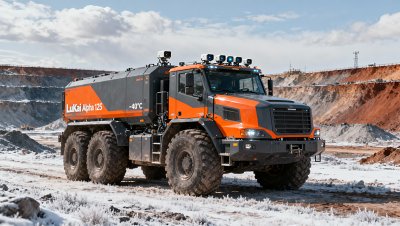
Chile’s state-owned National Copper Corporation (Codelco) released the technical specifications for its landmark tender of 200 autonomous mining trucks on May 22, 2026 — a move widely seen as setting a new global benchmark for safety validation in off-road autonomous haulage. The requirement for L4-level autonomous systems to pass scenario-based verification under ISO 34502:2025 marks the first known application of this standard in an operational mining procurement, with implications spanning technology suppliers, equipment integrators, and cross-border supply chains.
Event Overview
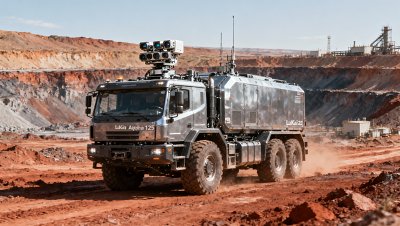
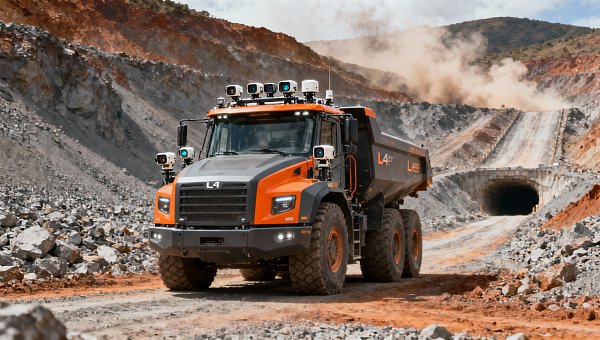
On May 22, 2026, Codelco published the technical annex to its tender for 200 L4-capable mining haul trucks. The annex mandates that all autonomous driving systems must be verified against three defined high-risk scenario groups within the ISO 34502:2025 framework: ‘extreme dust conditions’, ‘ramp blind zones’, and ‘multi-vehicle coordinated operations’. Bidders must submit third-party test reports confirming successful validation in each group. Chinese consortiums — including the XuGong + Zhijia Technology alliance — have initiated local scenario replication testing, with vehicle delivery scheduled for Q4 2026.
Industries Affected
Direct Trading Enterprises
Export-oriented equipment traders face tighter compliance gateways: ISO 34502 validation adds a non-negotiable certification layer beyond traditional type approvals (e.g., UNECE R157 or national road automation rules). This increases pre-bid technical due diligence time by an estimated 6–8 weeks and raises liability exposure if third-party test reports are later contested during commissioning.
Raw Material Procurement Firms
Suppliers of critical components — such as ruggedized LiDAR housings, thermal-resistant compute modules, and dust-sealed GNSS antennas — now confront demand shifts toward ISO 34502-aligned performance specs. For example, optical sensor vendors must demonstrate not just IP69K rating, but functional resilience across ISO-defined dust density gradients (e.g., ≥10 g/m³ suspended particulate concentration over 30-min cycles).
Manufacturing Enterprises
OEMs integrating autonomous stacks into mining chassis must reconfigure their V-model development workflows to embed ISO 34502 scenario libraries early in HIL (Hardware-in-the-Loop) and SIL (Software-in-the-Loop) stages. This extends integration timelines and requires traceability mapping between scenario IDs (e.g., ISO 34502-SC-072a) and internal test case identifiers — a capability currently held by fewer than 12 global Tier-1 suppliers.
Supply Chain Service Providers
Logistics and commissioning service firms must adapt to new site-readiness protocols. Codelco’s tender includes contractual clauses requiring on-site validation support teams to hold ISO/IEC 17025-accredited lab affiliations — effectively excluding many regional calibration or field-test providers lacking international accreditation infrastructure.
Key Focus Areas and Recommended Actions
Verify Third-Party Lab Accreditation Scope
Confirm that selected testing laboratories explicitly list ISO 34502:2025 scenario validation — not just general ADAS testing — within their ILAC-MRA signatory scope. Several labs accredited for ISO 26262 or ISO/PAS 21448 do not automatically cover ISO 34502’s mining-specific scenario taxonomy.
Map Internal Test Cases to ISO 34502 Scenario IDs
Develop a crosswalk table linking proprietary test scenarios (e.g., ‘dust storm overtaking sequence’) to corresponding ISO 34502:2025 identifiers (e.g., SC-041b ‘Dynamic Obstacle Avoidance Under Low-Visibility Ramp Descent’). This avoids subjective interpretation during bid review.
Prepare for Multi-System Traceability Documentation
Codelco requires end-to-end traceability from scenario definition → simulation environment configuration → hardware firmware version → sensor calibration logs → test report signature. Suppliers should initiate documentation templates aligned with ISO/IEC/IEEE 15288 prior to test execution.
Editorial Perspective / Industry Observation
Observably, Codelco is not merely procuring vehicles — it is de facto certifying a new safety ontology for off-road autonomy. Unlike automotive standards focused on nominal traffic conditions, ISO 34502’s mining extension introduces quantifiable environmental stressors (e.g., particulate mass concentration, slope-dependent occlusion geometry) as first-class validation variables. Analysis shows this reflects a broader industry pivot: mining operators are shifting from ‘technology readiness’ assessments to ‘operational hazard containment’ benchmarks. Current tender language suggests Codelco may extend ISO 34502 validation to drill rigs and shovels in its 2027 CapEx cycle — making early engagement with scenario library developers strategically advantageous.
Conclusion
This tender signals a structural inflection point: regulatory-grade scenario validation is no longer optional for high-stakes autonomous deployments in unstructured industrial environments. While the immediate impact centers on technical compliance, the longer-term implication is clearer market segmentation — between suppliers capable of auditable, standards-grounded autonomy engineering, and those reliant on proprietary or demonstration-grade validation. A measured, standards-first approach is better understood as risk mitigation than bureaucratic overhead.
Source Attribution
Official tender documents published by Corporación Nacional del Cobre de Chile (Codelco) on May 22, 2026, via codelco.com/en/tenders. ISO 34502:2025 standard published by International Organization for Standardization (ISO), Geneva. Note: Codelco’s implementation guidance — particularly regarding pass/fail thresholds for multi-vehicle coordination latency — remains pending; stakeholders should monitor updates through Codelco’s Supplier Portal (access granted upon registration).
Trending News
- How to choose an off road truck for steep and unstable job sites
- How to match crane truck lifting capacity to your jobsite loads
- What drives logging truck cost beyond the base purchase price?
- How to match lowbed trailer deck height to your hauling equipment
- What documents are needed to export a low bed trailer to Southeast Asia?
Tag
Recommended News
 Autonomous TrucksHong Kong Expo Highlights New Export Checks for L3+ Truck SystemsHong Kong Expo highlights new export checks for L3+ truck systems, from compliance files to delivery readiness. See what overseas fleet buyers and Tier 1 integrators may require next.
 Autonomous TrucksChina Enacts Unified L3 Truck Rule on June 10China Enacts Unified L3 Truck Rule on June 10: learn how the new L3 autonomous truck rule, V2X mandate, and liability shift reshape compliance, exports, and fleet risk.
 Autonomous TrucksChina Sets Unified Rules for L3 Autonomous TrucksChina sets unified rules for L3 autonomous trucks, defining accident liability within ODD conditions. Explore what it means for truck makers, fleets, compliance, and export growth.
 Autonomous TrucksNational Rule for L3 Autonomous Trucks Takes EffectNational Rule for L3 Autonomous Trucks takes effect nationwide, clarifying liability, insurance, compliance, and supplier risk. Learn what fleets, buyers, and operators must review now.
 Autonomous TrucksCodelco's L4 Mining Truck Tender Requires ISO 34502 ValidationCodelco's L4 mining truck tender mandates ISO 34502 validation — the first global operational use of this standard. Discover compliance insights, supplier impacts, and strategic actions for陆路运输设备 exporters and OEMs.
 Autonomous TrucksLuKai Alpha 125 Mining Transport Robot Enters Mass DeliveryLuKai Alpha 125 mining transport robot enters mass delivery — GNSS-denied, KAZMINE-2026 certified autonomous haulage for copper mines in Kazakhstan.
 Autonomous TrucksL4 Autonomous Container Tractor Chassis Emerges as New Export Vehicle for China's Smart Shipping StrategyL4 autonomous container tractor chassis: China's new export-ready smart shipping solution for global logistics—modular, UN R156-precompliant, and infrastructure-adaptive.
 Autonomous TrucksLuKai Alpha 125 Mining Robot Enters Mass DeliveryLuKai Alpha 125 mining robot — L4 autonomous haulage, 90-ton payload, GNSS-free navigation — now in mass delivery for global mines.
 Autonomous TrucksLuKai Alpha 125 Autonomous Mining Truck Enters Mass DeliveryLuKai Alpha 125 autonomous mining truck enters mass delivery — L4-level, 90-ton payload, −40°C certified. First units deployed in Kazakhstan copper mine.
 Autonomous TrucksBeijing to Open L4 Smart Truck Platoon Test Roads in Q3 2026L4 smart truck platoon testing lanes launching Q3 2026 on Beijing’s JingTai & JingXiong Expressways — key opportunity for V2X, platoon algorithms & smart logistics exporters.
 Autonomous TrucksBeijing to Open L4 Smart Truck Platooning Test on Jingxiong Expressway in 2026L4 smart truck platooning tests launch on Jingxiong Expressway in 2026—key opportunity for global transport tech integrators and fleet operators to validate C-V2X + BeiDou compliance.
 Autonomous TrucksPony.ai Launches Europe's First Commercial Robotaxi Service in CroatiaPony.ai launches Europe's first commercial Robotaxi service in Croatia, showcasing China's L4 autonomous driving tech meeting EU safety standards. A milestone for AV, logistics & transport industries.
 Autonomous TrucksInner Mongolia Pilot Zone Launches Cross-Border Autonomous Transport ChannelInner Mongolia's cross-border autonomous transport channel launches, revolutionizing logistics with smart vehicle tech. Key for automotive, logistics, and trade sectors under China-Mongolia-Russia Economic Corridor.
 Autonomous TrucksNeolix L4 Autonomous Delivery Vehicle Debuts at AMR Expo, Accelerating Global Smart LogisticsNeolix's L4 autonomous delivery vehicle debuts at AMR Expo, featuring temperature control & V2X tech. Approved for road tests in UAE, Singapore & Germany, revolutionizing global smart logistics for last-mile delivery.
 Autonomous TrucksNeolix L4 Autonomous Delivery Vehicle Debuts at AMR Expo, Accelerating 'Last Mile' SolutionsNeolix's L4 autonomous delivery vehicle debuts at AMR Expo, revolutionizing last-mile solutions with CE pre-assessment & UN-R155 certification. Discover how this smart logistics innovation cuts costs 15-20% for e-commerce and cross-border trade.
 Autonomous TrucksInner Mongolia Free Trade Zone Approved, Exploring Cross-Border Autonomous TransportChina's Inner Mongolia Free Trade Zone approval boosts autonomous cross-border transport, creating opportunities for L4 truck makers and Eurasian logistics. Explore policy impacts on smart freight and trade routes.
 Autonomous TrucksInner Mongolia Free Trade Zone Approved, Exploring Cross-Border Autonomous TransportChina's Inner Mongolia Free Trade Zone approved for autonomous cross-border transport, boosting smart logistics & Eurasian trade. Explore key impacts on autonomous driving, freight efficiency, and tech partnerships.
 Autonomous TrucksBeijing-Xiongan Commuter Express Launches with L4 Autonomous ShuttlesDiscover how the Beijing-Xiongan Commuter Express with L4 autonomous shuttles revolutionizes smart mobility. Learn about China's advanced AV technology and export potential for global buyers in transit solutions.
 Autonomous TrucksWhat autonomous driving readiness levels are supported by current GPS-tracked bulldozer platforms?BULLDOZER with GPS tracking supports Level 1–2 autonomy for precision pipeline & infrastructure work. Explore EXCAVATOR for pipeline installation, heavy truck chassis supplier for heavy haulage, and more on The Global Heavy Truck Industry Platform.