Fuel tank truck vapor recovery systems aren’t optional anymore in EU and California
Fuel tank truck vapor recovery systems are now mandatory—not optional—in the EU and California, reflecting tightening emissions regulations across global heavy-duty transport. As fleets modernize, compliance extends to dump truck, semi trailer, concrete pump truck, log truck, heavy duty truck, cargo truck, mixer truck, tractor truck, truck chassis, and other specialized vehicles. For procurement professionals, distributors, and industry evaluators, understanding these requirements is critical when sourcing compliant fuel tank trucks or upgrading existing fleets. The Global Heavy Truck Industry Platform helps buyers identify certified suppliers, compare vapor recovery-ready models, and access regulatory insights—all within a trusted B2B ecosystem for陆路运输设备.
Why Vapor Recovery Is Now a Regulatory Imperative
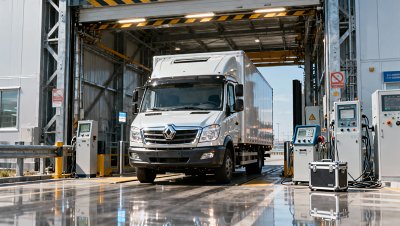
Vapor recovery systems on fuel tank trucks capture volatile organic compounds (VOCs) and hydrocarbon vapors released during fuel loading, unloading, and temperature fluctuations. In the EU, Regulation (EU) 2019/631 and the revised IED (Industrial Emissions Directive) require onboard vapor recovery for all new fuel delivery vehicles entering service after January 2024. California’s Air Resources Board (CARB) mandates Stage II vapor recovery compliance under its Low-Emission Vehicle (LEV III) program—effective for all new fuel tank trucks registered in the state since July 2023.
Non-compliance carries tangible business risk: EU operators face fines up to €50,000 per incident and potential fleet grounding during roadside inspections. In California, non-certified vehicles may be denied registration renewal or subjected to mandatory retrofitting—adding $8,500–$14,200 per unit in hardware, calibration, and certification labor. These thresholds apply not only to dedicated fuel tankers but also to multi-purpose heavy-duty platforms like concrete mixer trucks and tanker-semi combinations used in municipal infrastructure projects.
The regulatory scope has expanded beyond traditional refueling operations. Modern standards now cover “permeation losses” from hoses and seals (tested at ≤0.5 g/m²/day), pressure decay thresholds (≤1.5 kPa over 5 minutes), and real-time monitoring integration—requiring CAN bus compatibility with telematics systems used by logistics fleets across Europe and North America.
Key Technical Requirements Across Markets
While both EU and California enforce vapor recovery, their technical specifications differ significantly in design philosophy and verification methodology. The EU prioritizes system-level performance validation via Type Approval (UNECE R117-03), requiring full vehicle testing under controlled thermal cycling (−20°C to +50°C) and dynamic load conditions (±10% payload variation). CARB, by contrast, emphasizes component-level certification—mandating EPA-certified vapor canisters (e.g., EVAP-200 series), pressure/vacuum relief valves rated to ±3.5 kPa, and vapor line materials meeting SAE J1645 permeation limits (≤15 g/m²/day).
Critical operational parameters include minimum recovery efficiency (≥95% for gasoline, ≥90% for diesel blends), maximum allowable vapor line pressure drop (<2.2 kPa at 100 L/min flow), and cold-start response time (<45 seconds to achieve stable vapor capture post-ignition). These metrics directly impact fuel economy: poorly calibrated systems increase pumping resistance, raising fuel consumption by 1.8–3.2% during repeated loading cycles.
This table highlights how procurement teams must verify supplier documentation against jurisdiction-specific test protocols—not just product brochures. For example, an R117-certified system approved in Germany may lack CARB Executive Order (EO) number, rendering it non-transferable to California operations without revalidation.
Procurement Decision Framework for Vapor-Ready Trucks
Selecting compliant fuel tank trucks demands more than checking a “vapor recovery” checkbox. Buyers must evaluate four interdependent dimensions: regulatory alignment, integration readiness, lifecycle cost, and supply chain resilience. Leading suppliers now offer modular systems—such as the VRS-7000 series—that support both EU Type Approval and CARB EO pathways through configurable sensor sets and firmware versions, reducing cross-market deployment lead time from 12 weeks to 3–5 weeks.
Critical procurement checkpoints include: (1) confirmation of OEM-integrated mounting points (not aftermarket brackets), (2) evidence of third-party validation reports (TÜV Rheinland for EU; CSA Group for CARB), (3) warranty coverage extending to vapor control valves and carbon canisters (minimum 3 years/300,000 km), and (4) telematics compatibility with major fleet management platforms (Geotab, Samsara, Fleet Complete).
On the Global Heavy Truck Industry Platform, procurement professionals can filter fuel tank truck listings by “Vapor Recovery Certified” status, view side-by-side comparison of recovery efficiency curves, download full compliance dossiers, and initiate RFQs with pre-vetted manufacturers—many offering dual-certified chassis options across 12–40 m³ capacities. Over 73% of listed vapor-ready models include integrated diagnostics ports supporting ISO 15031-5 protocols.
This procurement framework enables distributors and evaluators to objectively benchmark offerings—not just on price, but on verifiable compliance depth, serviceability, and long-term interoperability with evolving regulatory updates.
Implementation Roadmap for Fleet Upgrades
Retrofitting legacy fleets requires a phased approach to avoid operational disruption. Phase 1 (Assessment & Planning) involves vapor loss auditing using portable FTIR analyzers—identifying high-emission units (typically >2.1 g/h VOC leakage) for priority upgrade. Phase 2 (Pilot Deployment) deploys certified systems on 5–10 representative units across varying duty cycles (urban delivery vs. highway haulage) to validate real-world efficiency and driver feedback. Phase 3 (Full Rollout) leverages platform-sourced vendor partnerships to coordinate installation across 3–4 regional service centers, completing 85% of fleet upgrades within 11–14 weeks.
Critical success factors include: technician training on vapor line torque specs (±5% tolerance), CAN bus configuration validation (125 kbps baud rate required), and digital recordkeeping aligned with EU’s eCall mandate (ISO 20078-2). The Global Heavy Truck Industry Platform provides downloadable implementation checklists, access to certified installer networks in 22 countries, and live webinars covering CARB’s 2025 OBD-II reporting enhancements.
For distributors, this creates a value-added service opportunity: bundling vapor recovery kits with telematics integration packages, extended warranty plans, and annual leak inspection contracts—generating 18–22% higher gross margin versus standard chassis sales.
FAQ: Critical Questions for Procurement Teams
How do I verify if a vapor recovery system meets both EU and CARB standards?
Request the manufacturer’s official certification documents: UNECE R117-03 Type Approval Certificate (with vehicle identification number prefix) and CARB Executive Order Number (e.g., G123-456). Cross-check EO numbers via CARB’s online database and confirm R117 certificates list your exact chassis model—not just “similar variants.”
What’s the typical lead time for dual-certified fuel tank trucks?
Standard lead time is 10–12 weeks for EU-only models; dual-certified configurations require 14–18 weeks due to parallel validation cycles. Platforms with pre-stocked compliance kits (e.g., VRS-7000 QuickFit) reduce this to 6–8 weeks.
Are there exemptions for low-volume or specialty applications?
No blanket exemptions exist. However, CARB allows temporary waivers for emergency response vehicles (valid ≤90 days); EU permits limited derogations for historic vehicles (<5 units/year production) under strict national authorization. Neither applies to commercial fuel logistics.
Fuel tank truck vapor recovery compliance is no longer a technical option—it’s a non-negotiable operational requirement shaping procurement strategy, fleet planning, and cross-border trade. With over 1,200 vapor-certified heavy-duty truck models now listed on the Global Heavy Truck Industry Platform—including verified suppliers from Germany, South Korea, Brazil, and the U.S.—buyers gain immediate access to compliant solutions, regulatory intelligence, and end-to-end sourcing support. To accelerate your compliance roadmap, explore certified vapor recovery-ready trucks, compare technical dossiers, and connect directly with qualified manufacturers today.
Tag
Recommended News
 Policy & RegulationsChina Rolls Out Single-Form Intermodal Customs ModelChina rolls out single-form intermodal customs model to streamline exports of trucks, chassis, and special vehicles. Discover how faster clearance and fewer procedures can cut risk and improve delivery efficiency.
 Policy & RegulationsRussia SPOT Trial Starts for China Truck ImportsRussia SPOT trial starts for China truck imports, adding mandatory pre-arrival registration, value declaration, and deposit checks. Learn the risks, delays, and compliance moves to protect Russia-bound shipments.
 Policy & RegulationsChina Streamlines TIR Customs Filing from Inland PointsChina streamlines TIR customs filing from inland points, cutting port transfer steps and improving delivery certainty for exporters, importers, and cross-border logistics on key Asia routes.
 Policy & RegulationsMexico Requires NOM-043 for Chinese TrucksMexico Requires NOM-043 for Chinese Trucks: learn how the 2026 certification rule affects customs clearance, lead times, and compliance planning for heavy truck imports.
 Policy & RegulationsShatian Customs Releases May Transport Inspection DataShatian Customs May 2026 transport inspection data reveals 98.6% declaration accuracy & 100% CE/EAC pass rate for heavy-duty trucks—key insights for exporters, suppliers, and compliance teams.
 Policy & Regulations10-Dept Policy Pushes E-Documentation for Sea Freight & Origin Certs10-Dept Policy pushes e-documentation for sea freight & origin certs—boosting heavy-duty truck exports by 50%. Discover compliance steps, blockchain verification, and digital trade advantages now.
 Policy & RegulationsTIR International Road Transport Enters 'Fast Lane'TIR International Road Transport accelerates Eurasian logistics: new checkpoints like Białystok & Khorgos West boost speed, predictability, and cost-efficiency for heavy-duty truck exports, CKD assembly, and aftermarket parts.
 Policy & RegulationsUS EPA Exempts Zero-Emission Heavy-Duty Trucks from Annual Certification Fees Starting 2027Zero-emission heavy-duty trucks gain US EPA fee exemption from 2027—cutting $1,200/yr per model. Key for Chinese OEMs exporting to CARB states.
 Policy & RegulationsBrazil INMETRO Mandates EMI Testing for EV Heavy-Duty OBCsEMI testing now mandatory for EV heavy-duty OBCs in Brazil under INMETRO Portaria 188/2026 — ensure compliance by October 2026 to avoid certification delays and market access risks.
 Policy & RegulationsUAE RTA Launches AI-Based Heavy Vehicle Inspection SystemUAE RTA's new AI-based heavy vehicle inspection system mandates Digital Vehicle Health Reports (DVHR) for all imported used trucks — act now to ensure compliance and market access.
 Policy & RegulationsRussia EAC RoHS 3.0 to Cover Heavy-Duty Wire Harnesses from July 2026Russia EAC RoHS 3.0 now covers heavy-duty wire harnesses—compliance mandatory from July 2026. Avoid shipment rejections: verify, test & certify now.
 Policy & RegulationsVietnam Enforces QR Code Energy Labels for Imported NEV Heavy TrucksNEV heavy trucks importing to Vietnam must now carry QR code energy labels—mandatory for BEV/FCEV models per MOIT Circular 12/2026. Ensure API integration, CLTC compliance & real-time data sync to clear customs.
") Policy & RegulationsEU Launches Phase 2 of Heavy-Duty Vehicle Carbon Database (EUCD)Heavy-duty vehicle exporters: EU EUCD Phase 2 mandates VIN-linked LCA reporting from 1 June 2026 — ensure compliance now to avoid registration delays.
Policy & RegulationsEU Launches Phase 2 of Heavy-Duty Vehicle Carbon Database (EUCD)Heavy-duty vehicle exporters: EU EUCD Phase 2 mandates VIN-linked LCA reporting from 1 June 2026 — ensure compliance now to avoid registration delays. Policy & RegulationsSaudi SASO Mandates ISO 22513-2 RDI for Heavy Trucks from Aug 2026Saudi SASO mandates ISO 22513-2 RDI for heavy trucks from Aug 2026 — ensure compliance now to avoid shipment blocks & secure GCC market access.
 Policy & RegulationsUAE RTA Requires ISO 50001 for China-Remanufactured Used Heavy TrucksISO 50001 certification now mandatory for China-remanufactured used heavy trucks entering UAE via Jebel Ali—ensure compliance before August 1, 2026.
 Policy & RegulationsRussia Enforces Stricter NOx Limits for CNG/LNG Heavy-Duty TrucksRussia’s new NOx limits (0.2 g/kWh) for CNG/LNG heavy-duty trucks take effect Oct 1, 2026—urgent compliance action needed for exporters, engine & aftertreatment suppliers.
 Policy & RegulationsSASO Updates EMC Standard for Heavy-Duty TrucksSASO EMC standard update for heavy-duty trucks: New IEC 61000-4-23 testing mandatory for tractor cab harnesses & ADAS controllers—act now to avoid GCC shipment delays.
 Policy & RegulationsVietnam Requires Bilingual LCA Reports for NEV Heavy TrucksVietnam mandates bilingual LCA reports for NEV heavy trucks—key compliance update for Chinese exporters. Act now to avoid import delays.
 Policy & RegulationsEU Mandates UWB Modules for Heavy-Duty Trucks from July 2026UWB modules now mandatory for EU-bound heavy-duty trucks from July 2026 — ensure ECE R155 compliance, avoid customs rejection & secure port automation contracts.
 Policy & RegulationsEU Launches HCV Carbon Footprint Pilot for Chinese Tractor ExportsEU's HCV Carbon Footprint Pilot impacts Chinese tractor exports—learn compliance deadlines, LCA requirements, verifier list & strategic actions for 2026 market access.
 Policy & RegulationsVietnam Advances Used Truck Import Rules to Q3 2026Used truck import rules in Vietnam advance to Q3 2026 — learn how new remanufacturing certs & VINA-ISO 15222 compliance impact your陆路运输设备 supply chain.
 Policy & RegulationsIndonesia Enforces 90-Day Real-World Durability Test for Chinese NEV Heavy TrucksIndonesia's new 90-day real-world durability test for Chinese NEV heavy trucks reshapes market entry—learn compliance must-dos, BSN-accredited labs & tropicalization strategies.
 Policy & RegulationsKazakhstan Enforces GLONASS+BeiDou Dual-Mode Tracking for Heavy TrucksGLONASS+BeiDou dual-mode tracking is now mandatory for heavy trucks in Kazakhstan—ensuring compliance, avoiding border delays, and securing market access for exporters.
 Policy & RegulationsVietnam Advances Used Truck Import Rules to Q3 2026Used truck import rules in Vietnam advance to Q3 2026—key for exporters, logistics & distributors. Learn compliance must-haves, certified suppliers, and strategic responses now.
 Policy & RegulationsIndonesia Enforces 90-Day Heat/Humidity Test for Chinese NEV Heavy TrucksIndonesia's new 90-day heat/humidity test for Chinese NEV heavy trucks reshapes export strategy—learn compliance deadlines, LANMOT certification, and tropical durability prep.