How to Compare an Excavator Manufacturer Beyond Price Lists
Choosing an excavator manufacturer should go far beyond comparing price lists. For procurement teams, distributors, and market researchers, the real value lies in production capacity, quality control, after-sales service, and supply chain strength. On a global B2B platform covering heavy duty trucks for sale, light duty truck, cab chassis truck, wing van truck, semi trailer manufacturer, truck engine parts, truck brake system, commercial vehicle parts, and bulk cement trailer, buyers can evaluate suppliers more strategically and reduce sourcing risks.
In the land transportation equipment sector, excavators are often purchased alongside trucks, trailers, and parts for infrastructure, mining, municipal works, and logistics-linked construction projects. That makes manufacturer selection a cross-functional decision involving sourcing, operations, finance, and service planning. A lower unit price may look attractive at the quotation stage, but weak lead times, unstable component quality, or poor spare parts support can increase total ownership cost within 6 to 18 months.
For B2B buyers using a global heavy equipment marketplace, the goal is not simply to identify the cheapest supplier. It is to compare excavator manufacturers with a structured method: production capability, consistency, compliance, delivery reliability, service coverage, and long-term business fit. The sections below explain how to assess an excavator manufacturer beyond price lists and how to reduce commercial and operational risk before placing bulk orders.
Look Beyond the Quote: Why Total Purchase Value Matters
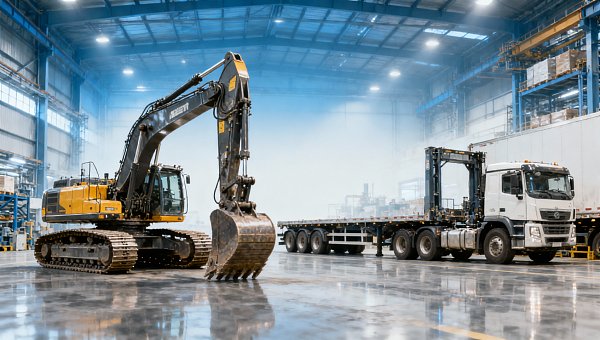
A price list only captures the visible portion of a sourcing decision. In excavator procurement, hidden cost drivers usually appear after the order is confirmed: delayed production slots, non-standard hydraulic components, inconsistent steel thickness, missing documents, or slow technical feedback. For distributors and project buyers, these issues can affect machine uptime, customer satisfaction, and resale reputation within the first 200 to 500 operating hours.
A practical comparison should include at least 5 dimensions: manufacturing capability, quality control, component sourcing, service support, and commercial responsiveness. If a supplier offers a price that is 8% lower but requires 30 to 45 more days for delivery, or cannot commit to spare parts supply for 24 months, the apparent savings may disappear quickly.
This matters even more on international B2B platforms serving buyers of heavy duty trucks for sale, semi trailers, construction machinery, and commercial vehicle parts. Many buyers consolidate sourcing across multiple categories. They need suppliers that understand fleet operations, project deadlines, customs documentation, and after-sales expectations, not just machine assembly.
What procurement teams should measure first
Before comparing quotations, define the intended application. A 6-ton machine for municipal trenching, a 20-ton excavator for road construction, and a 36-ton unit for quarry work require different criteria. Operating environment, annual hour target, attachment compatibility, and expected maintenance intervals should all be documented before requesting final offers.
- Target operating range: light, medium, or heavy-duty application over 1,000 to 3,000 hours per year.
- Required delivery window: urgent stock demand in 15 to 30 days or planned production in 45 to 90 days.
- Support scope: parts only, remote technical guidance, field service, or distributor training.
- Commercial terms: MOQ, payment milestone, warranty duration, and export packaging requirements.
The table below shows why direct price comparison is often misleading when evaluating an excavator manufacturer for international sourcing.
The main takeaway is clear: a cheaper excavator manufacturer is not automatically a lower-cost partner. For distributors, contractors, and sourcing teams, the real benchmark is how reliably the manufacturer can deliver machine performance, supply continuity, and service support across the full business cycle.
Assess Production Capacity, Factory Discipline, and Component Control
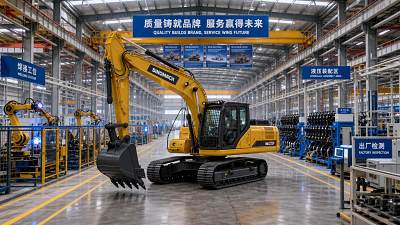
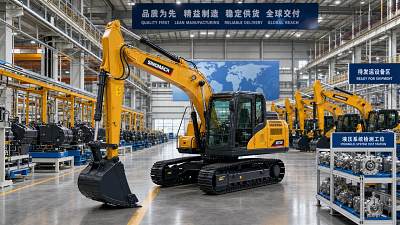
Production capacity is one of the most overlooked indicators in excavator supplier comparison. Buyers often ask for annual output, but the more useful questions are monthly capacity, peak season utilization, welding line stability, painting throughput, and assembly balancing. A factory claiming 5,000 units per year may still struggle to deliver 20 machines on time if its engine or hydraulic pump supply is constrained.
For a serious commercial evaluation, ask the manufacturer to explain its production flow in 4 steps: steel fabrication, structure welding, paint treatment, and final assembly/testing. This helps buyers understand whether the plant controls critical processes or outsources too much. Excessive outsourcing can create variability in boom quality, undercarriage life, or assembly consistency across different batches.
Factory signals that indicate stronger operational control
A disciplined excavator manufacturer should be able to describe standard lead times by model class, such as 25 to 40 days for compact excavators, 35 to 60 days for mid-size units, and 45 to 75 days for larger crawler models under standard configuration. If timelines vary widely without explanation, capacity planning may be weak.
Component traceability is equally important. Engines, pumps, valves, travel motors, and electronic controllers should have documented sourcing channels. Buyers do not need confidential commercial data, but they should understand whether the manufacturer uses stable supply partnerships, equivalent alternatives, or mixed sourcing by batch. This affects serviceability and parts interchangeability in the field.
Key checks during supplier review
- Confirm monthly output by model range rather than only annual production claims.
- Ask whether welding jigs, paint pretreatment, and testing stations are standardized across lines.
- Review how many core components come from stable suppliers and how often alternatives are used.
- Verify whether the factory keeps safety stock for filters, seals, hoses, and wear parts for at least 6 to 12 months.
The following table can be used by buyers to compare production capability among excavator manufacturers on a global B2B platform.
A factory with transparent answers, realistic output planning, and clear component management is usually a better long-term partner than one that competes only on quotation speed. In land transportation equipment sourcing, supply continuity often matters as much as machine specification.
Review Quality Systems Through Inspection Logic, Not Sales Claims
Many suppliers describe their excavators as reliable, durable, or export-grade, but those words are not enough for procurement decisions. Buyers should ask how quality is inspected at each stage and what acceptance standards are used. A structured quality process usually includes incoming component checks, in-process inspection, final functional testing, and pre-shipment review.
For excavators used in road work, quarry support, municipal engineering, or loading operations, quality consistency matters more than isolated showroom performance. A machine may look competitive on paper but still underperform if hose routing is poor, weld finishing is inconsistent, or cab electrical connectors are not secured for vibration-heavy usage. These details often determine whether the equipment performs reliably after 500, 1,000, or 2,000 hours.
Questions that reveal stronger quality discipline
Ask whether the manufacturer performs hydraulic leakage checks, boom and arm movement tests, travel function verification, and engine idle-to-load evaluation before shipment. It is also useful to know whether test records are kept by serial number. A manufacturer that can retrieve inspection data by machine is usually operating with better process discipline.
Buyers should also compare packaging and shipment readiness. International deliveries of 10 to 30 units require more than simple loading. Machines may need rust protection, detachable parts arrangement, battery isolation, attachment labeling, and packing lists suitable for customs and receiving teams. Weak shipment control can cause avoidable damage or delays.
Typical quality checkpoints for export excavators
- Incoming inspection of engines, pumps, cylinders, hoses, pins, and electrical connectors.
- Dimensional and visual checks after welding and before painting.
- Functional test of travel, swing, bucket movement, hydraulic response, and control systems.
- Final review of attachments, manuals, labels, tool kits, and shipment documentation.
When these checkpoints are documented and repeatable, the buyer can compare manufacturers more objectively. This is especially useful for distributors managing mixed portfolios that may also include cab chassis truck, wing van truck, trailer products, and truck brake system components from the same B2B sourcing platform.
The strongest suppliers do not avoid scrutiny. They explain their process in measurable terms, such as 100% final test coverage, 2-stage paint inspection, or 24 to 48 hours for internal issue feedback. Such details are more meaningful than generic promises about premium quality.
Compare After-Sales Service, Spare Parts Strategy, and Distributor Support
For dealers, agents, and project buyers, after-sales support can determine whether an excavator line becomes profitable. Machine procurement does not end at delivery. Buyers need to know how the manufacturer handles troubleshooting, consumable parts, technical documents, and warranty coordination. A weak after-sales structure can turn a competitively priced machine into a recurring service burden.
The most practical service questions are simple. What is the usual response time for technical inquiries: 12 hours, 24 hours, or 72 hours? Which parts are stocked routinely: filters, seal kits, hoses, bucket teeth, track rollers, sensors? Can the manufacturer provide exploded parts references, service videos, or remote troubleshooting in English for international teams? These questions directly affect customer satisfaction and maintenance efficiency.
Why parts availability matters more than broad warranty wording
A 12-month warranty sounds reassuring, but it has limited value if the supplier cannot ship a failed hose assembly, seal kit, or control component within 3 to 7 days. In active construction markets, downtime can trigger project penalties, idle operators, and customer complaints. For distributors, this risk becomes larger when managing 20, 50, or 100 units in different territories.
Manufacturers that support channel partners usually provide a starter parts package, service training, digital manuals, and a technical escalation process. This is especially important when buyers source across categories on a commercial vehicle platform, where the same business may also be handling truck engine parts, commercial vehicle parts, and trailer-related maintenance products.
The table below helps compare service capability in a practical procurement review.
In supplier comparison, after-sales capability should be scored with the same weight as price and specification. For many international buyers, a manufacturer with slightly higher pricing but faster support can protect margin, reduce downtime, and improve repeat business over a 2- to 3-year distribution cycle.
Evaluate Commercial Reliability, Documentation, and Cross-Border Fit
Commercial reliability is often where supplier comparison becomes more precise. A manufacturer may have acceptable products, but if quotation terms change frequently, export documents are incomplete, or communication is inconsistent, the buying process becomes risky. For cross-border procurement, the ability to manage contracts, documentation, and coordination is as important as machine configuration.
Buyers should confirm at least 6 commercial checkpoints before order placement: quotation validity period, payment milestones, production lead time, pre-shipment inspection arrangement, parts support plan, and shipping document list. If these items are unclear, even a technically suitable excavator manufacturer can create delays at payment approval, customs clearance, or final receiving.
How a B2B platform helps buyers compare suppliers more efficiently
A specialized global heavy truck and heavy equipment platform gives buyers a wider comparison base. Instead of reviewing one supplier in isolation, procurement teams can compare excavator manufacturers alongside other land transportation equipment suppliers, such as semi trailer manufacturer networks, light duty truck suppliers, and truck parts exporters. This broader sourcing context helps identify which companies are operationally mature and export-ready.
The platform value is not only product visibility. Buyers can assess supplier responsiveness, category depth, document readiness, and market positioning. A manufacturer that presents consistent product information, application detail, and support resources is usually easier to work with than one that offers only a price sheet and a few photos.
Recommended 5-step supplier comparison process
- Shortlist 3 to 5 excavator manufacturers based on model range, export activity, and application fit.
- Request comparable quotations with the same attachment scope, warranty terms, and delivery basis.
- Check production, QC, and service answers using one unified comparison sheet.
- Review parts support, documentation readiness, and communication speed over at least 2 rounds.
- Finalize with trial order, inspection requirement, and post-delivery support agreement.
This structured approach reduces the chance of choosing a supplier solely because the initial quotation is lower by 5% or 10%. In commercial vehicle and construction equipment sourcing, long-term execution quality creates more value than short-term discounting.
Common Mistakes Buyers Make When Comparing Excavator Manufacturers
One frequent mistake is comparing machines with different configurations as if they were equal. Two excavators may look similar in operating weight, but differences in engine source, hydraulic system matching, undercarriage specification, and attachment package can change both cost and performance. Buyers should insist on a side-by-side comparison sheet before judging price competitiveness.
Another mistake is overlooking the service model. A supplier may accept low-margin orders but provide little technical backup after delivery. This can hurt dealers and distributors who need repeat parts orders, local service confidence, and product continuity. In many cases, weak after-sales support becomes visible only after the first 3 to 6 months of operation.
Practical risk reminders for procurement teams
- Do not approve a supplier based only on brochure quality or exhibition presentation.
- Do not treat all warranties as equal without checking claim process and parts fulfillment speed.
- Do not ignore packaging, loading, and export documentation for multi-unit shipments.
- Do not assume component consistency unless the manufacturer explains sourcing stability clearly.
A more disciplined buying strategy is to run a weighted evaluation. For example, some buyers use a 100-point model with 25 points for technical fit, 20 for production capability, 20 for quality control, 20 for after-sales support, and 15 for commercial terms. The exact weighting can vary, but the principle is useful: price should be one factor, not the only factor.
FAQ: questions buyers often ask
How many suppliers should I compare? For most B2B purchases, 3 to 5 qualified suppliers is enough to reveal realistic pricing, service range, and delivery capability without creating unnecessary evaluation delay.
What is a typical delivery lead time? Standard export lead times often fall between 25 and 75 days depending on model size, attachment scope, and current factory load. Custom branding or non-standard attachments may add 7 to 20 days.
Should I start with a trial order? Yes, especially for new supplier relationships. A trial batch of 1 to 3 units can help verify build consistency, packaging quality, communication efficiency, and parts follow-up before a larger order.
What matters most for distributors? Stable parts supply, training support, and response speed often matter more than the lowest initial machine price because dealer profitability depends on service continuity and customer retention.
Comparing an excavator manufacturer beyond price lists means looking at the full business outcome: production reliability, quality discipline, component consistency, after-sales support, and export execution. For information researchers, procurement specialists, commercial evaluators, and distributors, this broader review reduces risk and improves long-term purchasing decisions.
On a global industry platform that connects construction machinery, heavy trucks, trailers, and commercial vehicle parts suppliers, buyers can compare manufacturers in a more practical and transparent way. If you are evaluating new excavator sources or planning a wider land transportation equipment sourcing strategy, contact us to get tailored supplier comparison support, product details, and more solution options for your market.
- EXCAVATOR
- cab chassis truck
- heavy duty trucks for sale
- light duty truck
- excavator manufacturer
- semi trailer manufacturer
- commercial vehicle parts
- excavator supplier
- heavy duty truck
- semi trailer
- heavy truck
- construction machinery
- truck parts
- bulk cement trailer
- truck engine parts
- wing van truck
- truck engine
- truck brake system
- wing van
- truck parts exporter
Trending News
- Cab Chassis Truck for Fire Department: Key Specs Before Ordering
- When to Use an Excavator With Long Reach Boom on Site
- Choosing a Water Truck Factory for Municipal and Mining Projects
- Truck Parts Wholesale: How to Balance Price, Quality, and Lead Time
- Crane Truck Price in 2026: What Drives Total Ownership Cost
Tag
Recommended News
 Market Analysis2026 China Excavator Manufacturers: What Sets the Best ApartExcavator manufacturer in China selection in 2026 goes beyond price. Discover how top brands stand out in quality, export support, durability, and lifecycle value.
 Market AnalysisHeavy Duty Trucks for Sale in Middle East: Cost and Spec TrendsHeavy duty trucks for sale in Middle East: explore 2024–2025 cost shifts, spec trends, and smart sourcing tips to compare suppliers, reduce fleet risk, and improve long-term ROI.
 Market AnalysisDelivery Truck Supplier with Cost-Effective Solutions: 2026 Market OutlookDelivery truck supplier with cost-effective solutions: explore the 2026 market outlook, compare total ownership costs, supplier reliability, and aftersales support to choose smarter fleet investments.
 Market AnalysisFlatbed Trailer Supplier with Modular Design: Flexibility vs Maintenance CostFlatbed trailer supplier with modular design: compare flexibility, maintenance cost, parts support, and lifecycle value. Use this practical checklist to choose smarter.
 Market AnalysisInfrastructure Projects Need More Than a Machinery SupplierConstruction machinery supplier for infrastructure projects should deliver more than equipment. Learn how to compare reliable partners, reduce risk, and secure lifecycle support.
 Market AnalysisTruck Trailer Distributor Trends Shaping Regional Market Growth in 2026Truck trailer distributor trends for 2026 reveal how regional logistics, compliance, sourcing, and service strategy drive market growth. Explore key insights for smarter expansion.
 Market AnalysisConstruction Machinery Price Trends in 2026: What Shapes Final QuotesConstruction machinery price trends in 2026 depend on specs, compliance, freight, and service. Learn what shapes final quotes and compare suppliers with more confidence.
 Market AnalysisExcavator Manufacturer in China: How to Compare Quality Across FactoriesExcavator manufacturer in China selection is no longer about price alone. Learn how to compare factory quality, reliability, safety, and after-sales support for smarter sourcing.
 Market AnalysisTruck Cement Mixer Manufacturer Comparison: Capacity, Build, and Lead TimeTruck cement mixer manufacturer comparison guide covering capacity, build quality, and lead time to help buyers reduce risk, improve uptime, and choose the right supplier faster.
 Market AnalysisPortable Construction Machinery Supplier Options for Fast-Changing Job SitesExplore how a construction machinery supplier with portable options can help fast-changing job sites stay efficient, reduce relocation delays, and improve uptime with smarter sourcing.
 Market AnalysisWhat Sets a Reliable Truck Trailer Distributor Apart in Regional MarketsTruck trailer distributor selection made easier: discover the key traits that define reliability in regional markets, from stable supply and service support to scalable growth potential.
 Market AnalysisConstruction Machinery Price Swings: What They Mean for 2026 BudgetsConstruction machinery price swings are reshaping 2026 budgets. Learn how volatility affects capex, supplier selection, and timing—and how to cut risk with smarter buying strategies.
 Market AnalysisTruck Cement Exporter Trends in Emerging Infrastructure MarketsTruck cement exporter trends in emerging markets: discover where demand is rising fastest, what buyers expect, and how reliable suppliers win in infrastructure growth.
 Market AnalysisWhat Sets a Reliable Excavator Manufacturer in China ApartExcavator manufacturer in China selection starts with quality, capacity, and service. Discover how to identify reliable suppliers, reduce sourcing risks, and improve long-term equipment value.
 Market AnalysisCrane Truck Price Trends: What Changed and What to ExpectCrane truck price trends explained: discover what changed, which cost drivers matter most, and what buyers should expect next to source smarter and reduce total investment risk.
 Market AnalysisCommercial Trucks Manufacturer in Germany: Quality vs Total CostCommercial trucks manufacturer in Germany choices go beyond build quality. Explore how uptime, compliance, fuel efficiency, and resale value shape total cost and smarter fleet investment.
 Market AnalysisWhen Truck Tipper Wholesale Makes More Sense Than Local SourcingTruck tipper wholesale often beats local sourcing when you need better pricing, broader specs, and stable supply. Learn when wholesale improves fleet value and procurement efficiency.
 Market AnalysisDump Truck Wholesale Margins, Stock Risk, and Model Mix ExplainedDump truck wholesale explained: learn how margins, stock risk, and model mix affect dealer profit. Discover smarter sourcing strategies to improve turnover and scale sales.
 Market AnalysisLogging Truck Distributor vs Factory: Which Option Fits Local DemandLogging truck distributor or factory-direct supplier? Compare local demand, pricing, delivery speed, customization, and after-sales support to choose the best sourcing model for sustainable truck sales growth.
 Market AnalysisLogging Truck Producer Trends Shaping the 2026 Forestry MarketLogging truck producer trends for 2026: discover how durability, fuel efficiency, compliance, and supplier support are reshaping forestry truck sourcing for dealers and distributors.
 Market AnalysisWhen a Dump Truck Distributor Is Better Than Direct Factory BuyingDump truck distributor or factory direct? Discover when a qualified dump truck distributor offers faster delivery, lower sourcing risk, better local support, and smarter fleet value.
 Market AnalysisHeavy Equipment Export to Africa: Market Gaps, Demand Shifts, and Entry TimingHeavy equipment export to Africa: identify market gaps, demand shifts, and the best entry timing to reduce risk, compare suppliers, and capture profitable growth opportunities.
 Market Analysis2026 Independent Site Strategy White Paper: AI Search Reshapes Heavy-Duty B2B ContentAI search reshapes heavy-duty B2B content: Discover how ISO 15118–compliant electric dump trucks and structured site strategy drive global procurement visibility in 2026.
 Market AnalysisConstruction Machinery Cost Trends That Affect Truck ProcurementConstruction machinery cost trends are reshaping truck procurement. Learn how material, labor, and supply chain shifts affect pricing, timing, and smarter fleet sourcing decisions.
 Market AnalysisIs Truck Tipper Wholesale the Right Fit for Seasonal DemandTruck tipper wholesale: learn if it’s the right strategy for seasonal demand. Compare cost, inventory, lead time, and supplier reliability to source smarter.