How to verify an excavator manufacturer with CE certification
How to verify an excavator manufacturer with CE certification
Choosing an excavator manufacturer with CE certification is not just a paperwork exercise. For many buyers, especially those sourcing for Europe or for projects that follow European safety expectations, the CE mark is often treated as a quick sign of legitimacy. That is risky. A CE mark can be valid, misapplied, incomplete, or attached to a machine configuration that is different from the one you are actually buying.
In practice, verification means looking at three things together: the machine, the documents, and the manufacturer behind both. A compliant excavator should be supported by consistent technical files, traceable production controls, and a supplier that understands export documentation rather than treating certification as a sales label.
This matters even more in cross-border procurement, where lead time, inland transport, port handling, customs clearance, and after-sales responsibilities can become tangled if the original compliance basis is weak. Platforms that serve the wider commercial vehicle and heavy equipment supply chain, such as the Global Heavy Truck Industry Platform, are useful here not because they replace due diligence, but because they make comparison easier across manufacturers, machinery categories, and sourcing regions. That broader visibility helps buyers ask better questions before they place an order.
What CE certification really means for an excavator
CE marking is not a generic quality badge. It is a manufacturer’s declaration that the machine complies with applicable EU requirements. For excavators, that usually involves machinery safety obligations and may also involve noise, electromagnetic compatibility, and other technical requirements depending on the machine design, electrical systems, and market application.
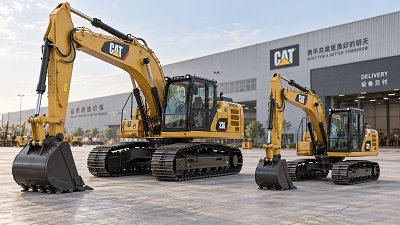
That distinction is important. If a supplier says, “Our excavator has CE,” the next question should be: for which model, which configuration, under which directives or regulations, and supported by which documents? A 1.8-ton mini excavator and a larger crawler excavator may not present the same compliance scope. Add attachments, enclosed cabins, auxiliary hydraulic functions, or electronic control systems, and the documentation burden can change.
A serious manufacturer should be able to explain this clearly, without relying on vague claims or sending a blurred certificate image with no model traceability.
Start with the Declaration of Conformity, not the logo
The most useful first document is usually the EU Declaration of Conformity. Buyers often ask for “the CE certificate,” but for many machines the central compliance document is the declaration issued by the manufacturer or authorized representative. It should identify the manufacturer, the machine model, and the applicable legal framework and standards used for conformity assessment.
Check whether the model name on the declaration matches the quotation, nameplate, brochure, and shipping documents. If the quotation refers to one model family, but the declaration covers a different variant, that is not a small clerical issue. It can signal that the supplier is reusing documents across machines.
Also check the signatory details. The declaration should not look anonymous. It should show who signed it, on what date, and on behalf of which legal entity. If the sales company, factory name, and export company all differ, ask for the relationship between them. In international machinery trade this is common, but it needs to be transparent.
Review the technical documentation that supports compliance
A reliable excavator manufacturer with CE certification should be able to provide more than a declaration. Procurement teams should normally request a document package that may include:
- The Declaration of Conformity
- Operator’s manual in the required language
- Machine nameplate details and serial number format
- Key safety labels and warning markings
- Basic test or inspection records before shipment
- If relevant, reports related to noise, EMC, or component conformity
You do not always need the full technical file at quotation stage, and many manufacturers will not release everything because it contains proprietary engineering material. But they should at least demonstrate that such a file exists and that it is organized. A supplier who cannot provide a structured manual, clear wiring information for electrical parts, or a coherent parts list may struggle later with customs inquiries, field service, or warranty claims.
Inspect the nameplate and machine traceability
On heavy equipment, traceability is one of the easiest ways to separate a real manufacturer from a trading operation with limited technical control. The machine should have a durable nameplate showing the manufacturer, model, serial number, and essential identification data. Those details should match the packing list, invoice, declaration, and inspection photos.
If possible, ask for high-resolution photos or a live video inspection of the specific unit or a recent production unit from the same line. Pay attention to whether the CE mark is applied neatly and consistently, whether warning decals are legible, and whether the cabin controls and emergency markings appear professionally integrated rather than added at the last minute.
This sounds basic, but many sourcing problems begin with simple mismatches between the approved document set and the actual machine shipped.
Verify the manufacturer, not only the factory photo
A polished workshop video proves very little. Verification should focus on whether the company really controls design, assembly, quality inspection, and export compliance. Useful questions include: Does the supplier own the brand? Who is responsible for technical documentation? Are critical components sourced under stable agreements? Is there a quality process for incoming parts, final assembly, and pre-delivery inspection?
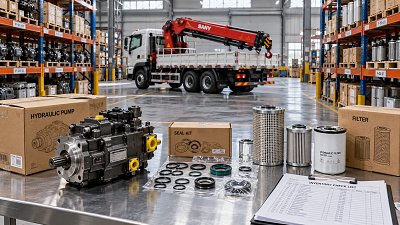
For excavators, component consistency matters. Engines, hydraulic pumps, valves, travel motors, electronics, and safety devices affect not just performance but compliance and serviceability. If a manufacturer frequently substitutes parts without updating manuals or declarations, the CE claim becomes weak in practice even if the paperwork once looked acceptable.
This is where a specialized B2B ecosystem can help. On a sector-focused platform that covers construction machinery alongside trucks, trailers, chassis, and spare parts, buyers can compare how suppliers present technical information across categories, whether they show stable product structures, and whether they support the machines with parts and documentation rather than only headline pricing.
Ask how the manufacturer handles changes and optional configurations
One of the most common blind spots in machinery procurement is configuration drift. The supplier may quote a CE-compliant base machine, then add a quick coupler, breaker line, different engine option, wider track shoe, rotating grab, or enclosed cab package. Those additions can affect machine weight, safety instructions, operating limits, and the supporting documents.
A capable manufacturer should be able to explain whether the quoted configuration is covered by the existing conformity assessment and manuals. If not, they should tell you what needs to be updated before shipment. Buyers dealing with multiple destinations should be especially careful here, because the machine that satisfies one market’s expectations may still require different labeling, manuals, or documentation for another.
Use an audit checklist that combines compliance and delivery risk
For procurement teams, the smartest approach is to combine technical verification with supply risk review. A manufacturer that understands CE requirements but cannot support spare parts, packaging, inland transport coordination, or document accuracy still creates cost later.
Common warning signs buyers should not ignore
Some red flags are obvious: the supplier refuses to share the declaration, the model on the document does not match the offered unit, or the CE mark appears only in marketing artwork. Others are more subtle. A manual copied from another brand, poor English in safety instructions, missing serial number logic, or uncertainty about who prepared the documents usually points to a weak compliance process.
Another warning sign is when the supplier answers every technical question with a sales promise. Buyers do not need perfection, but they do need evidence that engineering, quality, and export teams are connected. If the sales contact cannot arrange a document review, a factory video call, or a pre-shipment inspection discussion, the relationship may not hold up under real project pressure.
Why this check matters beyond Europe
Even when the destination market is outside the EU, CE-related verification is often still useful. Many distributors, project owners, and fleet operators use European-style compliance as a benchmark for machine safety, documentation quality, and export readiness. In land transport and heavy equipment procurement, that discipline tends to correlate with smoother delivery, clearer parts support, and fewer surprises after arrival.
That is one reason industry platforms covering both transport equipment and construction machinery are gaining attention. Buyers are not only comparing excavator price lists; they are looking at the supplier’s ability to function within a larger logistics and equipment ecosystem where documentation, spare parts, and long-term support matter as much as the machine itself.
If you are evaluating an excavator manufacturer with CE certification, do not stop at the mark on the body panel. Ask for the declaration, confirm the model traceability, review the technical support package, and test whether the supplier can explain how compliance is maintained from design to shipment. That process takes more effort up front, but it is usually far cheaper than solving documentation disputes, customs delays, or field safety issues after the machine has already landed.
Trending News
- How order size affects wholesale pricing for cement mixer trucks
- Commercial Vehicle Leaders Hold Firm in Q1–Q3 2026 Automotive Influence Index
- How to choose a refrigerated truck for multi-stop urban deliveries
- Tata Motors Returns to Q2 Profit on Strong Commercial Vehicle Demand
- How to load an excavator onto a lowbed trailer without tipping
Tag
Recommended News
 Buying GuideHow order size affects wholesale pricing for cement mixer trucksExplore truck cement wholesale pricing by order size. Compare volume discounts, landed costs, and delivery terms to secure better value and avoid costly overbuying.
 Buying GuideHow to choose a refrigerated truck for multi-stop urban deliveriesKeep your truck refrigerated through every urban delivery stop. Learn how to compare cooling capacity, payload and door layouts to protect cargo and choose the right vehicle.
 Buying GuideHow much torque does a truck engine need for heavy-duty hauling?How much truck engine torque do you need? Explore the 1,250–2,050 lb-ft range and learn how load, gearing, and gradients shape the right choice for heavy-duty hauling.
 Buying GuideHow to assess a crane truck distributor's spare parts supportAssess a crane truck distributor's spare parts support with practical checks for stock, delivery, and technical expertise. Discover how to reduce downtime and buy with confidence.
 Buying GuideHow to verify spare parts availability with a crane truck supplierChoosing a crane truck supplier? Learn how to verify spare parts stock, compatibility, delivery times, and support commitments to reduce downtime and buy with confidence.
 Buying GuideHow to verify a truck trailer OEM's claimed payload capacityVerify a truck trailer OEM's payload claim with tare records, load calculations, and structural evidence. Learn key checks to avoid costly mistakes and buy with confidence.
 Buying GuideHow does operating weight affect the price of a new excavator?See how operating weight affects excavator price, transport costs, and productivity. Compare configurations and uncover the best value for your next equipment purchase.
 Buying GuideHow to compare concrete mixer truck suppliers by total landed costCompare truck cement mixer supplier quotes by total landed cost, including freight, duties, and delivery. Uncover hidden charges and choose the best-value truck for your fleet.
 Buying GuideWhen does heavy equipment transport require a lowboy trailer?Does your heavy equipment need a lowboy trailer? Discover how loaded height, weight distribution, loading access, and route limits determine the right choice for safe transport.
 Buying GuideHow to choose an off road truck for steep and unstable job sitesChoose the right off road truck for steep, unstable job sites. Compare traction, braking, stability, clearance, payload, and route-test essentials.
 Buying GuideHow to match crane truck lifting capacity to your jobsite loadsCrane truck capacity planning made clear: calculate gross load, radius, rigging, outriggers, and ground conditions to select safer, job-ready lifting equipment.
 Buying GuideHow to match lowbed trailer deck height to your hauling equipmentLowbed trailer deck height guide: match equipment clearance, ramp geometry, axle loads, tractor fit, and route limits for safer, more efficient hauling.
 Buying GuideWhat to verify before choosing a delivery truck supplier for school transportationDelivery truck supplier for school transportation: verify route fit, payload, safety, compliance, service support, and total cost before choosing a reliable partner.
 Buying GuideWhat an excavator manufacturer catalog should show before you compare modelsExcavator manufacturer catalog guide: verify supplier identity, configurations, hydraulics, compliance, parts support, and delivery readiness before comparing models.
 Buying GuideWhat to check before appointing a bulldozer distributorBulldozer distributor selection guide: evaluate service, parts availability, warranty, pricing, compliance, and lifecycle value to reduce downtime and protect fleet investment.
 Buying GuideWhat to verify before choosing a truck cement mixer supplierTruck cement mixer supplier checklist: verify chassis fit, drum quality, hydraulics, compliance, spare parts, and after-sales support before you buy.
 Buying GuideHow to verify a truck spare parts supplier before placing a bulk orderTruck spare parts supplier verification made practical: learn how to check part specifications, factory control, test records, samples, pricing, and delivery capability before placing a bulk order.
 Buying GuideWhat size truck container is right for a typical freight load?Truck container sizing made simple: compare payload, volume, pallet layouts, route access, and loading needs to choose the most efficient freight solution.
 Buying GuideWhat drives semi trailer price differences between similar models?Semi trailer price differences come down to frame materials, axles, suspension, coating, and configuration. Compare specifications line by line to choose lasting value.
 Buying GuideHow to compare excavator manufacturer price lists before requesting quotesCompare an excavator manufacturer price list with confidence. Learn to normalize configurations, calculate landed costs, assess options and service, and create stronger RFQs.
 Buying GuideHow to choose a mixer truck drum capacity for your concrete pourMixer truck capacity guide: match drum size to pour rate, legal payload, site access, and delivery cycles for efficient, reliable concrete placement.
 Buying GuideHow to size a bulldozer for construction site grading workBulldozer for construction sizing guide: match weight, blade, traction, grade control, and transport needs to improve grading productivity and costs.
 Buying GuideHow to assess a truck cement manufacturer’s build quality before orderingTruck cement manufacturer build quality: assess tank steel, welding, chassis integration, pneumatic systems, factory QC, and inspection evidence before ordering.
 Buying GuideWhen does a truck trailer OEM make sense for private-label fleets?Truck trailer OEM programs help private-label fleets cut lifecycle costs, standardize operations, and improve uptime. Learn when customization delivers real commercial value.
 Buying GuideWhat to verify before choosing a water truck OEM for your fleetWater truck OEM selection guide: verify chassis compatibility, tank quality, pump performance, compliance, and service support to build a safer, more reliable fleet.