Why Truck Loader Design Matters for Daily Efficiency
In today’s transport and construction markets, truck loader design directly affects productivity, safety, and operating cost. For buyers comparing a construction truck, lowbed trailer, truck mounted crane, refrigerated truck, mixer truck, or fuel tank truck, understanding loader efficiency is essential. This article explores why smart truck loader configurations matter in daily operations and how they influence performance across logistics, mining, and heavy-duty equipment applications.
For most buyers and commercial evaluators, the short answer is simple: truck loader design matters because it directly changes how much work a vehicle can complete in a day, how safely it can operate, and how much it costs to run over time. A well-designed loader setup improves loading speed, reduces idle time, supports payload stability, and helps protect both equipment and operators. A poor design may look acceptable on paper, but in real operations it often causes delays, higher maintenance, cargo handling problems, and lower fleet efficiency.
Why does truck loader design affect daily efficiency so much?
In heavy transport and industrial operations, efficiency is rarely determined by engine power alone. It is shaped by how quickly a truck can be loaded, secured, transported, unloaded, and returned for the next task. That is why truck loader design plays a central role in daily performance.
Loader design includes the loading platform structure, access angle, weight distribution, hydraulic or mechanical lifting arrangement, body material, reinforcement layout, and compatibility with the cargo type. These factors influence whether a truck can move goods smoothly or lose time at every stage of the workflow.
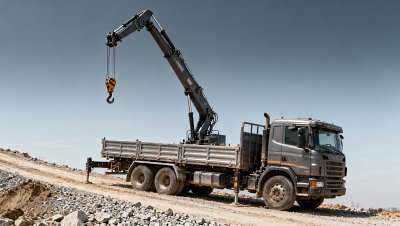
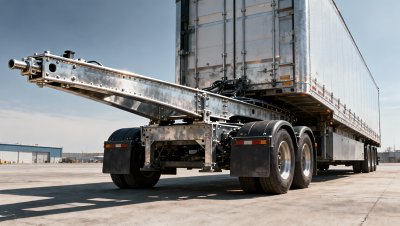
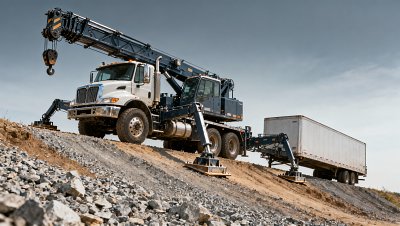
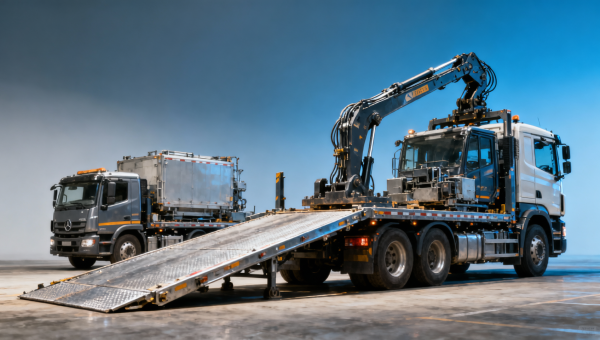
For example, a construction truck serving short-cycle urban projects may need fast loading and unloading more than maximum highway speed. A lowbed trailer transporting machinery depends heavily on deck height, ramp angle, and load stability. A truck mounted crane requires a loader configuration that supports safe lifting, balanced operation, and efficient placement of materials on site. In each case, the vehicle’s design affects the number of trips completed per day and the cost per delivered unit.
For procurement teams, this means truck loader design should be evaluated as an operational productivity factor, not just a technical specification.
What do buyers and distributors usually care about most?
Target readers such as sourcing teams, business evaluators, distributors, and agents usually focus on a few practical questions:
- Will this truck or trailer improve daily throughput?
- Is the design suitable for the intended cargo and route conditions?
- Can it reduce labor time and loading errors?
- Will the structure hold up under repeated heavy-duty use?
- How will design quality affect maintenance cost and resale value?
- Is the supplier able to offer configurations for different market needs?
These are not theoretical concerns. In industries such as logistics transportation, mining operations, infrastructure development, and municipal engineering, small differences in loading efficiency can create major differences in total operating return.
A truck with an optimized loading system may save only a few minutes per cycle, but over months of daily operation, that time saving can translate into more completed routes, lower fuel waste from idling, and better asset utilization. For fleet buyers, these gains matter more than broad product claims.
Which loader design features have the biggest impact on real-world performance?
Several design elements consistently influence operational results.
1. Load access and loading angle
Easy cargo access reduces loading time and improves safety. This is especially important for lowbed trailers, construction trucks, and machinery transport applications. A poor loading angle can slow equipment movement, increase the risk of scraping, and require more operator intervention.
2. Weight distribution and chassis balance
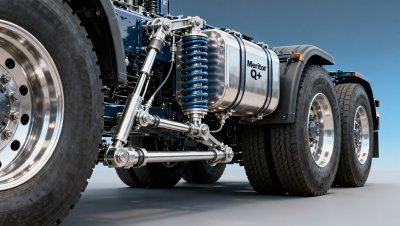
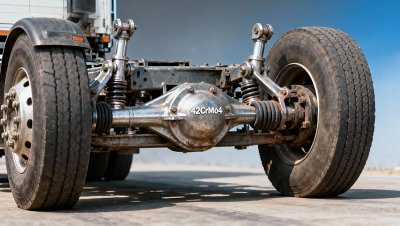
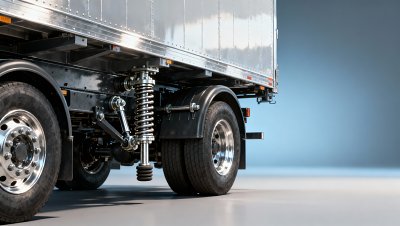
Good loader design supports stable load placement across axles. This improves handling, braking, tire wear, and road safety. In heavy-duty trucks and trailers, poor weight distribution can lead to structural stress and reduced legal payload efficiency.
3. Body strength and material selection
Different applications require different body structures. Mining and construction environments often need reinforced steel structures for durability. Some logistics applications may benefit from lighter materials that increase payload potential and fuel efficiency. Buyers should match material choice with actual use conditions rather than assuming heavier is always better.
4. Hydraulic and mechanical system reliability
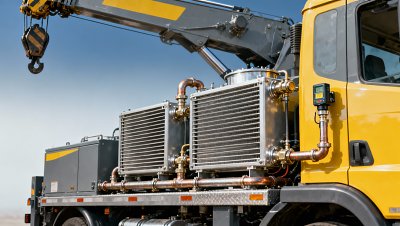
In dump trucks, truck mounted cranes, mixer trucks, and specialized transport vehicles, the loader-related hydraulic system can determine cycle speed and uptime. Weak hydraulic performance often leads to slower operation, leakage risk, and more downtime.
5. Compatibility with cargo type
Truck loader design should fit the product being moved. Refrigerated truck loading needs efficient door access and internal space use. Fuel tank truck design must support secure loading and unloading while meeting safety requirements. Construction material transport may require reinforced sidewalls, anti-spillage design, or faster tipping performance.
How does smart truck loader design reduce operating costs?
Many buyers focus first on purchase price, but daily efficiency usually has a bigger long-term financial effect. Better truck loader design helps reduce operating cost in several ways.
Less loading and unloading time: Faster cycle completion means more productive hours per vehicle.
Lower labor dependency: Efficient loading systems reduce manual intervention and operator fatigue.
Reduced maintenance stress: Balanced design lowers wear on suspension, tires, hydraulics, and structural parts.
Improved fuel use: Smoother cargo handling and fewer idle periods support better fuel economy.
Lower cargo damage risk: Secure and stable loading protects goods, machinery, or materials during transit.
Better uptime: Durable design reduces breakdown frequency and keeps vehicles on the road longer.
For commercial vehicle buyers, this is why evaluating total cost of ownership is more useful than comparing only initial quotation figures.
Why does design matter across different truck categories?
The impact of loader design varies by vehicle type, but it is important in nearly every segment covered by the heavy truck supply chain.
Construction truck
These vehicles often operate in rough environments with frequent loading cycles. Efficiency depends on body strength, tipping speed, and resistance to wear from aggregates, soil, or construction debris.
Lowbed trailer
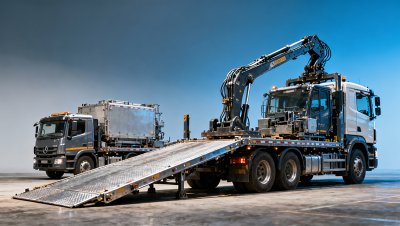
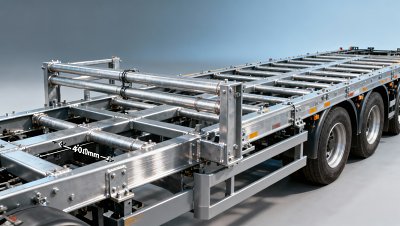
Used for transporting machinery and oversized equipment, lowbed trailer efficiency depends on deck design, loading ramp engineering, axle arrangement, and cargo securing options.
Truck mounted crane
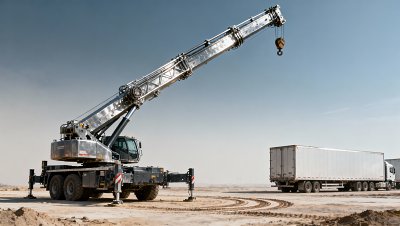
Here, loader design affects both transport and lifting performance. Stability, crane reach integration, and load platform usability all influence on-site productivity.
Refrigerated truck
In cold chain logistics, loader efficiency includes quick access, thermal integrity, and practical cargo arrangement. Poor design can delay deliveries and affect temperature control.
Mixer truck
For concrete transport, the effectiveness of loading and discharge design affects cycle time, material consistency, and project scheduling.
Fuel tank truck
For liquid transport, loading system design affects safety, unloading speed, cleaning convenience, and regulatory compliance.
This is why product comparison should always be application-specific. The best truck loader design is not universal; it depends on cargo, environment, route type, and operating cycle.
How should procurement teams evaluate truck loader design before buying?
To make a sound sourcing decision, buyers should go beyond catalog descriptions and ask structured questions.
- What is the expected daily load cycle count?
- What cargo or equipment will be handled most often?
- What road, site, and climate conditions will affect loading operations?
- How much downtime can the operation tolerate?
- Are spare parts and technical support available in the target market?
- Can the supplier customize the loader design for local regulations or user habits?
It is also useful to request detailed product data such as material thickness, hydraulic brand information, axle layout, deck dimensions, reinforcement structure, and working examples from similar markets. For dealers and distributors, supplier consistency is especially important, because repeat quality affects customer trust and long-term sales potential.
On a professional B2B platform, buyers can compare suppliers more efficiently by reviewing product categories, technical specifications, export capability, and market positioning side by side. This shortens the evaluation process and supports better risk control.
What are the common mistakes when judging loader efficiency?
One common mistake is treating all heavy trucks as comparable if payload numbers look similar. In reality, two vehicles with the same nominal capacity may perform very differently in loading speed, structural life, and site adaptability.
Another mistake is over-prioritizing low initial cost. Lower-priced units may use weaker materials, less reliable hydraulic systems, or less practical loading geometry. These issues often appear only after deployment.
Buyers also sometimes underestimate operator usability. If loading operations are awkward, visibility is poor, or controls are inconvenient, efficiency suffers even when the basic specifications seem strong.
Finally, some procurement decisions are made without considering future maintenance and parts support. Even a strong truck loader design loses value if service access and replacement components are difficult to obtain.
What does an efficient truck loader setup mean for long-term business value?
For fleet operators, contractors, and distributors, efficient truck loader design is more than a daily convenience. It affects competitiveness.
Higher daily throughput can increase revenue potential. Better durability can reduce lifecycle cost. Reliable performance can improve customer satisfaction and project completion rates. For distributors and agents, offering models with smarter loader design can also strengthen brand reputation and create stronger repeat demand.
In a market shaped by global logistics growth, infrastructure investment, and industrial transportation demand, buyers are increasingly looking for equipment that performs well in actual operating conditions. The suppliers and platforms that can present clear technical value, practical application fit, and transparent comparison data will be better positioned to win business.
Conclusion
Truck loader design matters for daily efficiency because it influences every important operational result: speed, safety, cost control, durability, and cargo handling quality. For buyers evaluating a construction truck, lowbed trailer, truck mounted crane, refrigerated truck, mixer truck, or fuel tank truck, the key question is not just what the vehicle can carry, but how efficiently it can complete real work every day.
The most effective buying decisions come from matching loader design to application needs, checking real-world performance factors, and comparing suppliers with a total-value mindset. In the heavy truck industry, smart design is not an added feature. It is a core business advantage.
Trending News
- China's MW-Class Hydrogen Aviation Turboprop Engine First Flight
- Oil Prices Rise, Airlines Cut Capacity, Land Freight Costs Pressure
- Henan's 2026 Key Projects List: RMB 1 Trillion Investment Drives Heavy-Duty & Special Vehicle Demand
- Guangxi Xijiang Waterway Enforces Zero Discharge for Vessel Pollutants
- China Accelerates Low-Altitude Economy Clusters, Boosting Demand for Smart Airport Tugs
Tag
Recommended News
 Truck TechnologyChangjiang 'Lan Yue' Smart Cruise Delivered, TianShu Cabin Migrates to Heavy-Duty TrucksChangjiang 'Lan Yue' Smart Cruise delivered; TianShu intelligent cockpit migrates to heavy-duty trucks—boosting cross-domain AI mobility for陆路运输设备 manufacturers and global fleets.
 Truck TechnologyWeichai NG4.0 Pro Gas Engine Launch Boosts China's Heavy Truck Competitiveness in SE Asia & Central AsiaWeichai's NG4.0 Pro gas engine launch enhances China's heavy truck competitiveness in SE Asia & Central Asia with 48.5% thermal efficiency and dual-fuel capability. Discover cost-saving opportunities for manufacturers and fleet operators.
 Truck TechnologyChina's Transport Ministry Upgrades Multimodal Transport StandardsChina's Transport Ministry upgrades multimodal transport standards, enhancing terminal compatibility with international equipment. Learn how this impacts logistics, manufacturers & global supply chains in 2026.
 Truck TechnologyWhy Truck Loader Design Matters for Daily EfficiencyTruck loader design drives daily efficiency across construction truck, lowbed trailer, truck mounted crane, refrigerated truck, mixer truck and fuel tank truck operations—discover smarter buying insights.
 Truck TechnologyBULLDOZER for land clearing: Why engine displacement matters more than horsepower aloneBULLDOZER for land clearing: Why engine displacement beats horsepower. Compare dump truck for sale, truck tipper price & more on Global Heavy Truck Platform.
 Truck TechnologyTruck Brake System Warning Signs That Should Not Be IgnoredTruck brake system warning signs every fleet buyer should know. Learn how to assess heavy duty trucks for sale, light duty truck models, and commercial vehicle parts before costly failures.
 Truck TechnologyCab Chassis Truck or Factory Body? The Real Upfit TradeoffCab chassis truck or factory body? Compare wing van truck flexibility, light duty truck fit, truck brake system integration, and commercial vehicle parts support to choose smarter and reduce lifecycle cost.
 Truck TechnologyLogging truck OEMs shifting to modular chassis — what changes for fleet operators?Logging truck OEM, bulldozer manufacturer & excavator supplier insights: How modular chassis reshape heavy duty trucks for sale in Canada, Australia, South Africa — boost uptime, cut TCO.
 Truck TechnologyTruck mounted crane hydraulic leaks — the first sign most operators ignoreTruck mounted crane hydraulic leaks signal serious risks—spot them early to protect your light commercial vehicle, refrigerated truck, wing van & more. Act now!
 Truck TechnologyTruck axle upgrades that actually improve ride quality — not just durabilityUpgrade truck axle, suspension & spare parts for light commercial vehicle, refrigerated truck, wing van & truck mounted crane—boost ride quality, efficiency & driver comfort now.
 Truck TechnologyTruck engine remapping after DPF cleaning — does it really restore power?Optimize light commercial vehicle & refrigerated truck performance: Does truck engine remapping after DPF cleaning restore power? Explore real-world data for truck mounted crane, fuel tank truck, and wing van fleets — backed by truck axle, suspension, transmission & spare parts insights.
 Truck TechnologyTruck transmission shift delay in cold weather: Normal behavior or early warning?Light commercial vehicle & refrigerated truck operators: Is your truck transmission shift delay in cold weather normal—or a red flag? Discover actionable diagnostics, verified truck spare parts, and cold-climate powertrain benchmarks.
 Truck TechnologyTruck mounted crane load chart accuracy: Why factory specs don’t match real-site conditionsDiscover why truck mounted crane load charts fail on real job sites—especially for light commercial vehicle, refrigerated truck & wing van integrations. Validate axle, suspension, engine & transmission compatibility now.
 Truck TechnologyRefrigerated truck evaporator coil icing — common triggers beyond thermostat faultsRefrigerated truck icing? Discover root causes beyond thermostat faults—refrigerant charge, airflow, moisture & suspension. Essential for light commercial vehicle & truck spare parts buyers.
 Truck TechnologyTruck axle camber drift after 100,000 km — is realignment enough?Truck axle camber drift at 100,000 km affects light commercial vehicle, refrigerated truck & wing van handling—realignment alone isn’t enough. Discover root-cause solutions for truck suspension, transmission & spare parts.
 Truck TechnologyTruck transmission fluid change intervals: Why ‘lifetime fill’ isn’t universal anymoreOptimize uptime for light commercial vehicle, refrigerated truck & truck mounted crane fleets—discover why 'lifetime fill' transmission fluid is outdated & get application-specific change intervals for truck transmission, axle, suspension & more.
 Truck TechnologyTruck crane boom extension speed drops 22% in sub-zero conditions — operator workarounds testedvan trailer, flatbed trailer, gooseneck trailer & truck crane performance drops 22% in cold weather—discover proven operator workarounds and certified cold-climate solutions.
 Truck TechnologyGooseneck trailer turning radius shrinks with extended pin box — but at what cost to frame stress?Gooseneck trailer, van trailer, stake trailer & more: Discover how extended pin boxes cut turning radius—but raise frame stress. Get engineering insights & procurement checks.
 Truck TechnologyTruck crane stability on uneven terrain — common setup mistakes that lead to tippingTruck crane stability on uneven terrain: avoid tipping with van trailer, flatbed, gooseneck & axle trailer setups. Expert tips, ISO/EN compliance checks & real-world fixes.
 Truck TechnologyAxle trailer weight distribution errors cause 63% of premature suspension failuresAxle trailer weight distribution errors cause 63% of premature suspension failures—critical for van, flatbed, gooseneck, water tanker & more. Optimize fleet longevity now.
 Truck TechnologyTruck crane hydraulic oil temperature rise correlates with boom cycle frequency — thermal data snapshotvan trailer, stake trailer, gooseneck trailer & more: Discover how truck crane hydraulic oil temperature rises with boom cycles—get actionable thermal insights now.
 Truck TechnologyFlatbed trailer crossmember spacing impacts load distribution — not just structural strengthFlatbed trailer crossmember spacing critically affects load distribution—key for van, stake, gooseneck, curtain side, bulk, axle, wing van, water tanker & truck crane trailers. Optimize stability, compliance & lifespan.
 Truck TechnologyTruck crane boom length vs. stability trade-off: Why longer isn’t always safervan trailer, flatbed trailer, gooseneck trailer & more—discover why truck crane boom length ≠ stability. Optimize safety, ROI & compliance now.
 Truck TechnologyConcrete pump hydraulic oil temperature spikes during high-pressure pours—what’s safe?Concrete pump, truck crane & water tanker operators: avoid costly downtime—discover safe hydraulic oil temp thresholds for curtain side, flatbed, bulk, axle, low bed, container & garbage trailers.
 Truck TechnologyTruck crane outrigger pressure readings don’t always reflect ground bearing capacityTruck crane safety starts with true ground bearing capacity—not just outrigger pressure. Critical for curtain side trailer, flatbed trailer, bulk trailer, axle trailer, water tanker, concrete pump, garbage truck, low bed trailer & container trailer operations.