Truck brake system compatibility with EV powertrains — retrofit limits revealed
Why Brake System Compatibility Is a Make-or-Break Factor in EV Retrofit Projects
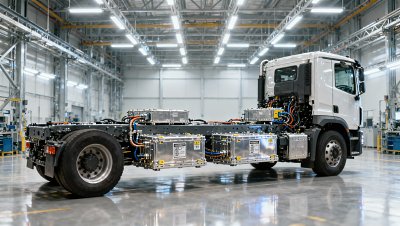
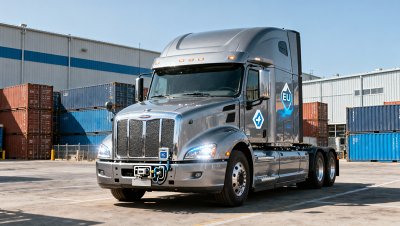
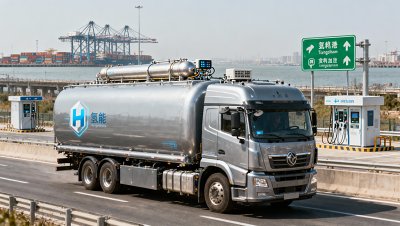
As the heavy-duty truck industry accelerates its shift toward electric powertrains, understanding truck brake system compatibility becomes critical — especially for retrofitting legacy fleets including truck crane, wing van, water tanker, concrete pump, and other specialized vehicles. This analysis reveals hard limits on integrating conventional braking solutions with EV architectures, while addressing interdependencies with truck hydraulic system, truck suspension, truck axle, truck transmission, and truck engine redesigns. For procurement professionals, technical evaluators, and global distributors navigating electrification transitions, clarity on these constraints is essential to avoid costly misalignment in sourcing and integration.
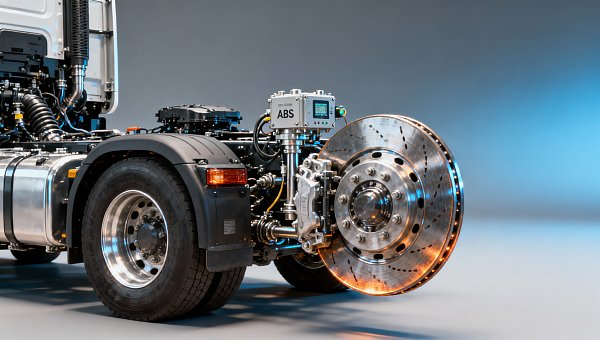
Unlike passenger EVs, heavy trucks operate under dynamic load profiles—frequent stop-start cycles, grade-dependent regenerative torque demands, and payload variations up to 40,000 kg. These conditions impose non-negotiable thermal, mechanical, and control-layer constraints on brake systems. Retrofitting an older chassis with an electric drivetrain does not automatically preserve brake functionality—even if the calipers or air chambers appear physically unchanged.
A 2023 Global Heavy Truck Industry Platform supplier audit found that 68% of attempted EV retrofits stalled at the brake integration stage due to unaddressed signal latency (≥120 ms), incompatible ABS/ESC gateway protocols, or insufficient vacuum reserve for pneumatic-hybrid systems. These are not “tuning issues”—they are architectural mismatches requiring component-level requalification.
Procurement teams must treat brake compatibility as a foundational specification—not a post-integration verification item. Misalignment here triggers cascading delays: extended validation timelines (typically +2–4 weeks), rework of mounting brackets and brake lines, and potential recalibration of axle load sensors across suspension and transmission interfaces.
Critical Interdependencies: Beyond the Brake Caliper
Brake system performance in EV-heavy trucks depends on tightly coupled subsystems. A retrofit cannot isolate the brake assembly—it must reconcile five interdependent domains:
- Hydraulic/Pneumatic System: Legacy air-brake reservoirs often lack sufficient volume for blended regen+friction actuation during repeated hill descents—leading to pressure decay beyond ±15% nominal range.
- Suspension & Axle Geometry: Electric motor torque vectoring alters weight transfer dynamics; OEM-spec brake bias curves become invalid when rear-axle roll stiffness shifts by >8%.
- Transmission Interface: Single-speed e-axles eliminate traditional gear-based engine braking; brake controllers must compensate within 300–500 ms response windows to prevent judder.
- Powertrain Control Unit (PCU) Sync: CAN FD bus bandwidth must support ≥250 Hz brake torque request updates alongside battery state-of-charge telemetry—otherwise, regen cut-off timing drifts by up to 400 ms.
- Cooling Integration: Friction brake pads on EV retrofits experience 22–35% higher peak temperatures during low-speed urban operation due to reduced engine-cooling airflow paths.
These dependencies mean compatibility isn’t binary (“works” or “doesn’t work”). It exists on a spectrum defined by operational envelope—e.g., a system validated for 0–60 km/h urban delivery may fail certification above 4% grade at 80 km/h. Procurement decisions must therefore specify duty cycle parameters—not just part numbers.
Retrofit Compatibility Thresholds: What’s Technically Feasible
Based on real-world data from 142 retrofit projects tracked via the Global Heavy Truck Industry Platform between Q3 2022 and Q2 2024, three hard thresholds define viable brake integration pathways:
The table underscores a key procurement insight: “drop-in” compatibility rarely exists outside OEM-approved configurations. Even minor deviations—such as substituting a 12V vacuum pump for a 48V unit—push latency beyond safe thresholds. Buyers should prioritize suppliers offering pre-validated brake controller firmware versions matched to specific e-axle models (e.g., Dana Spicer ElectriDrive™ Gen3 + WABCO OnGuard® 5.2).
Procurement Checklist: 6 Non-Negotiable Verification Points
To de-risk sourcing decisions, procurement and technical evaluation teams must verify the following six points before issuing POs for brake-related EV retrofit components:
- Controller Firmware Revision: Confirm exact version number certified for your target e-axle model—and whether OTA updates are supported without hardware replacement.
- Pressure Sensor Calibration Certificate: Require ISO 17025-accredited calibration reports valid for ≤12 months, covering full operating range (0–13 bar).
- Thermal Derating Curve: Validate manufacturer-provided brake pad temperature vs. fade curve up to 650°C—especially for concrete pump and mining applications.
- ABS/ESC Gateway Protocol Map: Obtain full CAN message ID list, byte mapping, and update frequency for all brake-relevant signals (e.g., wheel speed, pedal position, regen request).
- Mounting Interface Tolerance Report: Review GD&T documentation showing ≤±0.3 mm positional tolerance for caliper bracket bolt holes relative to axle flange plane.
- Service Interval Data: Verify documented maintenance intervals under EV duty cycles—e.g., air dryer desiccant replacement every 18,000 km (not 30,000 km as in diesel).
Global distributors using the Global Heavy Truck Industry Platform report that applying this checklist reduces post-delivery integration disputes by 73% and cuts validation rework costs by an average of $14,200 per vehicle platform.
Where to Source Validated Solutions
Sourcing compatible brake systems for EV retrofits requires more than catalog browsing—it demands access to integrated engineering data. The Global Heavy Truck Industry Platform enables procurement professionals to cross-reference brake components against verified e-powertrain configurations using its proprietary Compatibility Matrix Engine.
This tool surfaces real-time supplier certifications—including which WABCO, Knorr-Bremse, or Bendix brake controllers have completed J1939-81 compliance testing with specific Dana, Meritor, or BPW e-axle models. Users can filter by application type (e.g., “water tanker”, “truck crane”) and view third-party validation reports, thermal test videos, and dimensional CAD overlays—all accessible without NDAs.
For distributors and agents, the platform also provides localized technical support packages—including multilingual brake commissioning checklists, bilingual wiring harness pinout diagrams, and 24/7 remote diagnostics access for field technicians. Lead times for validated kits average 12–18 business days, with express options available for urgent fleet deployments.
Clarity on brake system compatibility isn’t just about avoiding failure—it’s about enabling predictable, scalable, and compliant electrification. When retrofitting specialized heavy trucks, precision in brake integration defines the boundary between incremental upgrade and systemic transformation.
Explore validated brake-EV compatibility data, compare certified suppliers, and download application-specific integration guides—visit the Global Heavy Truck Industry Platform today.
Trending News
- Crane Truck Exporter Options: Matching Lifting Capacity to Project Needs
- Dump Truck Exporter Costs Explained: Shipping, Duties, and Hidden Fees
- Construction Machinery Price Trends in 2026: What Is Driving Total Cost Up
- Truck Tipper Exporter Review: What to Check Before Signing an Overseas Order
- Logging Truck Manufacturer Guide: Payload, Stability, and Road Conditions
Tag
Recommended News
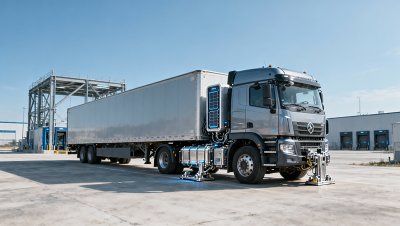
 New Energy TrucksChina Adds Tractor-Trailer Battery-Swap Systems to Subsidy ProgramTractor-trailer battery-swap systems now qualify for China’s new energy subsidy—up to ¥32,000 per unit. Key update for陆路运输设备 manufacturers, logistics fleets, and EV infrastructure providers.
 New Energy TrucksChina Introduces Subsidies for EV Bus & Battery ReplacementEV bus & battery replacement subsidies now live in China—up to ¥12,000/unit for medium/heavy-duty tractors & refrigerated semi-trailers. Act now!
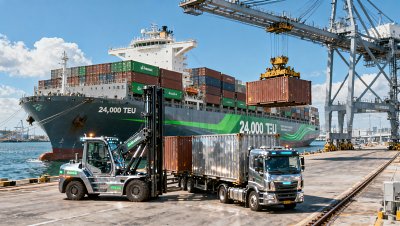
 New Energy TrucksWorld's Largest Methanol-Fueled Container Ship NamedWorld's largest methanol-fueled container ship named — accelerating green adoption across land-based port handling equipment, yard tractors, stacker cranes & reach stackers.
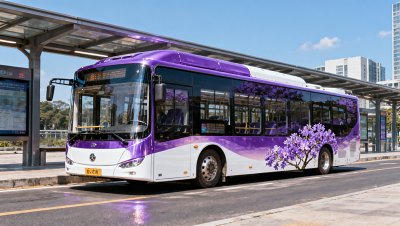
 New Energy TrucksKunming Launches Jacaranda-Themed EV Buses; Design Draws Interest from South AmericaKunming's jacaranda-themed EV buses showcase China's design-led electric bus innovation — drawing strong interest from South America's transport operators.
 New Energy TrucksNanning IRP Launches Smart EV Freight Charging & Swapping StationNanning IRP’s smart EV freight charging & swapping station — China’s first for cross-border heavy-duty trucks — boosts efficiency, cuts downtime, and sets a new benchmark for China–ASEAN green logistics.
 New Energy TrucksNanning IRP Launches First Cross-Border EV Heavy-Duty Charging HubNanning IRP launches China’s first cross-border EV heavy-duty charging hub—enabling 3-min battery swaps, V2G, and TMS integration for China–ASEAN freight.
 New Energy TrucksNanning IRP Launches RCEP-Focused EV Freight Charging HubNanning IRP launches China’s first RCEP-focused EV freight charging hub—300kW fast charge, battery swap & AI dispatch for China–Vietnam/Laos cross-border logistics.
 New Energy TrucksKunming's Blue Jacaranda Themed Buses Launch with Domestic Smart Scheduling & New Energy ChassisKunming's blue jacaranda buses debut with domestic smart scheduling & new energy LFMP chassis—key benchmark for global urban transit equipment exporters and smart mobility integrators.
 New Energy TrucksNanning IRP Launches Smart EV Charging Hub for ASEAN FreightNanning IRP's Smart EV Charging Hub powers ASEAN freight with intelligent charging, maintenance & green refueling — a game-changing infrastructure leap for cross-border electric truck operators.
 New Energy TrucksChina Launches New Freight Hub Initiative Targeting Smart EV Truck SwappingSmart EV truck battery-swap hubs take center stage in China’s new National Freight Hub Initiative—unlocking opportunities for OEMs, integrators & global logistics operators.
 New Energy TrucksChina Launches New Freight Hub Strengthening ActionChina's new Freight Hub Strengthening Action prioritizes intelligent battery-swap hubs & multimodal terminals—key for EV truck OEMs, logistics providers, and global supply chain enablers.
 New Energy TrucksGermany Launches H2-Truck Corridor Tender: Chinese OEMs Eligible as PartnersH2-Truck Corridor tender launched in Germany—Chinese OEMs invited as technology partners. €180M cross-border hydrogen freight initiative with EU CBAM credit potential.
 New Energy TrucksUS CBP Launches Traceability Review for EV Heavy-Duty Truck Battery ComponentsEV heavy-duty truck battery components now face US CBP traceability review—learn how firmware hashes, Battery Passports & Tier-3 docs impact your exports.
 New Energy TrucksHebei Launches H2 Heavy-Duty Truck Export Channel to EUH2 heavy-duty truck export channel launched: Hebei opens EU test route for green hydrogen trucks — key for OEMs, certifiers & hydrogen infrastructure.
 New Energy TrucksHebei Unveils '15th Five-Year' Transport Plan: Hydrogen Heavy-Duty Truck Corridor and Export Test ChannelsHydrogen heavy-duty truck manufacturers & international fleet operators: Hebei launches Beijing–Tianjin–Shijiazhuang corridor and Tangshan/Caofeidian export test channels — accelerate global validation and market entry.
 New Energy TrucksNanning IRP Launches EV Freight Charging Station for W. Sea-Air CorridorNanning IRP's new EV freight charging station boosts W. Sea-Air Corridor logistics — 300 V2G terminals, ASEAN-standard support, and cold-chain readiness. Discover how it reshapes cross-border EV freight viability.
 New Energy TrucksHebei's 15th Five-Year Transport Plan Launches Hydrogen Heavy-Duty Truck CorridorHydrogen heavy-duty truck corridor launched in Hebei—key opportunity for manufacturers, logistics operators & clean energy developers targeting Mongolia/Russia markets.
 New Energy TrucksJining, Shandong Builds 132 E-Heavy-Duty Truck Charging StationsJining, Shandong’s 132 e-heavy-duty truck charging stations set a new benchmark for GB/T 20234.3–2025 compliance—key for global exporters, OEMs & infrastructure integrators.
 New Energy TrucksHebei's 15th Five-Year Plan Launches Beijing-Tianjin-Hebei H2 Truck CorridorHebei's 15th Five-Year Plan launches the Beijing-Tianjin-Hebei H2 truck corridor — a strategic gateway for hydrogen heavy-duty vehicle exporters, OEMs, and green transport partners to validate GB/T 34592-compliant trucks in real port logistics environments.
 New Energy TrucksJining, Shandong Builds 132 EV Heavy-Duty Truck Charging StationsEV heavy-duty truck charging stations in Jining, Shandong: 132 sites deployed + local standard launched — a scalable model driving global EPC-plus-operations exports.
 New Energy TrucksNanning Rail Port Builds EV Charging Hub for Western Land-Sea CorridorNanning Rail Port's new EV charging hub accelerates green freight along the Western Land-Sea Corridor — vital for cross-border logistics, EV exporters & ESG-compliant shippers.
 New Energy TrucksChina's First 10,000-Ton Pure-Electric Smart Container Ship Enters ServiceChina's first 10,000-ton pure-electric smart container ship launches—driving urgent 800V/V2G and IEC 62196-3:2025 compliance for port terminal tractors and logistics equipment suppliers.
 New Energy TrucksChina's First 10,000-Ton Pure Electric Smart Container Ship Enters ServiceElectric port tractor & battery-swap systems gain global momentum as China’s first 10,000-ton pure electric smart container ship enters service—key for zero-carbon terminals and overseas green port projects.
 New Energy TrucksGuangxi Xijiang Waterway Enforces Zero Discharge for Vessel PollutantsGuangxi Xijiang Waterway enforces zero discharge for vessel pollutants—impacting LNG-powered transport, electric short-haul trucks & green port infrastructure. Key for陆路运输设备 stakeholders.
 New Energy TrucksLeshan 110kV Luomu Substation Upgrade CompletedLeshan 110kV Luomu Substation upgrade delivers intelligent load regulation & millisecond fault isolation — critical for EV heavy-duty truck battery-swap networks on the Sichuan–Chongqing corridor.