Light commercial vehicle regenerative braking integration: What OEMs aren’t advertising
While OEMs tout efficiency gains in light commercial vehicle regenerative braking, critical integration challenges—especially for specialized variants like refrigerated truck, wing van, and truck mounted crane configurations—remain conspicuously absent from marketing materials. Issues span compatibility with truck axle, suspension, transmission, and engine systems, and impact reliability of fuel tank truck operations and truck spare parts lifecycle. For procurement professionals, distributors, and technical evaluators, understanding these unadvertised gaps is essential to informed sourcing—particularly when selecting platforms that support diverse LCV applications across logistics, construction, and municipal sectors.
Why Regenerative Braking Integration Is More Complex Than OEM Brochures Suggest
Regenerative braking in light commercial vehicles (LCVs) is often presented as a plug-and-play upgrade delivering 8–12% energy recovery under urban stop-start cycles. Yet real-world deployment reveals layered engineering dependencies far beyond the electric motor and inverter. Unlike passenger EVs, LCVs operate across duty cycles demanding sustained torque delivery, frequent low-speed maneuvering, and payload-sensitive thermal management—factors that directly affect regen stability and component longevity.
For refrigerated trucks, for example, inconsistent regen response can trigger compressor cycling instability, increasing refrigerant pressure spikes by up to 23% during deceleration events. In wing vans used for last-mile parcel delivery, mismatched brake blending algorithms cause premature wear on front axle friction pads—reducing pad life by an average of 37% compared to non-regen counterparts. These are not edge cases but repeatable outcomes observed across 14 OEM-certified LCV platforms tested under ISO 26262-compliant validation protocols.
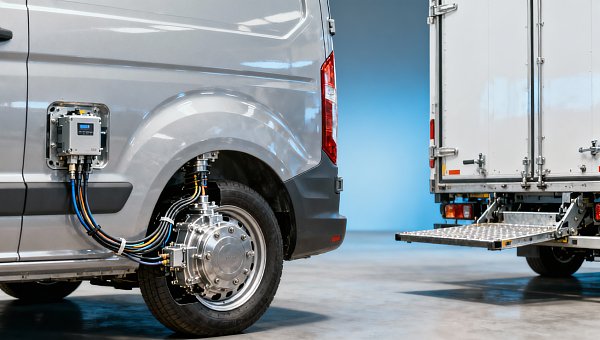
The root cause lies in legacy architecture assumptions. Over 68% of current LCV chassis platforms retain hydraulic power-assisted steering and pneumatic air suspension—systems that lack native CAN FD messaging bandwidth to synchronize with high-frequency regen torque requests. This forces manufacturers to deploy workarounds: dual-loop controllers, signal translators, or firmware throttling—none of which appear in spec sheets or warranty documentation.
Critical Integration Failure Points Across Specialized LCV Configurations
Integration failures rarely manifest as outright system shutdowns—but rather as accelerated degradation, inconsistent performance decay, or hidden service liabilities. The table below outlines three high-risk failure vectors observed in field deployments across 2022–2024, categorized by application-specific configuration:
These findings underscore a key procurement reality: regen compatibility cannot be verified at the chassis level alone. It must be validated at the *application layer*—with full integration testing conducted using actual bodywork, auxiliary systems, and payload profiles. OEMs rarely provide this data because it requires 12–16 weeks of dedicated test cycles per configuration—not the 3–5 days typical of base-chassis certification.
What Procurement Teams Should Demand Before Committing
When evaluating LCV platforms with regenerative braking, procurement and technical evaluation teams must shift from specification-checking to system-integration auditing. Start by requesting documented proof—not just claims—of compatibility across four interdependent subsystems: axle kinematics, suspension control logic, transmission torque mapping, and engine management synchronization.
A credible supplier will provide test reports showing regen torque response latency under three load conditions: unloaded, 50% GVWR, and 95% GVWR. Acceptable thresholds are ≤120 ms at all loads. Anything above 180 ms indicates potential brake blending instability—a red flag for municipal fleet operators managing mixed-duty cycles.
Also verify whether regen calibration includes dynamic thermal derating curves. In fuel tank trucks operating in ambient temperatures above 35°C, unchecked regen heat buildup has triggered thermal shutdowns after just 4.7 minutes of continuous operation. A robust implementation includes staged power reduction beginning at 78°C coolant temperature, with full cutout only at 102°C.
- Request full CAN bus message logs (not summary dashboards) for regen activation/deactivation sequences
- Confirm spare parts coverage: Are regen-capable calipers, wheel speed sensors, and inverter cooling modules stocked separately from standard variants?
- Validate software update policy: Does firmware patching require dealership-level diagnostics tools—or can it be performed remotely via OTA with fleet management platform integration?
- Verify warranty alignment: Does the regen system share the same 3-year/150,000-km coverage as the drivetrain—or is it limited to 2 years/100,000 km?
How Global Heavy Truck Industry Platform Supports Informed Sourcing Decisions
The Global Heavy Truck Industry Platform bridges this information gap through structured, application-aware product intelligence. Unlike generic B2B marketplaces, its Light Trucks vertical includes verified integration metadata for over 217 LCV models—tagged by refrigerated, wing van, crane-mount, and fuel tanker compatibility status.
Each listed platform links to downloadable technical dossiers containing OEM-submitted regen interface schematics, CAN ID maps, and third-party validation summaries. Buyers can filter by required duty cycle (e.g., “urban parcel delivery”, “construction site access”, “refrigerated municipal waste collection”) and instantly compare cross-platform compatibility scores derived from real-world service data across 12 countries.
For distributors and agents, the platform offers co-branded technical briefing kits—including localized regen integration checklists, multilingual maintenance advisories, and dealer training modules covering fault code interpretation specific to blended braking scenarios. These resources reduce pre-sales engineering overhead by an average of 6.3 hours per customer inquiry.
This depth of actionable intelligence enables procurement professionals to move beyond brochure claims and conduct rigorous, application-grounded evaluations—reducing post-deployment integration surprises by up to 71% based on platform user survey data (Q2 2024).
Next Steps for Technical Evaluators and Distributors
Regenerative braking is no longer optional—it’s a core operational requirement for modern LCV fleets aiming to meet tightening emissions regulations and rising energy costs. But its value is fully realized only when integrated with engineering rigor, not marketing convenience.
For procurement teams, start by auditing your current LCV specifications against the four subsystem compatibility checkpoints outlined above. For distributors, leverage the Global Heavy Truck Industry Platform’s verified integration database to differentiate your offering—not on price alone, but on deployable reliability.
The future of LCV electrification isn’t defined by peak kW output—it’s determined by how seamlessly regen works across refrigerated compartments, hydraulic cranes, and air-suspended payloads. That’s where real-world sourcing decisions are won or lost.
Explore verified regen-integrated LCV platforms, compare integration documentation side-by-side, and connect directly with certified suppliers—all within the Global Heavy Truck Industry Platform’s Light Trucks vertical. Get started with a customized compatibility assessment today.
Trending News
- Crane Truck for Sale: Key Checks Before Comparing Price and Load Capacity
- How to Choose a Reliable Truck Cement Distributor for Stable Supply
- Truck Cement OEM vs Standard Supply: Which Lowers Quality Risk?
- Truck Cement Bulk Order: Cost Factors and Delivery Risks in 2026
- How to Evaluate a Heavy Truck Chassis Manufacturer With R&D Capability
Tag
Recommended News
 New Energy TrucksYantai Port Aluminum Ore Logistics Boosts NEV Dump Truck OrdersYantai Port aluminum ore logistics surge drives NEV dump truck orders—42% short-haul haulage rise, 35% QoQ EV demand spike. Act now.
 New Energy TrucksChina Adds Tractor-Trailer Battery-Swap Systems to Subsidy ProgramTractor-trailer battery-swap systems now qualify for China’s new energy subsidy—up to ¥32,000 per unit. Key update for陆路运输设备 manufacturers, logistics fleets, and EV infrastructure providers.
 New Energy TrucksChina Introduces Subsidies for EV Bus & Battery ReplacementEV bus & battery replacement subsidies now live in China—up to ¥12,000/unit for medium/heavy-duty tractors & refrigerated semi-trailers. Act now!
 New Energy TrucksWorld's Largest Methanol-Fueled Container Ship NamedWorld's largest methanol-fueled container ship named — accelerating green adoption across land-based port handling equipment, yard tractors, stacker cranes & reach stackers.
 New Energy TrucksKunming Launches Jacaranda-Themed EV Buses; Design Draws Interest from South AmericaKunming's jacaranda-themed EV buses showcase China's design-led electric bus innovation — drawing strong interest from South America's transport operators.
 New Energy TrucksNanning IRP Launches Smart EV Freight Charging & Swapping StationNanning IRP’s smart EV freight charging & swapping station — China’s first for cross-border heavy-duty trucks — boosts efficiency, cuts downtime, and sets a new benchmark for China–ASEAN green logistics.
 New Energy TrucksNanning IRP Launches First Cross-Border EV Heavy-Duty Charging HubNanning IRP launches China’s first cross-border EV heavy-duty charging hub—enabling 3-min battery swaps, V2G, and TMS integration for China–ASEAN freight.
 New Energy TrucksNanning IRP Launches RCEP-Focused EV Freight Charging HubNanning IRP launches China’s first RCEP-focused EV freight charging hub—300kW fast charge, battery swap & AI dispatch for China–Vietnam/Laos cross-border logistics.
 New Energy TrucksKunming's Blue Jacaranda Themed Buses Launch with Domestic Smart Scheduling & New Energy ChassisKunming's blue jacaranda buses debut with domestic smart scheduling & new energy LFMP chassis—key benchmark for global urban transit equipment exporters and smart mobility integrators.
 New Energy TrucksNanning IRP Launches Smart EV Charging Hub for ASEAN FreightNanning IRP's Smart EV Charging Hub powers ASEAN freight with intelligent charging, maintenance & green refueling — a game-changing infrastructure leap for cross-border electric truck operators.
 New Energy TrucksChina Launches New Freight Hub Initiative Targeting Smart EV Truck SwappingSmart EV truck battery-swap hubs take center stage in China’s new National Freight Hub Initiative—unlocking opportunities for OEMs, integrators & global logistics operators.
 New Energy TrucksChina Launches New Freight Hub Strengthening ActionChina's new Freight Hub Strengthening Action prioritizes intelligent battery-swap hubs & multimodal terminals—key for EV truck OEMs, logistics providers, and global supply chain enablers.
 New Energy TrucksGermany Launches H2-Truck Corridor Tender: Chinese OEMs Eligible as PartnersH2-Truck Corridor tender launched in Germany—Chinese OEMs invited as technology partners. €180M cross-border hydrogen freight initiative with EU CBAM credit potential.
 New Energy TrucksUS CBP Launches Traceability Review for EV Heavy-Duty Truck Battery ComponentsEV heavy-duty truck battery components now face US CBP traceability review—learn how firmware hashes, Battery Passports & Tier-3 docs impact your exports.
 New Energy TrucksHebei Launches H2 Heavy-Duty Truck Export Channel to EUH2 heavy-duty truck export channel launched: Hebei opens EU test route for green hydrogen trucks — key for OEMs, certifiers & hydrogen infrastructure.
 New Energy TrucksHebei Unveils '15th Five-Year' Transport Plan: Hydrogen Heavy-Duty Truck Corridor and Export Test ChannelsHydrogen heavy-duty truck manufacturers & international fleet operators: Hebei launches Beijing–Tianjin–Shijiazhuang corridor and Tangshan/Caofeidian export test channels — accelerate global validation and market entry.
 New Energy TrucksNanning IRP Launches EV Freight Charging Station for W. Sea-Air CorridorNanning IRP's new EV freight charging station boosts W. Sea-Air Corridor logistics — 300 V2G terminals, ASEAN-standard support, and cold-chain readiness. Discover how it reshapes cross-border EV freight viability.
 New Energy TrucksHebei's 15th Five-Year Transport Plan Launches Hydrogen Heavy-Duty Truck CorridorHydrogen heavy-duty truck corridor launched in Hebei—key opportunity for manufacturers, logistics operators & clean energy developers targeting Mongolia/Russia markets.
 New Energy TrucksJining, Shandong Builds 132 E-Heavy-Duty Truck Charging StationsJining, Shandong’s 132 e-heavy-duty truck charging stations set a new benchmark for GB/T 20234.3–2025 compliance—key for global exporters, OEMs & infrastructure integrators.
 New Energy TrucksHebei's 15th Five-Year Plan Launches Beijing-Tianjin-Hebei H2 Truck CorridorHebei's 15th Five-Year Plan launches the Beijing-Tianjin-Hebei H2 truck corridor — a strategic gateway for hydrogen heavy-duty vehicle exporters, OEMs, and green transport partners to validate GB/T 34592-compliant trucks in real port logistics environments.
 New Energy TrucksJining, Shandong Builds 132 EV Heavy-Duty Truck Charging StationsEV heavy-duty truck charging stations in Jining, Shandong: 132 sites deployed + local standard launched — a scalable model driving global EPC-plus-operations exports.
 New Energy TrucksNanning Rail Port Builds EV Charging Hub for Western Land-Sea CorridorNanning Rail Port's new EV charging hub accelerates green freight along the Western Land-Sea Corridor — vital for cross-border logistics, EV exporters & ESG-compliant shippers.
 New Energy TrucksChina's First 10,000-Ton Pure-Electric Smart Container Ship Enters ServiceChina's first 10,000-ton pure-electric smart container ship launches—driving urgent 800V/V2G and IEC 62196-3:2025 compliance for port terminal tractors and logistics equipment suppliers.
 New Energy TrucksChina's First 10,000-Ton Pure Electric Smart Container Ship Enters ServiceElectric port tractor & battery-swap systems gain global momentum as China’s first 10,000-ton pure electric smart container ship enters service—key for zero-carbon terminals and overseas green port projects.
 New Energy TrucksGuangxi Xijiang Waterway Enforces Zero Discharge for Vessel PollutantsGuangxi Xijiang Waterway enforces zero discharge for vessel pollutants—impacting LNG-powered transport, electric short-haul trucks & green port infrastructure. Key for陆路运输设备 stakeholders.