Gansu Hydrogen Heavy-Duty Truck Project Enters Equipment Tender Phase
On April 18, 2026, Gansu Province advanced integrated transport–energy infrastructure development with the public release of equipment procurement details for the first phase of the ‘Hexi Corridor Green Hydrogen Heavy-Duty Truck Demonstration Corridor’. This development signals material progress in China’s hydrogen mobility value chain—and warrants attention from hydrogen equipment manufacturers, export-oriented system integrators, and logistics decarbonization service providers.
Event Overview
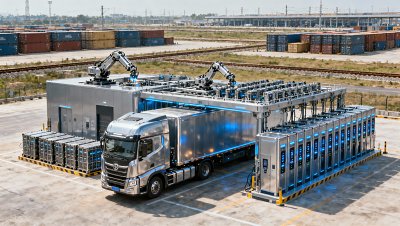
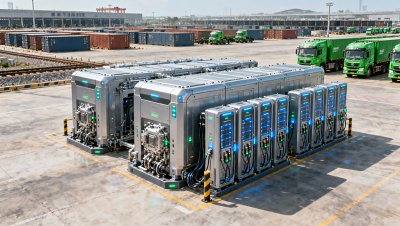
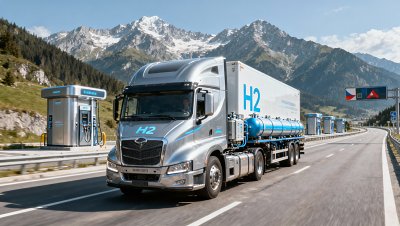
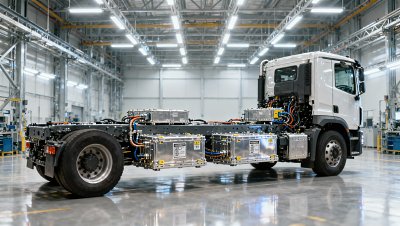
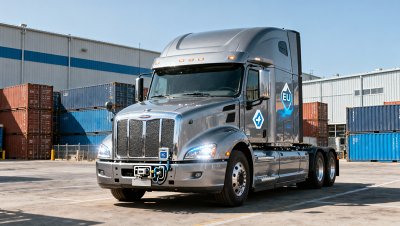
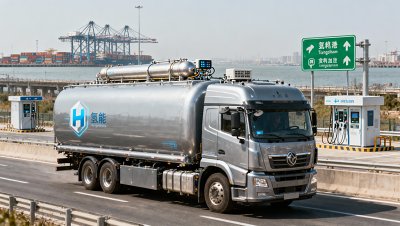
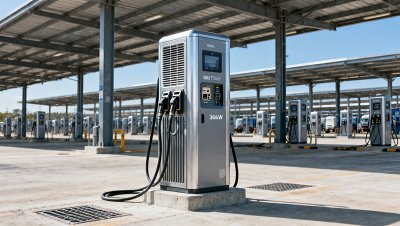
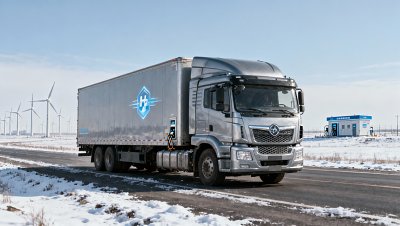
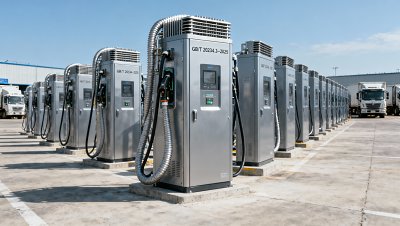
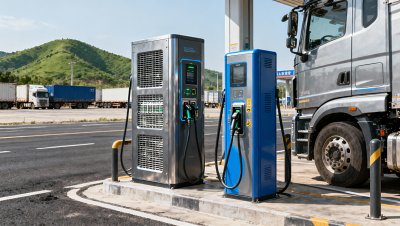
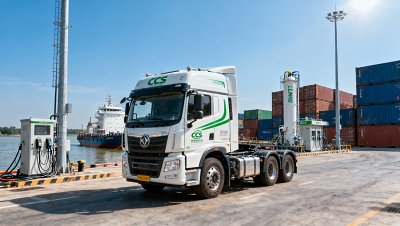
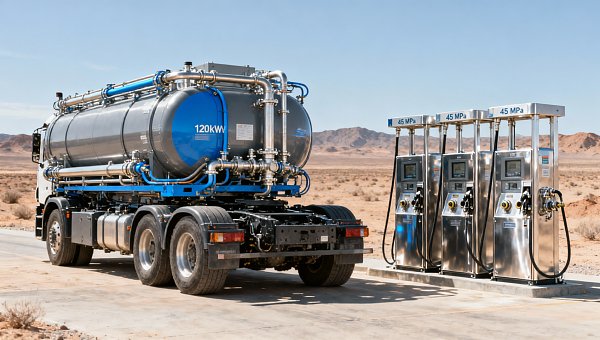
On April 18, 2026, the Gansu Provincial Development and Reform Commission published the equipment procurement list for Phase I of the ‘Hexi Corridor Green Hydrogen Heavy-Duty Truck Demonstration Corridor’. The list includes: 30 units of 45 MPa skid-mounted hydrogen dispensers; 20 units of 120 kW fuel cell tractor chassis; and associated onboard hydrogen supply systems. All procured equipment must comply with ISO 14687-2:2021 hydrogen purity specifications.
Industries Affected by This Procurement
Hydrogen Equipment Exporters & System Integrators
Why affected: The tender explicitly bundles production-grade hardware—including dispensers, chassis, and vehicle-integrated supply systems—into a standardized, export-ready package. This reflects a shift from prototype-level validation to repeatable, spec-compliant delivery.
Impact: Increased demand for certified, interoperable components aligned with international standards (e.g., ISO 14687-2:2021), particularly for markets pursuing similar green corridor models (e.g., Middle East, Australia).
Fuel Cell Vehicle Component Manufacturers
Why affected: The requirement for 20 units of 120 kW fuel cell tractor chassis indicates early but concrete volume signals for heavy-duty platform integration—not just passenger or light commercial applications.
Impact: Greater scrutiny on powertrain scalability, thermal management under sustained load, and compatibility with high-pressure (45 MPa) refueling interfaces.
H2 Refueling Infrastructure Suppliers
Why affected: The specification of 30 units of 45 MPa skid-mounted dispensers—rather than custom-built stations—suggests preference for modular, factory-assembled, and rapidly deployable solutions.
Impact: Competitive pressure shifts toward cost-per-unit predictability, certification readiness (e.g., ISO/IEC 17065 conformity), and logistical flexibility for remote or arid deployment environments.
Hydrogen Purity Testing & Certification Service Providers
Why affected: Mandatory compliance with ISO 14687-2:2021 implies enforceable third-party verification requirements for both delivered hydrogen and onboard storage systems.
Impact: Higher demand for on-site or mobile analytical services capable of validating Class 2 hydrogen quality (≤5 ppm total hydrocarbons, ≤2 ppm CO, ≤0.5 ppm H₂S) prior to commissioning.
What Relevant Enterprises or Practitioners Should Monitor and Do Now
Track official tender award notices and technical deviation records
Current tender documents are procurement lists—not awarded contracts. Follow-up announcements (expected Q3 2026) will clarify which suppliers meet the ISO 14687-2:2021 compliance threshold and whether field testing protocols are defined. These details directly inform export replication feasibility.
Assess alignment between existing product specs and the 45 MPa + 120 kW operational envelope
This tender sets a de facto benchmark for near-term heavy-duty hydrogen mobility deployments in arid, long-haul corridors. Companies should cross-check their dispenser flow rates, chassis thermal derating curves, and onboard tank pressure cycling endurance against these parameters—not just nominal ratings.
Distinguish policy intent from immediate commercial scale
The project is labeled ‘demonstration corridor’, not ‘commercial rollout’. While it validates engineering readiness, revenue visibility remains limited to Phase I equipment supply only. No downstream operation, maintenance, or hydrogen supply contracts have been disclosed.
Prepare modular documentation packages for international replication
Given the stated export opportunity for an integrated ‘production–storage–transport–use’ equipment package, suppliers should begin consolidating ISO-compliant test reports, CE/UKCA declarations (where applicable), and multilingual installation manuals—prior to formal RFPs emerging in target markets like Saudi Arabia or Western Australia.
Editorial Observation / Industry Perspective
From an industry perspective, this tender is best understood as a *policy-anchored signal*, not yet a market inflection point. It confirms that Chinese authorities are moving beyond pilot-scale hydrogen mobility experiments toward standardized, certifiable hardware packages—but does not indicate broad fleet adoption or hydrogen supply economics viability. Analysis来看, its greatest near-term value lies in establishing a reference architecture: one that links renewable hydrogen generation (via PV), localized compression/storage, and purpose-built heavy-duty vehicles into a single procurement framework. That structure—rather than the specific quantities—may be replicated elsewhere, provided local grid, terrain, and regulatory conditions permit.
Observation来看, the emphasis on ISO 14687-2:2021 compliance (not just national GB/T standards) suggests deliberate alignment with global export expectations. However, actual export readiness depends less on this tender alone and more on how consistently subsequent phases—and parallel projects in Ningxia or Inner Mongolia—maintain this specification discipline.
Current more appropriate interpretation is that this marks the first publicly verifiable step toward industrializing hydrogen heavy-duty mobility in China—not its commercial launch.
Conclusion
This tender represents a calibrated, infrastructure-led progression in China’s hydrogen strategy—not a sudden market opening. Its significance lies in standardization, not scale; in certification readiness, not immediate revenue. For stakeholders, it serves as a functional reference point for what ‘export-ready’ means in green hydrogen transport systems today: modular hardware, internationally recognized purity compliance, and explicit bundling across the value chain. A measured, specification-first response remains more suitable than expansive commercial planning at this stage.
Information Source
Main source: Gansu Provincial Development and Reform Commission official procurement notice (April 18, 2026).
Note: Award outcomes, supplier names, and follow-up implementation timelines remain pending and require ongoing observation.
Trending News
- Nanjing Launches First Wind Power Equipment Shipping Route to Pakistan
- Irkeshtam Port’s 24-Hour Freight Clearance Boosts Exports to Kyrgyzstan
- Erenhot-Mongolia 24-Hour Freight Clearance Marks First Anniversary
- China-Europe Railway Express Surpasses 130,000 Trains
- Iran-Pakistan Launch 6 Cross-Border Roads, 3 New Land Ports
Tag
Recommended News
 New Energy TrucksNanning IRP Launches Smart EV Freight Charging & Swapping StationNanning IRP’s smart EV freight charging & swapping station — China’s first for cross-border heavy-duty trucks — boosts efficiency, cuts downtime, and sets a new benchmark for China–ASEAN green logistics.
 New Energy TrucksNanning IRP Launches First Cross-Border EV Heavy-Duty Charging HubNanning IRP launches China’s first cross-border EV heavy-duty charging hub—enabling 3-min battery swaps, V2G, and TMS integration for China–ASEAN freight.
 New Energy TrucksNanning IRP Launches RCEP-Focused EV Freight Charging HubNanning IRP launches China’s first RCEP-focused EV freight charging hub—300kW fast charge, battery swap & AI dispatch for China–Vietnam/Laos cross-border logistics.
 New Energy TrucksNanning IRP Launches RCEP-Focused EV Freight Charging HubNanning IRP launches China’s first RCEP-focused EV freight charging hub—300kW fast charge, battery swap & AI dispatch for China–Vietnam/Laos cross-border logistics.
 New Energy TrucksNanning IRP Launches RCEP-Focused EV Freight Charging HubNanning IRP launches China’s first RCEP-focused EV freight charging hub—300kW fast charge, battery swap & AI dispatch for China–Vietnam/Laos cross-border logistics.
 New Energy TrucksNanning IRP Launches RCEP-Focused EV Freight Charging HubNanning IRP launches China’s first RCEP-focused EV freight charging hub—300kW fast charge, battery swap & AI dispatch for China–Vietnam/Laos cross-border logistics.
 New Energy TrucksNanning IRP Launches RCEP-Focused EV Freight Charging HubNanning IRP launches China’s first RCEP-focused EV freight charging hub—300kW fast charge, battery swap & AI dispatch for China–Vietnam/Laos cross-border logistics.
 New Energy TrucksKunming's Blue Jacaranda Themed Buses Launch with Domestic Smart Scheduling & New Energy ChassisKunming's blue jacaranda buses debut with domestic smart scheduling & new energy LFMP chassis—key benchmark for global urban transit equipment exporters and smart mobility integrators.
 New Energy TrucksNanning IRP Launches Smart EV Charging Hub for ASEAN FreightNanning IRP's Smart EV Charging Hub powers ASEAN freight with intelligent charging, maintenance & green refueling — a game-changing infrastructure leap for cross-border electric truck operators.
 New Energy TrucksChina Launches New Freight Hub Initiative Targeting Smart EV Truck SwappingSmart EV truck battery-swap hubs take center stage in China’s new National Freight Hub Initiative—unlocking opportunities for OEMs, integrators & global logistics operators.
 New Energy TrucksChina Launches New Freight Hub Strengthening ActionChina's new Freight Hub Strengthening Action prioritizes intelligent battery-swap hubs & multimodal terminals—key for EV truck OEMs, logistics providers, and global supply chain enablers.
 New Energy TrucksGermany Launches H2-Truck Corridor Tender: Chinese OEMs Eligible as PartnersH2-Truck Corridor tender launched in Germany—Chinese OEMs invited as technology partners. €180M cross-border hydrogen freight initiative with EU CBAM credit potential.
 New Energy TrucksUS CBP Launches Traceability Review for EV Heavy-Duty Truck Battery ComponentsEV heavy-duty truck battery components now face US CBP traceability review—learn how firmware hashes, Battery Passports & Tier-3 docs impact your exports.
 New Energy TrucksHebei Launches H2 Heavy-Duty Truck Export Channel to EUH2 heavy-duty truck export channel launched: Hebei opens EU test route for green hydrogen trucks — key for OEMs, certifiers & hydrogen infrastructure.
 New Energy TrucksHebei Unveils '15th Five-Year' Transport Plan: Hydrogen Heavy-Duty Truck Corridor and Export Test ChannelsHydrogen heavy-duty truck manufacturers & international fleet operators: Hebei launches Beijing–Tianjin–Shijiazhuang corridor and Tangshan/Caofeidian export test channels — accelerate global validation and market entry.
 New Energy TrucksJining, Shandong Builds 132 E-Heavy-Duty Truck Charging StationsJining, Shandong builds 132 e-heavy-duty truck charging stations — ultra-fast 360kW liquid-cooled chargers with AI battery monitoring. A global reference for green freight corridors.
 New Energy TrucksNanning IRP Launches EV Freight Charging Station for W. Sea-Air CorridorNanning IRP's new EV freight charging station boosts W. Sea-Air Corridor logistics — 300 V2G terminals, ASEAN-standard support, and cold-chain readiness. Discover how it reshapes cross-border EV freight viability.
 New Energy TrucksHebei's 15th Five-Year Transport Plan Launches Hydrogen Heavy-Duty Truck CorridorHydrogen heavy-duty truck corridor launched in Hebei—key opportunity for manufacturers, logistics operators & clean energy developers targeting Mongolia/Russia markets.
 New Energy TrucksJining, Shandong Builds 132 E-Heavy-Duty Truck Charging StationsJining, Shandong’s 132 e-heavy-duty truck charging stations set a new benchmark for GB/T 20234.3–2025 compliance—key for global exporters, OEMs & infrastructure integrators.
 New Energy TrucksHebei's 15th Five-Year Plan Launches Beijing-Tianjin-Hebei H2 Truck CorridorHebei's 15th Five-Year Plan launches the Beijing-Tianjin-Hebei H2 truck corridor — a strategic gateway for hydrogen heavy-duty vehicle exporters, OEMs, and green transport partners to validate GB/T 34592-compliant trucks in real port logistics environments.
 New Energy TrucksJining, Shandong Builds 132 EV Heavy-Duty Truck Charging StationsEV heavy-duty truck charging stations in Jining, Shandong: 132 sites deployed + local standard launched — a scalable model driving global EPC-plus-operations exports.
 New Energy TrucksNanning Rail Port Builds EV Charging Hub for Western Land-Sea CorridorNanning Rail Port's new EV charging hub accelerates green freight along the Western Land-Sea Corridor — vital for cross-border logistics, EV exporters & ESG-compliant shippers.
 New Energy TrucksChina's First 10,000-Ton Pure-Electric Smart Container Ship Enters ServiceChina's first 10,000-ton pure-electric smart container ship launches—driving urgent 800V/V2G and IEC 62196-3:2025 compliance for port terminal tractors and logistics equipment suppliers.
 New Energy TrucksChina's First 10,000-Ton Pure Electric Smart Container Ship Enters ServiceElectric port tractor & battery-swap systems gain global momentum as China’s first 10,000-ton pure electric smart container ship enters service—key for zero-carbon terminals and overseas green port projects.
 New Energy TrucksGuangxi Xijiang Waterway Enforces Zero Discharge for Vessel PollutantsGuangxi Xijiang Waterway enforces zero discharge for vessel pollutants—impacting LNG-powered transport, electric short-haul trucks & green port infrastructure. Key for陆路运输设备 stakeholders.