EU's New HCV Battery Rules: Impact & Strategies
EU's New HCV Battery Rules: Impact & Strategies

Introduction
On March 24, 2026, the European Commission initiated preliminary research for stricter safety regulations on heavy commercial vehicle (HCV) power batteries. Starting from 2027, all imported electric truck battery systems must pass mandatory Dynamic Thermal Runaway Propagation tests. This development particularly concerns Chinese new energy heavy truck manufacturers, battery swap chassis suppliers, and battery pack producers, as the new standards significantly exceed current UN GTR 20 requirements.
Event Overview
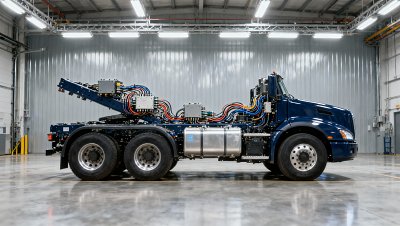
The EU's proposed regulation focuses on enhancing battery safety through dynamic thermal runaway testing, with implementation scheduled for 2027. The current information confirms this affects HCV battery imports, particularly electric trucks, with standards more rigorous than existing UN GTR 20 protocols.
Impact on Specific Industries
Chinese New Energy Heavy Truck Manufacturers
These manufacturers face immediate certification challenges as their current battery systems may not meet the new thermal propagation standards. The regulation could delay or block market entry for existing models.
Battery Pack Suppliers
Suppliers must redesign thermal management systems and battery architectures to comply with dynamic testing requirements, potentially increasing production costs by 15-20% for compliant systems.
Battery Swap Service Providers
The standardized battery swap systems may require complete re-engineering to accommodate new safety-compliant battery designs, disrupting existing infrastructure investments.
Key Focus Areas and Recommended Actions
Certification Timeline Monitoring
Companies should track the EU's regulatory development process, particularly the finalization of test parameters expected in Q4 2026, to align product development cycles.
Technical Collaboration
Engaging with European testing agencies now for pre-certification consultations could help identify necessary design modifications before the 2027 deadline.
Supply Chain Evaluation
Assess current battery component suppliers' ability to meet new thermal management requirements, considering alternative sourcing for critical materials like thermal interface materials.
Market Strategy Adjustment
Develop phased market entry plans, prioritizing models with easier upgrade paths to meet the new standards while maintaining existing product lines for non-EU markets.
Industry Perspective
From an industry viewpoint, this regulation signals the EU's commitment to stringent EV safety standards beyond passenger vehicles. While currently in the research phase, the 2027 implementation timeline suggests companies have approximately 18 months for compliance preparation. The regulation's emphasis on dynamic testing represents a shift from static safety assessments, potentially becoming a global benchmark for HCV battery safety.
Conclusion
The EU's HCV battery regulation presents both challenges and opportunities for industry players. While compliance will require significant technical and financial resources, early adopters may gain competitive advantage in the European market. Companies should view this as a strategic inflection point rather than merely a regulatory hurdle, using the transition period to enhance product safety and potentially differentiate their offerings.
Source Information
Primary source: European Commission announcement dated March 24, 2026. Note: Specific test parameters and certification procedures remain under development and warrant continuous monitoring.
Trending News
- Are Energy-Saving Excavators Worth It for Long-Term Operations?
- Dump Truck Supplier With Quick Delivery: What to Verify First
- Choosing Commercial Vehicle Parts for Cold Storage Reliability
- How ISO Certification Reduces Supplier Risk in Heavy Truck Chassis
- Cab Chassis Truck for Fire Department: Key Fitment Points
Tag
Recommended News
 Policy & RegulationsMulti-Dept Launches New Freight Hub Resilience ActionMulti-Dept Freight Hub Resilience Action boosts land transport equipment intelligence—AI loading systems, cloud diagnostics & multilingual e-clearance now drive efficiency, compliance, and export readiness.
 Policy & RegulationsMOT Issues Oil-Price-Freight Coordination Mechanism NoticeMOT's Oil-Price-Freight Coordination Mechanism transforms cross-border road freight pricing—real-time diesel-linked rates at key land ports like Erenhot & Manzhouli. Learn impacts & compliance steps.
 Policy & RegulationsMOF & MOT Launch New Freight Hub Resilience InitiativeMOF & MOT launch Freight Hub Resilience Initiative—boosting multimodal connectivity, smart trailers, and cross-border rail freight for land transport equipment exporters and operators.
 Policy & RegulationsVietnam to Enforce China's Tier 6B Emission Standard for Imported Medium/Heavy Trucks from Q3 2026Vietnam to enforce China's Tier 6B emission standard for imported medium/heavy trucks from Q3 2026 — critical for exporters, certifiers & distributors. Act now.
 Policy & RegulationsEU Draft Rules Mandate V2X for Imported Commercial Trucks from 2027V2X for imported commercial trucks becomes mandatory in the EU from 2027—learn how EU draft rules impact exporters, OEMs & certification providers.
 Policy & RegulationsHow ISO Certification Reduces Risk When Choosing a Heavy Truck Chassis ManufacturerChoose a heavy truck chassis manufacturer with ISO certification to reduce compliance, quality, and safety risks. Learn how certified processes improve traceability and supplier reliability.
 Policy & RegulationsKazakhstan Extends Zero Tariff on China-Europe Express Truck Parts to 2027Kazakhstan extends zero tariff on China-Europe Express truck parts to 2027—now covering 12 intelligent control components. Boost your export edge in陆路运输设备.
 Policy & RegulationsNew Railway Freight Rules Effective May 1, 2026: 72-Hour Pre-Submission for Oversize CargoNew railway freight rules (effective May 1, 2026) require 72-hour pre-submission for oversize cargo — critical for land transport equipment shippers, EPC contractors & heavy-lift logistics providers.
 Policy & RegulationsKazakhstan Extends Zero Tariff on China’s Rail Truck Parts to 2027Kazakhstan extends zero tariff on China’s rail truck parts to 2027 — now covering 12 intelligent control system components. Boost your Central Asia market access & pricing edge.
 Policy & RegulationsTruck Chassis Supplier in Europe: Key Compliance Points Before OrderingTruck chassis supplier in Europe: learn the key compliance checks before ordering, from documents and axle loads to body integration and safety, to reduce risk and source with confidence.
 Policy & RegulationsNew Railway Cargo Rules Effective May 1, 2026: 72-Hour Pre-Submission for Oversized LoadsNew railway cargo rules (2026) require 72-hour pre-submission for oversized land transport equipment—critical for exporters, manufacturers & freight forwarders on China-Europe/Asia rail corridors.
 Policy & RegulationsLow Bed Trailer Export to Southeast Asia: Key Compliance Points to KnowLow bed trailer export to Southeast Asia requires more than pricing. Discover key compliance points on axle loads, certifications, road standards, and supplier evaluation for safer, faster sourcing.
 Policy & RegulationsEU Mandates ISO 27145-2 Compliance for Heavy-Duty Trucks from May 2026EU mandates ISO 27145-2 compliance for heavy-duty trucks from May 2026 — ensure your exports meet remote diagnostics, type approval & after-sales requirements.
 Policy & RegulationsNew China Railway Freight Rules Take Effect May 1, 2026New China railway freight rules (2026) mandate transparent pricing & service standards for land transport equipment — boosting predictability for China-Europe rail shippers.
 Policy & RegulationsHow to Evaluate a Truck Chassis Supplier in Europe for Compliance and StabilityTruck chassis supplier in Europe selection starts with compliance and stability. Discover a practical checklist to compare suppliers, reduce sourcing risk, and choose reliable long-term partners.
 Policy & RegulationsWhat Sets a Truck Trailer Exporter Apart in Regulated MarketsTruck trailer exporter selection in regulated markets goes beyond price. Learn how compliance, documentation, traceability, and service reduce risk and improve sourcing decisions.
 Policy & RegulationsNew Railway Cargo Regulations Take Effect May 1, 2026New Railway Cargo Regulations (2026) impact rail freight exporters, forwarders & importers—key for China-Europe/Asia rail logistics. Act now to ensure compliance.
 Policy & RegulationsNew Railway Cargo Rules Take Effect May 1, 2026New Railway Cargo Rules (effective May 1, 2026) reshape rail freight compliance for exporters, logistics providers & manufacturers—key updates on fees, safety, and data sharing.
 Policy & RegulationsHuanggang Port Freight Closure Shapes Shenzhen-HK Logistics PatternHuanggang Port freight closure reshapes Shenzhen-HK logistics — key implications for truck & special-purpose vehicle exporters, customs brokers, and ASEAN/Middle East supply chains.
 Policy & Regulations2026 Q1 Transport Industry Tax & Finance Policy List Released2026 Q1 transport industry tax & finance policy: 35% export credit insurance subsidy for heavy-duty & new-energy trucks — key updates for road freight and OEM exporters.
 Policy & Regulations2026 Q1 Transport Industry Tax & Finance Policy List Released2026 Q1 Transport Industry Tax & Finance Policy List: 35% export credit insurance subsidy for heavy-duty trucks, special-purpose vehicles, KD kits & chassis via China-Europe Railway, Western Land-Sea Passage & RCEP routes—key update for exporters & OEMs.
 Policy & RegulationsMOT Releases Translation Guidelines for Highway StandardsMOT's new Highway Standards Translation Guidelines impact heavy-duty truck exporters to Latin America, Central Asia & ASEAN—get compliant bilingual/trilingual technical docs now.
 Must Comply with Maritime Authority Rules") Policy & RegulationsSmall Yacht Operators (Under 12 Pax) Must Comply with Maritime Authority RulesSmall yacht operators (under 12 pax) must comply with maritime authority rules—critical for Ro-Ro logistics, port engineering & export service providers. Act now to avoid enforcement risks.
Policy & RegulationsSmall Yacht Operators (Under 12 Pax) Must Comply with Maritime Authority RulesSmall yacht operators (under 12 pax) must comply with maritime authority rules—critical for Ro-Ro logistics, port engineering & export service providers. Act now to avoid enforcement risks. Policy & RegulationsMOT Releases Guideline for Foreign-Language Translation of Highway Engineering StandardsMOT's new guideline for foreign-language translation of highway engineering standards ensures compliance for heavy-duty trucks, special-purpose vehicles & intelligent chassis exports—key for ASEAN, Middle East & LATAM market access.
 Policy & RegulationsMOT Releases Foreign-Language Translation Guidelines for Highway Engineering StandardsMOT's new Highway Engineering translation guidelines impact heavy-duty tractors, semi-trailers & chassis exporters to BRI markets—ensure certified English/Russian/Arabic docs now.