What to Check Before Buying a Used Truck Van
Buying a used truck van can be a smart investment, but only if you know what to inspect before making a deal. From vehicle condition and service history to load capacity, body wear, and key components, every detail matters. Whether you also source a construction truck, refrigerated truck, mixer truck, or lowbed trailer, understanding the right checkpoints helps buyers reduce risk, compare suppliers, and make more confident purchasing decisions.
Why a used truck van purchase needs a structured inspection process
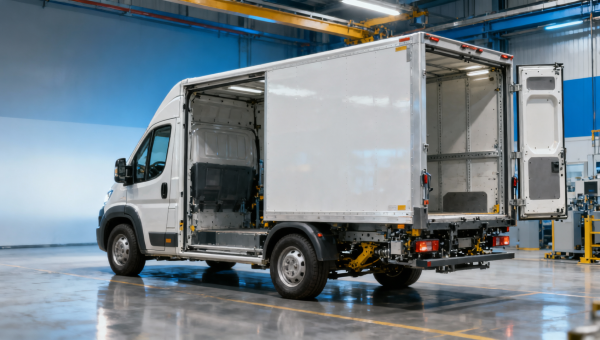
In the road transport equipment sector, a used truck van is rarely a simple second-hand purchase. For logistics operators, distributors, fleet buyers, and commercial evaluators, it is an asset decision that affects uptime, maintenance cost, payload efficiency, and delivery reliability for the next 12–36 months. A low purchase price may look attractive at first, but hidden wear in the powertrain, chassis, cargo body, or electrical system can quickly change the total cost.
This is why experienced buyers use a checklist-based review instead of relying only on photos, seller claims, or basic mileage data. In practical sourcing, at least 5 core areas should be examined before negotiation: legal identity, maintenance records, structural condition, drivetrain performance, and application fit. If one of these areas is unclear, the risk level rises significantly, especially in cross-border B2B transactions.
A used truck van may be deployed in urban delivery, regional distribution, cold chain support, light construction supply, or municipal service operations. Each scenario places different pressure on axle load, suspension, cargo body integrity, and stop-start durability. A vehicle that works well for 80–150 km urban routes may not be suitable for higher-duty regional operations with heavier daily loading cycles.
For information researchers and procurement teams, the goal is not only to find a lower-cost vehicle, but to verify whether the truck van can meet route conditions, compliance expectations, and service support requirements. A structured review also helps compare multiple suppliers more efficiently and supports clearer internal approval for finance, operations, and commercial management.
What makes used truck van sourcing different from passenger vehicle buying?
Commercial vehicles operate under heavier duty cycles, more frequent loading and unloading, and longer idle-to-work transitions. Even when mileage appears moderate, real wear may be high if the van handled overloaded cargo, poor road conditions, or irregular maintenance intervals. For many truck vans, inspection should consider service frequency by month, average payload range, and route type rather than mileage alone.
Another difference is body functionality. A used truck van often includes a cargo box, insulated compartment, tipper arrangement, service body, or custom rack system. Buyers need to evaluate not just the base vehicle but also the installed body equipment, weld quality, sealing condition, corrosion points, and compatibility with intended cargo dimensions and loading methods.
Documentation is also more critical in B2B deals. Registration records, VIN consistency, axle specifications, engine data, service invoices, and parts replacement history all matter. If a truck van is intended for resale or distribution, missing documents can reduce marketability and complicate downstream transfer, inspection, or import procedures.
What should you check first before comparing price?
Before discussing price, buyers should confirm whether the used truck van is legally traceable and technically matchable to the seller’s description. The first screening stage normally takes 4 steps: verify identification data, review operating history, inspect visible condition, and confirm functional suitability. This saves time by filtering out vehicles that are cheap for the wrong reasons.
The table below summarizes the most practical first-round checks for procurement teams evaluating road transport equipment from multiple sellers or regions. It is useful for truck van sourcing as well as for comparing related equipment such as refrigerated trucks, construction trucks, or light-duty cargo vehicles.
A practical reading of this table is simple: if two or more high-risk areas cannot be verified clearly, the buyer should either pause the transaction or request further inspection evidence. In fleet procurement, this rule helps reduce rushed decisions and keeps supplier comparison objective rather than price-driven.
Quick screening checklist for procurement staff
- Confirm whether the vehicle’s model year, registration date, and current mileage form a believable operating profile.
- Ask for maintenance records covering at least the last 12 months or the last 3 service intervals, whichever is available.
- Check whether the cargo body dimensions, door opening, and payload specification fit your loading method and route profile.
- Look for signs of repainting, uneven panel gaps, chassis corrosion, oil leaks, or tire wear patterns that suggest alignment or load issues.
These checks do not replace a full technical inspection, but they are effective as a first 20–30 minute filter. For distributors or agents managing multiple offers, this approach speeds up shortlist creation and improves negotiation quality.
Early red flags that should trigger deeper review
Be cautious if the seller cannot explain where the truck van operated, what average loads it carried, or why major components were replaced. A gearbox replacement or repaint is not automatically a problem, but incomplete explanation increases uncertainty. The same applies when the odometer seems low but pedals, steering wheel, and cargo floor show heavy wear.
Another warning sign is when the vehicle is promoted as suitable for multiple heavy-duty applications without matching axle, suspension, or body specifications. A used truck van built for parcel work is not automatically suitable for construction material delivery or temperature-controlled goods.
How to inspect vehicle condition, load capacity, and body integrity
The second stage is a closer technical review. In used truck van sourcing, the most important practical question is whether the vehicle can perform under your expected daily cycle. Buyers should inspect 6 key systems: engine, transmission, braking system, steering and suspension, tires and axles, and cargo body structure. This applies whether the van is for in-house operations or resale to downstream customers.
Load capacity must be checked against actual business use, not just brochure figures. Review the rated payload, axle load limits, body volume, and the type of goods to be transported. For example, a high-cube body may offer more volume but still be restricted by payload if the goods are dense. This matters for beverage delivery, equipment parts, building materials, or municipal supply tasks.
Body integrity is equally important because many used truck vans fail not from the engine but from body deterioration. Rust around hinges, floor deformation, water leakage from roof seams, door misalignment, and weak locking systems can reduce cargo security and shorten service life. If the body has been modified, inspect welds, reinforcement points, and whether the structure remains balanced under load.
A short road test of 15–30 minutes is often enough to detect several common issues. Listen for transmission hesitation, steering vibration, brake pull, suspension noise, and differential hum. If possible, test under both empty and partial-load conditions. A vehicle that performs smoothly without cargo may behave very differently once loaded.
Technical points that deserve close attention
- Engine condition: check startup behavior, idle stability, visible smoke, fluid leakage, cooling system condition, and signs of overheating history.
- Transmission and clutch: note delayed engagement, slipping under acceleration, hard shifting, or abnormal noise during gear change.
- Braking and steering: assess pedal response, brake line condition, steering free play, uneven tire wear, and suspension rebound.
- Cargo body and frame: inspect cross members, floor plate thickness, corrosion around joints, and signs of previous collision repair.
Procurement teams should record these findings in a standardized form. That creates a consistent basis for comparing truck vans from different sellers, even when age, body type, and application history vary.
Typical suitability by application
Not every used truck van fits every transport task. The table below helps buyers connect technical condition with deployment scenarios. This is especially useful for mixed portfolios where a buyer may also compare refrigerated units, service vans, construction support vehicles, or light-duty freight trucks.
This comparison shows why procurement cannot rely on a generic “good condition” label. A truck van suitable for one route pattern may carry high risk in another. Matching condition to application is often more important than choosing the lowest acquisition price.
How to evaluate supplier reliability, compliance, and cross-border buying risk
In B2B road transport equipment sourcing, the vehicle is only one side of the decision. The supplier is the other. A reliable used truck van offer should include clear product data, traceable communication, document support, and realistic delivery terms. Buyers should confirm whether the seller can provide unit photos, identification records, service history, condition notes, and loading or export support where required.
Compliance also matters, especially for importers, distributors, and business evaluators. Requirements vary by destination market, but buyers commonly need to review registration status, emissions category where applicable, dimensions, axle configuration, and any market-specific inspection or roadworthiness expectation. If the vehicle will be resold, local transfer and downstream compliance should be considered early, not after purchase.
Cross-border transactions introduce practical timing risks. Document preparation, inland transport, port handling, and customs processes may add 2–6 weeks depending on origin and destination. If a buyer needs the truck van for a contract start date, procurement should ask not only “Is it available?” but also “When can documents, dispatch, and handover be completed?”
This is where a specialized industry platform creates value. The Global Heavy Truck Industry Platform helps buyers access supplier comparisons, product discovery, industry directories, and sourcing information across truck chassis, complete trucks, trailers, construction machinery, and spare parts. For procurement teams working across multiple road transport categories, this shortens the search path and improves supplier screening efficiency.
Questions to ask before placing an order
- Can the seller provide current VIN photos, engine plate images, odometer display, and chassis details from multiple angles?
- Are there maintenance invoices, replacement records, or workshop notes from the last 6–12 months?
- What is the confirmed cargo body size, payload rating, axle specification, and intended transport category?
- What is the realistic lead time for documentation, booking, shipping, and destination handling?
- Can the seller support spare parts identification or recommend replacement items after delivery?
These questions are practical because they reduce ambiguity. For distributors and agents, they also help determine whether the unit can be remarketed confidently in another region or customer segment.
Common compliance and documentation gaps
The most common gap is incomplete unit documentation. Another is unclear modification history, especially when cargo bodies were changed after the original vehicle configuration. Buyers should also check whether wear items such as tires, lights, reflective markings, or braking components may need replacement before the truck van enters service.
Where local rules apply, buyers may also need to consider general roadworthiness inspections, emissions conformity expectations, or transport-specific equipment rules. These are market-dependent, so the safest approach is to align technical review with destination requirements before payment approval.
What are the most common buying mistakes and how can you avoid them?
One frequent mistake is buying a used truck van based mainly on age and price. A newer unit is not always the better investment if it has worked in severe operating conditions or received irregular maintenance. Likewise, an older van with consistent servicing and light-duty history may deliver more stable value over the next 1–2 years.
Another mistake is ignoring body functionality. Buyers sometimes focus on the engine and transmission but overlook floor damage, door seal failure, roof leakage, or cargo body distortion. In commercial use, these details affect loading efficiency, cargo protection, and downtime. For cold-chain or specialized delivery, body condition can be decisive.
A third mistake is underestimating post-purchase cost. Tires, brakes, filters, fluids, suspension parts, lighting, and basic body repair can create immediate expense within the first 30–60 days. Smart buyers estimate these likely costs before negotiating, not after the truck van arrives.
Finally, some procurement teams compare units without a common evaluation structure. This leads to inconsistent judgment between different buyers or departments. Using a fixed checklist for all offers improves transparency and makes internal review easier for purchasing, operations, and finance teams.
FAQ for used truck van buyers
How many key checks should be completed before purchase?
For most B2B buyers, 5–6 checks are essential: identity verification, service history review, mechanical inspection, body and frame inspection, application matching, and supplier document confirmation. If the transaction is cross-border, add a seventh check for shipping and destination compliance readiness.
Is mileage the most important factor in a used truck van?
No. Mileage is useful, but it should be read together with route type, load pattern, maintenance quality, idle time, and body condition. A medium-mileage van used on overloaded urban routes may be riskier than a higher-mileage unit used on stable regional transport with proper servicing.
What if service history is incomplete?
Incomplete records do not always mean the truck van is unsuitable, but they should reduce buying confidence and affect price expectations. In this case, buyers should request a more thorough mechanical check, pay closer attention to wear indicators, and budget for preventive service immediately after purchase.
How long does used truck van sourcing usually take?
For domestic sourcing, shortlist and inspection may take several days to 2 weeks depending on inventory quality. In cross-border sourcing, adding documentation and shipping can extend the process by 2–6 weeks. Timelines vary by market, so early planning is important when delivery deadlines are fixed.
Why work with a specialized heavy truck industry platform?
When buyers need to compare used truck vans alongside complete trucks, light trucks, trailers, construction machinery, or spare parts, fragmented searching creates delays and blind spots. A specialized B2B platform focused on the global heavy truck industry helps centralize product discovery, supplier screening, and industry information in one workflow. That is especially useful for procurement teams managing multiple transport equipment categories.
The Global Heavy Truck Industry Platform supports buyers with access to broad supply chain resources, product categories, global truck brand information, and professional buying references. Instead of reviewing offers in isolation, users can compare suppliers, assess application suitability, and identify more relevant partners for logistics transportation, infrastructure projects, municipal engineering, and related commercial vehicle needs.
For distributors, agents, and business evaluators, this also improves market visibility. You can review not only available units, but also related components, replacement parts, and adjacent transport equipment that may support a wider sourcing strategy. In practice, this reduces communication friction and improves decision speed across 3 key stages: market research, supplier evaluation, and transaction preparation.
If you are assessing a used truck van purchase, you can contact us for targeted support on parameter confirmation, application matching, supplier comparison, expected delivery timing, documentation review, and quotation communication. If your requirement extends beyond one van, we can also help you compare related options such as refrigerated trucks, construction trucks, trailers, chassis, and spare parts based on your route profile, load needs, and project schedule.
What you can consult with us
- Truck van specification checks, including payload, cargo body size, axle arrangement, and route suitability.
- Supplier comparison support for used truck vans, complete trucks, trailers, and related transport equipment.
- Delivery cycle discussion, including document readiness, dispatch planning, and sourcing time expectations.
- Custom sourcing guidance for mixed demand such as refrigerated transport, construction use, municipal service, or spare parts follow-up.
If your team is still comparing options, send the target application, expected payload range, preferred body type, and purchase timeline. That makes it easier to narrow down suitable used truck van offers and connect you with more relevant suppliers across the global commercial vehicle supply chain.
Trending News
- China's MW-Class Hydrogen Aviation Turboprop Engine First Flight
- Oil Prices Rise, Airlines Cut Capacity, Land Freight Costs Pressure
- Henan's 2026 Key Projects List: RMB 1 Trillion Investment Drives Heavy-Duty & Special Vehicle Demand
- Guangxi Xijiang Waterway Enforces Zero Discharge for Vessel Pollutants
- China Accelerates Low-Altitude Economy Clusters, Boosting Demand for Smart Airport Tugs
Tag
Recommended News
 Used Truck MarketLinquan Court Auctions HOWO Tractor + Dump Semi-trailer Combo, Highlighting Potential Supply for Used Trailer ExportsExplore Linquan Court's HOWO tractor & dump semi-trailer auction - a rare opportunity for used commercial vehicle exporters targeting Middle East, Africa & Latin America markets. Starting bid 86,500 RMB with full documentation.
 Used Truck MarketWhat to Check Before Buying a Used Truck VanUsed truck van buying guide: inspect service history, load capacity, body wear, and supplier reliability. Compare truck van, lowbed trailer, refrigerated truck, mixer truck, and construction truck options with confidence.
 Used Truck MarketWhat to Inspect Before Choosing a Used Truck Trailer for SaleTruck trailer for sale guide: inspect frame, axles, brakes, and records before comparing truck trailer price or choosing a semi trailer supplier for safer, smarter sourcing.
 Used Truck MarketWhat ‘truck trailer for sale’ listings won’t tell you about frame fatigue historyDiscover hidden frame fatigue history in 'dump truck for sale', 'truck trailer for sale', and 'semi trailer for sale'—get verified structural data, NDT reports & fatigue risk scores before buying.
 Used Truck MarketDump truck for sale: Red flags in used unit listings you should never ignoreDump truck for sale? Avoid costly mistakes—spot red flags in used listings, compare dump truck price & truck tipper for sale options with expert guidance.
 Used Truck MarketHeavy Duty Trucks for Sale: Which Specs Hold Resale Value?Heavy duty trucks for sale: learn which engine, cab chassis truck and truck brake system specs protect resale value, reduce downtime, and improve fleet ROI with stronger parts support.
 Used Truck MarketHow bulldozer factory certifications affect resale value in AustraliaBulldozer manufacturer certifications boost resale value in Australia—key for bulldozer supplier, distributor & heavy duty trucks for sale. Learn how ISO, AS/NZS & OEM standards drive premiums.
 Used Truck MarketExcavator for sale online: Why certified pre-owned listings often skip hydraulic flow testing recordsExcavator for sale online? Discover why certified pre-owned units often lack hydraulic flow testing—critical for accurate excavator price, attachment performance & demolition readiness.
 Used Truck MarketTruck mounted crane resale values fell faster than expected after hybrid powertrain adoption — why?Truck mounted crane resale values plummeted—outpacing forecasts. See why garbage truck, water truck, logging truck, low bed trailer & refrigerated truck fleets are rethinking hybrid adoption.
 Used Truck MarketCement tanker residual value drops faster than other heavy trucks—what drives depreciation?Cement tanker depreciation outpaces other heavy trucks—explore truck parts, mixer truck specs & residual value drivers for smarter procurement.
 Used Truck MarketHeavy duty truck resale value drops faster after 3 years—if it’s not Euro VI compliantDump truck, semi trailer, concrete pump truck & more: Euro VI compliance slashes heavy duty truck depreciation—boost resale value, financing approval & LEZ access. Source verified inventory now.
 Used Truck MarketSHACMAN X5000 6×4 Dump truck resale value trends: How axle configuration impacts 3-year depreciation in Southeast AsiaTruck spare parts supplier & dump truck supplier insights: SHACMAN X5000 6×4 Dump truck holds 54.3% 3-year resale value in SEA—key for heavy equipment export & fleet ROI.
") Used Truck MarketSHACMAN L3000 4×2 Dump Truck Resale Value Trends in Southeast Asia (2024–2026)SHACMAN L3000 4×2 Dump Truck resale trends in SEA (2024–2026). Backed by truck spare parts supplier networks, flatbed & low bed trailer export data, and heavy truck parts manufacturer insights.
Used Truck MarketSHACMAN L3000 4×2 Dump Truck Resale Value Trends in Southeast Asia (2024–2026)SHACMAN L3000 4×2 Dump Truck resale trends in SEA (2024–2026). Backed by truck spare parts supplier networks, flatbed & low bed trailer export data, and heavy truck parts manufacturer insights. Used Truck MarketExcavator for sale listings with ‘low hours’ — what that really means when maintenance logs are missingExcavator for sale with 'low hours'? Discover what it really means—no maintenance logs? Avoid hidden risks. Compare excavator rental, price & supplier transparency now.
 Used Truck MarketHeavy duty trucks for sale in Australia: Are ‘ex-demo’ units worth the discount?Heavy duty trucks for sale in Australia: Discover certified ex-demo units with full warranty, GPS-tracked bulldozers, electric models & OEM custom chassis—save up to 22%.
 Used Truck MarketLight duty truck resale values held up better than expected in 2026 — but only for fleet-spec modelsLight duty truck and cab chassis truck resale values surged in 2026 — especially fleet-spec models. Discover why SHACMAN H3000, heavy truck parts manufacturers, and global heavy equipment export trends are reshaping procurement.
 Used Truck MarketThe cab chassis truck resale market is tightening faster than expectedLight duty truck & cab chassis truck resale is tightening fast—urgent demand for heavy duty trucks for sale, SHACMAN H3000 cement mixers, low bed trailer export, and dump truck supplier solutions. Act now.
 Used Truck MarketBULLDOZER resale value trends don’t follow general equipment depreciation—here’s what actually holds upBULLDOZER resale value beats depreciation myths—discover why SHACMAN L3000, X5000 & F2000 models hold value, plus insights for excavator manufacturers, trailer suppliers & truck parts partners.