Truck Military Auctions Look Cheaper Until Refit Costs Appear
Truck military auctions may seem like a bargain, but hidden refurbishment costs can quickly change the picture. From hydraulic pump repairs and truck battery replacement to upgrades for off road truck performance, buyers must evaluate the full lifecycle cost. For procurement teams, dealers, and market researchers comparing truck trailer, truck tipper, wheel loader support units, or truck leasing alternatives, understanding total value is far more important than the auction price alone.
In the road transport equipment sector, military-surplus trucks often attract attention because the headline bid price can sit 20% to 50% below an equivalent civilian-used unit. Yet that price gap rarely reflects the real cost of putting the vehicle into daily commercial service. Recommissioning, compliance checks, parts replacement, and downtime can shift the economics within the first 30 to 180 days after purchase.
For B2B buyers, especially distributors, fleet planners, and sourcing teams working across international markets, the key question is not whether the auction truck is cheap. The key question is whether the truck can deliver acceptable payload efficiency, serviceability, and operating reliability over a 3-year to 7-year use cycle. This is where structured supplier comparison and aftermarket visibility become decisive.
The Global Heavy Truck Industry Platform supports this evaluation process by helping buyers compare trucks, trailers, spare parts, service resources, and supplier capabilities in one sourcing environment. That matters when auction purchases require immediate decisions on batteries, tires, hoses, axle work, body modifications, or trailer matching for logistics, mining support, or infrastructure transport.
Why Auction Prices Often Understate the Real Cost
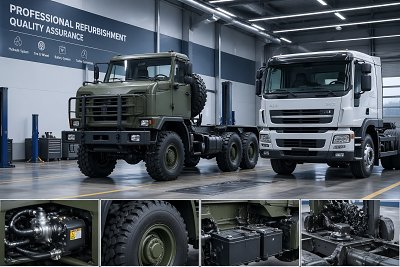
A military truck sold through auction is usually priced on disposal logic, not on commercial readiness. The vehicle may have low recorded mileage, but many units have spent years in storage, intermittent deployment, or severe climate exposure. Rubber, seals, wiring, and brake components can degrade even when the odometer looks attractive. In practical terms, a truck bought for USD 18,000 may need another USD 8,000 to USD 25,000 before entering dependable service.
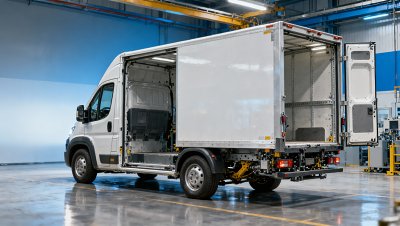
This gap appears because military specifications do not always align with civilian duty cycles. A defense vehicle may be rugged, but it may also use non-standard electrical systems, uncommon tire sizes, or driveline layouts that complicate maintenance. If the buyer intends to use it as a truck tipper, flatbed support unit, or off road truck for construction supply work, body adaptation alone can add 2 to 6 weeks and significant fabrication cost.
Another overlooked factor is inspection uncertainty. Auction catalogs rarely provide the same level of service history that a professional fleet seller or OEM dealer can offer. Procurement teams may need to budget for full fluid replacement, pressure testing, battery renewal, brake overhaul, and hydraulic pump repair immediately after delivery. Even where each item appears manageable, the total can change the investment case fast.
Typical hidden cost categories
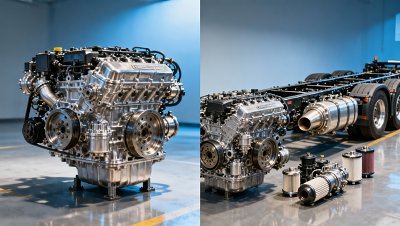
- Mechanical recommissioning: engine seals, cooling hoses, filters, injectors, clutch wear, transmission inspection.
- Electrical restoration: truck battery replacement, alternator testing, lighting rewiring, connector corrosion repair.
- Operational conversion: body installation, trailer coupling changes, PTO integration, road-legal lighting and mirror kits.
- Compliance and logistics: import documentation, local roadworthiness testing, emissions adaptation where required.
The table below shows how an apparently low purchase price can become much less competitive once the vehicle is prepared for commercial use.
The practical lesson is simple: buyers should compare “ready-to-work cost” rather than hammer price. In many cases, a higher-priced civilian used truck with documented service history produces lower total cost and faster deployment than a military auction unit that needs major refurbishment.
The Refit Items That Most Commonly Disrupt Budgets
When auction trucks move from storage or military use into road transport, several refit items repeatedly appear. The first is the electrical system. Many surplus units require at least 2 new batteries, terminal cleaning, wiring checks, and charging-system verification. If corrosion is present in connectors or junction points, electrical troubleshooting can consume more labor time than expected, especially on older 24V systems adapted for civilian accessories.
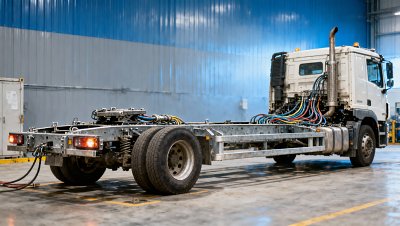
Hydraulic systems are another budget trap. Buyers planning to convert an ex-military chassis into a truck tipper, crane support truck, or service vehicle should inspect the hydraulic pump, hoses, cylinders, and PTO compatibility before bidding. A pump rebuild may be manageable, but if seals, valves, and line routing all need replacement, project cost can move beyond the original savings within 10 to 15 working days.
Tires and suspension also deserve careful attention. Auction photos rarely tell the full story on age-hardening, sidewall cracking, or flat spotting from long-term storage. Replacing 6 to 10 heavy-duty tires can add several thousand dollars immediately. On top of that, leaf springs, bushings, shock absorbers, and steering joints should be checked if the truck is expected to operate on construction sites, mining roads, or mixed on-road and off-road routes.
Refit checklist before confirming fleet deployment
- Test engine start performance after battery replacement or charging.
- Inspect fluid condition in engine, gearbox, transfer case, axles, and hydraulic circuits.
- Verify brake line integrity, chamber response, and parking brake holding force.
- Measure tire age, tread depth, and load suitability for planned payload.
- Confirm cab electronics, lighting, mirrors, and road-legal equipment for the destination market.
The most reliable buyers build a staged inspection budget. A common method is to reserve 10% to 15% of the expected all-in cost for immediate safety repairs, another 10% for conversion work, and a contingency of 5% to 8% for unexpected parts sourcing. That discipline prevents the truck from becoming a low-price purchase with high idle time.
Why parts sourcing matters more than repair cost alone
A low repair quote is not enough if spare parts lead times run 3 to 6 weeks. For distributors and resellers, downtime affects stock turnover and customer confidence. Through a dedicated B2B platform, buyers can compare spare parts availability, alternative components, trailer compatibility, and supplier responsiveness before deciding whether the auction vehicle fits their market strategy.
How to Compare Auction Trucks with Civilian Used Trucks, Leasing, and Equipment Alternatives
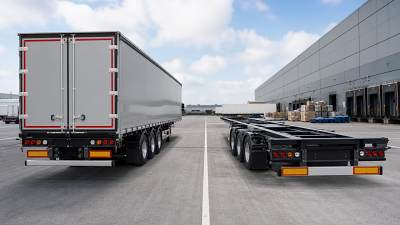
A sound purchasing decision depends on comparing alternatives beyond the auction yard. In road transport equipment procurement, ex-military trucks are only one route. Buyers may instead source a civilian used truck, arrange truck leasing, purchase a truck trailer and matching tractor separately, or deploy another support asset such as a wheel loader for site movement depending on workload type and duty hours.
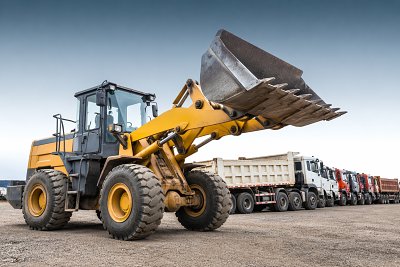
For example, if the project involves variable demand over 6 to 12 months, leasing may offer lower risk despite a higher monthly cost. If the operation requires immediate road compliance and stable uptime, a used commercial truck with known service history may outperform a cheaper auction unit. If the core task is internal yard handling rather than road haulage, a wheel loader or dedicated construction support machine may be more productive than adapting an off road truck chassis.
Decision-makers should compare at least 4 dimensions: acquisition cost, time to service, maintenance complexity, and resale liquidity. Auction trucks can score well on entry cost and ruggedness, but often lose points on parts standardization and market familiarity. Civilian assets and leasing models can be easier to explain to finance teams because the total operating profile is more predictable.
Comparison table for common procurement paths
The following table helps buyers compare several realistic options for logistics fleets, project contractors, and dealers serving mixed transport applications.
The table shows that procurement should follow application logic, not just auction excitement. Buyers handling regional distribution, municipal contracting, or dealer resale should always calculate the cost per productive operating hour and the time needed to achieve legal, technical, and commercial readiness.
When military trucks make sense
They are usually most suitable when the buyer has in-house maintenance capability, access to fabrication partners, moderate road-compliance barriers, and a use case that benefits from robust chassis design. They are less suitable when uptime must begin within 7 to 14 days, financing requires clear residual value assumptions, or local customers expect standard commercial specifications.
A Practical Procurement Framework for Dealers and B2B Buyers
In commercial vehicle sourcing, disciplined process reduces risk more effectively than bargain hunting. Dealers, agents, and procurement officers should build a 5-step evaluation model before bidding on any military truck. This approach is especially useful when comparing multiple supply paths across truck chassis, complete trucks, construction machinery, trailers, and spare parts sourced from different countries.
Step 1: Define the final application clearly
Start with payload, route type, annual operating distance, and body requirement. A truck intended for 15 to 30 tons of construction material on mixed terrain has different needs from a yard support unit or municipal service truck. Without this definition, buyers often pay for unnecessary off-road capability or underestimate body integration cost.
Step 2: Estimate all-in cost before bidding
This should include auction price, transport, inspection, parts, labor, tires, fluids, registration, and at least one contingency line. Many professional buyers stop bidding when the projected all-in cost reaches 80% to 90% of an equivalent civilian used truck. At that point, the savings margin is often too thin to justify uncertainty.
Step 3: Validate service and parts channels
If key components require specialist sourcing, the truck may not be a good stock item for dealers or rental fleets. Buyers should identify at least 2 parts channels for consumables and 1 qualified workshop path for driveline, electrical, and hydraulic work. This is where a global heavy truck industry platform creates value by connecting products, parts suppliers, and market information in one workflow.
Step 4: Check conversion feasibility
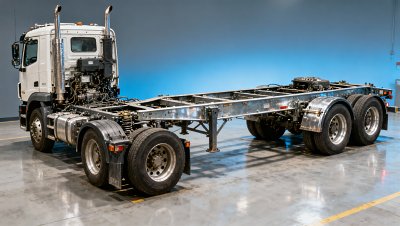
A chassis may be strong enough, yet still unsuitable for the desired truck trailer coupling, tipper body geometry, or axle load distribution. PTO position, frame condition, cab clearance, and local legal dimensions should be checked before deposit payment. A body shop may need 2 to 4 weeks simply to confirm compatibility and prepare drawings.
Step 5: Model exit value
Resale matters. Some military-origin units have a narrow secondary market, especially if they keep unusual wheel patterns, transmission layouts, or military-specific electrics. Dealers should estimate who the next buyer will be after 24 or 36 months. If that customer base is limited, the low entry price may still produce weak capital recovery.
The framework below is useful during internal reviews or supplier comparison meetings.
For cross-border buyers, structured sourcing also reduces documentation risk. Importers can compare truck types, trailers, parts categories, and supplier communication quality through one marketplace rather than relying only on auction lot descriptions. That improves both procurement transparency and execution speed.
FAQ for Market Researchers, Fleet Buyers, and Distributors
How much refurbishment budget should be reserved for a military auction truck?
A practical planning range is 20% to 60% of the hammer price, depending on age, storage condition, and conversion scope. If the truck needs only fluids, batteries, and minor brake work, the figure may stay near the lower end. If it needs hydraulic repair, tire replacement, body adaptation, and wiring updates, the ratio can rise quickly.
Are military trucks suitable for regular logistics transport?
They can be, but only after confirming road compliance, payload economics, fuel consumption, and service support. For regional delivery fleets with high mileage and tight delivery windows, a standard civilian truck often performs better. For rough terrain, site access roads, or heavy-duty support roles, ex-military units may still be useful after correct refitting.
What are the most common procurement mistakes?
Three mistakes appear frequently: focusing only on bid price, underestimating parts lead times, and assuming rugged design means low maintenance. Another mistake is failing to confirm how the truck will connect with trailers, tipper bodies, or site equipment before purchase. Application mismatch destroys value faster than any single repair bill.
How long does it usually take to place an auction truck into service?
A relatively clean unit may be ready in 2 to 4 weeks. A truck requiring major inspection, fabrication, and imported parts may need 6 to 12 weeks. That timeline should be compared with the delivery schedule of alternative solutions such as used truck sourcing or short-term leasing.
What should dealers check before buying for resale?
Dealers should verify who the end-user is, what service network exists, whether common spare parts are available, and how quickly the vehicle can be turned into saleable inventory. If the target customer needs immediate uptime, standard trailer compatibility, and documented maintenance records, a military unit may be harder to move unless it has already been professionally refurbished.
Using Digital B2B Sourcing to Reduce Refit Risk and Improve Total Value
The strongest procurement results come from information depth, not just price negotiation. In the global commercial vehicle market, buyers increasingly need one place to compare truck chassis, complete trucks, light trucks, construction machinery, trailers, semi-trailers, and spare parts while also reviewing industry insights and supplier positioning. This integrated sourcing method shortens decision cycles and exposes hidden cost earlier.
For companies evaluating military auction trucks, a specialized industry platform provides practical support in at least 3 ways. First, it helps benchmark the auction candidate against alternative used or new products. Second, it improves access to parts and support suppliers for batteries, hydraulic components, axles, cabs, and body-related items. Third, it gives procurement teams wider market context before they commit capital to a refurbishment-heavy purchase.
This is especially valuable for international buyers managing cross-border sourcing. A fleet in Africa, the Middle East, Southeast Asia, or Latin America may face very different parts access, road conditions, and project timelines. What seems like a good auction buy in one region may become inefficient in another if lead times stretch beyond 30 days or if local workshops cannot support the configuration.
The Global Heavy Truck Industry Platform is designed for this broader decision environment. By connecting manufacturers, suppliers, distributors, and buyers across the heavy truck supply chain, it enables structured comparison instead of isolated purchasing. That helps information researchers, commercial evaluators, and dealers move from auction curiosity to actionable procurement judgment.
- Compare multiple vehicle categories for the same transport task instead of evaluating one auction lot in isolation.
- Identify spare parts sources early, reducing downtime risk after purchase.
- Support supplier evaluation with industry resources, buying guides, and market visibility.
- Improve cross-border trade coordination through a more transparent sourcing ecosystem.
Military truck auctions can create real opportunities, but only when the vehicle fits the intended application, the refit path is realistic, and the parts ecosystem is visible. Buyers who calculate full lifecycle cost, compare alternatives carefully, and use a professional B2B sourcing platform are more likely to secure durable commercial value instead of inheriting an underpriced repair project.
If you are assessing heavy trucks, trailers, construction equipment, or spare parts for logistics, infrastructure, mining, or municipal projects, now is the time to evaluate the complete sourcing picture. Contact us to explore suitable products, compare supplier options, and get a tailored procurement solution based on your operational and market requirements.
Trending News
- Commercial Trucks Manufacturer in Germany: Market Position in 2026
- Light Duty Truck With Durable Engine: What Matters Most
- Choosing a Truck Chassis Supplier for Trailer Manufacturing Needs
- Best Light Commercial Vehicle Options for Last Mile Delivery
- What Advanced Technology Means in Heavy Truck Chassis Design
Tag
Recommended News
 Used Truck MarketVietnam to Enforce Used Truck Import Rules from Q4 2026Used truck import rules in Vietnam: OEM-certified remanufactured trucks required from Q4 2026 — key implications for Chinese exporters & logistics providers.
 Used Truck MarketSemi Trailer Wholesale: Which Specs Matter Most for Resale ValueSemi trailer wholesale buyers: learn which specs most influence resale value, from axle layout to payload, materials, and parts compatibility—make smarter, higher-margin sourcing decisions.
 Used Truck MarketTruck Tipper for Sale: New or Used for Heavy-Duty Work?Truck tipper for sale guide: compare new or used options, dump truck price, heavy-duty specs, and trusted suppliers for construction, mining, and fleet sourcing.
 Used Truck MarketTruck Military Auctions Look Cheaper Until Refit Costs AppearTruck military auction deals can hide high refit costs. Compare hydraulic pump, truck battery, truck trailer, truck tipper, off road truck and truck leasing options before you buy.
 Used Truck MarketUsed Wheel Loader Inspection Points That Matter MostHydraulic pump and wheel loader inspection tips that matter most for used equipment buyers. Compare off road truck, truck trailer, and truck tipper options to reduce risk and source smarter.
 Used Truck MarketUsed Truck Skeleton Trailers: What Usually Wears Out First?Truck skeleton buyers: learn what wears out first on used trailers, from truck steel fatigue and truck air system leaks to truck lighting system faults, and inspect smarter before you buy.
 Used Truck MarketWhat to Check Before Buying a Used Truck VanUsed truck van buying guide: inspect service history, load capacity, body wear, and supplier reliability. Compare truck van, lowbed trailer, refrigerated truck, mixer truck, and construction truck options with confidence.
 Used Truck MarketRebuilt or New Truck Piston? The Cost Difference Is Not the Whole StoryTruck piston buying guide: compare rebuilt vs new on lifecycle cost, downtime risk, and supplier quality. See how truck gasket, truck pump, and truck export decisions affect fleet value.
 Used Truck MarketNew vs Remanufactured Engine Assembly: Which Holds Value Better?Engine assembly value guide: compare new vs reman options for industrial transportation, with insights on truck turbocharger, truck gearbox, and fleet ROI.
 Used Truck MarketUsed Tipper Trailer Checks That Prevent Expensive RepairsTipper trailer buyers: learn used inspection checks that prevent costly repairs. Verify truck lighting, construction truck, mining truck, and off road truck compatibility before you buy.
 Used Truck MarketDump Truck for Sale: New or Used in 2026?Dump truck for sale in 2026: compare new or used options, review dump truck price trends, and source excavator for sale, truck cement mixer, and excavator parts with confidence.
 Used Truck MarketNew vs Used Excavator for Sale in 2026Excavator for sale in 2026: compare new vs used options, excavator rental, excavator parts, and dump truck for sale insights to cut risk, control cost, and buy with confidence.
 Used Truck MarketWhat to Inspect Before Choosing a Used Truck Trailer for SaleTruck trailer for sale guide: inspect frame, axles, brakes, and records before comparing truck trailer price or choosing a semi trailer supplier for safer, smarter sourcing.
 Used Truck MarketWhat ‘truck trailer for sale’ listings won’t tell you about frame fatigue historyDiscover hidden frame fatigue history in 'dump truck for sale', 'truck trailer for sale', and 'semi trailer for sale'—get verified structural data, NDT reports & fatigue risk scores before buying.
 Used Truck MarketDump truck for sale: Red flags in used unit listings you should never ignoreDump truck for sale? Avoid costly mistakes—spot red flags in used listings, compare dump truck price & truck tipper for sale options with expert guidance.
 Used Truck MarketHeavy Duty Trucks for Sale: Which Specs Hold Resale Value?Heavy duty trucks for sale: learn which engine, cab chassis truck and truck brake system specs protect resale value, reduce downtime, and improve fleet ROI with stronger parts support.
 Used Truck MarketLinquan Court Auctions HOWO Tractor + Dump Semi-trailer Combo, Highlighting Potential Supply for Used Trailer ExportsExplore Linquan Court's HOWO tractor & dump semi-trailer auction - a rare opportunity for used commercial vehicle exporters targeting Middle East, Africa & Latin America markets. Starting bid 86,500 RMB with full documentation.
 Used Truck MarketHow bulldozer factory certifications affect resale value in AustraliaBulldozer manufacturer certifications boost resale value in Australia—key for bulldozer supplier, distributor & heavy duty trucks for sale. Learn how ISO, AS/NZS & OEM standards drive premiums.
 Used Truck MarketExcavator for sale online: Why certified pre-owned listings often skip hydraulic flow testing recordsExcavator for sale online? Discover why certified pre-owned units often lack hydraulic flow testing—critical for accurate excavator price, attachment performance & demolition readiness.
 Used Truck MarketTruck mounted crane resale values fell faster than expected after hybrid powertrain adoption — why?Truck mounted crane resale values plummeted—outpacing forecasts. See why garbage truck, water truck, logging truck, low bed trailer & refrigerated truck fleets are rethinking hybrid adoption.
 Used Truck MarketCement tanker residual value drops faster than other heavy trucks—what drives depreciation?Cement tanker depreciation outpaces other heavy trucks—explore truck parts, mixer truck specs & residual value drivers for smarter procurement.
 Used Truck MarketHeavy duty truck resale value drops faster after 3 years—if it’s not Euro VI compliantDump truck, semi trailer, concrete pump truck & more: Euro VI compliance slashes heavy duty truck depreciation—boost resale value, financing approval & LEZ access. Source verified inventory now.
 Used Truck MarketSHACMAN X5000 6×4 Dump truck resale value trends: How axle configuration impacts 3-year depreciation in Southeast AsiaTruck spare parts supplier & dump truck supplier insights: SHACMAN X5000 6×4 Dump truck holds 54.3% 3-year resale value in SEA—key for heavy equipment export & fleet ROI.
") Used Truck MarketSHACMAN L3000 4×2 Dump Truck Resale Value Trends in Southeast Asia (2024–2026)SHACMAN L3000 4×2 Dump Truck resale trends in SEA (2024–2026). Backed by truck spare parts supplier networks, flatbed & low bed trailer export data, and heavy truck parts manufacturer insights.
Used Truck MarketSHACMAN L3000 4×2 Dump Truck Resale Value Trends in Southeast Asia (2024–2026)SHACMAN L3000 4×2 Dump Truck resale trends in SEA (2024–2026). Backed by truck spare parts supplier networks, flatbed & low bed trailer export data, and heavy truck parts manufacturer insights. Used Truck MarketExcavator for sale listings with ‘low hours’ — what that really means when maintenance logs are missingExcavator for sale with 'low hours'? Discover what it really means—no maintenance logs? Avoid hidden risks. Compare excavator rental, price & supplier transparency now.