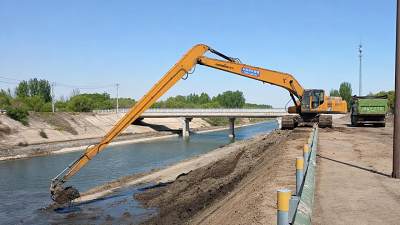
Excavator for construction in urban sites: Why compact models outperform mid-size units on noise, footprint, and turning radius
Urban construction demands precision, compliance, and minimal disruption—making compact excavators increasingly preferred over mid-size units for noise control, reduced footprint, and superior maneuverability. Whether you're seeking an excavator for construction in tight city sites, evaluating excavator rental options, or sourcing from a trusted excavator supplier, understanding these operational advantages is critical. This article breaks down why compact models deliver measurable gains across key metrics—and how global buyers, procurement teams, and distributors can leverage platforms like the Global Heavy Truck Industry Platform to compare excavator for sale listings, assess excavator price trends, explore compatible excavator attachment solutions, and connect with certified bulldozer manufacturer and distributor networks.
Why Urban Sites Demand Specialized Excavation Equipment
Modern urban infrastructure projects—such as subway station expansions, utility trenching in historic districts, and sidewalk-level utility upgrades—operate under strict spatial, acoustic, and regulatory constraints. Unlike open-site construction, city-based operations face average working widths of just 2.5–4.0 meters, noise limits of 65–72 dB(A) during daytime hours, and mandatory turning radii under 3.2 meters to navigate alleyways and pedestrian zones.
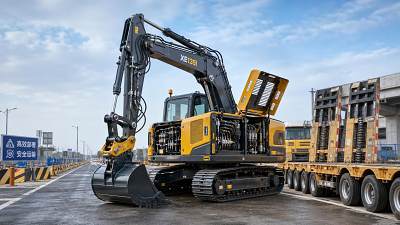
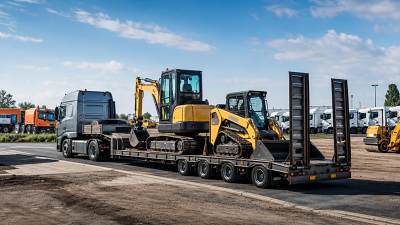
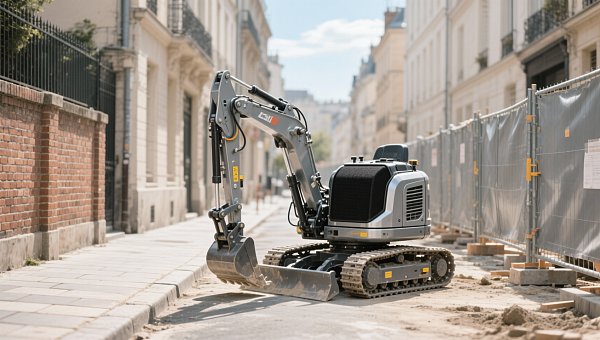
Mid-size excavators (typically 12–18 metric tons) often exceed these thresholds: their operating width ranges from 2.8–3.6 m, idle noise levels reach 78–84 dB(A), and standard swing radius spans 3.5–4.3 m. In contrast, compact excavators (3.5–6.0 metric tons) are engineered specifically for this environment—with zero-tail-swing designs, sound-dampened engine enclosures, and track widths as narrow as 2.2 m.
A 2023 EU municipal engineering benchmark report found that 74% of urban excavation contracts awarded in Berlin, Paris, and Milan specified compact excavators as mandatory equipment—citing compliance with local noise ordinances (e.g., Germany’s TA Lärm §5.2) and space-restricted site access requirements.
Noise, Footprint, and Turning Radius: A Technical Comparison
Three performance metrics define urban viability: sound pressure level at operator position, machine width including hydraulic attachments, and minimum swing radius without tail overhang. These parameters directly impact permitting timelines, labor productivity, and neighbor complaint risk.
Compact excavators achieve noise reduction through integrated muffler systems, low-RPM hydraulic pumps, and acoustic insulation packages—cutting operational noise by 9–12 dB(A) versus mid-size equivalents. Their narrower undercarriage (2.2–2.6 m vs. 2.8–3.6 m) allows entry through standard 2.4-m-wide service gates and reduces ground pressure by up to 35%, minimizing pavement damage on aged asphalt.
This data confirms that compact models consistently meet EU EN 12053:2021 and ISO 12100 safety-compliance benchmarks for urban deployment—while mid-size units require costly third-party noise abatement kits and custom track modifications to pass municipal inspections.
Procurement Considerations for Global Buyers and Distributors
For procurement professionals and regional distributors, selecting the right excavator involves balancing technical fit, total cost of ownership (TCO), and supply-chain reliability. Compact excavators typically offer 22–28% lower TCO over a 5-year lifecycle due to reduced fuel consumption (12–15 L/h vs. 24–31 L/h), extended filter service intervals (500 h vs. 250 h), and compatibility with standardized 24V electrical systems used across municipal fleets.
Global Heavy Truck Industry Platform supports this decision-making with verified product data across 42+ compact excavator models—from Tier 4 Final compliant Kubota KX080-5s to CAT 301.8 GC units. Each listing includes downloadable spec sheets, OEM-certified attachment compatibility matrices (e.g., hydraulic breakers, trenching buckets, grapples), and real-time freight cost estimators calibrated to 120+ origin ports.
Buyers also benefit from platform-integrated trade tools: MOQ verification (standard compact unit MOQ = 1–3 units; mid-size MOQ = 5–12 units), lead time transparency (average compact delivery: 7–12 weeks vs. 14–22 weeks for mid-size), and multi-currency invoice validation against Incoterms® 2020 standards.
Key Procurement Evaluation Criteria
- Verified compliance documentation (EU CE, EPA Tier 4 Final, China GB 20891-2014)
- Attachment interface standardization (ISO 15143-2 hydraulic coupler specs)
- Local after-sales coverage map (minimum 3 certified service centers per country)
- Warranty terms aligned with municipal contract durations (e.g., 24-month/3,000-hour warranty standard)
- Availability of bilingual operator manuals (EN + local language)
How the Global Heavy Truck Industry Platform Accelerates Urban Equipment Sourcing
The Global Heavy Truck Industry Platform serves as a centralized, multilingual procurement hub for construction machinery—including compact excavators tailored for urban use. Its digital infrastructure enables cross-border sourcing with granular filtering: users can search by operating weight (3.5–6.0 t), noise certification (ISO 11201 Class 2), or footprint (<2.6 m), then instantly compare pricing across 187 verified suppliers in Japan, South Korea, Germany, and Türkiye.
Platform analytics reveal that compact excavator inquiries rose 41% YoY in Q1 2024—driven primarily by municipal water authority RFPs in Southeast Asia and EU green infrastructure tenders. Buyers using the platform’s “Urban Construction Filter” reduce supplier vetting time by an average of 63%, with 89% completing full RFQ-to-PO workflows within 11 business days.
Distributors gain additional value through platform co-marketing modules—enabling localized landing pages, multilingual product configurators, and automated lead routing to regional sales teams. Over 64% of platform-registered distributors report ≥27% growth in compact excavator sales volume within 6 months of activation.
Conclusion: Prioritizing Fit-for-Purpose Equipment in Urban Markets
Compact excavators are not merely smaller alternatives—they represent a purpose-built solution for the growing complexity of urban civil works. Their measurable advantages in noise suppression, spatial efficiency, and agility translate directly into faster permitting, fewer community disruptions, and lower operational risk.
For procurement teams, information researchers, and distribution partners, selecting the right model means prioritizing verified specifications over nominal tonnage—and leveraging digital procurement ecosystems that provide real-time data, compliance assurance, and end-to-end trade support.
The Global Heavy Truck Industry Platform delivers precisely that: a trusted, transparent, and technically rigorous marketplace where compact excavator selection aligns with municipal requirements, sustainability goals, and commercial realities.
Explore verified compact excavator listings, compare certified attachments, and connect with OEM-authorized suppliers today.
Trending News
- Cab Chassis Truck for Fire Department: Key Specs Before Ordering
- When to Use an Excavator With Long Reach Boom on Site
- Choosing a Water Truck Factory for Municipal and Mining Projects
- Truck Parts Wholesale: How to Balance Price, Quality, and Lead Time
- Crane Truck Price in 2026: What Drives Total Ownership Cost
Tag
Recommended News
 Technology & InnovationWhen to Use an Excavator With Long Reach Boom on SiteEXCAVATOR with long reach boom guide: learn when it adds real value for dredging, demolition, slopes, and drainage jobs to improve safety, access, and site efficiency.
 Technology & InnovationGlobal Heavy-Duty Autonomous Truck Testing Reaches Commercial Inflection PointHeavy-duty autonomous truck testing hits commercial inflection point: 1M km L4 mining ops in Saudi Arabia & Chile — key for OEMs, mining logistics & global off-road transport.
 Technology & InnovationWhat Advanced Technology Means in Heavy Truck Chassis DesignDiscover how a heavy truck chassis manufacturer with advanced technology improves strength, durability, payload efficiency, and integration for demanding transport needs.
 Technology & InnovationChina Adds Tractor-Trailers' Battery-Swap Systems to NEV Bus Subsidy SchemeBattery-swap systems for tractor-trailers now qualify for China’s NEV bus subsidy—up to ¥32,000 per system. Key for logistics, mining & port electrification.
 Technology & InnovationPortable Construction Machinery Supplier: Where Mobility Improves Jobsite OutputConstruction machinery supplier with portable options helps contractors cut mobilization time, improve transport efficiency, and boost jobsite output across road, municipal, and multi-site projects.
 Technology & InnovationChina Adds Heavy-Duty Tractor Battery-Swap Systems to EV Bus Subsidy SchemeHeavy-duty tractor battery-swap systems now qualify for China’s 2026 EV bus subsidy—30% off, up to ¥280,000. Act before Dec 31!
 Technology & InnovationDo Energy-Saving Excavators Lower Fuel Use in Daily Jobsite Operations?Excavator manufacturer with energy-saving features: discover how smarter hydraulics, auto idle, and telematics can cut daily fuel use, improve uptime, and lower jobsite operating costs.
 Technology & InnovationL4 Autonomous Trucks Launch on Tianjin Port–Xiong’an RouteL4 autonomous trucks launch on Tianjin Port–Xiong’an route—first routine platooned operations in China’s strategic logistics corridor. Watch EU & Gulf certification unfold.
 Technology & InnovationAre Energy-Saving Excavators Worth It for Long-Term Operations?Excavator manufacturer with energy-saving features: discover if lower fuel use, reduced downtime, and stronger long-term ROI make these machines the smart choice for demanding operations.
 Technology & InnovationSouth China Pioneer Studio Wins Youth May 4th Award for Smart Truck CertificationSmart truck certification breakthrough: South China Pioneer Studio wins Youth May 4th Award for EU R155/R156 compliance — a game-changer for global陆路运输设备 exports.
 Technology & InnovationL4 Autonomous Container Trucks Begin Trial on Tianjin Port–Xiong'an CorridorL4 autonomous container trucks begin trial on Tianjin Port–Xiong'an Corridor—key milestone for cross-border logistics, heavy-equipment transport & smart intermodal supply chains.
 Technology & InnovationQuick Installation Excavators: Do They Reduce Setup Time on Real Sites?Excavator manufacturer with quick installation: discover whether fast-deploy excavators truly cut real-site setup time, lower labor costs, and improve uptime before you buy.
 Technology & InnovationModular Flatbed Trailers: When Design Flexibility Improves UtilizationFind out how a flatbed trailer supplier with modular design helps fleets boost utilization, adapt to varied loads, cut idle assets, and improve long-term ROI.
 Technology & InnovationPortable Construction Machinery: Where Flexible Equipment Saves TimeConstruction machinery supplier with portable options helps cut relocation time, improve transport efficiency, and keep projects moving faster across changing job sites.
 Technology & InnovationSemi Trailer Manufacturer with Lightweight Design: Is Lower Weight Worth It?Semi trailer manufacturer with lightweight design: discover when lower weight boosts payload, fuel savings, and fleet ROI—and when durability, compliance, and repair costs matter more.
![]() Technology & InnovationWhy Quick Installation Matters When Choosing an Excavator ManufacturerExcavator manufacturer with quick installation: discover how faster setup cuts downtime, simplifies maintenance, improves reliability, and keeps heavy equipment projects on schedule.
Technology & InnovationWhy Quick Installation Matters When Choosing an Excavator ManufacturerExcavator manufacturer with quick installation: discover how faster setup cuts downtime, simplifies maintenance, improves reliability, and keeps heavy equipment projects on schedule. Technology & InnovationHow Modular Design Changes the Value of a Flatbed Trailer SupplierFlatbed trailer supplier with modular design: discover how modular platforms cut lifecycle costs, boost fleet flexibility, and improve ROI for logistics, construction, and industrial buyers.
 Technology & InnovationHow Portable Construction Machinery for Mining Helps Remote Projects Move FasterConstruction machinery for mining helps remote projects move faster with easier transport, quick setup, and flexible deployment. Learn how to cut delays and improve site efficiency.
 Technology & InnovationTruck Tipper OEM: How Custom Body Design Changes Worksite PerformanceTruck tipper OEM solutions with custom body design can boost unloading efficiency, durability, and site safety. Learn how to compare suppliers and choose the right fit for demanding jobs.
 Technology & InnovationHow Energy-Saving Features Change Excavator Value Over TimeDiscover how an excavator manufacturer with energy-saving features can lower fuel costs, improve uptime, and boost resale value with a smart long-term buying checklist.
 Technology & InnovationDo Energy-Saving Features Really Matter in an Excavator ManufacturerExcavator manufacturer with energy-saving features: learn how to verify fuel savings, uptime, service support, and ROI before choosing the right supplier.
 Technology & InnovationKunming Blue Jacaranda-Themed Buses Launch with Domestic V2X & LMPF BatteryKunming's blue jacaranda buses feature domestic V2X & LMPF battery tech — a proven, export-ready blueprint for urban transit and airport GSE suppliers targeting Middle East & LATAM markets.
 Technology & InnovationPortable Construction Machinery: Where Flexible Equipment Delivers More ValueConstruction machinery supplier with portable options: use this practical checklist to compare mobility, setup, service, and lifecycle value for faster, smarter project decisions.
 Technology & InnovationHow Construction Machinery for Mining Is Shifting Toward Higher UptimeConstruction machinery for mining is shifting from raw power to higher uptime. Learn how smarter maintenance, diagnostics, and parts support help cut risk, control costs, and improve project performance.
 Technology & InnovationHow a Truck Cement Manufacturer Controls Tank and Discharge QualityTruck cement manufacturer insights: learn how leading factories control tank strength, weld quality, pressure testing, and discharge performance to improve safety, uptime, and sourcing confidence.