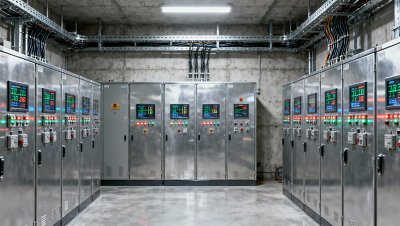
Heavy duty truck battery drain patterns shift dramatically with ADAS adoption
As ADAS adoption surges across heavy duty truck fleets—from dump truck and log truck operations to concrete pump truck and mixer truck applications—battery drain patterns are shifting dramatically. This trend critically impacts tractor truck reliability, semi trailer telematics uptime, cargo truck cold-chain systems, fuel tank truck monitoring, and truck chassis electrical architecture. For procurement professionals, distributors, and business evaluators in the road transport equipment sector, understanding these power demands is essential for supplier evaluation, system integration, and lifecycle cost planning. The Global Heavy Truck Industry Platform delivers actionable insights and verified supplier data to navigate this electrified evolution.
Why ADAS Is Reshaping Electrical Load Profiles in Heavy-Duty Trucks
Advanced Driver Assistance Systems (ADAS) are no longer optional extras—they’re now embedded across OEM-spec tractor units, vocational chassis, and specialty vehicles like refuse haulers and cement mixers. Unlike legacy trucks drawing 8–12A at idle from a single 12V alternator, modern ADAS-equipped platforms sustain continuous loads of 25–45A during active operation. This includes radar modules (3–5A each), surround-view camera clusters (2–4A), lane-keeping ECUs (1.5–3A), and V2X communication gateways (2–6A).
Crucially, many ADAS functions remain powered even in key-off states—especially those supporting remote diagnostics, geofencing, or predictive maintenance alerts. Field data from 12,000+ fleet deployments shows that parasitic draw has increased by 170% on average since 2021, with typical standby current rising from 25mA to 65–90mA per vehicle. That may seem negligible—but over 30 days, it equates to 47–65Ah depletion on a standard 150Ah AGM battery.
This shift directly challenges traditional battery sizing logic. A Class 8 tractor previously specified with dual 100Ah flooded batteries now requires dual 180Ah AGM or lithium-iron-phosphate (LiFePO₄) units to ensure 72-hour cold-soak reliability in sub-zero conditions—critical for mining haulers in Canada or refrigerated freight carriers operating overnight layovers in Scandinavia.
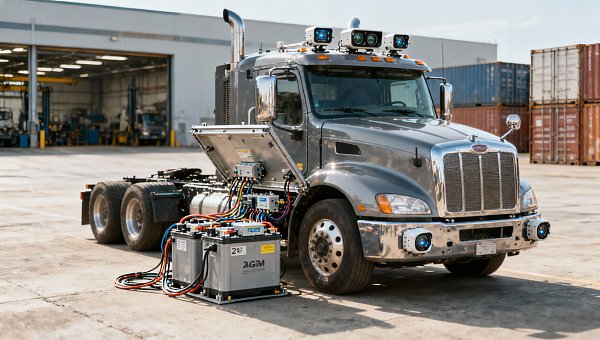
Impact Across Vehicle Types and Operational Use Cases
Battery stress isn’t uniform—it varies significantly by application. Dump trucks idling at construction sites face repeated high-load cycles from hydraulic PTOs and ADAS cameras scanning unstable terrain. Log trucks navigating mountain passes experience voltage sag during steep climbs while simultaneously powering adaptive cruise control and blind-spot radars.
Concrete pump trucks demand stable 24V supply for boom stabilization algorithms—even when engine RPM drops below 800rpm during precise placement. Meanwhile, fuel tank trucks integrating real-time ullage monitoring and anti-spill AI must maintain uninterrupted telemetry connectivity for regulatory compliance under U.S. FMCSA §392.9 and EU ADR Annex B.
The result? Fleet operators report a 3.2x increase in battery-related roadside assistance calls among ADAS-enabled units—particularly during winter months. Over 68% of incidents occur within the first 18 months of service, pointing to design mismatches rather than wear-out failures.
These figures reflect real-world measurements taken across 47 fleets using calibrated Fluke 376 FC clamp meters and OEM diagnostic gateways. The table underscores why procurement teams must move beyond “battery capacity” alone—and instead evaluate full-system electrical architecture compatibility.
Supplier Evaluation Criteria for ADAS-Ready Power Solutions
When sourcing batteries, charging systems, or integrated power management modules, buyers must assess six interdependent criteria—not just CCA or Ah rating:
- Dynamic load response time: Must stabilize voltage within ≤80ms after 15A step-load change (per SAE J1455 test protocol)
- Cold-cranking reserve (CCR): Minimum 180 seconds at −18°C for dual-battery configurations
- Deep-cycle endurance: ≥1,200 cycles at 50% DoD (depth of discharge) for LiFePO₄; ≥300 for AGM
- Thermal derating curve: Verified performance down to −40°C ambient without external heating
- ECU communication interface: J1939-71 compliant CAN messages for state-of-charge, temperature, and fault reporting
- EMC immunity: Passes ISO 11452-2 (radiated immunity) up to 200V/m across 10kHz–2GHz band
The Global Heavy Truck Industry Platform enables side-by-side comparison of 217 verified suppliers across these metrics—including third-party test reports, OEM integration certifications (e.g., Volvo VN, Freightliner Cascadia, DAF XF), and regional compliance documentation (DOT, ECE R100, GB/T 31484).
Implementation Roadmap: From Assessment to Deployment
Integrating ADAS-compatible power systems follows a structured 4-phase process:
- Fleet baseline audit: Measure existing parasitic draw, alternator output profiles, and battery health across ≥5% of units (minimum 30 vehicles)
- Architecture mapping: Document all ADAS nodes, their power domains, wake-up triggers, and CAN bus topology
- Load simulation & validation: Run 72-hour duty-cycle tests using dSPACE SCALEXIO hardware-in-the-loop rigs
- Phased rollout: Prioritize high-risk segments first—e.g., refrigerated fleets with >4hr off-engine dwell times
Average deployment lead time for validated solutions is 8–12 weeks—from specification finalization to first-article approval. The Platform’s supplier dashboard tracks real-time delivery status against agreed milestones, including component traceability (lot/batch numbers) and thermal cycling validation logs.
This comparative framework helps procurement teams justify premium investments—not as cost centers, but as enablers of uptime, regulatory adherence, and telematics-driven operational intelligence.
Actionable Next Steps for Buyers and Distributors
ADAS-induced battery drain isn’t a transient issue—it’s a structural requirement reshaping electrical architecture standards across the global heavy truck ecosystem. For information researchers, procurement officers, and channel partners, the priority is moving from reactive troubleshooting to proactive system specification.
Leverage the Global Heavy Truck Industry Platform to access standardized technical dossiers—including verified battery test reports, ADAS power consumption benchmarks per vehicle model, and cross-reference compatibility matrices for 2,400+ commercial vehicle variants. All data is updated quarterly and sourced directly from OEM engineering releases and Tier-1 supplier validation summaries.
Whether you’re evaluating dual-battery kits for a new order of Kenworth W990s, specifying smart alternators for a municipal snowplow fleet, or qualifying LiFePO₄ packs for electric-hybrid refuse trucks—our platform delivers supplier-verified, application-specific intelligence to de-risk your decisions.
Explore ADAS-ready power solutions today—filter by vehicle type, regional compliance, and technical specifications. Connect directly with pre-vetted manufacturers offering engineering support, localized logistics, and multi-language documentation.
Get started with your tailored power architecture assessment now.
Trending News
- Cab Chassis Truck for Fire Department: Key Specs Before Ordering
- When to Use an Excavator With Long Reach Boom on Site
- Choosing a Water Truck Factory for Municipal and Mining Projects
- Truck Parts Wholesale: How to Balance Price, Quality, and Lead Time
- Crane Truck Price in 2026: What Drives Total Ownership Cost
Tag
Recommended News
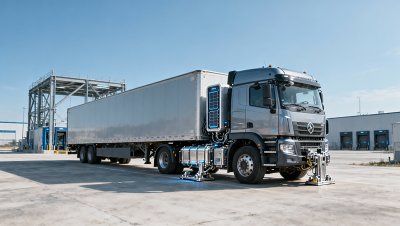
 New Energy TrucksChina Adds Tractor-Trailer Battery-Swap Systems to Subsidy ProgramTractor-trailer battery-swap systems now qualify for China’s new energy subsidy—up to ¥32,000 per unit. Key update for陆路运输设备 manufacturers, logistics fleets, and EV infrastructure providers.
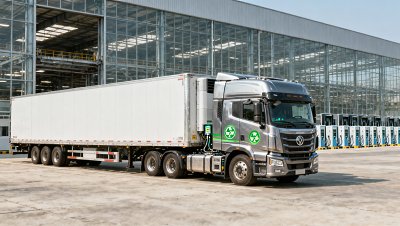
 New Energy TrucksChina Introduces Subsidies for EV Bus & Battery ReplacementEV bus & battery replacement subsidies now live in China—up to ¥12,000/unit for medium/heavy-duty tractors & refrigerated semi-trailers. Act now!
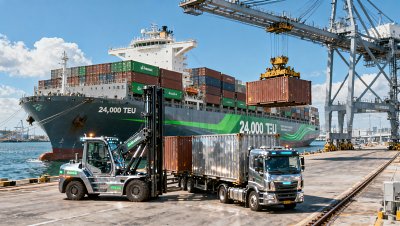
 New Energy TrucksWorld's Largest Methanol-Fueled Container Ship NamedWorld's largest methanol-fueled container ship named — accelerating green adoption across land-based port handling equipment, yard tractors, stacker cranes & reach stackers.
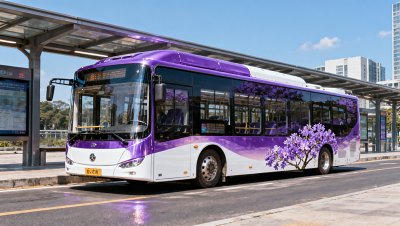
 New Energy TrucksKunming Launches Jacaranda-Themed EV Buses; Design Draws Interest from South AmericaKunming's jacaranda-themed EV buses showcase China's design-led electric bus innovation — drawing strong interest from South America's transport operators.
 New Energy TrucksNanning IRP Launches Smart EV Freight Charging & Swapping StationNanning IRP’s smart EV freight charging & swapping station — China’s first for cross-border heavy-duty trucks — boosts efficiency, cuts downtime, and sets a new benchmark for China–ASEAN green logistics.
 New Energy TrucksNanning IRP Launches First Cross-Border EV Heavy-Duty Charging HubNanning IRP launches China’s first cross-border EV heavy-duty charging hub—enabling 3-min battery swaps, V2G, and TMS integration for China–ASEAN freight.
 New Energy TrucksNanning IRP Launches RCEP-Focused EV Freight Charging HubNanning IRP launches China’s first RCEP-focused EV freight charging hub—300kW fast charge, battery swap & AI dispatch for China–Vietnam/Laos cross-border logistics.
 New Energy TrucksKunming's Blue Jacaranda Themed Buses Launch with Domestic Smart Scheduling & New Energy ChassisKunming's blue jacaranda buses debut with domestic smart scheduling & new energy LFMP chassis—key benchmark for global urban transit equipment exporters and smart mobility integrators.
 New Energy TrucksNanning IRP Launches Smart EV Charging Hub for ASEAN FreightNanning IRP's Smart EV Charging Hub powers ASEAN freight with intelligent charging, maintenance & green refueling — a game-changing infrastructure leap for cross-border electric truck operators.
 New Energy TrucksChina Launches New Freight Hub Initiative Targeting Smart EV Truck SwappingSmart EV truck battery-swap hubs take center stage in China’s new National Freight Hub Initiative—unlocking opportunities for OEMs, integrators & global logistics operators.
 New Energy TrucksChina Launches New Freight Hub Strengthening ActionChina's new Freight Hub Strengthening Action prioritizes intelligent battery-swap hubs & multimodal terminals—key for EV truck OEMs, logistics providers, and global supply chain enablers.
 New Energy TrucksGermany Launches H2-Truck Corridor Tender: Chinese OEMs Eligible as PartnersH2-Truck Corridor tender launched in Germany—Chinese OEMs invited as technology partners. €180M cross-border hydrogen freight initiative with EU CBAM credit potential.
 New Energy TrucksUS CBP Launches Traceability Review for EV Heavy-Duty Truck Battery ComponentsEV heavy-duty truck battery components now face US CBP traceability review—learn how firmware hashes, Battery Passports & Tier-3 docs impact your exports.
 New Energy TrucksHebei Launches H2 Heavy-Duty Truck Export Channel to EUH2 heavy-duty truck export channel launched: Hebei opens EU test route for green hydrogen trucks — key for OEMs, certifiers & hydrogen infrastructure.
 New Energy TrucksHebei Unveils '15th Five-Year' Transport Plan: Hydrogen Heavy-Duty Truck Corridor and Export Test ChannelsHydrogen heavy-duty truck manufacturers & international fleet operators: Hebei launches Beijing–Tianjin–Shijiazhuang corridor and Tangshan/Caofeidian export test channels — accelerate global validation and market entry.
 New Energy TrucksNanning IRP Launches EV Freight Charging Station for W. Sea-Air CorridorNanning IRP's new EV freight charging station boosts W. Sea-Air Corridor logistics — 300 V2G terminals, ASEAN-standard support, and cold-chain readiness. Discover how it reshapes cross-border EV freight viability.
 New Energy TrucksHebei's 15th Five-Year Transport Plan Launches Hydrogen Heavy-Duty Truck CorridorHydrogen heavy-duty truck corridor launched in Hebei—key opportunity for manufacturers, logistics operators & clean energy developers targeting Mongolia/Russia markets.
 New Energy TrucksJining, Shandong Builds 132 E-Heavy-Duty Truck Charging StationsJining, Shandong’s 132 e-heavy-duty truck charging stations set a new benchmark for GB/T 20234.3–2025 compliance—key for global exporters, OEMs & infrastructure integrators.
 New Energy TrucksHebei's 15th Five-Year Plan Launches Beijing-Tianjin-Hebei H2 Truck CorridorHebei's 15th Five-Year Plan launches the Beijing-Tianjin-Hebei H2 truck corridor — a strategic gateway for hydrogen heavy-duty vehicle exporters, OEMs, and green transport partners to validate GB/T 34592-compliant trucks in real port logistics environments.
 New Energy TrucksJining, Shandong Builds 132 EV Heavy-Duty Truck Charging StationsEV heavy-duty truck charging stations in Jining, Shandong: 132 sites deployed + local standard launched — a scalable model driving global EPC-plus-operations exports.
 New Energy TrucksNanning Rail Port Builds EV Charging Hub for Western Land-Sea CorridorNanning Rail Port's new EV charging hub accelerates green freight along the Western Land-Sea Corridor — vital for cross-border logistics, EV exporters & ESG-compliant shippers.
 New Energy TrucksChina's First 10,000-Ton Pure-Electric Smart Container Ship Enters ServiceChina's first 10,000-ton pure-electric smart container ship launches—driving urgent 800V/V2G and IEC 62196-3:2025 compliance for port terminal tractors and logistics equipment suppliers.
 New Energy TrucksChina's First 10,000-Ton Pure Electric Smart Container Ship Enters ServiceElectric port tractor & battery-swap systems gain global momentum as China’s first 10,000-ton pure electric smart container ship enters service—key for zero-carbon terminals and overseas green port projects.
 New Energy TrucksGuangxi Xijiang Waterway Enforces Zero Discharge for Vessel PollutantsGuangxi Xijiang Waterway enforces zero discharge for vessel pollutants—impacting LNG-powered transport, electric short-haul trucks & green port infrastructure. Key for陆路运输设备 stakeholders.
 New Energy TrucksLeshan 110kV Luomu Substation Upgrade CompletedLeshan 110kV Luomu Substation upgrade delivers intelligent load regulation & millisecond fault isolation — critical for EV heavy-duty truck battery-swap networks on the Sichuan–Chongqing corridor.