Semi trailer for sale — how axle configuration affects load capacity and compliance
Shopping for a semi trailer for sale? Understanding axle configuration is critical—not only for maximizing load capacity but also for ensuring regional road compliance and safety. Whether you're comparing dump truck for sale options, evaluating truck tipper price vs. performance, or sourcing from a trusted truck trailer manufacturer, axle layout directly impacts payload, maneuverability, and legal operation. This guide breaks down how tandem, tridem, and lift-axle setups affect real-world hauling efficiency—helping procurement professionals, distributors, and engineering buyers make compliant, cost-effective decisions across global markets.
Why axle configuration determines both payload and legality
Axle configuration is not just about mechanical layout—it’s the primary factor governing weight distribution, legal axle load limits, and structural integrity under dynamic conditions. In most major markets—including the EU (Directive 96/53/EC), USA (FMCSA Part 658), Australia (NHVR Mass Limits), and China (GB 1589-2016)—regulatory frameworks define maximum permissible loads per axle group, with strict penalties for non-compliance.
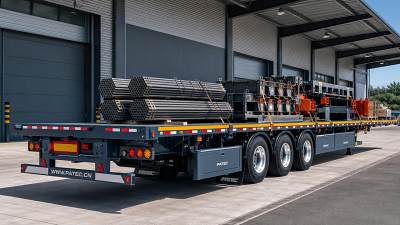
For example, a standard 3-axle rigid semi-trailer in Europe may carry up to 25 tonnes gross vehicle weight (GVW) with a tandem axle setup—but adding a third driven axle (tridem) allows up to 32 tonnes when combined with proper suspension tuning and certified chassis design. These thresholds are not theoretical: they directly determine freight rate calculations, route planning, and insurance eligibility.
Procurement teams must cross-reference axle count, spacing, and suspension type against local enforcement practices—not just published limits. A 1.3-meter axle spread may pass inspection in one jurisdiction but trigger overweight penalties in another due to bridge formula calculations. This makes axle configuration a foundational parameter—not an afterthought—in semi trailer for sale evaluation.
Tandem vs. tridem vs. lift-axle: functional trade-offs
Three axle configurations dominate commercial semi-trailer applications globally. Each serves distinct operational needs—and carries specific implications for procurement, maintenance, and total cost of ownership (TCO). The optimal choice depends on cargo density, typical haul distance, infrastructure quality, and regulatory environment.
This table reflects real-world configurations verified across 12+ OEM partners on The Global Heavy Truck Industry Platform. Note that lift-axle systems require additional certification for automatic deployment logic in EU and ASEAN markets—adding 7–15 days to lead time for custom-built units.
How procurement teams verify compliance before purchase
Compliance verification goes beyond reviewing factory specs. Buyers must validate axle configuration against three layers: national legislation, regional enforcement interpretation, and fleet-specific operational constraints. For instance, a semi trailer for sale certified to ECE R132 standards may still fail roadside checks in Germany if axle spacing deviates by more than ±15 mm from documented values.
Procurement professionals should request the following documentation prior to order placement:
- Full axle geometry report (including center-to-center distances, vertical alignment tolerances, and suspension travel range)
- Certified test reports for axle load distribution under 3 loading scenarios: front-heavy, rear-heavy, and uniformly distributed
- Country-specific type approval certificates (e.g., UK VCA, Australian ADR, Mexican NOM)
- Supplier warranty coverage for axle-related fatigue failure (minimum 2 years or 200,000 km)
On The Global Heavy Truck Industry Platform, all listed semi-trailer manufacturers provide downloadable compliance dossiers. Buyers can filter suppliers by active certifications—including ISO/IEC 17065-accredited conformity assessment bodies—and compare axle configuration data side-by-side across 40+ product lines.
What distributors need to know about customization & delivery timelines
Distributors and agents often face pressure to deliver regionally optimized trailers within tight windows. Custom axle configurations—such as adding a steerable third axle or integrating ABS-compatible air suspension—typically extend standard lead times by 3–6 weeks. However, pre-certified modular platforms reduce this to 10–14 days for minor modifications.
The Global Heavy Truck Industry Platform enables distributors to access real-time production capacity data from over 80 trailer OEMs. Filters include “certified for EU Stage V”, “ready for US DOT FMVSS compliance”, and “lift-axle compatible with OEM telematics”. This eliminates guesswork during quotation cycles and supports accurate delivery commitments to end customers.
Additionally, platform members receive free access to our Axle Configuration Compliance Checker—a web tool that validates axle spacing, tire size, and load distribution against 27 country-specific regulations using input parameters like cargo density, route elevation profile, and average pavement condition index (PCI).
Why choose The Global Heavy Truck Industry Platform for semi trailer procurement?
When sourcing a semi trailer for sale, procurement teams need more than listings—they need decision-grade intelligence. Our platform delivers:
- Verified axle configuration data across 500+ trailer models, updated monthly with OEM technical bulletins
- Side-by-side comparison of 6 key compliance metrics: axle weight distribution, turning radius impact, brake force balance, suspension durability rating, tire scrub angle, and bridge formula score
- Direct access to engineering support from certified trailer manufacturers—available for technical validation within 24 business hours
- Integrated quotation workflow with multi-currency pricing, Incoterms 2020 mapping, and automated compliance gap reporting
Whether you’re evaluating a dump truck for sale, benchmarking truck tipper price against axle-rated payload, or specifying a custom semi-trailer for mining operations—we help you move from specification to shipment in under 4 weeks. Contact our procurement specialists today to request axle configuration validation for your next tender—or download our free Semi-Trailer Axle Selection Checklist (includes 12 jurisdiction-specific compliance checkpoints).
Trending News
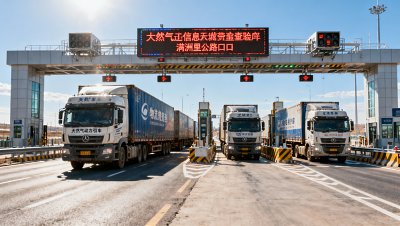
- Manzhouli Highway Port Launches 24-Hour Freight Clearance
- Irkeshtam Port’s 24-Hour Freight Clearance Boosts Exports to Kyrgyzstan by 66%
- Erenhot-Mongolia 24-Hour Freight Clearance Marks One-Year Milestone
- MOF & MOT Launch New Freight Hub Resilience Initiative
- Six New Iran-Pakistan Land Crossings Opened, Land Clearance Cut to 6 Hours
Tag
Recommended News
 Truck ExportManzhouli Highway Port Launches 24-Hour Freight ClearanceManzhouli Highway Port’s 24-hour freight clearance boosts heavy-duty truck, natural gas tractor & engineering chassis exports to Russia/CIS — faster, more reliable cross-border logistics.
 Truck ExportIrkeshtam Port’s 24-Hour Freight Clearance Boosts Exports to Kyrgyzstan by 66%Irkeshtam Port’s 24-hour freight clearance slashes border delays—boosting China-to-Kyrgyzstan auto component exports by 66%. Optimize your陆路运输设备 supply chain now.
 Truck ExportErenhot-Mongolia 24-Hour Freight Clearance Marks One-Year MilestoneErenhot-Mongolia 24-hour freight clearance boosts reliability for heavy-duty trucks, refrigerated semi-trailers & dump chassis exports — optimize your cross-border logistics now.
 Policy & RegulationsMOF & MOT Launch New Freight Hub Resilience InitiativeMOF & MOT launch Freight Hub Resilience Initiative—boosting multimodal connectivity, smart trailers, and cross-border rail freight for land transport equipment exporters and operators.
 Logistics & FreightSix New Iran-Pakistan Land Crossings Opened, Land Clearance Cut to 6 HoursSix new Iran-Pakistan land crossings slash cargo clearance to just 6 hours—boosting efficiency for heavy-duty trucks, semi-trailers & CKD/SKD kits export.
 Logistics & FreightNanjing Launches First Wind Power Equipment Shipping Route to PakistanWind power equipment shipping route from Nanjing to Pakistan launched—key logistics upgrade for CPEC renewable projects, heavy transport & EPC contractors.
 Truck Parts IndustryIrkeshtam Port’s 24-Hour Freight Clearance Boosts Exports to KyrgyzstanIrkeshtam Port’s 24-hour freight clearance slashes heavy-truck component clearance to <15 mins—boosting road transport equipment exports to Kyrgyzstan.
 Truck ExportErenhot-Mongolia 24-Hour Freight Clearance Marks First AnniversaryErenhot-Mongolia 24-hour freight clearance delivers 40% faster road freight & zero-delay customs for auto parts, machinery, and fresh produce—key for logistics and heavy-vehicle exporters.
 Truck ExportChina-Europe Railway Express Surpasses 130,000 TrainsChina-Europe Railway Express surpasses 130,000 trains — a pivotal milestone for陆路运输设备 exporters, offering faster, more reliable overland logistics amid maritime volatility.
 Logistics & FreightIran-Pakistan Launch 6 Cross-Border Roads, 3 New Land PortsIran-Pakistan launch 6 cross-border roads & 3 new land ports—boosting overland logistics, heavy-duty truck demand, and Central Asia–Gulf corridor efficiency.
 Company NewsWater Truck Factory Checklist: What to Confirm Before Factory AuditWater truck factory audit checklist: confirm certifications, tank quality, welding, traceability, and testing before approval. Reduce sourcing risk and choose a reliable supplier.
 Truck TechnologyHigh-Strength Flatbed Trailers: Where Stronger Steel Pays OffFlatbed trailer supplier with high strength expertise helps fleets cut tare weight, improve durability, and lower lifecycle cost. See what specs matter most before you buy.
 Market AnalysisExcavator Manufacturer in China: How to Compare Quality Across FactoriesExcavator manufacturer in China selection is no longer about price alone. Learn how to compare factory quality, reliability, safety, and after-sales support for smarter sourcing.
 Truck ExportHeavy Equipment Export to Africa: Market Openings and Compliance ChallengesHeavy equipment export to Africa is accelerating as infrastructure and logistics demand grows. Explore market openings, compliance risks, and smart strategies for sustainable expansion.
 Technology & InnovationQuick Installation Excavators: Do They Reduce Setup Time on Real Sites?Excavator manufacturer with quick installation: discover whether fast-deploy excavators truly cut real-site setup time, lower labor costs, and improve uptime before you buy.
 Industry ReportsInfrastructure Machinery Supply: Avoiding Delays from Wrong Equipment MixConstruction machinery supplier for infrastructure: learn how the right equipment mix prevents delays, cuts downtime, and improves fleet coordination for roads, utilities, and transport projects.
 Fleet ManagementDelivery Truck Supplier in USA: What Matters Most for Fleet ExpansionDelivery truck supplier in USA selection impacts uptime, cost, and fleet growth. Learn how to compare suppliers by route needs, service support, and long-term scalability.
 Transportation CostsCrane Truck Price Breakdown: Capacity, Boom Type, and Operating CostCrane truck price explained by capacity, boom type, and operating cost. Compare key cost drivers, ownership value, and smart buying tips to choose the right crane truck.
 Truck Parts IndustryHeavy Truck Parts for Construction: Which Components Fail Most OftenHeavy truck parts manufacturer for construction insights: discover which brake, suspension, filter, and drivetrain components fail most often—and how smarter sourcing cuts downtime and repair costs.
 Truck ExportLow Bed Trailer Export to Southeast Asia: Specs That Meet Local DemandLow bed trailer export to Southeast Asia starts with the right specs. Discover how to match payload, axles, ramps, and compliance needs to win dealers, reduce risk, and boost sales.
 Technology & InnovationModular Flatbed Trailers: When Design Flexibility Improves UtilizationFind out how a flatbed trailer supplier with modular design helps fleets boost utilization, adapt to varied loads, cut idle assets, and improve long-term ROI.
 Truck ExportHeavy Equipment Export for Mining Operations: Key Risks Before ShipmentHeavy equipment export for mining operations: identify compliance, logistics, technical, and supplier risks before shipment to avoid delays, control costs, and protect mine project timelines.
 Industry ReportsMunicipal Engineering Machinery: Which Equipment Delivers Faster ProgressConstruction machinery supplier for municipal engineering insights: discover which excavators, dump trucks, pavers, and cranes deliver faster project progress, less downtime, and smarter fleet coordination.
 Buying GuideCost-Effective Delivery Truck Supply: What Low Price May Leave OutDelivery truck supplier with cost-effective solutions: learn what low prices may leave out, from compliance and after-sales support to lifecycle value, so you can source smarter and avoid hidden costs.
 Logistics & FreightTruck Spare Parts Supplier in Europe: How to Avoid Cross-Border DelaysTruck spare parts supplier in Europe guide: learn how to reduce cross-border delays, improve parts sourcing, and keep fleet repairs fast with smarter supplier selection.