Municipal Engineering Machinery: Which Equipment Delivers Faster Progress
In municipal engineering, project speed depends heavily on choosing the right equipment for each stage of work. For project teams aiming to improve efficiency, a reliable construction machinery supplier for municipal engineering can directly influence cycle time, equipment uptime, and coordination across transport and site operations. From road excavation and earthmoving to lifting, compaction, hauling, and finishing, faster progress is not created by one machine alone. It comes from selecting the right fleet mix, matching machine capacity to task volume, and securing dependable supply support for delivery, spare parts, and after-sales service.
Equipment Speed in Municipal Engineering: What Really Determines Progress
Municipal engineering covers roads, drainage systems, bridges, utility corridors, urban earthworks, and public infrastructure upgrades. In these projects, equipment performance is measured not only by maximum power, but by how quickly one machine hands work over to the next. A high-output excavator loses value if dump trucks arrive late. A fast paver cannot maintain pace if compaction equipment is undersized. This is why a dependable construction machinery supplier for municipal engineering is important: the supplier influences machine availability, compatibility, maintenance response, and transport logistics.
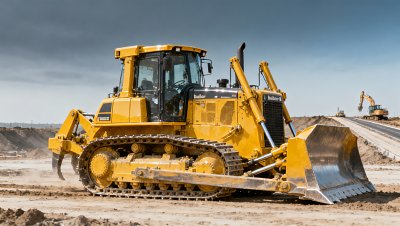
Progress is usually driven by five factors: machine productivity, fleet balance, site access, operator familiarity, and parts support. In dense urban environments, compact machines may deliver faster results than larger units because they maneuver more easily around traffic, utilities, and restricted work zones. On open road expansion or drainage trenching, however, larger-capacity equipment often reduces total working hours. The fastest equipment is therefore not the biggest or newest by default, but the one that best fits the sequence of tasks.
Current Equipment Priorities in Municipal Works
Across the land transport equipment and heavy construction segment, municipal projects are increasingly shaped by tight schedules, limited urban work windows, stricter safety standards, and pressure to reduce idle time. These conditions have raised demand for integrated sourcing through a trusted construction machinery supplier for municipal engineering that can support both machines and transport-related equipment such as trucks, trailers, and spare parts.
These priorities show that project speed is not only about one category of machinery. It depends on coordinated land transport equipment and construction assets working as a system.
Which Municipal Engineering Machines Commonly Deliver Faster Progress
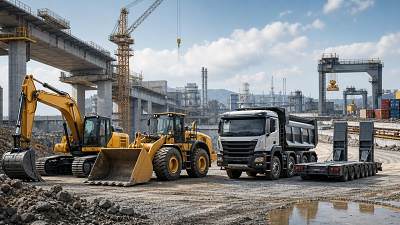
Several equipment categories stand out when the goal is shorter completion time and fewer interruptions. The value of a capable construction machinery supplier for municipal engineering is the ability to align these categories into an efficient equipment package.
Excavators for trenching and foundation preparation
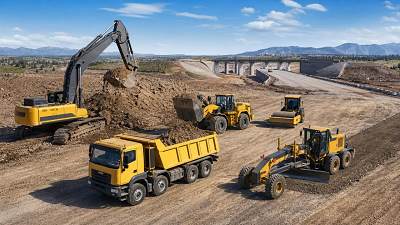
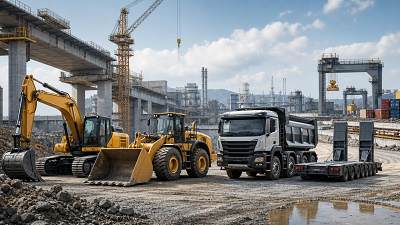
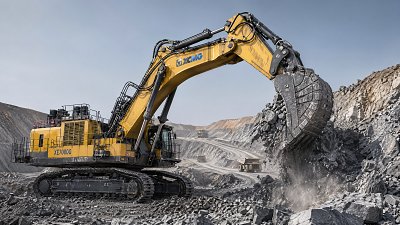
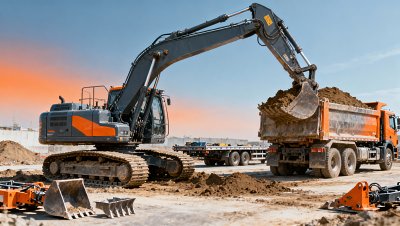
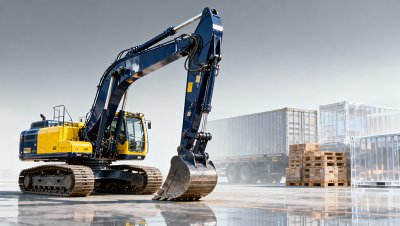
Excavators remain central to municipal works. Medium excavators often deliver the best balance of reach, digging power, and mobility for road reconstruction, drainage channels, and utility trenching. Compact excavators move faster in narrow streets and residential zones because they reduce repositioning time. When paired with quick couplers and multiple attachments, one unit can dig, break, grade, and load without waiting for additional machinery.
Backhoe loaders for versatile urban operations
Backhoe loaders often outperform larger specialized units in smaller municipal jobs. Their ability to travel quickly between nearby points, perform light excavation, load spoil, and complete utility support tasks makes them highly efficient where work is fragmented. For patch repair, curb work, and compact trenching, they reduce the number of machines entering the site.
Dump trucks and tipper trucks for continuous flow
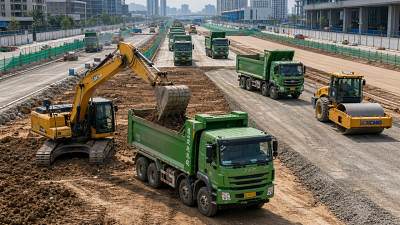
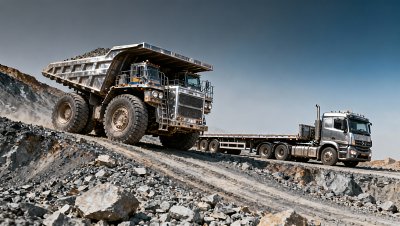
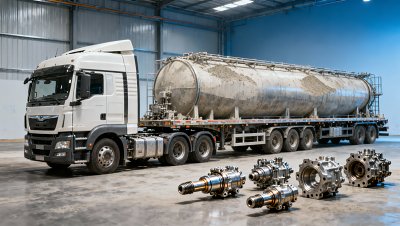
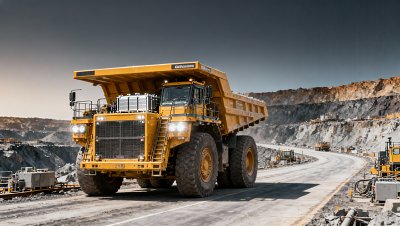
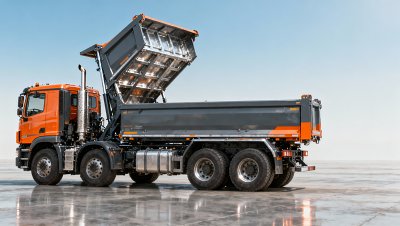
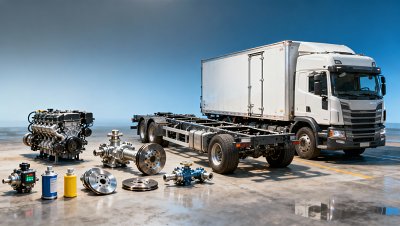
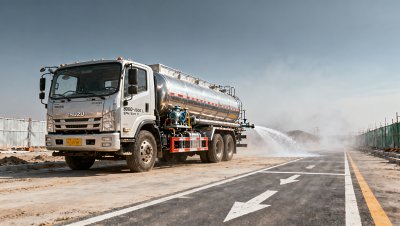
No excavation project moves fast if material cannot leave the site. Dump trucks are often the hidden driver of progress. Proper truck-body volume, axle configuration, and route suitability determine whether excavators operate continuously or sit idle. This is where the land transport equipment side becomes critical. A professional construction machinery supplier for municipal engineering with heavy truck platform capability can support better matching between loading equipment and transport vehicles.
Wheel loaders for material handling and staging
Wheel loaders accelerate stockpile management, backfilling support, aggregate feeding, and site cleanup. On large road or drainage projects, they help separate loading duties from trench excavation duties, which improves machine specialization and reduces queue times.
Road pavers and rollers for fast surface completion
For municipal roadworks, paving trains define the final schedule. Asphalt pavers can quickly place material, but only when supported by reliable truck feeding and correctly sized rollers. Tandem rollers deliver smooth compaction on surface layers, while pneumatic rollers improve density on selected base or binder applications. Fast progress comes from synchronized paving width, delivery rhythm, and compaction passes.
Truck cranes for pipe placement and lifting tasks
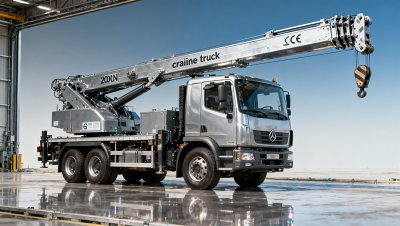
Drainage and utility projects often slow down at the lifting stage. Truck cranes reduce this delay by placing pipes, precast components, manholes, and barriers efficiently. Because they travel on roads without complex mobilization in many cases, they are well suited to municipal engineering schedules that require frequent movement.
Application Value Across Typical Municipal Project Scenarios
Different municipal applications call for different definitions of speed. The table below shows where certain machine combinations usually produce the strongest progress advantage.
In each case, the highest productivity comes from reducing waiting time between tasks. Faster progress is rarely achieved by overinvesting in one powerful machine while underestimating haulage, lifting, or compaction capacity.
How Supplier Capability Influences Equipment Speed
Choosing a construction machinery supplier for municipal engineering is also a speed decision. Reliable supply support reduces delivery uncertainty, improves compatibility across brands and machine classes, and shortens repair response time. In municipal projects, lost time often comes from non-technical issues: delayed spare parts, poor documentation, inconsistent machine condition, or lack of transport coordination.
A strong industry platform with access to truck chassis, complete trucks, trailers, construction machinery, and spare parts offers a practical advantage. It becomes easier to compare suppliers, verify product scope, and source both construction machines and land transport equipment through one connected ecosystem. This is especially useful when projects require excavators, dump trucks, semi-trailers, and replacement components under one schedule.
- Check whether machine specifications align with road access limits and municipal worksite constraints.
- Confirm spare parts availability for high-wear items such as filters, hydraulic components, tires, cutting edges, and compaction parts.
- Evaluate whether transport vehicles are matched to machine output and haul distance.
- Prioritize suppliers that provide transparent product comparison and international sourcing support.
Practical Selection Considerations for Faster Project Delivery
To improve execution speed, equipment should be selected according to work density, haul distance, pavement structure, and frequency of relocation. A small machine with quick mobility can outperform a large one in urban block repairs. On the other hand, a larger excavator and higher-capacity dump truck fleet may cut days from a major drainage or road expansion project.
Useful selection principles include:
- Balance excavation volume with truck dispatch frequency.
- Avoid oversized machines where turning space is limited.
- Use multi-function equipment for fragmented urban tasks.
- Plan maintenance windows before high-output phases such as paving and mass hauling.
- Source from a construction machinery supplier for municipal engineering that understands both machinery and heavy transport integration.
Attention should also be given to compliance, fuel efficiency, and operator familiarity. Machines that are slightly less powerful but easier to operate consistently may produce better daily output than advanced units with poor onsite adaptation. Real speed is measured over the full project timeline, not in isolated peak performance.
Next-Step Direction for Efficient Equipment Sourcing
Municipal engineering progresses faster when excavation, hauling, lifting, paving, and compaction are treated as one connected workflow. Excavators, dump trucks, backhoe loaders, wheel loaders, rollers, pavers, and truck cranes each contribute to shorter schedules when capacity is properly matched. The most effective route is to work with a dependable construction machinery supplier for municipal engineering that can support equipment comparison, supplier evaluation, transport coordination, and spare parts continuity across the full heavy equipment chain.
A practical next step is to define the project sequence first, then map each stage to the required machine class, truck support, and maintenance risk. With access to a global heavy truck and construction machinery platform, it becomes easier to compare options across complete trucks, construction equipment, trailers, and components, helping municipal projects move from planning to execution with fewer delays and stronger cost control.
Trending News
- Water Truck Factory Checklist: What to Confirm Before Factory Audit
- High-Strength Flatbed Trailers: Where Stronger Steel Pays Off
- Excavator Manufacturer in China: How to Compare Quality Across Factories
- Heavy Equipment Export to Africa: Market Openings and Compliance Challenges
- Quick Installation Excavators: Do They Reduce Setup Time on Real Sites?
Tag
Recommended News
 Industry ReportsInfrastructure Machinery Supply: Avoiding Delays from Wrong Equipment MixConstruction machinery supplier for infrastructure: learn how the right equipment mix prevents delays, cuts downtime, and improves fleet coordination for roads, utilities, and transport projects.
 Industry ReportsMunicipal Engineering Machinery: Which Equipment Delivers Faster ProgressConstruction machinery supplier for municipal engineering insights: discover which excavators, dump trucks, pavers, and cranes deliver faster project progress, less downtime, and smarter fleet coordination.
 Industry ReportsBest Construction Machinery for Mining: Key Equipment by Site ConditionConstruction machinery for mining should match real site conditions. Discover the best equipment for soft ground, hard rock, and steep hauls to improve uptime, safety, and transport efficiency.
 Industry ReportsConstruction Machinery Manufacturer Trends Shaping Fleet UpgradesConstruction machinery manufacturer trends are reshaping fleet upgrades with smarter telematics, better fuel efficiency, and stronger service support. Learn how to choose equipment that cuts downtime and boosts project ROI.
 Industry ReportsConstruction Machinery Manufacturer Trends Shaping Fleet UpgradesConstruction machinery manufacturer trends are reshaping fleet upgrades with smarter telematics, better fuel efficiency, and stronger service support. Learn how to choose equipment that cuts downtime and boosts project ROI.
 Industry ReportsConstruction Machinery Manufacturer Trends Shaping Fleet UpgradesConstruction machinery manufacturer trends are reshaping fleet upgrades with smarter telematics, better fuel efficiency, and stronger service support. Learn how to choose equipment that cuts downtime and boosts project ROI.
 Industry ReportsHow Construction Machinery for Mining Affects Output, Fuel Use, and DowntimeConstruction machinery for mining directly affects output, fuel use, and downtime. Learn how to compare equipment, cut operating costs, and choose the right fleet for higher mining productivity.
 Industry ReportsWhat Changes When an Excavator Is Built for Mining WorkExcavator for mining vs standard models: discover how reinforced excavator parts, stronger hydraulics, and lifecycle value impact excavator price and smarter buying decisions.
 Industry ReportsTruck Concrete Pumping Jobs Need More Than High OutputTruck concrete pumping jobs demand more than high output. Learn how hydraulic pump efficiency, truck trailer and truck tipper support, and off road truck stability improve value.
 Industry ReportsHow to Assess Truck Mining Models for Harsh ConditionsAssess truck mining models for harsh sites with expert tips on construction truck, lowbed trailer, truck mounted crane, mixer truck, and refrigerated truck selection for lower downtime.
 Industry ReportsConstruction Machinery Supplier Costs ExplainedConstruction machinery supplier costs explained: compare commercial vehicle parts, truck cylinder, bulk cement trailer, truck injector and flatbed trailer supplier pricing for smarter sourcing.
 Industry ReportsMining Truck Fuel Burn Is Not the Only Cost That MattersMining truck cost goes beyond fuel. Compare truck battery, truck lighting, off road truck reliability, parts support, and lifecycle value to choose smarter, lower-risk fleets.
 Industry ReportsWhy Excavator for Construction Size MattersExcavator for construction size affects cost, output, and fleet fit. Compare excavator rental, excavator for sale, dump truck for sale, and excavator parts to choose smarter.
 Industry ReportsLowbed trailer air suspension vs. mechanical: total cost of ownership analysisCompare lowbed trailer air vs. mechanical suspension TCO—covering mixer truck, fuel tank truck, truck container & more. Save on maintenance, tires, fuel & downtime.
 Industry ReportsHenan 2026 Key Projects List Released: >¥1T Transport InvestmentHenan's 2026 transport investment >¥1T unlocks opportunities for陆路运输设备 makers—EV truck charging corridors, intelligent freight hubs & multimodal terminals await.
 Industry ReportsTruck trailer manufacturer certifications — which ones actually affect field durability?Looking for a truck trailer manufacturer or dump truck for sale? Discover which certifications—like EN 12642-C and ISO 12944-6—actually boost field durability, not just paperwork.
 Industry ReportsTruck trailer manufacturer rankings — based on real-world service response timeCompare top truck trailer manufacturers & dump truck manufacturers by real-world service response time—get accurate dump truck price, truck tipper price, and semi trailer for sale insights before you buy.
 Industry ReportsDump truck manufacturer vs. local assembler: Where do warranty terms really differ?Compare dump truck manufacturer vs. local assembler warranty terms—critical for dump truck for sale, truck tipper price, and semi trailer for sale decisions.
 Industry ReportsCommercial Vehicle Parts Shortages Are Changing Maintenance PlansCommercial vehicle parts shortages are reshaping maintenance for wing van truck, light duty truck, and cab chassis truck fleets. Explore smarter sourcing, truck engine parts planning, and truck brake system strategies.
 Industry ReportsWater truck distributor exclusivity agreements: What they lock in—and what they don’tUnlock water truck cost clarity & construction machinery quotation insights—what exclusivity agreements truly cover (and miss) for distributors, exporters & buyers.
 Industry ReportsConstruction machinery distributors: Are you buying from the factory—or a layered reseller?Compare real-time water truck cost, construction machinery quotation & crane truck distributor pricing—direct from verified manufacturers. Cut markups, lead times & risk.
 Industry ReportsBulldozer supplier tech support response times — real data from 12 service centersBulldozer supplier & excavator supplier response times revealed—real data from 12 global service centers. Compare bulldozer manufacturers, distributors, and heavy duty trucks for sale in Canada, South Africa, Australia—before you buy.
 Industry ReportsExcavator supplier transparency: are machine hours logged before shipment?Excavator supplier & bulldozer manufacturer transparency matters: verify pre-shipment machine hours for road construction, heavy duty trucks in Canada, South Africa, Australia—and logging truck OEMs.
 Industry ReportsFlatbed trailer tie-down point fatigue cracks appear earlier than rated cycle life — field inspection findingsFlatbed trailer tie-down fatigue cracks appear 30–50% earlier—critical for van, stake, gooseneck, curtain side, bulk, axle, wing van, water tanker & truck crane fleets. Act now.
 Industry ReportsBulk trailer pneumatic discharge systems underperform with abrasive materials — abrasion test resultsBulk trailer pneumatic discharge underperforms with abrasives—see wear data for van, flatbed, curtain side, gooseneck & more. Optimize TCO now.