How to Cut Delays in Truck Container Operations
Delays in truck container operations usually come from a small number of repeat issues: poor yard scheduling, mismatched equipment, slow loading and unloading, weak document coordination, and low visibility between carriers, warehouses, and buyers. For procurement teams, logistics planners, distributors, and commercial vehicle evaluators, the fastest way to reduce delays is not one single fix. It is a combination of better process control, more suitable transport equipment, clearer handoff standards, and smarter supplier selection. If your operation involves construction trucks, lowbed trailers, truck mounted cranes, refrigerated trucks, or mixer trucks, improving container flow can directly lower downtime, protect delivery commitments, and improve total transport cost.
The practical question is not only how to move containers faster, but how to remove the operational bottlenecks that repeatedly slow truck turnaround. This article focuses on the points that matter most to decision-makers and field teams: where delays happen, how to shorten loading and dispatch cycles, what role equipment choice plays, and how buyers can assess suppliers and vehicle solutions more effectively.
Where Do Truck Container Delays Usually Start?
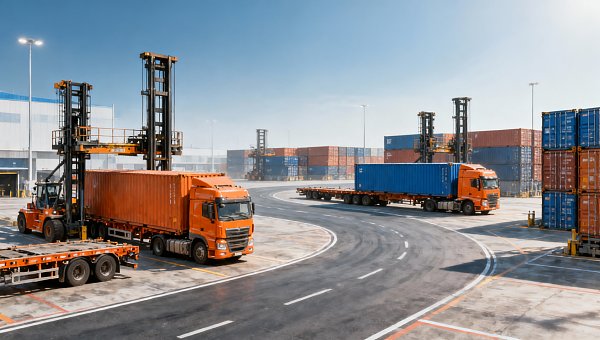
In most heavy-duty logistics environments, delays start before the truck actually moves. The truck may arrive on time, yet still lose hours because the loading slot is not ready, the container is not staged correctly, the paperwork is incomplete, or the handling equipment does not match the cargo plan.
Common causes include:
- Uncoordinated scheduling: trucks, drivers, warehouse teams, and yard staff work from different timing assumptions.
- Slow loading or unloading: forklifts, cranes, or labor teams are unavailable or overloaded.
- Equipment mismatch: the selected truck, trailer, or lifting equipment is not ideal for the container type, cargo weight, route condition, or site environment.
- Documentation errors: customs files, gate passes, cargo manifests, delivery instructions, or compliance records are missing or inconsistent.
- Poor yard flow: congestion at entry gates, weighing stations, temporary storage zones, or exit checkpoints increases idle time.
- Weak communication: buyers, carriers, dispatchers, and loading teams do not get real-time updates when plans change.
For target readers such as sourcing teams and business evaluators, the key insight is this: many truck container delays are process failures, but a large share also comes from using transport equipment that is not well suited to the actual job. That is why operational review and equipment selection should be evaluated together.
How Can Operators Reduce Delays in Daily Container Handling?
The most effective improvements usually come from standardizing routine operations. Even simple process upgrades can create major gains in truck turnaround time.
1. Use appointment-based loading and unloading.
Time-slot management helps avoid bunching at the yard. Instead of allowing random arrivals, assign loading windows based on cargo readiness, labor capacity, and site handling speed. This is especially important when fleets include multiple vehicle types such as lowbed trailers, refrigerated trucks, and construction transport vehicles that need different preparation times.
2. Pre-stage containers and cargo.
If the truck arrives before the cargo is prepared, delay is almost guaranteed. Pre-staging means the container, palletized goods, lifting plan, and loading tools are ready before the vehicle enters the operation zone.
3. Build a gate-to-exit workflow.
Map each step: arrival, check-in, inspection, queueing, loading, securing, document sign-off, and departure. Then measure where waiting time accumulates. Many companies discover that loading itself is not the biggest issue; the real bottleneck is waiting for approval or access.
4. Standardize loading checklists.
A checklist reduces errors in weight confirmation, cargo securing, temperature settings for refrigerated transport, lifting point verification, and trailer compatibility. This lowers rework and prevents trucks from being held after loading.
5. Improve dispatch visibility.
Dispatch teams need live updates on truck position, estimated arrival time, loading readiness, and unexpected route constraints. Better visibility helps reduce yard congestion and enables rescheduling before a delay becomes critical.
6. Train teams around turnaround KPIs.
Drivers, loaders, warehouse staff, and supervisors should work from shared metrics such as average waiting time, loading time, departure delay, and failed loading incidents. What gets measured gets improved.
Why Does Equipment Selection Matter So Much in Container Efficiency?
Many companies focus heavily on scheduling but underestimate how much delay comes from the wrong vehicle or handling setup. In truck container operations, equipment suitability directly affects loading speed, route flexibility, cargo safety, and site access.
Here is how equipment choice influences delay reduction:
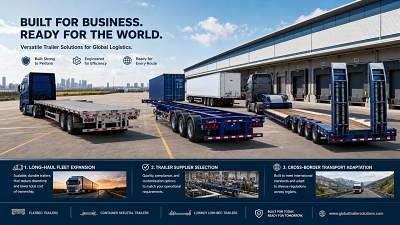
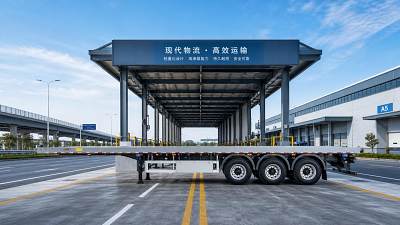
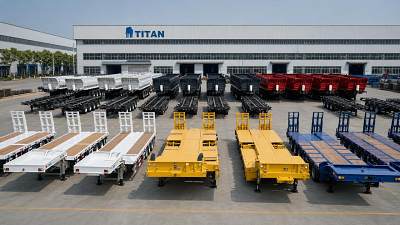
- Lowbed trailers are better suited for oversized machinery and construction equipment. Using a standard trailer for these loads often creates loading complications, height restrictions, and cargo securing delays.
- Truck mounted cranes can reduce dependence on external lifting equipment at sites where fixed cranes are unavailable. This is especially useful for remote construction, municipal engineering, and infrastructure projects.
- Refrigerated trucks require stable temperature control, quick door operation, and efficient dock planning. Delays in loading can affect cargo quality and increase spoilage risk.
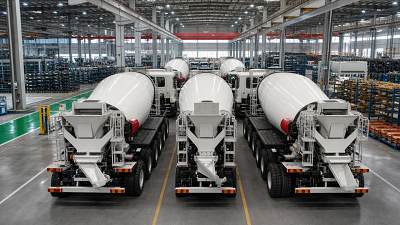
- Mixer trucks operate within strict delivery timing constraints. Delays in dispatch or site access can directly affect material usability and project efficiency.
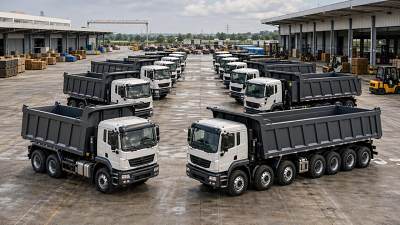
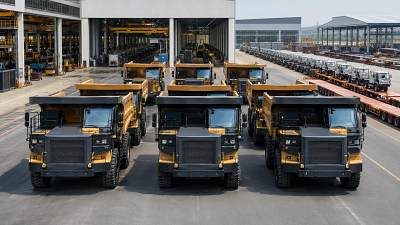
- Construction truck fleets often operate in rough terrain, temporary road conditions, or multi-stop project environments. Vehicle durability, axle configuration, loading access, and maintenance reliability all affect schedule performance.
For procurement professionals, this means supplier evaluation should go beyond unit price. Ask whether the truck or trailer configuration matches your actual operating conditions. A lower-cost option may generate higher long-term delay costs if it creates slow loading, poor route adaptability, or frequent downtime.
What Should Buyers and Evaluators Check Before Choosing Transport Equipment or Suppliers?
If your goal is to cut delays in truck container operations, supplier selection should include operational criteria, not just commercial terms. This is where many buyers can improve decision quality.
Key evaluation points include:
- Application fit: Is the vehicle designed for port drayage, industrial delivery, construction transport, municipal work, or cross-border freight?
- Payload and dimensional compatibility: Can it handle your typical container size, cargo type, and loading pattern without repeated adjustment?
- Loading and unloading support: Does the configuration improve handling efficiency, such as hydraulic systems, crane integration, trailer access design, or refrigeration performance?
- Reliability and maintenance network: Frequent breakdowns create hidden delay costs. Review service coverage, spare parts availability, and maintenance response.
- Driver and operator usability: Cab ergonomics, control systems, visibility, and ease of operation influence both speed and safety.
- Compliance and documentation readiness: This is essential for international buyers and cross-border operators who need consistent certification and export support.
- Supplier communication capability: A reliable supplier should provide clear specifications, lead times, technical guidance, and after-sales support.
For distributors and agents, these factors are also important for portfolio planning. Products that reduce customer downtime and operational friction are easier to position in the market and more likely to generate repeat business.
Which Process Improvements Deliver the Fastest Return?
Not every business needs a full digital transformation to reduce delays. In many cases, the fastest return comes from improving a few high-impact steps.
The most practical quick wins are:
- Create a unified scheduling board for warehouse, dispatch, and transport teams.
- Separate priority cargo from standard cargo to avoid queue conflicts.
- Introduce pre-arrival document checks so trucks are not stopped at the gate for missing information.
- Match cargo type to the correct vehicle class instead of assigning based only on availability.
- Review loading zone layout to reduce unnecessary truck movement and reversing time.
- Track recurring delay causes by supplier, route, site, or cargo type so improvement decisions are evidence-based.
These changes are especially valuable in operations that handle mixed transport tasks across logistics, mining, infrastructure development, and municipal engineering. In those settings, a standardized process with flexible equipment planning often delivers better results than simply increasing fleet size.
How Can Better Coordination Across the Supply Chain Prevent Repeat Delays?
Truck container efficiency is not controlled by one party alone. Carriers, shippers, buyers, warehouse teams, and equipment suppliers all affect the result. When communication is fragmented, delays repeat even if each company believes it is performing well internally.
To improve coordination:
- Share arrival forecasts and loading readiness updates earlier.
- Use common handling instructions across suppliers and sites.
- Set escalation rules for late trucks, missing documents, and equipment issues.
- Align procurement decisions with operations feedback.
- Review supplier performance using delivery accuracy and turnaround efficiency, not price alone.
This is particularly relevant in global heavy truck sourcing. International buyers often compare multiple manufacturers and suppliers, but the best commercial decision is usually the one that supports long-term operational reliability, efficient parts support, and lower delay risk in real working conditions.
Conclusion
To cut delays in truck container operations, companies should focus on the factors that create the biggest real-world impact: scheduling discipline, loading readiness, yard workflow, documentation accuracy, and equipment suitability. For buyers, procurement teams, distributors, and business evaluators, the most effective strategy is to connect operational analysis with better vehicle and supplier selection.
Whether you are assessing construction truck fleets, lowbed trailers, truck mounted cranes, refrigerated trucks, or mixer trucks, the right decision is the one that improves container flow, reduces idle time, and supports reliable delivery performance. In heavy-duty transport, faster operations do not come from speed alone. They come from better coordination, better equipment fit, and better decision-making across the supply chain.
Trending News
- Truck Tipper Exporter Compliance Risks in Cross-Border Deliveries
- Truck Trailer Distributor Trends Shaping Regional Market Growth in 2026
- Crane Truck for Sale: 7 Checks Before You Choose a Model
- How to Compare a Truck Trailer Supplier Beyond Unit Price
- Bulldozer for Construction: Key Specs That Affect Earthmoving Efficiency
Tag
Recommended News
 Fleet ManagementDelivery Truck Supplier in USA: What Matters Most for Fleet ExpansionDelivery truck supplier in USA selection impacts uptime, cost, and fleet growth. Learn how to compare suppliers by route needs, service support, and long-term scalability.
 Fleet ManagementHow to Choose Commercial Vehicle Parts for Warehouse Fleet UptimeCommercial vehicle parts for warehouse fleets directly impact uptime. Learn how to choose durable, accurate-fit parts and reliable suppliers to reduce downtime and control maintenance costs.
 Fleet ManagementWhy a Light Duty Truck Manufacturer in USA Still Matters for Fleet ReliabilityLight duty truck manufacturer in USA choices still shape fleet uptime, parts access, and lifecycle value. See what buyers should compare for more reliable operations.
 Fleet ManagementHow to Plan a Dump Truck Bulk Order for Multi-Site ProjectsDump truck bulk order planning for multi-site projects made simple. Learn how to balance specs, delivery, support, and total cost for smarter fleet decisions.
 Fleet ManagementWhat Makes a Delivery Truck Supplier Cost-Effective in Real OperationsDelivery truck supplier with cost-effective solutions: learn how to cut fuel, maintenance, and downtime costs with a practical checklist for smarter fleet purchasing.
 Fleet ManagementHow Low-Maintenance Truck Spare Parts Suppliers Help Cut DowntimeTruck spare parts supplier with low maintenance benefits help fleets cut downtime, speed repairs, and lower service costs. Discover how smarter sourcing boosts uptime.
 Fleet ManagementHow Commercial Vehicle Parts for Warehouse Improve Daily UptimeCommercial vehicle parts for warehouse operations help reduce downtime, improve safety, and keep trucks and trailers moving efficiently. Discover how the right parts boost daily uptime.
 Fleet ManagementCommercial Vehicle Parts for Cold Storage: Reducing Failure in Daily UseCommercial vehicle parts for cold storage help reduce daily failures, protect cargo quality, and improve fleet uptime. Discover scenario-based maintenance insights for refrigerated transport.
 Fleet ManagementDelivery Truck Supplier in USA: What to Compare Before Expanding a FleetDelivery truck supplier in USA comparison guide for fleet expansion. Learn how to evaluate quality, service, parts support, and lifecycle cost before you invest.
 Fleet ManagementBest Commercial Vehicle Parts for Warehouse OperationsCommercial vehicle parts for warehouse operations should boost safety, uptime, and load control. Explore the best brake, tire, steering, and lighting solutions for efficient fleet performance.
 Fleet ManagementTruck Cement Mixer Supplier: What to Check Before Fleet ExpansionTruck cement mixer supplier selection can make or break fleet expansion. Learn the key checks on quality, compliance, parts support, and total cost before you buy.
 Fleet ManagementTruck Trailer Supplier Checklist for Long-Haul Fleet ExpansionTruck trailer supplier checklist for long-haul fleet expansion: compare compliance, lifecycle cost, delivery, and support to reduce sourcing risk and scale with confidence.
 Fleet ManagementIs a Lightweight Semi Trailer Manufacturer the Right Fit for High-Frequency RoutesFind out if a semi trailer manufacturer with lightweight design is the smart choice for high-frequency routes, balancing payload, durability, compliance, and long-term fleet savings.
 Fleet ManagementDump Truck Wholesale for Growing Fleets: What to Watch FirstDump truck wholesale buyers: learn what to check first for growing fleets, from specs and compliance to supplier reliability, to cut risk, control costs, and buy with confidence.
 Fleet ManagementDump Truck Bulk Order Timing: How to Avoid Capacity BottlenecksDump truck bulk order timing can make or break delivery schedules. Learn when to order, spot supplier bottlenecks early, and secure reliable capacity for faster project execution.
 Fleet ManagementHow to Plan a Semi Trailer Bulk Order Without Stock PressureSemi trailer bulk order planning made simple: learn how to balance demand, product mix, supplier control, and phased delivery to reduce stock pressure and improve trailer sales.
 Fleet ManagementChoosing Commercial Vehicle Parts for Cold Storage Without DowntimeCommercial vehicle parts for cold storage: learn how to choose reliable batteries, seals, hoses, and brake parts to reduce downtime, protect cargo, and improve fleet uptime.
 Fleet ManagementBest Commercial Vehicle Parts for Warehouse Fleet UptimeCommercial vehicle parts for warehouse fleets: discover the best brake, electrical, suspension, and service parts to reduce downtime, speed repairs, and keep operations moving.
 Fleet ManagementHow an Excavator Supplier Affects Uptime After DeliveryExcavator supplier performance directly affects uptime after delivery. Learn how parts speed, technical support, and service response reduce downtime and protect fleet efficiency.
 Fleet ManagementCold weather truck cooling system mistakes that lead to downtimeTruck cooling system mistakes in cold weather can cause costly downtime. Learn how truck pump, truck fuel system, truck electrical system, and truck control unit issues affect fleet reliability.
 Fleet ManagementTruck steering system play: repair now or monitor longer?Truck steering system play: repair now or monitor longer? Learn when to act, how truck wheel, truck tire, truck control unit, truck fuel system, cooling and exhaust checks affect fleet safety and cost.
 Fleet ManagementWater sprinkler truck capacity choices that affect route efficiencyWater sprinkler truck capacity choices affect route efficiency, fuel cost, and uptime. Compare truck pump, truck fuel system, truck tire, and truck control unit factors before you buy.
 Fleet ManagementOff Road Truck Tires: When Lower Cost Leads to More DowntimeOff road truck tire costs go beyond price. Learn how downtime, wheel loader workflow, hydraulic pump efficiency, truck trailer use, and fleet reliability are affected—and how to buy smarter.
 Fleet ManagementTruck Logging Systems: Which Data Actually Improves Fleet Control?Truck logging insights that improve fleet control: compare fuel, maintenance, and safety data for truck dumper, truck excavator, truck wing, lighting and air system decisions.
 Fleet ManagementTruck leasing vs. outright purchase: Hidden TCO differences in cold-climate operationsDiscover hidden TCO differences in cold climates: truck leasing vs. purchase impacts hydraulic pump reliability, fuel injection pump performance, truck off-road durability & more.