Semi Trailer Supplier Delays Often Start With Spec Mismatch
When delivery timelines slip, the real issue often begins long before production—with unclear specifications between buyer and semi trailer supplier. For companies comparing truck trailer for sale options, evaluating semi trailer price, or planning truck trailer wholesale purchases, understanding how spec mismatch affects cost, lead time, and sourcing accuracy is essential. This article explains where delays start and how smarter supplier alignment reduces risk.
Why semi trailer supplier delays often begin before production
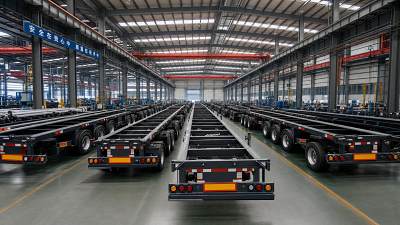
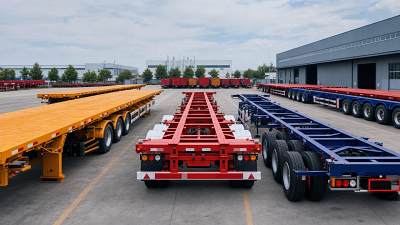
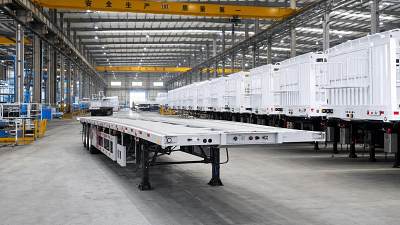
In the road transport equipment sector, delays rarely start on the factory floor. They usually start in the quotation stage, when the buyer and the semi trailer supplier use the same product name but mean different technical configurations. A “flatbed semi trailer,” a “low bed trailer,” or a “container chassis” can vary widely in axle count, suspension type, deck height, king pin size, tire specification, braking system, and loading requirement.
For procurement teams, this mismatch creates a hidden chain reaction. First, the supplier quotes based on an assumed standard configuration. Then the buyer clarifies application details 7–15 days later. Engineering revises drawings, purchasing checks parts availability, and production slots shift. What looked like a simple order becomes a custom project, even if the buyer only intended a minor change.
This issue is especially common in cross-border sourcing, where distributors, traders, and end users may each describe the same truck trailer for sale in different commercial terms. A business evaluator may focus on semi trailer price, while the operations team cares more about payload class, local road restrictions, or compatibility with an existing tractor fleet. If those viewpoints are not aligned early, the final specification drifts.
The Global Heavy Truck Industry Platform helps reduce this early-stage confusion by connecting buyers with suppliers across the heavy truck supply chain and by supporting product comparison, industry research, and technical sourcing. In a market where lead times can move from 3–4 weeks for stock-oriented units to 8–12 weeks for tailored builds, clearer specifications are often the fastest way to protect delivery schedules.
Where mismatch usually appears
- Payload and loading method are not defined clearly, such as static cargo weight versus dynamic loading frequency.
- Dimensional requirements are incomplete, including overall length, deck height, ramp angle, and turning radius.
- Regional compliance needs are discovered too late, especially for lighting, braking, reflective marking, or axle load rules.
- The buyer requests a low semi trailer price first, then adds hydraulic ramps, reinforced frame members, or imported components afterward.
The sourcing lesson is simple: a delayed order is often an underdefined order. Before comparing suppliers, buyers should compare assumptions.
Which specification gaps create the biggest delivery risk?
Not every missing detail causes the same level of disruption. Some specification gaps can be corrected in 1–3 days, while others affect frame design, axle procurement, or legal compliance and may add several weeks. For procurement staff evaluating truck trailer wholesale projects, knowing which details are critical helps prioritize supplier communication and internal approval.
The table below summarizes common mismatch areas in semi trailer sourcing and how they affect lead time, cost, and supplier coordination. This is particularly useful for buyers comparing multiple semi trailer supplier offers that appear similar on price but differ in actual scope.
The highest-risk mismatches are the ones tied to structure, compliance, and operating conditions. Cosmetic items such as paint tone or decal layout may be handled later, but axle load distribution, coupling compatibility, and braking interface should be locked before final order confirmation. In many trailer programs, these 3 categories determine whether the project runs as a standard build or a custom build.
Three specification areas that deserve early confirmation
1. Load profile and road condition
A semi trailer designed for paved highway container movement is not automatically suitable for quarry access roads or construction site haulage. Buyers should define average payload, peak load, load center, loading frequency, and road surface condition. Even a difference between occasional overload and continuous heavy-duty use can change frame reinforcement requirements.
2. Tractor compatibility
Semi trailer procurement should always consider the tractor unit already in service. Fifth wheel height, king pin standard, brake line interface, and electrical connector type need to match. If the trailer fits the quote but not the tractor, delivery is technically on time but commercially late because the unit cannot enter operation immediately.
3. Destination market requirements
For exporters, local regulation can affect dimensions, lighting placement, reflective tape, mudguard arrangement, underrun protection, and documentation. These are not minor details. They can influence production drawings, pre-shipment inspection points, and even packing method for CKD or SKD transport models.
How to compare semi trailer supplier offers without being misled by price
A lower semi trailer price is not always the better commercial result. In B2B road transport equipment sourcing, price only becomes meaningful after scope consistency is verified. Two truck trailer for sale quotations may differ by 8%–15%, yet one includes reinforced landing gear, branded axles, and export packing, while the other excludes them. If buyers compare totals without comparing structure, delay risk remains hidden.
For information researchers and business evaluators, the practical goal is to normalize offers before approval. That means asking every semi trailer supplier to quote against the same baseline specification, commercial terms, and documentation list. Once the baseline is fixed, cost analysis becomes more accurate and supplier capability becomes easier to assess.
The following comparison matrix can support RFQ review, distributor selection, or truck trailer wholesale planning. It is especially useful when sourcing from multiple countries or balancing standard products against semi-custom builds.
A reliable comparison should separate four layers: base vehicle scope, optional configuration, compliance requirements, and logistics terms. If those layers are mixed together, procurement teams may choose the cheapest quotation but still face a higher final spend through rework, expedited shipping, or local modification after arrival.
A practical 4-step RFQ discipline
- Prepare one specification sheet for all bidders, covering at least 10–12 key fields such as payload, dimensions, axle type, suspension, tires, braking, and destination market.
- Ask each supplier to identify standard items versus optional items in separate lines.
- Request a draft drawing or configuration summary before deposit payment.
- Confirm which date defines lead time: deposit receipt, drawing approval, or production slot release.
This process takes more effort in the first 3–5 days, but it usually saves much more time than repeated redesign after order release.
What should buyers define before placing a truck trailer wholesale order?
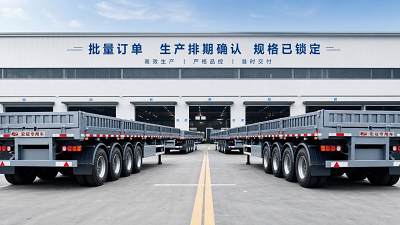
Wholesale and dealer purchases carry a different risk profile from one-off retail sourcing. When a distributor buys 5 units, 10 units, or mixed trailer types for inventory, a specification error multiplies across the whole batch. The result is not just a delayed shipment. It can become slow stock, warranty friction, or reduced resale confidence in the local market.
This is why distributors and agents should define not only the product but also the intended customer segment. A trailer package for general logistics, fuel transport support, construction material haulage, or machinery movement will prioritize different features. The better the market positioning, the more accurate the supplier alignment.
Before finalizing a truck trailer wholesale order, buyers should run a structured pre-order checklist. The checklist below can be used by procurement teams, dealers, and commercial evaluators working through platform-based supplier discovery.
Six checks before order confirmation
- Define the main cargo category and weight range, such as machinery, containers, aggregate, steel products, or palletized freight.
- Confirm whether the order is for stock rotation, named project delivery, or tender response, because urgency and customization tolerance differ.
- Check local registration and road use constraints, including axle load limits, lighting norms, and trailer dimension thresholds.
- Clarify spare parts expectations for the first 6–12 months, especially consumables and commonly replaced components.
- Verify packaging and shipping mode, such as complete unit, nested loading, or knock-down arrangement.
- Agree on document package, including commercial invoice, packing list, configuration confirmation, and any required inspection records.
For many buyers, these checks matter as much as the unit price itself. A lower quote without operational fit can weaken fleet utilization and create secondary sourcing costs later.
Typical lead-time structure buyers should ask about
Instead of asking only “How many days for delivery?”, buyers should break the answer into stages. A practical structure includes 2–5 days for technical clarification, 3–7 days for drawing approval where needed, 2–6 weeks for production depending on complexity and quantity, and an additional shipping window based on route and port conditions. This staged view reveals where delays are most likely to occur.
The Global Heavy Truck Industry Platform adds value here by helping buyers compare suppliers, understand market categories, and access industry buying guides. That reduces the time spent filtering mismatched offers and improves the quality of pre-order communication with manufacturers and exporters.
How standards, compliance, and documentation affect semi trailer delivery
In international trailer sourcing, compliance is often treated as a final-stage issue, but in practice it should be integrated into the technical specification from the beginning. A trailer may be structurally sound yet still be delayed due to missing reflectors, incompatible brake connectors, incorrect plate layout, or documentation gaps required for import or registration.
Because destination markets differ, buyers should avoid assuming that one export model fits all. The right question is not “Is this trailer compliant?” but “Compliant with which market and for which operating scenario?” That is a critical distinction for project cargo teams, distributors, and procurement managers working across several countries.
The table below outlines a practical compliance review framework that buyers can use before locking the final trailer specification with a semi trailer supplier.
For buyers, compliance planning is not just about risk avoidance. It also improves the accuracy of semi trailer price comparisons. A cheaper quote may simply leave more compliance work to the buyer. When that hidden work is added back in, the apparent savings may disappear.
A useful documentation habit
Ask the supplier to issue a final configuration confirmation before production starts. This document should summarize at least the main dimensions, axle and suspension arrangement, tires, braking system, accessory list, and market-specific requests. Even a 1-page or 2-page signed confirmation can prevent many late-stage disputes.
This is where a professional B2B sourcing platform becomes valuable. By combining supplier discovery, product categorization, and industry knowledge, the Global Heavy Truck Industry Platform supports better communication between technical, commercial, and purchasing teams that do not always use the same decision language.
FAQ: common buyer questions about spec mismatch and trailer lead time
How can I tell whether a semi trailer supplier quote is truly complete?
Check whether the quote identifies the core build elements clearly: axle count and rating, suspension type, dimensions, tire specification, brake arrangement, landing gear, accessory list, and delivery terms. If more than 3–4 of these items are described only as “standard,” ask for a technical annex or drawing summary. Complete scope is more important than a fast first quote.
What is a reasonable lead time for a truck trailer for sale order?
There is no single answer, because standard inventory-based units and customized production units are different. As a practical range, buyers often see several days for clarification, a few days for approval, and a few weeks for production. More important than the total number is whether the timeline starts after specification lock or before it. If that point is unclear, delay risk increases.
Why does semi trailer price change after the first quotation?
Price changes usually happen because the original inquiry did not define enough technical scope. Once reinforced beams, hydraulic ramps, air suspension, upgraded tires, or market-specific electrical parts are added, the supplier is no longer quoting the same product. The solution is not simply harder negotiation. It is more precise RFQ preparation.
Is truck trailer wholesale purchasing always more efficient?
It can be more efficient when specifications are standardized across the batch and the buyer has a clear sales or fleet deployment plan. However, if the batch combines multiple end-user needs without proper grouping, wholesale can magnify mismatch. A better approach is to cluster orders into 2–3 use-case families, then source each family against a stable specification sheet.
Why choose us for global trailer sourcing and specification alignment
For buyers in commercial vehicles and road transport equipment, the challenge is not only finding a truck trailer for sale. The real challenge is finding a supplier match that fits application, budget, compliance, and timeline at the same time. That is where the Global Heavy Truck Industry Platform creates practical value across the heavy truck supply chain.
Our platform connects manufacturers, suppliers, distributors, and buyers across trailers, semi-trailers, truck chassis, complete trucks, construction machinery, and spare parts. This wider industry coverage matters because trailer decisions are rarely isolated. Buyers often need to evaluate tractor compatibility, spare parts support, market positioning, and multi-category sourcing within one project cycle.
If you are comparing semi trailer supplier options, planning truck trailer wholesale procurement, or reviewing semi trailer price against lead time and specification scope, you can consult us for focused support in the areas that matter most:
- Parameter confirmation, including payload range, axle setup, suspension choice, deck dimensions, and tractor matching points.
- Product selection support for flatbed trailers, low bed trailers, container chassis, tipper trailers, and other transport equipment categories.
- Lead-time review, with a stage-by-stage view of clarification, drawing approval, production readiness, and shipment planning.
- Custom solution discussion for project cargo, distributor stock planning, and destination-market adaptation.
- Documentation and compliance guidance based on common export and market-entry considerations.
- Quotation communication support to help buyers compare offers on a like-for-like basis instead of headline price only.
If your current sourcing process is slowed by unclear drawings, changing requirements, or inconsistent supplier responses, the next step is to organize the specification before the order. Share your target application, configuration priorities, delivery expectations, and market requirements, and we can help you identify suitable suppliers and reduce the mismatch that causes preventable delays.
Trending News
- Nanjing Launches First Wind Power Equipment Shipping Route to Pakistan
- Irkeshtam Port’s 24-Hour Freight Clearance Boosts Exports to Kyrgyzstan
- Erenhot-Mongolia 24-Hour Freight Clearance Marks First Anniversary
- China-Europe Railway Express Surpasses 130,000 Trains
- Iran-Pakistan Launch 6 Cross-Border Roads, 3 New Land Ports
Tag
Recommended News
 FAQDelivery Truck for School Transportation: Safety Points Before OrderingDelivery truck supplier for school transportation: review key safety points before ordering, from braking and visibility to compliance and passenger protection.
 FAQDump Truck Sourcing Mistakes That Delay Construction ProjectsDump truck sourcing mistakes can delay construction projects, raise hidden costs, and disrupt site schedules. Learn the key risks to avoid and source smarter for faster, more reliable project delivery.
 FAQIs a Bulldozer for Construction the Right Fit for Your Site ConditionsBulldozer for construction: learn how terrain, soil, slope, and job size determine the right machine fit. Compare site conditions, avoid costly mismatches, and choose with confidence.
 FAQTruck Trailer Bulk Order: How to Avoid Spec Drift Across BatchesTruck trailer bulk order quality can fail when specs drift across batches. Learn how to lock standards, align suppliers, and protect safety, compliance, and delivery consistency.
 FAQWhat a Dump Truck Distributor Should Offer After Vehicle DeliveryDump truck distributor support matters after delivery. Learn what to expect in spare parts, warranty, training, and technical service to reduce downtime and protect your investment.
 FAQHow to Vet a Truck Cement Distributor for Stable After-Sales SupportTruck cement distributor selection starts with after-sales strength. Learn how to vet parts support, technical response, and warranty handling to reduce downtime and choose a reliable partner.
 FAQDump Truck OEM Quality Control Points Before Factory AcceptanceDump truck OEM quality control points before factory acceptance: learn the key checks for welding, hydraulics, brakes, and safety to reduce risk, avoid failures, and choose reliable suppliers.
 FAQTruck Trailer Bulk Order: How to Avoid Spec Drift Across BatchesTruck trailer bulk order quality can fail when specs drift across batches. Learn how to lock standards, align suppliers, and protect safety, compliance, and delivery consistency.
 FAQWhat a Dump Truck Distributor Should Offer After Vehicle DeliveryDump truck distributor support matters after delivery. Learn what to expect in spare parts, warranty, training, and technical service to reduce downtime and protect your investment.
 FAQHow to Vet a Truck Cement Distributor for Stable After-Sales SupportTruck cement distributor selection starts with after-sales strength. Learn how to vet parts support, technical response, and warranty handling to reduce downtime and choose a reliable partner.
 FAQDump Truck OEM Quality Control Points Before Factory AcceptanceDump truck OEM quality control points before factory acceptance: learn the key checks for welding, hydraulics, brakes, and safety to reduce risk, avoid failures, and choose reliable suppliers.
 FAQTruck Trailer Bulk Order: How to Avoid Spec Drift Across BatchesTruck trailer bulk order quality can fail when specs drift across batches. Learn how to lock standards, align suppliers, and protect safety, compliance, and delivery consistency.
 FAQWhat a Dump Truck Distributor Should Offer After Vehicle DeliveryDump truck distributor support matters after delivery. Learn what to expect in spare parts, warranty, training, and technical service to reduce downtime and protect your investment.
 FAQHow to Vet a Truck Cement Distributor for Stable After-Sales SupportTruck cement distributor selection starts with after-sales strength. Learn how to vet parts support, technical response, and warranty handling to reduce downtime and choose a reliable partner.
 FAQHeavy Truck Chassis Manufacturer With R&D Capability: Questions Worth Asking FirstHeavy truck chassis manufacturer with R&D capability: discover the key procurement questions to assess customization, compliance, durability, and long-term supply before you buy.
 FAQHow to Read a Water Truck Quotation Without Missing Hidden CostsWater truck quotation guide: learn how to spot hidden costs in specs, logistics, compliance, and after-sales terms so you can compare offers accurately and buy with confidence.
 FAQHow to Read a Water Truck Quotation Before You SignWater truck quotation review guide: learn how to check specs, pricing, delivery terms, and warranty details before signing to reduce risk and secure better value.
 FAQSemi Trailer Bulk Order Terms That Can Hurt You After DeliverySemi trailer bulk order risks often appear after delivery. Learn which warranty, inspection, spare parts, and payment terms can raise costs, delay operations, and weaken your claims.
 FAQSemi Trailer OEM or ODM? A Practical Guide for Custom OrdersSemi trailer OEM or ODM? Learn how to compare cost, lead time, compliance, and customization to choose the right semi trailer OEM strategy for smarter custom orders.
 FAQSemi Trailer Bulk Order Checklist Before You Confirm Production SlotsSemi trailer bulk order buyers: use this pre-production checklist to lock specs, lead times, compliance, and payment terms before confirming factory slots with confidence.
 FAQTruck Cement Supplier FAQ: Delivery, Capacity, and After-SalesTruck cement supplier FAQ covering delivery lead times, transport capacity, fleet options, and after-sales support to help buyers compare suppliers and source with confidence.
 FAQDump Truck Supplier with Quick Delivery: How to Avoid Delays After SigningDump truck supplier with quick delivery: learn how to verify production, parts, logistics, and documents before signing to avoid costly delays and choose a reliable partner faster.
 FAQTruck Trailer Bulk Order: 7 Details That Prevent Spec DisputesTruck trailer bulk order success starts with clear specs. Discover 7 critical details that reduce disputes, protect compliance, and improve trailer purchasing decisions.
 FAQTruck Tipper Sourcing Mistakes That Lead to Delays and ReworkTruck tipper sourcing mistakes can trigger delays, fitment issues, and costly rework. Learn how to avoid spec gaps, compare suppliers smarter, and choose the right tipper for every job.
 FAQAre Fireproof Semi Trailers Necessary for Sensitive FreightSemi trailer manufacturer with fireproof materials: learn when fireproof semi trailers are essential for sensitive freight, how to reduce risk, and what buyers should verify before sourcing.