Truck Trailer Wholesale or Factory Direct? The Real Difference
Choosing between truck trailer wholesale and factory direct sourcing can significantly affect cost, quality control, and delivery efficiency. Whether you are comparing truck trailer for sale options, evaluating truck trailer price, or searching for a reliable semi trailer supplier, understanding the real difference is essential. This guide helps buyers, distributors, and sourcing teams make smarter decisions in a competitive global market.
What is the real difference between truck trailer wholesale and factory direct?
In the road transport equipment sector, these two sourcing paths serve different commercial purposes. Truck trailer wholesale usually means buying through a trader, distributor, export company, or channel partner that consolidates products from one or more manufacturers. Factory direct means dealing more closely with the actual semi trailer supplier or production plant responsible for fabrication, configuration, and quality control.
For many buyers, the difference is not only about price. It also affects lead time, communication speed, customization depth, after-sales coordination, and risk exposure. A wholesale channel may respond faster for standard stock units in small to medium batches, while a factory direct model is often more suitable for technical customization, fleet-level procurement, and long-term distributor development.
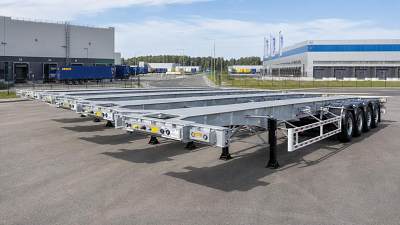
In practical procurement, there are at least 4 core decision variables: required quantity, configuration complexity, delivery window, and market responsibility. If you need 2–5 standard flatbed or skeletal trailers quickly, a wholesale route may reduce transaction friction. If you need 20–50 units with axle, suspension, landing gear, braking, and deck specifications aligned to a target market, factory direct often creates stronger control.
The confusion grows because many export suppliers present themselves as factories even when they mainly coordinate production externally. That is why buyers should verify not only the company profile, but also production capability, inspection process, engineering response, and export documentation support before comparing truck trailer price.
A quick decision framework for B2B buyers
- Choose wholesale when you need faster access to ready configurations, lower communication burden, and a broader shortlist of truck trailer for sale options from multiple sources.
- Choose factory direct when product consistency, technical documentation, repeat orders, and component traceability matter across 6–12 months of planned procurement.
- Use a platform-based sourcing approach when you want to compare both channels side by side, validate supplier claims, and reduce information asymmetry in cross-border buying.
This is where a specialized B2B platform becomes useful. The Global Heavy Truck Industry Platform connects buyers with manufacturers, suppliers, and distributors across trailers, trucks, construction machinery, and parts. Instead of relying on a single sales narrative, procurement teams can compare suppliers, review product categories, and evaluate sourcing models based on real application needs.
Which sourcing model fits your procurement scenario better?
The right choice depends on how the trailer will be used, how often you buy, and what your downstream customers expect. A logistics operator moving containers between ports and inland terminals may prioritize interchangeability and short replenishment cycles. A distributor entering a new market may care more about branding support, model range, and stable factory communication over the next 2–4 quarters.
Application type also changes the sourcing logic. Semi trailers for general cargo, bulk transport, construction support, mining access roads, and municipal projects do not carry the same technical risk. In tougher conditions, the value of factory engineering support rises because frame structure, suspension type, brake setup, and axle capacity directly affect durability and operating cost.
Wholesale can still be highly competitive in repeatable configurations. For example, standard container chassis, fence cargo trailers, or basic lowbed units often move through channel inventories more efficiently than fully customized orders. In those cases, buyers may gain from shorter negotiation cycles of 7–15 days and fewer engineering revisions before production release.
Factory direct becomes more compelling when your project requires 3 or more custom parameters at the same time, such as axle load matching, deck length revision, king pin positioning, optional hydraulic ramps, or market-specific electrical and brake interfaces. Once specification complexity increases, the cost of miscommunication through intermediaries can become higher than any apparent purchase discount.
Typical buyer situations and recommended sourcing route
The following comparison helps information researchers, purchasing managers, commercial evaluators, and distributors understand where each model performs best in the land transport equipment industry.
This comparison shows that the best answer is rarely universal. It depends on order size, technical complexity, and the buyer’s ability to manage supplier verification. A professional sourcing platform helps narrow options faster by presenting multiple semi trailer supplier profiles, product lines, and market information in one place.
Scenario-based buying checklist
- Define whether the order is stock-driven, project-driven, or channel-development-driven.
- Separate mandatory specifications from negotiable ones across at least 5 items, such as payload class, suspension, deck size, tire setup, and brake standard.
- Check whether delivery must happen within 2–6 weeks or can follow a planned production cycle of 30–60 days.
- Assess who will own warranty coordination, local service response, and spare parts continuity after shipment.
How do cost, control, and delivery differ in real transactions?
Many buyers begin with truck trailer price, but unit price alone does not reveal total procurement value. In land transport equipment, cost should be read across at least 5 layers: ex-works or export quote, optional configuration cost, inspection cost, inland logistics and port handling, and post-delivery service risk. A lower headline quote may still lead to a higher total landed cost if technical errors or delays occur.
Wholesale pricing may include channel markup, but it can also reduce hidden coordination costs. A strong wholesaler may consolidate communication, prepare export papers, combine multiple equipment categories, and shorten selection time. This can be valuable when procurement teams handle trailers, truck chassis, spare parts, and construction machinery in the same sourcing cycle.
Factory direct pricing often improves when the order reaches planned production scale. For medium to larger runs, buyers may gain better visibility into steel structure options, axle brands, braking systems, wiring arrangements, and painting processes. That transparency helps commercial evaluators judge whether the quoted truck trailer for sale represents a true like-for-like comparison.
Delivery control also differs. A factory can usually confirm production milestones more accurately, such as drawing approval, material preparation, assembly, surface treatment, final inspection, and shipment release. A wholesale supplier may still manage this well, but only if its upstream coordination is disciplined and documented.
Cost and control comparison for trailer sourcing
Before selecting a sourcing path, compare not just selling price but also process control, rework risk, and timeline predictability. The matrix below is useful for RFQ review and supplier meetings.
The key point is balance. Wholesale may lower coordination burden. Factory direct may improve engineering control. The right procurement decision compares total commercial efficiency, not just the initial number on a quotation sheet.
Where hidden costs usually appear
- Specification mismatch discovered after deposit, especially on axle ratings, ramp type, brake interfaces, or electrical connection standard.
- Slow approval cycles when drawings pass through 2–3 communication layers before reaching engineering staff.
- Incomplete compliance preparation for target markets that require clear documentation on dimensions, lighting, reflectors, or braking systems.
- Weak spare parts planning for wear items needed during the first 6–12 months of operation.
What should buyers verify before choosing a semi trailer supplier?
Whether you source through wholesale or factory direct, supplier verification remains the decisive step. In cross-border trade, a polished quotation does not replace evidence of capability. Buyers should confirm at least 6 checkpoints: product scope, production or coordination model, engineering response, inspection process, export experience, and after-sales support path.
For a truck trailer for sale inquiry, ask for specification sheets that clearly state dimensions, axle arrangement, suspension type, tire quantity, braking configuration, king pin specification, and loading design intent. If the supplier cannot provide structured documentation within a reasonable response cycle of 2–5 working days, that may indicate weak technical discipline.
Compliance should also be discussed early. Different markets may require different roadworthiness practices, lighting setups, conspicuity markings, mechanical brake compatibility, ABS-related considerations, or documentation formats. Even when no formal certification is mandatory for the transaction itself, importers still need equipment aligned with local registration and operating conditions.
A specialized industry platform adds value here because it helps buyers move beyond isolated cold outreach. The Global Heavy Truck Industry Platform offers product discovery, supplier comparison, industry insights, and multilingual information support across truck chassis, complete trucks, trailers, semi trailers, construction machinery, and spare parts. That wider context improves supplier screening quality.
Practical verification points before placing an order
- Confirm whether the supplier is acting as manufacturer, trading company, or integrated sourcing coordinator, and match that role to your order objective.
- Request at least 1 full specification sheet and 1 sample inspection checklist for a similar trailer category.
- Clarify the standard lead time range for production, usually discussed in windows such as 20–45 days or 30–60 days depending on configuration complexity.
- Verify spare parts support for wear items and key assemblies for the first operating cycle, often planned for 6 months or 1 year.
Common documents worth requesting
Buyers do not always need highly complex technical files, but they should request enough to compare offers properly. Useful documents include general arrangement drawings, BOM-level option descriptions, inspection records, packing plans, and shipping dimension confirmations. For distributors and agents, brand presentation materials and model range summaries also support channel development decisions.
When reviewing these documents, focus on consistency. If the quotation, drawing, and technical sheet describe different axle counts or deck dimensions, resolve the gap before any payment milestone. In trailer sourcing, small documentation mismatches often become large operational problems after shipment.
How can distributors and procurement teams reduce risk in cross-border trailer sourcing?
Risk reduction starts with a structured buying process, not with reactive problem solving. Many failed purchases happen because sourcing teams move from price inquiry straight to deposit without locking the decision path. A better method is to divide the process into 4 stages: requirement definition, supplier comparison, technical confirmation, and delivery execution.
For distributors, one additional layer matters: channel sustainability. A supplier may offer an attractive truck trailer price today but fail to support sample refinement, local market adaptation, or repeat orders over the next 3–4 procurement cycles. That is why commercial evaluators should score supplier fit based on both immediate transaction value and future cooperation potential.
Information researchers often underestimate the value of cross-category visibility. When a platform covers complete trucks, truck chassis and cab, trailers and semi trailers, construction machinery, and spare parts together, buyers can compare more than one product family in a single workflow. This is especially useful for infrastructure, mining, and logistics projects that require combined equipment sourcing.
The Global Heavy Truck Industry Platform is built for this broader B2B sourcing reality. Buyers can explore supplier resources, product categories, market insights, industry news, and buying guides in one ecosystem. That reduces time spent switching between fragmented channels and improves the quality of commercial shortlisting.
A low-risk sourcing process for truck trailers
- Define the operating scenario, payload logic, road condition, and required quantity before requesting quotes.
- Shortlist 3–5 suppliers and compare not only truck trailer for sale listings but also response quality, document clarity, and communication discipline.
- Freeze technical details before payment, especially dimensions, axle layout, suspension, brake system, accessories, and spare package.
- Align production checkpoints and shipping milestones so that inspection and dispatch happen on an agreed timeline.
FAQ buyers ask before moving forward
Is factory direct always cheaper than wholesale?
Not always. Factory direct can be more cost-effective for medium or larger volumes and custom configurations, but wholesale may save money when you need small quantities, mixed sourcing, or faster access to existing specifications. The lower-risk option is often the one with fewer correction costs and fewer delays.
What is a normal lead time for a semi trailer supplier?
Lead time depends on whether the trailer is standard or customized. In many transactions, standard or near-standard units may move within 2–4 weeks, while customized production may require 30–60 days. Shipping and port schedules should be added separately to the manufacturing timeline.
What matters more than truck trailer price?
Specification accuracy, quality consistency, compliance readiness, and after-sales coordination often matter more over the life of the asset. A lower quote loses value quickly if the trailer arrives with the wrong suspension, incomplete electrical setup, or missing documentation for import and operation.
Can a platform help if we are still at the research stage?
Yes. Early-stage research benefits from broad comparison. A focused industry platform helps teams study truck trailer categories, compare supplier types, review related equipment lines, and understand market direction before they send formal RFQs. This is particularly useful for buyers building sourcing criteria for the first time.
Why choose us for trailer sourcing support and supplier comparison?
For buyers deciding between wholesale and factory direct, the real challenge is not just finding a product. It is finding a sourcing path that matches application, budget, timeline, and risk tolerance. The Global Heavy Truck Industry Platform supports that process by connecting buyers with manufacturers, suppliers, distributors, and product resources across the global heavy truck supply chain.
Our advantage is practical visibility across multiple equipment categories, including Truck Chassis & Cab, Complete Trucks, Light Trucks, Construction Machinery, Trailers & Semi-Trailers, and Spare Parts. This helps procurement teams compare sourcing routes more efficiently, especially when a project includes several product lines rather than a single trailer order.
If you are evaluating a truck trailer for sale, reviewing truck trailer price across suppliers, or looking for a reliable semi trailer supplier, you can use the platform to narrow options and strengthen decision quality. We can help you organize product parameters, compare supplier roles, review delivery expectations, and identify which sourcing model better fits your business objective.
Contact us to discuss specific procurement needs, including parameter confirmation, product selection, delivery cycle planning, customized trailer solutions, documentation and certification considerations, spare parts matching, and quotation communication. If you are a distributor or agent, you can also consult on market-oriented model selection and long-term supplier matching for channel expansion.
Trending News
- Nanjing Launches First Wind Power Equipment Shipping Route to Pakistan
- Irkeshtam Port’s 24-Hour Freight Clearance Boosts Exports to Kyrgyzstan
- Erenhot-Mongolia 24-Hour Freight Clearance Marks First Anniversary
- China-Europe Railway Express Surpasses 130,000 Trains
- Iran-Pakistan Launch 6 Cross-Border Roads, 3 New Land Ports
Tag
Recommended News
 Fleet ManagementDelivery Truck Supplier in USA: What Matters Most for Fleet ExpansionDelivery truck supplier in USA selection impacts uptime, cost, and fleet growth. Learn how to compare suppliers by route needs, service support, and long-term scalability.
 Buying GuideCost-Effective Delivery Truck Supply: What Low Price May Leave OutDelivery truck supplier with cost-effective solutions: learn what low prices may leave out, from compliance and after-sales support to lifecycle value, so you can source smarter and avoid hidden costs.
 FAQDelivery Truck for School Transportation: Safety Points Before OrderingDelivery truck supplier for school transportation: review key safety points before ordering, from braking and visibility to compliance and passenger protection.
 Buying GuideHow to Choose a Truck Trailer Distributor for Stable After-Sales SupportTruck trailer distributor selection starts with after-sales strength. Learn how to compare service networks, parts support, warranty response, and technical help for long-term uptime.
 Buying GuideWhat to Check Before Choosing a Truck Cement Mixer SupplierTruck cement mixer supplier selection starts with the right checks. Learn how to compare quality, compliance, delivery, and after-sales support to reduce risk and choose with confidence.
 Buying GuideBulldozer Price Guide: What Affects Cost Across Jobsite TypesBulldozer price guide for construction, mining, roadwork, and municipal projects. Compare key cost drivers, avoid overbuying, and source the right dozer with confidence.
 Buying GuideHow to Evaluate a Heavy Truck Chassis Manufacturer with R&D CapabilityHeavy truck chassis manufacturer with R&D capability: learn how to assess engineering strength, validation, compliance, and customization support to choose a reliable supplier.
 Fleet ManagementHow to Choose Commercial Vehicle Parts for Warehouse Fleet UptimeCommercial vehicle parts for warehouse fleets directly impact uptime. Learn how to choose durable, accurate-fit parts and reliable suppliers to reduce downtime and control maintenance costs.
 Buying GuideLogging Truck Supplier Selection: Durability Points That Matter in Tough TerrainLogging truck supplier selection starts with durability. Discover the key strength, traction, braking, and support factors that reduce downtime in tough terrain.
 FAQDump Truck Sourcing Mistakes That Delay Construction ProjectsDump truck sourcing mistakes can delay construction projects, raise hidden costs, and disrupt site schedules. Learn the key risks to avoid and source smarter for faster, more reliable project delivery.
 Buying GuideWhat Makes a Delivery Truck Supplier Suitable for School TransportationDelivery truck supplier for school transportation: learn how to assess safety, compliance, body design, and after-sales support for urban, rural, and school logistics needs.
 Buying GuideHow to Plan a Semi Trailer Bulk Order Without Costly Specification MistakesSemi trailer bulk order planning starts with the right specs. Learn how to avoid costly mistakes, compare suppliers wisely, and secure compliant, fleet-ready trailers.
 Fleet ManagementWhy a Light Duty Truck Manufacturer in USA Still Matters for Fleet ReliabilityLight duty truck manufacturer in USA choices still shape fleet uptime, parts access, and lifecycle value. See what buyers should compare for more reliable operations.
![]() Buying GuideFlatbed Trailer Supplier for Logistics Transportation: What to Check Before OrderingFlatbed trailer supplier for logistics transportation: learn what to check before ordering, from load capacity and compliance to customization and supplier reliability.
Buying GuideFlatbed Trailer Supplier for Logistics Transportation: What to Check Before OrderingFlatbed trailer supplier for logistics transportation: learn what to check before ordering, from load capacity and compliance to customization and supplier reliability. FAQIs a Bulldozer for Construction the Right Fit for Your Site ConditionsBulldozer for construction: learn how terrain, soil, slope, and job size determine the right machine fit. Compare site conditions, avoid costly mismatches, and choose with confidence.
![]() Buying GuideBulldozer Price Guide: What Changes the Final Cost MostBulldozer price explained for finance buyers: compare size, brand, used vs. new, shipping, and service factors that shape total cost and smarter budget decisions.
Buying GuideBulldozer Price Guide: What Changes the Final Cost MostBulldozer price explained for finance buyers: compare size, brand, used vs. new, shipping, and service factors that shape total cost and smarter budget decisions. Buying GuideChoosing a Truck Cement Mixer Supplier for Stable Long-Term OperationTruck cement mixer supplier selection affects uptime, parts access, and lifecycle cost. Use this practical checklist to compare suppliers and choose reliable equipment for stable long-term operation.
 Buying GuideHow to Evaluate a Heavy Truck Chassis Manufacturer With R&D CapabilityHeavy truck chassis manufacturer with R&D capability: learn how to assess engineering strength, testing standards, customization, and reliability to choose the right supplier.
 Buying GuideHow to Shortlist a Water Truck Supplier for Municipal ContractsWater truck supplier shortlist guide for municipal contracts: compare compliance, chassis reliability, service support, and lifecycle value to choose with confidence.
 FAQTruck Trailer Bulk Order: How to Avoid Spec Drift Across BatchesTruck trailer bulk order quality can fail when specs drift across batches. Learn how to lock standards, align suppliers, and protect safety, compliance, and delivery consistency.
 Used Truck MarketSemi Trailer Wholesale: Which Specs Matter Most for Resale ValueSemi trailer wholesale buyers: learn which specs most influence resale value, from axle layout to payload, materials, and parts compatibility—make smarter, higher-margin sourcing decisions.
 FAQWhat a Dump Truck Distributor Should Offer After Vehicle DeliveryDump truck distributor support matters after delivery. Learn what to expect in spare parts, warranty, training, and technical service to reduce downtime and protect your investment.
 Fleet ManagementHow to Plan a Dump Truck Bulk Order for Multi-Site ProjectsDump truck bulk order planning for multi-site projects made simple. Learn how to balance specs, delivery, support, and total cost for smarter fleet decisions.
 Buying GuideDump Truck Wholesale: How to Balance Price, Spec, and Lead TimeDump truck wholesale buyers must balance price, spec, and lead time. Learn how to compare suppliers, reduce sourcing risk, and secure trucks that fit project demands.
 Buying GuideTruck Tipper Wholesale vs Direct Factory Supply: A Practical ComparisonTruck tipper wholesale vs direct factory supply: compare cost, lead time, customization, and risk to choose the best sourcing model for reliable, high-value fleet procurement.