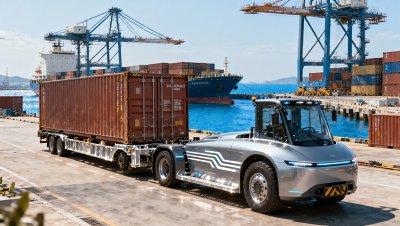
Can electric commercial trucks deliver sufficient range and payload for last-mile logistics in urban Europe?
As urban Europe accelerates its green logistics transition, electric commercial trucks face a critical test: can they deliver the range and payload required for demanding last-mile operations? With growing demand for sustainable solutions — from light commercial vehicles for food delivery to heavy-duty trucks for sale in Russia — fleet operators and procurement professionals are evaluating electric models alongside traditional options like excavator for pipeline installation and bulldozer with GPS tracking. This analysis explores real-world performance, infrastructure readiness, and supply chain support — including trusted truck chassis supplier for heavy haulage and commercial trucks manufacturer with electric models — helping technical evaluators, project managers, and enterprise decision-makers make future-proof choices.
How Real-World Range Compares to Urban Delivery Demands
Urban last-mile logistics in Europe typically require daily operational ranges between 120–250 km, with frequent stop-start cycles, low-speed maneuvering, and regenerative braking opportunities. Current battery-electric heavy-duty trucks (GVW ≥ 16t) report verified real-world ranges of 180–320 km under mixed urban conditions — but only when payload is capped at 6–8 tonnes. At full legal payload (up to 12 tonnes), effective range drops by 22–35%, depending on ambient temperature (5℃–20℃), route gradient, and cabin HVAC load.
Charging infrastructure remains uneven: major EU cities average 1.8 public high-power chargers (150–350 kW) per 100 km², while secondary distribution hubs often rely on depot-based AC or 120 kW DC charging — extending turnaround time by 45–90 minutes per shift. For multi-shift operations, this creates scheduling pressure that diesel equivalents avoid.
Battery thermal management is another constraint. Lithium NMC packs perform optimally between 15℃–35℃. Below 5℃, pre-conditioning adds 8–12 minutes to plug-in time and reduces usable capacity by up to 18%. This directly impacts winter reliability in northern markets like Sweden, Finland, and Poland.
Payload vs. Battery Weight: The Engineering Trade-Off
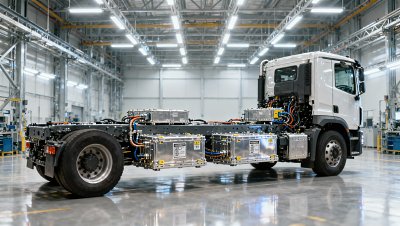
A typical 19-tonne GVW electric distribution truck carries a 550–750 kWh battery pack weighing 2,800–3,600 kg — equivalent to 3–4 pallets of standard cargo. That weight directly displaces revenue-generating payload. In contrast, diesel counterparts allocate only ~350 kg to fuel, DEF, and powertrain mass.
Manufacturers mitigate this via structural integration: battery cells embedded into frame rails, lightweight aluminum cabs, and modular axle configurations. Still, most production models sacrifice 1.2–2.1 tonnes of payload versus their diesel twins — a gap that narrows only in purpose-built platforms like the SQ3.2SK1Q, which uses a reinforced steel-aluminum hybrid chassis to retain 95% of nominal payload capacity at 22-tonne GVW.
Key Payload & Range Benchmarks (Urban Distribution Class)
The table highlights how platform-level engineering — not just battery size — determines viability. Modular designs like the SQ3.2SK1Q achieve higher payload efficiency through optimized weight distribution and thermal-integrated battery mounting — reducing the “range penalty” per tonne delivered by up to 27% versus legacy conversions.
What Procurement Teams Must Evaluate Beyond Spec Sheets
Technical evaluation alone is insufficient. Buyers must assess five interdependent dimensions:
- Battery second-life value: Does the supplier offer certified repurposing pathways or residual value guarantees (e.g., 70% capacity retention after 8 years / 500,000 km)?
- Software-defined service: Are over-the-air (OTA) updates included for energy management, routing optimization, and predictive maintenance — with SLA-backed uptime (≥ 99.2%)?
- Chassis modularity: Can the same base platform accept refrigerated bodies, hook-lift systems, or hydraulic cranes without structural rework?
- Spare parts lead time: What is the guaranteed global warehouse coverage for battery modules, inverters, and cooling pumps (e.g., ≤ 72 hours in EU Tier-1 cities)?
- Certification alignment: Does the vehicle comply with UNECE R100 (battery safety), R136 (electric powertrain), and EN 15194 (light e-cargo bike interface standards)?
These criteria directly impact TCO over 5–7 years — where electric models show advantage only when utilization exceeds 75% and charging infrastructure is owned or co-invested.
Why Global Heavy Truck Industry Platform Accelerates Your Decision
You need more than product listings — you need context-aware procurement intelligence. The Global Heavy Truck Industry Platform delivers:
- Verified supplier profiles — including ISO/TS 16949-certified manufacturers offering SQ3.2SK1Q-class modular chassis with EU type-approval documentation available for download.
- Cross-border compliance dashboards — mapping regional homologation requirements (e.g., Germany’s Zulassung vs. France’s Réception à Titre Isolé) against your target markets.
- Real-time freight cost modeling — comparing landed costs for assembled trucks vs. CKD kits across 23 EU ports and inland customs zones.
- Technical evaluation kits — including CAD files, BOM breakdowns, and simulation-ready thermal models for fleet planners and engineering teams.
Whether you’re validating payload integrity for municipal waste collection in Barcelona, benchmarking charging dwell time for cross-border parcel hubs in Rotterdam, or sourcing a certified truck chassis supplier for heavy haulage in Eastern Europe — our platform connects you with vetted partners who meet precise operational, regulatory, and lifecycle requirements. Request a free technical consultation today to compare spec-aligned options, review delivery timelines (standard lead time: 12–18 weeks), and access localized compliance support.
Recommended News
 New Energy TrucksEU Tightens Battery Passport Rules for Heavy TrucksEU battery passport rules for heavy trucks now require ISO 14067 carbon verification. Learn how exporters, OEMs, and battery suppliers can prepare for compliance.
 New Energy TrucksYantai Port Aluminum Ore Logistics Boosts NEV Dump Truck OrdersYantai Port aluminum ore logistics surge drives NEV dump truck orders—42% short-haul haulage rise, 35% QoQ EV demand spike. Act now.
 New Energy TrucksChina Adds Tractor-Trailer Battery-Swap Systems to Subsidy ProgramTractor-trailer battery-swap systems now qualify for China’s new energy subsidy—up to ¥32,000 per unit. Key update for陆路运输设备 manufacturers, logistics fleets, and EV infrastructure providers.
 New Energy TrucksChina Introduces Subsidies for EV Bus & Battery ReplacementEV bus & battery replacement subsidies now live in China—up to ¥12,000/unit for medium/heavy-duty tractors & refrigerated semi-trailers. Act now!
 New Energy TrucksWorld's Largest Methanol-Fueled Container Ship NamedWorld's largest methanol-fueled container ship named — accelerating green adoption across land-based port handling equipment, yard tractors, stacker cranes & reach stackers.
 New Energy TrucksKunming Launches Jacaranda-Themed EV Buses; Design Draws Interest from South AmericaKunming's jacaranda-themed EV buses showcase China's design-led electric bus innovation — drawing strong interest from South America's transport operators.
 New Energy TrucksNanning IRP Launches Smart EV Freight Charging & Swapping StationNanning IRP’s smart EV freight charging & swapping station — China’s first for cross-border heavy-duty trucks — boosts efficiency, cuts downtime, and sets a new benchmark for China–ASEAN green logistics.
 New Energy TrucksNanning IRP Launches First Cross-Border EV Heavy-Duty Charging HubNanning IRP launches China’s first cross-border EV heavy-duty charging hub—enabling 3-min battery swaps, V2G, and TMS integration for China–ASEAN freight.
 New Energy TrucksNanning IRP Launches RCEP-Focused EV Freight Charging HubNanning IRP launches China’s first RCEP-focused EV freight charging hub—300kW fast charge, battery swap & AI dispatch for China–Vietnam/Laos cross-border logistics.
 New Energy TrucksKunming's Blue Jacaranda Themed Buses Launch with Domestic Smart Scheduling & New Energy ChassisKunming's blue jacaranda buses debut with domestic smart scheduling & new energy LFMP chassis—key benchmark for global urban transit equipment exporters and smart mobility integrators.
 New Energy TrucksNanning IRP Launches Smart EV Charging Hub for ASEAN FreightNanning IRP's Smart EV Charging Hub powers ASEAN freight with intelligent charging, maintenance & green refueling — a game-changing infrastructure leap for cross-border electric truck operators.
 New Energy TrucksChina Launches New Freight Hub Initiative Targeting Smart EV Truck SwappingSmart EV truck battery-swap hubs take center stage in China’s new National Freight Hub Initiative—unlocking opportunities for OEMs, integrators & global logistics operators.
 New Energy TrucksChina Launches New Freight Hub Strengthening ActionChina's new Freight Hub Strengthening Action prioritizes intelligent battery-swap hubs & multimodal terminals—key for EV truck OEMs, logistics providers, and global supply chain enablers.
 New Energy TrucksGermany Launches H2-Truck Corridor Tender: Chinese OEMs Eligible as PartnersH2-Truck Corridor tender launched in Germany—Chinese OEMs invited as technology partners. €180M cross-border hydrogen freight initiative with EU CBAM credit potential.
 New Energy TrucksUS CBP Launches Traceability Review for EV Heavy-Duty Truck Battery ComponentsEV heavy-duty truck battery components now face US CBP traceability review—learn how firmware hashes, Battery Passports & Tier-3 docs impact your exports.
 New Energy TrucksHebei Launches H2 Heavy-Duty Truck Export Channel to EUH2 heavy-duty truck export channel launched: Hebei opens EU test route for green hydrogen trucks — key for OEMs, certifiers & hydrogen infrastructure.
 New Energy TrucksHebei Unveils '15th Five-Year' Transport Plan: Hydrogen Heavy-Duty Truck Corridor and Export Test ChannelsHydrogen heavy-duty truck manufacturers & international fleet operators: Hebei launches Beijing–Tianjin–Shijiazhuang corridor and Tangshan/Caofeidian export test channels — accelerate global validation and market entry.
 New Energy TrucksNanning IRP Launches EV Freight Charging Station for W. Sea-Air CorridorNanning IRP's new EV freight charging station boosts W. Sea-Air Corridor logistics — 300 V2G terminals, ASEAN-standard support, and cold-chain readiness. Discover how it reshapes cross-border EV freight viability.
 New Energy TrucksHebei's 15th Five-Year Transport Plan Launches Hydrogen Heavy-Duty Truck CorridorHydrogen heavy-duty truck corridor launched in Hebei—key opportunity for manufacturers, logistics operators & clean energy developers targeting Mongolia/Russia markets.
 New Energy TrucksJining, Shandong Builds 132 E-Heavy-Duty Truck Charging StationsJining, Shandong’s 132 e-heavy-duty truck charging stations set a new benchmark for GB/T 20234.3–2025 compliance—key for global exporters, OEMs & infrastructure integrators.
 New Energy TrucksHebei's 15th Five-Year Plan Launches Beijing-Tianjin-Hebei H2 Truck CorridorHebei's 15th Five-Year Plan launches the Beijing-Tianjin-Hebei H2 truck corridor — a strategic gateway for hydrogen heavy-duty vehicle exporters, OEMs, and green transport partners to validate GB/T 34592-compliant trucks in real port logistics environments.
 New Energy TrucksJining, Shandong Builds 132 EV Heavy-Duty Truck Charging StationsEV heavy-duty truck charging stations in Jining, Shandong: 132 sites deployed + local standard launched — a scalable model driving global EPC-plus-operations exports.
 New Energy TrucksNanning Rail Port Builds EV Charging Hub for Western Land-Sea CorridorNanning Rail Port's new EV charging hub accelerates green freight along the Western Land-Sea Corridor — vital for cross-border logistics, EV exporters & ESG-compliant shippers.
 New Energy TrucksChina's First 10,000-Ton Pure-Electric Smart Container Ship Enters ServiceChina's first 10,000-ton pure-electric smart container ship launches—driving urgent 800V/V2G and IEC 62196-3:2025 compliance for port terminal tractors and logistics equipment suppliers.
 New Energy TrucksChina's First 10,000-Ton Pure Electric Smart Container Ship Enters ServiceElectric port tractor & battery-swap systems gain global momentum as China’s first 10,000-ton pure electric smart container ship enters service—key for zero-carbon terminals and overseas green port projects.