Truck Mining Demand in 2026: Where Growth Looks Strongest
As global infrastructure, logistics, and resource projects accelerate, truck mining demand in 2026 is drawing strong attention from buyers and distributors. From construction truck and mixer truck applications to lowbed trailer, truck mounted crane, refrigerated truck, and fuel tank truck demand, growth is spreading across multiple segments. This article explores where opportunities look strongest and how sourcing teams can evaluate reliable suppliers, product trends, and market potential more effectively.
Where truck mining demand is likely to grow fastest in 2026
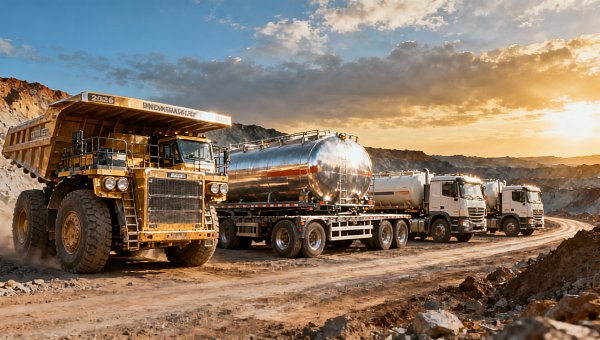
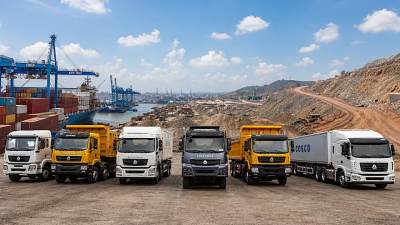
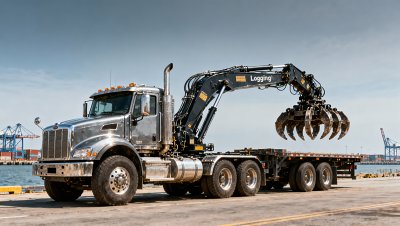
Truck mining demand in 2026 is not limited to one vehicle category. Growth is being supported by mine expansion, supporting road construction, overburden hauling, fuel distribution, and equipment relocation. For procurement teams, that means demand is spreading across dump trucks, tractor heads, lowbed trailers, fuel tank trucks, truck mounted cranes, and selected support vehicles used around mine sites and connected logistics corridors.
In practical sourcing terms, the strongest opportunities usually appear where 3 conditions overlap: active infrastructure spending, stable commodity extraction activity, and a shortage of reliable transport capacity. In these markets, buyers often need mixed fleets rather than a single truck type. A mine operator may require 20–40 dump trucks, 5–10 fuel tank units, and 2–6 lowbed trailers within one procurement cycle.
Another driver is the rising need for replacement cycles. Fleets operating in dust, heat, rough haul roads, and high-load conditions often review major equipment every 3–7 years depending on utilization. This is why business evaluators should not look only at first-purchase demand. Replacement demand, spare parts access, and local service support can be just as important as new project launches.
For distributors and agents, the key signal is whether local customers are shifting from basic transport sourcing toward application-specific transport equipment. When that transition happens, demand tends to move from general cargo trucks into purpose-built mining and construction support vehicles with stronger frames, higher payload tolerance, and easier maintenance access.
Which vehicle categories deserve the closest attention?
Mining-related truck demand often expands in layers. The first layer is direct extraction transport, especially dump trucks and heavy-duty chassis. The second layer includes support equipment such as fuel tank trucks, water units, service trucks, and lowbed trailers for moving excavators, loaders, and drilling machines. The third layer covers regional logistics, where tractor trucks and semi-trailers link mines, ports, and processing facilities.
- Dump and construction trucks are central where short-distance hauling, quarry work, and site transfer are frequent and payload consistency matters more than highway speed.
- Lowbed trailers become critical when equipment relocation happens every few weeks or between multiple work sites within a 100–300 km radius.
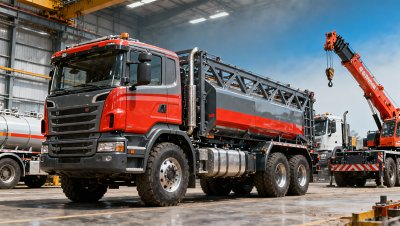
- Fuel tank trucks and service support vehicles gain importance as operations scale, because mines need controlled on-site fuel supply and maintenance response without long service interruptions.
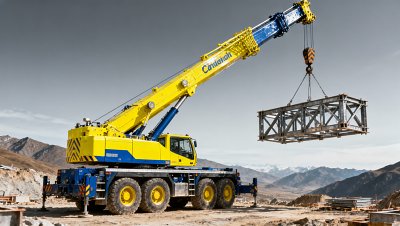
- Truck mounted cranes are increasingly considered where remote projects need flexible loading, component replacement, or field installation capability.
This demand pattern matters because it changes how buyers should compare suppliers. A supplier that only offers a complete truck may not be enough. In many tenders, sourcing teams now prefer partners that can support chassis, body adaptation, trailer matching, spare parts planning, and documentation review in one coordinated process.
The table below shows how different truck and trailer types align with mining-related demand patterns in 2026, especially for buyers comparing application fit, operating intensity, and sourcing complexity.
For B2B buyers, this comparison shows that truck mining demand in 2026 is broadening into fleet ecosystems. The more complex the project environment, the more valuable it becomes to source through a platform that can connect complete trucks, trailers, spare parts, and supplier comparison in one place.
How application scenarios change buying priorities
A frequent mistake in heavy truck sourcing is to compare products without defining the exact operating scenario. A mine access road, a quarry haul route, a port transfer lane, and a municipal infrastructure project may all require heavy transport equipment, but the preferred axle layout, body type, and service interval can be very different. Good procurement starts with scenario mapping, not catalog browsing.
For example, a construction truck used in a short-cycle aggregate pit may prioritize body durability and easy unloading. A refrigerated truck serving a mining camp supply chain has a different requirement set: temperature retention, route reliability, and daily operating efficiency. A mixer truck linked to remote site construction must balance drum capacity, road adaptation, and maintenance simplicity over a project period that may last 6–18 months.
This is why sourcing teams should break demand into at least 4 scenario groups: extraction support, equipment transport, fuel and service logistics, and camp or regional supply logistics. Once these groups are clear, product shortlists become more accurate and cost control improves. It also becomes easier to compare distributor opportunities across different territories.
On the Global Heavy Truck Industry Platform, buyers can evaluate these scenario differences more efficiently because products are organized across key categories such as Truck Chassis & Cab, Complete Trucks, Construction Machinery, Trailers & Semi-Trailers, and Spare Parts. That structure helps users move from broad market research to targeted supplier screening with less wasted time.
Scenario-based demand signals buyers should track
1. Extraction and quarry operations
These environments typically create repeat demand for construction trucks, dump bodies, reinforced chassis, and wear parts. Procurement checks should include expected daily cycles, average haul distance, and whether the vehicle will run more often on internal roads or public roads. Even a 10–20 km route difference can change tire, suspension, and brake priorities.
2. Equipment relocation between sites
Lowbed trailer demand rises where contractors move excavators, graders, and road machinery between mines or infrastructure projects. Buyers should verify load concentration, deck height, gooseneck structure, and whether permits or escort arrangements are required for oversize transport. In many regions, compliance planning is as important as the trailer itself.
3. Remote support logistics
Fuel tank trucks, truck mounted cranes, and service support vehicles become essential when sites are far from urban maintenance centers. In these cases, uptime planning often depends on spare parts lead times of 7–30 days and preventive service cycles measured by engine hours or monthly inspection frequency. A cheaper unit may become more expensive if support supply is weak.
4. Worker and material supply chains
Some mining-adjacent projects also drive demand for refrigerated trucks, light trucks, and logistics semi-trailers used for food, tools, and general supplies. These vehicles may not be the largest units in a fleet, but they often affect delivery continuity. For distributors, this creates cross-selling opportunities beyond the main heavy-duty truck package.
The following table helps procurement teams align common scenarios with the equipment categories most often considered during heavy truck and trailer sourcing.
A scenario-based approach reduces mismatch risk. Instead of selecting a truck because it looks competitive on paper, buyers can judge whether the configuration matches operating terrain, maintenance capability, and route intensity. That leads to better fleet economics over time.
What procurement teams should compare before placing orders
When truck mining demand in 2026 becomes more competitive, supplier comparison must go beyond price. Information researchers usually start with product listings, but procurement and commercial teams need a deeper review model. In heavy truck purchasing, 5 dimensions often decide whether a deal performs well after delivery: application fit, configuration transparency, compliance readiness, parts support, and delivery reliability.
For complete trucks and trailers, one of the first questions should be whether the quoted specification is truly application-ready or only a base platform. Many buyers receive an attractive quotation, then discover that body reinforcement, hydraulic functions, tire upgrades, safety accessories, or local compliance items are extra. This can affect both budget accuracy and project start timing.
Lead time also deserves close attention. Depending on configuration complexity, production planning, and export preparation, a common B2B cycle may range from 3–8 weeks for standard units and 8–16 weeks for specialized builds. Buyers working on mine projects should also ask about documentation readiness, pre-shipment inspection options, and spare parts packaging for the first 6–12 months of operation.
The Global Heavy Truck Industry Platform helps simplify this stage by allowing sourcing teams to compare suppliers, review category breadth, and access industry information alongside product discovery. For distributors and agents, this is especially useful when building a multi-brand shortlist before entering negotiation or territory assessment.
A practical 6-point evaluation checklist
- Confirm the operating scenario in detail, including payload, route condition, ambient temperature range, and daily utilization target.
- Check whether the quoted configuration includes all required body, tank, trailer, or crane functions rather than a chassis-only assumption.
- Review compliance documentation for the destination market, especially if road legality, tank safety, or trailer dimensions are regulated.
- Ask for routine spare parts planning, including fast-moving items and recommended quantities for the first operating phase.
- Clarify production and dispatch milestones, such as drawing confirmation, manufacturing slot, inspection stage, and shipping handover.
- Evaluate supplier communication quality, because poor specification clarity often leads to costly revisions later.
This checklist is useful not only for direct buyers but also for dealers assessing whether a supplier can support long-term channel business. In many regional markets, after-sales consistency determines brand acceptance faster than promotional pricing.
Common selection mistakes that increase total project risk
The first mistake is choosing by headline payload alone. Payload matters, but haul road condition, loading method, brake heat exposure, and suspension design may matter more in harsh mining environments. The second mistake is ignoring integration between tractor and trailer, especially for lowbed trailer operations where coupling geometry and load distribution are critical.
Another common issue is underestimating service access. A truck that performs well in theory may become difficult to manage if key parts take 20–45 days to arrive or if local technicians lack familiarity with the configuration. Buyers should always review the service ecosystem together with the equipment offer.
A final risk appears when teams treat mining, logistics, and construction transport as separate purchasing silos. In reality, many projects need a coordinated package. Sourcing through a platform that covers complete trucks, trailers, construction machinery, spare parts, and supplier directories can reduce fragmentation and speed decision-making.
How to assess supplier reliability, compliance, and service readiness
Reliable supply in the heavy truck sector depends on more than manufacturing capability. Buyers also need confidence in specification control, export coordination, documentation accuracy, and after-sales response. This is particularly important in truck mining demand because operating conditions are demanding and downtime costs can spread across transport, site operations, and contractor schedules.
A useful starting point is to divide supplier review into 3 layers. First, product capability: can the supplier provide the required truck, trailer, or body specification? Second, delivery capability: can they manage production timing, inspection, and shipment documents with consistency? Third, service capability: can they support spare parts, technical questions, and follow-up coordination after arrival?
For compliance, buyers should use destination-market requirements as the benchmark. Depending on the product, this may involve vehicle dimensions, axle load compliance, tank safety fittings, lighting and braking requirements, and general export documentation. It is safer to ask suppliers for a document checklist early rather than discover a gap after production is finished.
The platform advantage here is practical. A specialized B2B marketplace focused on the global commercial vehicle and heavy equipment industry makes it easier to compare category-specific suppliers, review related products, and shorten the gap between market research and supplier engagement. That matters when buyers are screening multiple options across regions in a limited 2–6 week evaluation window.
What a strong supplier review process should include
- Specification confirmation documents that clearly show chassis, engine range, axle configuration, superstructure details, and optional items.
- A realistic delivery outline with at least 4 stages: technical confirmation, production scheduling, inspection or acceptance, and shipment preparation.
- Spare parts discussion covering fast-wear items, first-order packing, and future replenishment channels for 6–12 months of operation.
- Compliance review based on destination use, particularly for trailers, tank trucks, and other road-regulated equipment.
Commercial evaluators should also judge responsiveness. If a supplier cannot answer technical clarification questions quickly during the quotation stage, coordination may become harder once production begins. Clear communication is a measurable sign of execution quality.
FAQ: key questions buyers ask about truck mining demand in 2026
How should buyers prioritize between dump trucks, lowbed trailers, and fuel tank trucks?
Start from operational dependency. If revenue depends directly on material movement, construction trucks or dump trucks usually come first. If project continuity depends on relocating excavators or loaders between sites, lowbed trailers may be equally urgent. If remote fueling delays frequently stop equipment, fuel tank trucks can deliver faster operational value than adding another haul unit.
What delivery cycle should procurement teams expect for heavy truck orders?
Standard configurations may be available within 3–8 weeks, while specialized vehicles or trailer builds often require 8–16 weeks depending on component planning, body fabrication, and export preparation. Buyers should also add time for drawing confirmation, inspection, inland transport, and shipping schedules. Early planning is important when a mine or infrastructure project has a fixed mobilization date.
Is it better to source from one supplier or several suppliers?
That depends on project complexity. A single supplier may simplify coordination if they can cover trucks, trailers, and support equipment properly. Multiple suppliers may be useful when specialized categories differ significantly. However, fragmented sourcing can increase documentation workload and compatibility risk. Many buyers now prefer to begin through an industry platform that allows side-by-side supplier comparison before deciding on sourcing structure.
What is the most overlooked factor in mining-related truck procurement?
After-sales planning is often overlooked. Buyers focus on acquisition price and core specifications, then realize later that downtime, spare parts lead times, and field service coordination affect total operating cost more than expected. In rough operating environments, a practical spare parts plan and responsive supplier communication can protect project continuity.
Why work with a specialized global heavy truck industry platform
For information researchers, the challenge is usually market fragmentation. For procurement teams, it is comparison efficiency. For distributors and agents, it is finding suppliers that can support long-term growth rather than one-off transactions. A specialized global heavy truck industry platform solves these problems by bringing together manufacturers, suppliers, buyers, and industry resources around one focused commercial vehicle ecosystem.
Because the platform covers Truck Chassis & Cab, Complete Trucks, Light Trucks, Construction Machinery, Trailers & Semi-Trailers, and Spare Parts, users can move from broad market scanning to practical sourcing without changing channels repeatedly. This is valuable when evaluating truck mining demand in 2026, where one project may involve construction trucks, lowbed trailers, support vehicles, and follow-on spare parts requirements in parallel.
The platform also supports better business judgment. Buyers can review product categories, compare supply options, access industry insights, and identify potential partners for cross-border trade collaboration. That shortens the path from research to quotation, and from quotation to supplier validation. In time-sensitive procurement cycles, even saving 1–2 weeks in supplier screening can improve project readiness.
If you are assessing truck mining demand, planning a heavy equipment transport program, or building a distributor portfolio for 2026, you can use the platform to discuss product selection, configuration matching, delivery timing, spare parts planning, destination-market compliance, and quotation comparison. You can also inquire about complete trucks, lowbed trailers, fuel tank trucks, truck mounted cranes, construction truck options, and customized fleet combinations based on your operating scenario.
What you can contact us about
- Parameter confirmation for truck chassis, payload range, axle layout, trailer structure, and body adaptation.
- Product selection support for mining, construction, logistics, and remote site service applications.
- Estimated delivery cycle discussion, including standard units, customized builds, and spare parts preparation.
- Compliance and documentation questions related to destination-market requirements.
- Quotation communication for single-unit trials, fleet procurement, dealership evaluation, or long-term sourcing cooperation.
If your team is comparing suppliers now, a focused inquiry with project use conditions, expected quantity, target delivery window, and destination market will make the next step much more efficient. That allows a more accurate discussion on truck mining demand in 2026 and helps turn market interest into workable procurement decisions.
Recommended News
 Global Truck MarkeChina’s Commercial Vehicle Exports Jump 50.28%China’s commercial vehicle exports jump 50.28%, led by surging electric heavy truck demand. Explore key markets, EV truck parts opportunities, and export trends shaping global procurement.
 Global Truck MarkeCommercial Trucks Manufacturer in Germany: Market Position in 2026Commercial trucks manufacturer in Germany insights for 2026: explore market position, technology readiness, export strength, and supplier value to identify smarter sourcing opportunities.
 Global Truck MarkeHow to Vet a Logging Truck Distributor Before Entering a New MarketLogging truck distributor vetting starts with market knowledge, service reach, and compliance checks. Discover key questions, red flags, and smart verification tips before expanding.
 Global Truck MarkeCommercial Trucks Manufacturer in Germany: Market Strengths in 2026Commercial trucks manufacturer in Germany insights for 2026: explore market strengths, export reliability, sourcing trends, and smart buying tips for global fleet decisions.
 Global Truck MarkeLight Duty Truck Manufacturer in USA: What Sets Leading Models ApartLight duty truck manufacturer in USA guide: compare fuel efficiency, payload, safety, upfit flexibility, and dealer support to choose the best model for delivery, service, or construction.
 Global Truck MarkeTruck Chassis Supplier in Europe: What to Compare Beyond Unit PriceTruck chassis supplier in Europe: compare compliance, customization, delivery reliability, and after-sales support beyond unit price to reduce sourcing risk and improve lifecycle value.
 Global Truck MarkeHeavy Equipment Export to Africa: Market Gaps and Practical Entry PointsHeavy equipment export to Africa: uncover market gaps, high-demand equipment segments, and practical entry points to reduce risk, find reliable partners, and grow faster in Africa.
 Global Truck MarkeIs a Semi Trailer Distributor Better for Faster Regional CoverageSemi trailer distributor solutions for faster regional coverage: compare models, reduce sourcing risk, improve delivery speed, and expand dealer reach with stronger local support.
 Global Truck MarkeDelivery Truck Supplier in USA: How to Compare Service and Lead TimeDelivery truck supplier in USA comparison guide: learn how to evaluate service quality, response speed, and realistic lead times to reduce sourcing risk and choose with confidence.
 Global Truck MarkeCommercial Trucks Manufacturer in Germany: What Makes Them CompetitiveCommercial trucks manufacturer in Germany insights: discover why German brands lead in engineering, efficiency, safety, and export strength across long-haul, construction, and urban fleet applications.
 Global Truck MarkeLight Duty Truck Manufacturer in USA: How to Compare Local OptionsLight duty truck manufacturer in USA comparison guide: learn how to evaluate local suppliers by application, service network, upfit support, and total cost to source smarter.
 Global Truck MarkeCommercial Trucks Manufacturer in Germany: What Global Buyers CompareCommercial trucks manufacturer in Germany: discover what global buyers compare most—engineering, compliance, delivery, TCO, and after-sales support—to source smarter and reduce fleet risk.
 Global Truck MarkeWhat to Expect from a Light Duty Truck Manufacturer in USA in 2026Light duty truck manufacturer in USA trends for 2026: explore smarter tech, better fuel efficiency, stronger compliance, and fleet-ready support to choose the right supplier.
 Global Truck MarkeHow to Compare Logging Truck Distributors Across RegionsLogging truck distributor comparison made practical: learn how to evaluate regional compliance, specs, lead times, service support, and total cost for smarter fleet sourcing.
 Global Truck MarkeWhy Light Duty Truck Manufacturers in the USA Are Gaining AttentionLight duty truck manufacturer in USA trends are reshaping delivery, utility, and fleet sourcing. Discover key market drivers, buyer tips, and how to choose the right supplier.
 Global Truck MarkeTruck Trailer Manufacturer Trends Reshaping Export Orders in 2026Truck trailer manufacturer trends in 2026 are reshaping export orders through compliance, customization, and supply chain pressure. Discover smarter sourcing insights now.
 Global Truck MarkeTruck Mining Demand in 2026: Where Growth Looks StrongestTruck mining demand in 2026 is rising across construction truck, lowbed trailer, truck mounted crane, refrigerated truck, mixer truck and fuel tank truck segments—see where growth is strongest.
 Global Truck MarkeSemi Trailer Manufacturer Lead Times Are Changing in Global MarketsSemi trailer manufacturer lead times are shifting globally. Learn how truck export, truck hydraulic, truck tanker, truck aluminum and key parts affect delivery risk and smarter sourcing.
 Global Truck MarkeGlobal Truck Market Signals That Could Affect Parts Demand Next YearTruck turbocharger and engine assembly trends could reshape industrial transportation parts demand next year. Explore truck gearbox, filter, bearing, and compressor signals for smarter sourcing.
 Global Truck MarkeWhy Semi Trailer Price Quotes Vary So Much Across Export MarketsTruck trailer price and semi trailer price quotes vary by specs, Incoterms, compliance, and freight. Learn how to compare a semi trailer supplier and truck trailer for sale offers wisely.
 Global Truck MarkeConstruction machinery distributor tiering: How regional reps differ from national partnersCompare water truck cost, crane truck quotation & truck parts quotation across Tier-1 national partners vs. Tier-2 regional reps—optimize pricing, lead time & compliance.
 Global Truck MarkeWater truck distributor networks in Southeast Asia: Who controls supply and pricing?Discover water truck cost drivers, construction machinery quotation benchmarks, and crane truck distributor margins across SEA—get transparent, data-backed pricing insights now.
 Global Truck MarkeLogging truck OEM delivery timelines: why Q3 2026 orders face extended port delaysLogging truck OEM delays hit Q3 2026 orders—8–12 week port bottlenecks impact heavy duty trucks for sale in Canada, Australia, South Africa. Bulldozer supplier & excavator supplier planning must adapt now.
 Global Truck MarkeLogging truck bulk order lead times jumped 42% in Q1 2026 — what’s causing the delay?Logging truck bulk order delays up 42% in Q1 2026 — explore root causes, cross-segment impacts on water truck OEM, construction machinery OEM & more, and actionable mitigation strategies.
 Global Truck MarkeTruck crane lifting capacity drops above 2,000m elevation — is derating mandatory?Truck crane derating above 2,000m is mandatory—impacting truck hydraulic system, engine, brake system, suspension & axle performance. Verify altitude-certified models now.