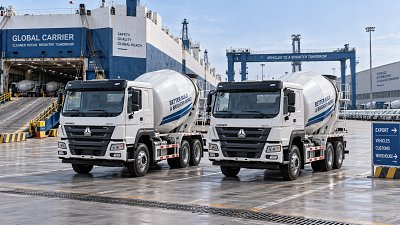
Truck Cement Mixer Supplier Comparison: Price, Lead Time, and Service
Choosing a truck cement mixer supplier affects more than the purchase price. It influences fleet uptime, concrete quality, project timing, parts availability, and total operating cost across the full equipment lifecycle.
A careful comparison helps reduce delays, control budget risk, and avoid costly mismatches between mixer capacity, chassis performance, and local jobsite conditions. The right supplier supports both delivery and long-term equipment value.
This article explains how to compare a truck cement mixer supplier using practical checkpoints. It covers price, lead time, technical fit, service support, and supplier reliability for smarter sourcing decisions.
Why a structured comparison matters
Truck mixer purchases often involve large budgets and project deadlines. A low quote can become expensive when freight, delayed production, weak parts support, or poor build quality create operating losses.
A structured method also makes supplier evaluation more transparent. It helps compare offers from different regions, standardize decision criteria, and identify a dependable truck cement mixer supplier faster.
Key checkpoints when comparing a truck cement mixer supplier
Use the following points to compare suppliers consistently. Each item should be verified with documents, quotations, production details, and after-sales commitments before confirming an order.
- Confirm whether the quoted price includes chassis, drum, hydraulic system, water tank, export packing, taxes, inland transport, and shipping terms such as EXW, FOB, or CIF.
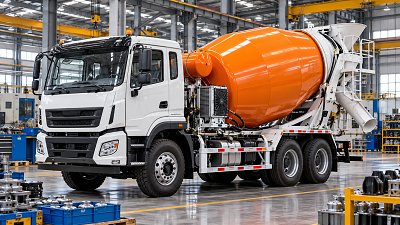
- Check drum volume, payload rating, engine power, axle configuration, and discharge performance to ensure the truck matches route distance, road grade, and batching plant output.
- Request a clear production schedule covering order confirmation, material preparation, assembly, testing, and shipment booking, rather than accepting only a broad lead time estimate.
- Review component brands for reducers, hydraulic pumps, motors, tires, and chassis parts because reliable sub-suppliers often determine service life and maintenance frequency.
- Ask for welding standards, anti-corrosion treatment, painting process, and drum material thickness to assess structural durability in demanding construction and transport environments.
- Verify after-sales service terms, including warranty length, spare parts response, remote troubleshooting, technical manuals, and local partner support in your target market.
- Evaluate supplier export experience, language responsiveness, documentation accuracy, and ability to handle customs, homologation, and destination compliance requirements.
- Request customer references, delivery records, inspection reports, and factory audit materials to test whether the truck cement mixer supplier performs as promised.
- Compare payment terms carefully, including deposit ratio, milestone payments, balance timing, and protections linked to inspection, shipment documents, or third-party verification.
- Examine lifecycle cost, not only purchase cost, by estimating fuel use, maintenance intervals, wear parts pricing, downtime risk, and residual value over several years.
How to compare price without making a costly mistake
Look beyond the headline quote
Many offers look competitive at first. However, the final landed cost may rise when optional components, marine freight, destination charges, or mandatory local modifications are excluded.
Ask every truck cement mixer supplier to quote using the same technical specification and trade term. This creates a true side-by-side comparison and reduces pricing confusion.
Consider total cost of ownership
A cheaper truck may consume more fuel, require more service visits, or suffer more downtime. Over time, those losses often exceed the initial savings from a lower purchase price.
Reliable components and stronger local support usually improve overall return. That is why experienced buyers compare operating cost together with initial acquisition cost.
How to assess lead time and delivery reliability
Separate production time from shipping time
Lead time often includes factory scheduling, component sourcing, assembly, testing, and port transport. Shipping time then depends on vessel space, route congestion, and customs procedures.
A dependable truck cement mixer supplier should explain each stage clearly. Vague promises can signal capacity issues or weak export coordination.
Ask for proof of delivery performance
Request recent shipment records, inspection dates, and sample export documents. On-time performance matters, especially when trucks are needed for infrastructure, municipal, or mining-related timelines.
Also confirm how the supplier handles delays. Good partners provide early notice, revised milestones, and practical recovery actions instead of last-minute explanations.
Service factors that strongly affect long-term value
Spare parts support
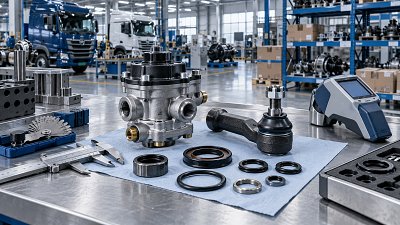
Spare parts availability is critical for a truck cement mixer supplier comparison. Fast access to reducers, seals, rollers, blades, pumps, and electrical parts reduces downtime significantly.
Ask whether wear parts are stocked regionally or shipped from origin. Long replacement cycles can stop operations even when the truck itself is structurally sound.
Technical communication and training
Strong service includes manuals, parts lists, operating instructions, and troubleshooting guidance. Some suppliers also provide commissioning support or remote training for maintenance teams.
This is especially useful when fleets operate in remote areas. Quick technical support can prevent small faults from becoming serious mixer failures.
Application-based points to check
Urban and municipal construction
Urban work often requires compact dimensions, stable discharge control, and easier maneuverability. Check turning radius, axle load compliance, and suitability for narrow streets or restricted zones.
For this application, a truck cement mixer supplier should also provide clear emissions information and local road compliance details.
Large infrastructure projects
High-volume construction needs consistent output and dependable scheduling. Focus on drum capacity, fleet standardization, rapid parts support, and the supplier’s ability to deliver multiple units on time.
Production planning becomes more important here. Ask whether the supplier can reserve capacity for phased deliveries across the project timeline.
Mining and rough-road transport
Harsh terrain demands stronger chassis performance, better suspension durability, and dependable hydraulic systems. Review axle strength, ground clearance, tire specification, and corrosion protection carefully.
A truck cement mixer supplier serving this segment should understand severe-duty applications rather than only standard road transport conditions.
Commonly overlooked risks
One frequent mistake is comparing trucks with different configurations. A lower quote may hide a smaller drum, lighter-duty components, or a weaker chassis that cannot meet actual demand.
Another risk is unclear warranty scope. Some warranties cover only selected components, while labor, freight, and consumables remain excluded. Always request written details.
Documentation gaps can also create delays. Missing certificates, incomplete invoices, or incorrect specifications may hold cargo at customs and increase project costs.
Finally, weak communication is often a warning sign. Slow replies before payment usually become worse after shipment, affecting service and claim handling.
A practical way to execute the comparison
- Define one standard specification sheet covering capacity, chassis brand, emission level, drivetrain, key components, and destination requirements.
- Send the same request to each truck cement mixer supplier and ask for itemized pricing with matching Incoterms.
- Score each supplier on price, lead time, service, technical compliance, export capability, and reference quality.
- Verify the top options through video factory review, third-party inspection, or document audit before placing the order.
- Negotiate payment, spare parts package, and delivery milestones together, not as separate issues.
FAQ about choosing a truck cement mixer supplier
Is the lowest-priced truck cement mixer supplier the best option?
Not always. The best option balances fair pricing with dependable quality, realistic lead time, and strong service support.
What documents should be requested before ordering?
Request technical specifications, quotation details, production schedule, warranty terms, export references, inspection reports, and sample shipping documents.
How important is after-sales support in supplier comparison?
It is essential. A truck cement mixer supplier with faster parts support and clearer technical guidance often saves more money over time.
Final decision and next step
A strong truck cement mixer supplier comparison should combine price analysis, lead time verification, service evaluation, and technical matching. Looking at one factor alone increases purchasing risk.
When reviewing global options, using a specialized B2B industry platform can simplify sourcing, supplier discovery, and market comparison across the heavy truck supply chain.
Start by building a clear specification sheet, shortlisting qualified suppliers, and requesting comparable offers. That process creates a more confident and cost-effective purchase decision.
Trending News
- How to load an excavator onto a lowbed trailer without tipping
- China’s New Energy Heavy Truck Sales Share Exceeds 50% in September 2026
- CATL Unveils Heavy-Truck Battery Range Extension, Signs Deals for 13,000 Vehicles
- CATL Unveils Tianxing II Electric-to-Electric Range-Extended Heavy Truck Solution
- How much torque does a truck engine need for heavy-duty hauling?
Tag
Recommended News
 Buying GuideHow much torque does a truck engine need for heavy-duty hauling?How much truck engine torque do you need? Explore the 1,250–2,050 lb-ft range and learn how load, gearing, and gradients shape the right choice for heavy-duty hauling.
 Buying GuideHow to assess a crane truck distributor's spare parts supportAssess a crane truck distributor's spare parts support with practical checks for stock, delivery, and technical expertise. Discover how to reduce downtime and buy with confidence.
 Buying GuideHow to verify spare parts availability with a crane truck supplierChoosing a crane truck supplier? Learn how to verify spare parts stock, compatibility, delivery times, and support commitments to reduce downtime and buy with confidence.
 Buying GuideHow to verify a truck trailer OEM's claimed payload capacityVerify a truck trailer OEM's payload claim with tare records, load calculations, and structural evidence. Learn key checks to avoid costly mistakes and buy with confidence.
 Buying GuideHow does operating weight affect the price of a new excavator?See how operating weight affects excavator price, transport costs, and productivity. Compare configurations and uncover the best value for your next equipment purchase.
 Buying GuideHow to compare concrete mixer truck suppliers by total landed costCompare truck cement mixer supplier quotes by total landed cost, including freight, duties, and delivery. Uncover hidden charges and choose the best-value truck for your fleet.
 Buying GuideWhen does heavy equipment transport require a lowboy trailer?Does your heavy equipment need a lowboy trailer? Discover how loaded height, weight distribution, loading access, and route limits determine the right choice for safe transport.
 Buying GuideHow to choose an off road truck for steep and unstable job sitesChoose the right off road truck for steep, unstable job sites. Compare traction, braking, stability, clearance, payload, and route-test essentials.
 Buying GuideHow to match crane truck lifting capacity to your jobsite loadsCrane truck capacity planning made clear: calculate gross load, radius, rigging, outriggers, and ground conditions to select safer, job-ready lifting equipment.
 Buying GuideHow to match lowbed trailer deck height to your hauling equipmentLowbed trailer deck height guide: match equipment clearance, ramp geometry, axle loads, tractor fit, and route limits for safer, more efficient hauling.
 Buying GuideWhat to verify before choosing a delivery truck supplier for school transportationDelivery truck supplier for school transportation: verify route fit, payload, safety, compliance, service support, and total cost before choosing a reliable partner.
 Buying GuideWhat an excavator manufacturer catalog should show before you compare modelsExcavator manufacturer catalog guide: verify supplier identity, configurations, hydraulics, compliance, parts support, and delivery readiness before comparing models.
 Buying GuideWhat to check before appointing a bulldozer distributorBulldozer distributor selection guide: evaluate service, parts availability, warranty, pricing, compliance, and lifecycle value to reduce downtime and protect fleet investment.
 Buying GuideWhat to verify before choosing a truck cement mixer supplierTruck cement mixer supplier checklist: verify chassis fit, drum quality, hydraulics, compliance, spare parts, and after-sales support before you buy.
 Buying GuideHow to verify a truck spare parts supplier before placing a bulk orderTruck spare parts supplier verification made practical: learn how to check part specifications, factory control, test records, samples, pricing, and delivery capability before placing a bulk order.
 Buying GuideWhat size truck container is right for a typical freight load?Truck container sizing made simple: compare payload, volume, pallet layouts, route access, and loading needs to choose the most efficient freight solution.
 Buying GuideWhat drives semi trailer price differences between similar models?Semi trailer price differences come down to frame materials, axles, suspension, coating, and configuration. Compare specifications line by line to choose lasting value.
 Buying GuideHow to compare excavator manufacturer price lists before requesting quotesCompare an excavator manufacturer price list with confidence. Learn to normalize configurations, calculate landed costs, assess options and service, and create stronger RFQs.
 Buying GuideHow to choose a mixer truck drum capacity for your concrete pourMixer truck capacity guide: match drum size to pour rate, legal payload, site access, and delivery cycles for efficient, reliable concrete placement.
 Buying GuideHow to size a bulldozer for construction site grading workBulldozer for construction sizing guide: match weight, blade, traction, grade control, and transport needs to improve grading productivity and costs.
 Buying GuideHow to assess a truck cement manufacturer’s build quality before orderingTruck cement manufacturer build quality: assess tank steel, welding, chassis integration, pneumatic systems, factory QC, and inspection evidence before ordering.
 Buying GuideWhen does a truck trailer OEM make sense for private-label fleets?Truck trailer OEM programs help private-label fleets cut lifecycle costs, standardize operations, and improve uptime. Learn when customization delivers real commercial value.
 Buying GuideWhat to verify before choosing a water truck OEM for your fleetWater truck OEM selection guide: verify chassis compatibility, tank quality, pump performance, compliance, and service support to build a safer, more reliable fleet.
 Buying GuideHow to size a cab chassis truck for a fire department apparatusCab chassis truck for fire department sizing guide: balance GVWR, axle loads, wheelbase, water tank placement, and mission needs for safer apparatus design.
 Buying GuideWhat to verify before choosing a truck chassis supplierChoose the right truck chassis supplier with a practical checklist for application fit, axle ratings, body integration, quality control, delivery reliability, and after-sales support.