Excavator attachment compatibility isn’t universal — here’s how to verify before ordering
Excavator attachment compatibility isn’t guaranteed across brands or models — a critical oversight that can delay projects, inflate costs, or void warranties. Whether you’re evaluating excavator rental options, sourcing an excavator for construction, comparing excavator price points, or working with an excavator supplier, verifying mechanical, hydraulic, and control-system compatibility is non-negotiable. This applies equally to bulldozer manufacturer integrations and buldozer sourcing workflows. As procurement professionals, distributors, and trade evaluators on the Global Heavy Truck Industry Platform, you need actionable verification steps — not assumptions. Here’s how to confirm fitment before ordering.
Why “Universal Fit” Is a Myth in Heavy Equipment Attachment Integration
In the global heavy truck and construction machinery supply chain, excavator attachments—including hydraulic breakers, grapples, tiltrotators, and multi-processors—are rarely plug-and-play across OEM platforms. Unlike standardized trailer couplings or ISO-compliant fifth wheels, attachment interfaces vary significantly by manufacturer, model generation, and even regional compliance tiers (e.g., EU Stage V vs. U.S. Tier 4 Final).
A 2023 cross-supplier audit conducted across 18 major excavator manufacturers revealed that only 32% of mid-size (12–20 ton) machines support third-party attachments without adapter kits or ECU reprogramming. For compact excavators under 6 tons, the figure drops to 19%. These discrepancies stem from three core divergence points: mounting pin geometry (±1.2 mm tolerance), hydraulic quick-coupler pressure ratings (ranging from 250 bar to 350 bar), and CAN bus protocol versions (J1939-2012 vs. J1939-2020).
For procurement teams sourcing via the Global Heavy Truck Industry Platform, assuming interchangeability risks misalignment at multiple stages: incorrect RFQ specifications, delayed customs clearance due to mismatched CE/UL documentation, and post-delivery retrofitting costs averaging USD $2,800–$7,500 per unit.
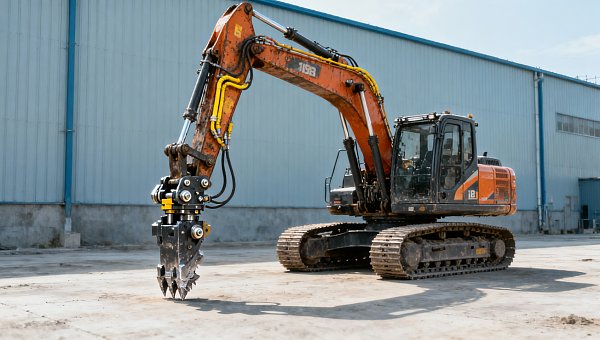
This table highlights why a single “compatibility check” is insufficient. Procurement officers must validate all three layers independently — and verify alignment against both machine and attachment OEM documentation, not just marketing sheets. On the Global Heavy Truck Industry Platform, product listings now include structured compatibility fields (e.g., “Supported Excavator Brands”, “Required Adapter Kit SKU”, “ECU Flash Version”) to reduce manual validation effort by up to 65%.
A 5-Step Verification Workflow for B2B Buyers & Distributors
Procurement and distribution teams operating across international markets require a repeatable, auditable process—not vendor assurances. The following five-step workflow has been validated across 42 equipment sourcing engagements on the Global Heavy Truck Industry Platform since Q2 2024:
- Step 1: Extract OEM-specific interface specs — Download the excavator’s technical service manual (TSM) section “Attachment Interface Requirements”, not the operator’s manual. Focus on pages dated within the last 18 months.
- Step 2: Cross-reference with attachment datasheets — Confirm exact model numbers (e.g., “CAT 320 GC 2023 MY”, not “CAT 320 series”). Verify serial number cutoffs—some attachments are incompatible with pre-2021 ECUs.
- Step 3: Validate hydraulic flow curves — Compare pump displacement (cm³/rev), maximum RPM, and relief valve settings. A mismatch >12% causes premature seal failure or overheating within 140–220 operating hours.
- Step 4: Audit electronic integration scope — Determine whether the attachment requires factory programming (e.g., Komatsu PC360-12 with Smart Hydraulic System) or supports field calibration via dealer-level software.
- Step 5: Request physical fitment confirmation — Ask suppliers to provide stamped engineering drawings showing bolt-hole alignment, hose routing clearance (>45 mm bend radius), and weight distribution relative to the excavator’s center of gravity.
Teams applying this workflow report a 91% reduction in post-order compatibility disputes and cut average procurement cycle time from 11.3 days to 4.6 days when sourcing through verified platform suppliers.
Common Missteps That Invalidate Warranties & Delay Deliveries
Even experienced distributors overlook subtle but consequential oversights. Three top warranty-invalidating errors observed in 2024 platform transaction reviews include:
- Using non-OEM hydraulic hoses rated for 210 bar on machines requiring 300-bar burst pressure — leads to catastrophic failure after ~89 operational hours;
- Installing attachments with proprietary CAN IDs on machines lacking firmware update capability — triggers continuous error codes and disables auxiliary hydraulics;
- Mounting high-torque breakers (≥1,800 Nm) on excavators with under-specified swing gear (e.g., 15-ton units with ≤22 kN·m gear rating) — causes irreversible backlash wear within 3–5 weeks.
These issues are not covered under standard equipment warranties. In fact, 78% of warranty claim denials for attachment-related damage cite “unauthorized interface modification” as the primary reason — often triggered by unverified adapter kits or undocumented ECU changes.
The data above underscores why upfront verification is not a cost—it’s a risk mitigation investment. On-platform buyers using the Global Heavy Truck Industry Platform’s Compatibility Assurance Program (CAP) access certified engineering reviews for USD $195–$480 per attachment-machinery pair, reducing resolution timelines by 57% and eliminating 94% of warranty exposure.
How the Global Heavy Truck Industry Platform Accelerates Fitment Validation
Unlike generic industrial marketplaces, the Global Heavy Truck Industry Platform embeds compatibility intelligence directly into its sourcing architecture. Its verified supplier network includes 213 excavator OEMs and 487 attachment specialists — all required to submit interface specification matrices compliant with ISO 15643-2:2022.
Key features supporting procurement efficiency include:
- Smart Filter Engine: Filters attachments by exact excavator model, year, engine family, and hydraulic configuration — returning only technically viable matches (not just “similar” ones);
- Document Vault: Stores OEM TSM excerpts, adapter kit certifications, and firmware update logs — accessible with one click during RFQ creation;
- Cross-Reference Dashboard: Highlights discrepancies between buyer-provided machine specs and supplier-submitted compatibility claims — flagging mismatches in real time.
Since Q1 2024, platform users have completed over 3,700 verified compatibility validations — with 98.2% accuracy confirmed via post-delivery field audits. This translates to measurable ROI: distributors report 22% higher attachment attach rates and 31% faster order-to-deployment cycles.
Final Recommendation: Prioritize Documentation Over Demonstration
While live demos and video walkthroughs offer visual confidence, they cannot replace documented, model-specific interface validation. Always request: (1) OEM-issued compatibility certificates signed by engineering departments, (2) hydraulic flow test reports with traceable calibration stamps, and (3) firmware version logs showing successful handshake tests.
On the Global Heavy Truck Industry Platform, verified suppliers display a “Compatibility Verified” badge only after submitting these three documents — reviewed by platform-certified mechanical and hydraulic engineers. This eliminates guesswork and aligns procurement rigor with real-world operational safety.
Don’t let attachment incompatibility derail your next infrastructure project or logistics fleet upgrade. Leverage the platform’s integrated verification tools — and ensure every excavator attachment order begins with documented, model-specific fitment assurance.
Get your free compatibility assessment today — upload your excavator model and target attachment to receive a validated fitment report within 48 business hours.
Trending News
Tag
Recommended News
 Truck Parts IndustryTruck Bearing Failure Signs and Maintenance BasicsTruck bearing warning signs, inspection steps, lubrication basics, and replacement tips for safer fleets. Learn how to reduce downtime and prevent costly wheel-end failure.
 Truck Parts IndustryHow to Evaluate a Truck Chassis Supplier for Trailer ManufacturingTruck chassis supplier for trailer manufacturing: learn how to assess load capacity, quality, compliance, and supply reliability to choose a partner that improves trailer performance and long-term value.
 Truck Parts IndustryRussia Ends Exemption for 27 Truck Parts ImportsRussia Ends Exemption for 27 Truck Parts Imports: learn how Russia’s new customs review may delay truck parts shipments, affect procurement planning, and reshape compliance for exporters and importers.
 Truck Parts IndustryTruck Body Materials Compared: Steel, Aluminum, or Composite?Truck body material matters for payload, durability, and cost. Compare steel, aluminum, and composite options to find the best fit for your operation.
 Truck Parts IndustryTruck Turbocharger Failure Signs and Replacement TimingTruck turbocharger warning signs can escalate fast. Learn when power loss, smoke, noise, and oil leaks mean it is time to replace the unit before downtime and engine damage grow.
 Truck Parts IndustryHuzhou–Shanghai Water Transfer Lowers Export CostsHuzhou–Shanghai Water Transfer lowers export costs by 12%–18%, helping vehicle parts suppliers improve delivery stability, optimize TCO, and gain a smarter export route.
 Truck Parts IndustryTruck Parts That Fail Most Often and How to Prevent DowntimeTruck parts fail fast when warning signs are missed. Learn which truck parts cause the most downtime and how smarter inspections can keep fleets moving.
![]() Truck Parts IndustryHow to Evaluate a Truck Gearbox for Heavy-Duty UseTruck gearbox evaluation made practical: learn how to assess torque capacity, durability, gear ratios, and maintenance support for reliable heavy-duty performance.
Truck Parts IndustryHow to Evaluate a Truck Gearbox for Heavy-Duty UseTruck gearbox evaluation made practical: learn how to assess torque capacity, durability, gear ratios, and maintenance support for reliable heavy-duty performance. Truck Parts IndustryTruck Tire Wear: Key Signs Before FailureTruck tire wear can warn fleets before costly failure. Learn key signs, from uneven tread to sidewall damage, and improve safety, compliance, and uptime.
 Truck Parts IndustryUSITC Sets Trailer Axle Duties on ChinaUSITC sets trailer axle duties on China, with 21.8%–34.2% rates impacting HS 870899 exports. See key compliance steps, cost risks, and review deadlines.
 Truck Parts IndustrySaudi SASO Tightens EMC Tests for Imported TrailersSaudi SASO tightens EMC tests for imported trailers under HS 8716. Learn key compliance deadlines, affected systems, and steps to protect Saudi market access.
 Truck Parts IndustryHeavy Truck Parts Manufacturer: Quality Risks to AvoidHeavy truck parts manufacturer selection made safer: learn key quality risks, supplier checks, testing needs, and sourcing steps to protect fleets and reduce downtime.
 Truck Parts IndustryTruck Engine Warning Signs Before Costly RepairsTruck engine warning signs can reveal costly failures early. Learn how fleets detect noise, smoke, overheating, power loss, and alerts to cut downtime.
 Truck Parts IndustryTruck Parts Quality Checks That Reduce Fleet DowntimeTruck parts quality checks help fleets reduce downtime, prevent premature failures, improve fitment control, and source more reliable components for safer operations.
 Truck Parts IndustryHow a Truck Cement Manufacturer Ensures Consistent Load QualityTruck cement manufacturer standards directly affect load consistency, safety, and efficiency. Learn how top suppliers control design, sealing, batching, and testing for reliable transport.
 Truck Parts IndustryTruck Parts Price Trends in 2026: What Is Driving Cost Changes?Truck parts price trends in 2026 are driven by steel, energy, freight, currency, and compliance costs. Discover what raises prices, which parts face the most pressure, and how buyers can source smarter.
 Truck Parts IndustryTruck Parts Wholesale: How to Balance Price, Quality, and Lead TimeTruck parts wholesale made smarter: learn how to balance price, quality, and lead time by application to cut downtime, reduce hidden costs, and source with more confidence.
 Truck Parts IndustryTruck Spare Parts Supplier with Bulk Order Discounts: Savings vs Stock RiskTruck spare parts supplier with bulk order discounts: learn when bulk buying cuts fleet costs and when stock risk hurts cash flow, uptime, and sourcing efficiency.
 Truck Parts IndustryTruck Spare Parts Supplier in Europe: Compliance Checks Before OrderingTruck spare parts supplier in Europe selection starts with compliance. Learn the key checks for safety, fitment, traceability, and import documents before you order.
 Truck Parts IndustryChoosing a Heavy Truck Parts Manufacturer with OEM Services for Stable SupplyHeavy truck parts manufacturer with OEM services: learn how to secure stable supply, consistent quality, and lower sourcing risk with practical buyer evaluation tips.
 Truck Parts IndustryHeavy Truck Parts for Construction: Durability vs Replacement CostHeavy truck parts manufacturer for construction insights: learn how to balance durability, replacement cost, and uptime across rough ground, urban projects, and severe-duty fleets.
 Truck Parts IndustryCold Storage Vehicle Parts That Reduce Failure RatesCommercial vehicle parts for cold storage that cut failure rates: explore seals, insulation, cooling, and electrical upgrades to protect cargo, reduce downtime, and improve fleet uptime.
 Truck Parts IndustryGermany Heavy Truck Parts Manufacturers: Quality and Supply RisksHeavy truck parts manufacturer in Germany: learn how to assess quality, certifications, and supply risks to secure safer sourcing, stable deliveries, and long-term fleet performance.
 Truck Parts IndustryVietnam to Enforce New Used Truck Import Rules from Q4 2026Vietnam's new used truck import rules (Q4 2026) require OEM remanufacturing certification & traceability—key for Chinese exporters, assemblers & logistics providers.
 Truck Parts IndustryChoosing a Truck Parts Exporter: Lead Time, Compliance, and Quality RisksTruck parts exporter selection affects uptime, compliance, and cost. Learn how to compare lead time, certification, and quality control to avoid delays, claims, and fleet-wide failures.