New Railway Cargo Rules Take Effect May 1, 2026
China’s Ministry of Transport’s Railway Cargo Transportation Rules take effect on May 1, 2026, introducing mandatory pre-submission requirements for oversized and special cargo—directly affecting wind power equipment exporters, heavy machinery suppliers, and multimodal logistics providers operating across national rail networks.
Event Overview
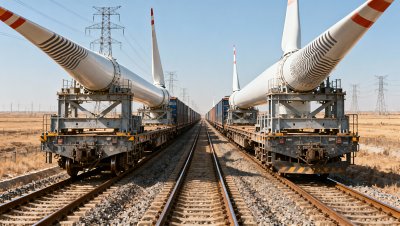
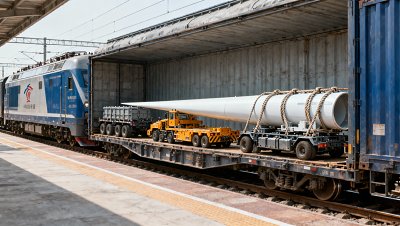
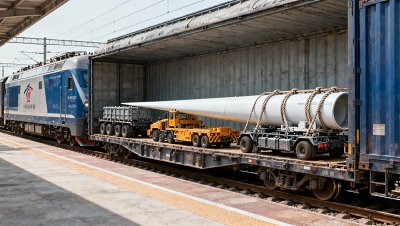
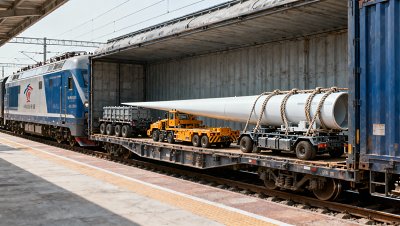
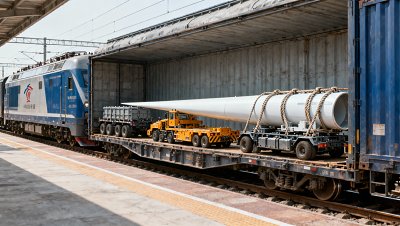
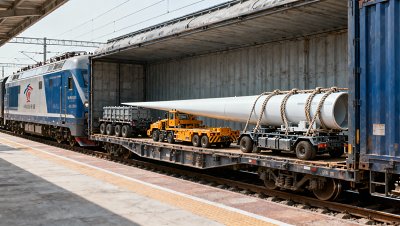
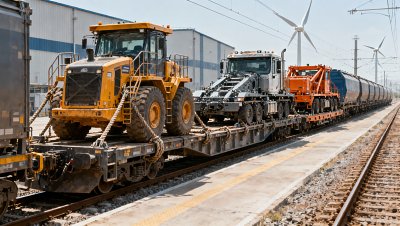
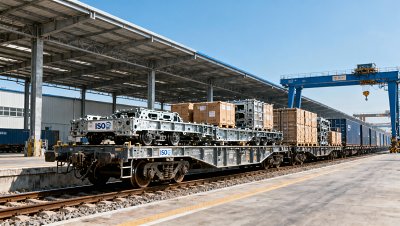
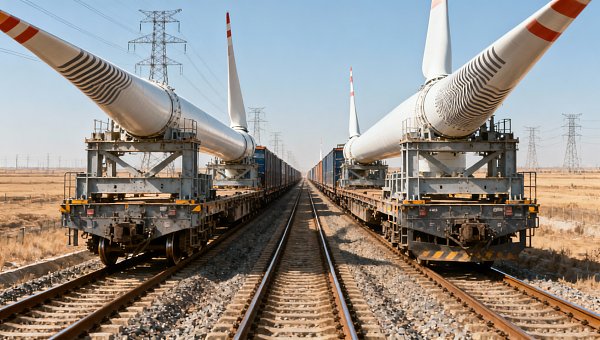
The Railway Cargo Transportation Rules, issued by China’s Ministry of Transport, enter into force on May 1, 2026. Under the new rules, all rail transport of oversized, overweight, or extra-long cargo—including wind turbine blade transporters, mining dump truck chassis, and modular highway trains—must be accompanied by a certified loading and reinforcement plan submitted to the departure station at least 72 hours prior to loading. The plan must include a reinforcement calculation report verified by a third-party certification institution.
Industries Affected by Sector
Direct Export Trading Enterprises
These enterprises face tighter domestic inland transit windows when moving large-scale export equipment (e.g., wind turbine components) from factories to ports. The 72-hour submission requirement compresses the allowable time between final assembly, structural verification, and rail dispatch—potentially delaying shipment schedules if documentation or certification is delayed.
Heavy Equipment Manufacturing Firms
Firms producing ultra-large machinery—including mining, energy, and infrastructure sectors—must now integrate third-party reinforcement validation into their standard delivery workflows. This adds both lead time and cost for engineering review and certification, especially where loading configurations are non-standard or project-specific.
Integrated Logistics & Multimodal Service Providers
Providers coordinating rail–road–port handoffs must now verify compliance readiness before accepting bookings for oversized cargo. Their operational risk increases if clients submit incomplete or uncertified plans late, triggering potential rework, demurrage, or rail access denial.
International Buyers & Project Procurement Teams
Overseas clients sourcing large equipment from China must now align procurement timelines with Chinese regulatory milestones—not just factory completion dates. They need earlier coordination with Chinese suppliers to initiate pre-submission reviews and certification备案 (filing), as delays may cascade into overseas installation or commissioning schedules.
Key Points for Enterprises and Practitioners
Monitor official guidance on third-party certification criteria
While the rule mandates third-party verification, the Ministry of Transport has not yet published a list of approved institutions or technical standards for reinforcement calculations. Enterprises should track upcoming notices from the National Railway Administration or provincial railway bureaus.
Identify high-risk cargo categories early in order planning
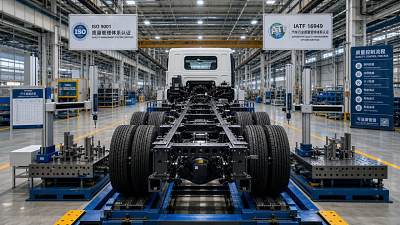
Cargo types explicitly cited—wind turbine blade transporters, mining dump truck chassis, and modular highway trains—are confirmed triggers. Firms handling similar dimensional profiles (e.g., transformer transporters, bridge girders, reactor vessels) should proactively assess whether their loads fall under the rule’s scope—even if not named.
Distinguish between policy issuance and implementation readiness
The rule takes legal effect on May 1, 2026, but actual enforcement—such as station-level acceptance protocols or digital submission platforms—may roll out gradually. Early adopters should test submission workflows with pilot stations ahead of full rollout.
Adjust internal handoff timelines between engineering, logistics, and export departments
A minimum 72-hour buffer must now be built into domestic transport scheduling. Engineering teams must finalize loading schemes earlier; logistics coordinators must reserve rail slots only after certification is confirmed—not merely initiated.
Editorial Perspective / Industry Observation
Observably, this rule signals a systemic shift toward formalized structural safety accountability in China’s rail freight system—not just procedural compliance. It does not introduce new dimensional thresholds, but rather institutionalizes verification as a prerequisite for access. Analysis shows it reflects growing scrutiny of infrastructure load impacts amid expanding deployment of ultra-heavy industrial equipment. From an industry perspective, it functions less as an isolated regulation and more as a coordination checkpoint: its real-world impact will depend heavily on how consistently certification bodies, railway bureaus, and shippers interpret and execute the 72-hour window and documentation scope. Continued observation is warranted on enforcement consistency and certification capacity bottlenecks.
Conclusion
Effective May 1, 2026, the new Railway Cargo Transportation Rules establish a binding pre-approval mechanism for oversized rail shipments in China. Its significance lies not in altering what can be transported, but in reshaping *when* and *how* transport authorization is secured. For stakeholders, it is best understood not as a one-time compliance update—but as a structural recalibration of timing, responsibility, and cross-functional alignment across manufacturing, engineering, and logistics workflows.
Information Sources
Main source: Ministry of Transport of the People’s Republic of China — Railway Cargo Transportation Rules, effective May 1, 2026.
Note: Details regarding approved third-party institutions, technical evaluation criteria, and digital submission procedures remain pending official release and are subject to ongoing monitoring.
Trending News
- Low Bed Trailer Export for Mining: How to Match Axle Layout to Load Type
- Semi Trailer Manufacturer for Logistics: What Impacts Turnaround Efficiency
- How Low-Maintenance Truck Spare Parts Reduce Downtime Over Time
- When Fireproof Materials Add Real Value in Semi Trailer Manufacturing
- Are Waterproof Features Worth It in Low Bed Trailer Export Projects
Tag
Recommended News
 Policy & RegulationsHow ISO Certification Reduces Risk When Choosing a Heavy Truck Chassis ManufacturerChoose a heavy truck chassis manufacturer with ISO certification to reduce compliance, quality, and safety risks. Learn how certified processes improve traceability and supplier reliability.
 Policy & RegulationsNew Railway Cargo Rules Take Effect May 1, 2026New Railway Cargo Rules (2026) mandate 72h pre-submission for oversized cargo—critical for wind power, heavy machinery & multimodal logistics exporters. Act now!
 Policy & RegulationsKazakhstan Extends Zero Tariff on China-Europe Express Truck Parts to 2027Kazakhstan extends zero tariff on China-Europe Express truck parts to 2027—now covering 12 intelligent control components. Boost your export edge in陆路运输设备.
 Policy & RegulationsNew Railway Freight Rules Effective May 1, 2026: 72-Hour Pre-Submission for Oversize CargoNew railway freight rules (effective May 1, 2026) require 72-hour pre-submission for oversize cargo — critical for land transport equipment shippers, EPC contractors & heavy-lift logistics providers.
 Policy & RegulationsKazakhstan Extends Zero Tariff on China’s Rail Truck Parts to 2027Kazakhstan extends zero tariff on China’s rail truck parts to 2027 — now covering 12 intelligent control system components. Boost your Central Asia market access & pricing edge.
 Policy & RegulationsNew Railway Freight Rules Effective May 1, 2026: 72-Hour Pre-Submission for Oversize CargoNew railway freight rules (effective May 1, 2026) require 72-hour pre-submission for oversize cargo — critical for land transport equipment shippers, EPC contractors & heavy-lift logistics providers.
 Policy & RegulationsKazakhstan Extends Zero Tariff on China’s Rail Truck Parts to 2027Kazakhstan extends zero tariff on China’s rail truck parts to 2027 — now covering 12 intelligent control system components. Boost your Central Asia market access & pricing edge.
 Policy & RegulationsNew Railway Freight Rules Effective May 1, 2026: 72-Hour Pre-Submission for Oversize CargoNew railway freight rules (effective May 1, 2026) require 72-hour pre-submission for oversize cargo — critical for land transport equipment shippers, EPC contractors & heavy-lift logistics providers.
 Policy & RegulationsKazakhstan Extends Zero Tariff on China’s Rail Truck Parts to 2027Kazakhstan extends zero tariff on China’s rail truck parts to 2027 — now covering 12 intelligent control system components. Boost your Central Asia market access & pricing edge.
 Policy & RegulationsNew Railway Freight Rules Effective May 1, 2026: 72-Hour Pre-Submission for Oversize CargoNew railway freight rules (effective May 1, 2026) require 72-hour pre-submission for oversize cargo — critical for land transport equipment shippers, EPC contractors & heavy-lift logistics providers.
 Policy & RegulationsKazakhstan Extends Zero Tariff on China’s Rail Truck Parts to 2027Kazakhstan extends zero tariff on China’s rail truck parts to 2027 — now covering 12 intelligent control system components. Boost your Central Asia market access & pricing edge.
 Policy & RegulationsNew Railway Freight Rules Effective May 1, 2026: 72-Hour Pre-Submission for Oversize CargoNew railway freight rules (effective May 1, 2026) require 72-hour pre-submission for oversize cargo — critical for land transport equipment shippers, EPC contractors & heavy-lift logistics providers.
 Policy & RegulationsKazakhstan Extends Zero Tariff on China’s Rail Truck Parts to 2027Kazakhstan extends zero tariff on China’s rail truck parts to 2027 — now covering 12 intelligent control system components. Boost your Central Asia market access & pricing edge.
 Policy & RegulationsTruck Chassis Supplier in Europe: Key Compliance Points Before OrderingTruck chassis supplier in Europe: learn the key compliance checks before ordering, from documents and axle loads to body integration and safety, to reduce risk and source with confidence.
 Policy & RegulationsNew Railway Cargo Rules Effective May 1, 2026: 72-Hour Pre-Submission for Oversized LoadsNew railway cargo rules (2026) require 72-hour pre-submission for oversized land transport equipment—critical for exporters, manufacturers & freight forwarders on China-Europe/Asia rail corridors.
 Policy & RegulationsLow Bed Trailer Export to Southeast Asia: Key Compliance Points to KnowLow bed trailer export to Southeast Asia requires more than pricing. Discover key compliance points on axle loads, certifications, road standards, and supplier evaluation for safer, faster sourcing.
 Policy & RegulationsEU Mandates ISO 27145-2 Compliance for Heavy-Duty Trucks from May 2026EU mandates ISO 27145-2 compliance for heavy-duty trucks from May 2026 — ensure your exports meet remote diagnostics, type approval & after-sales requirements.
 Policy & RegulationsNew China Railway Freight Rules Take Effect May 1, 2026New China railway freight rules (2026) mandate transparent pricing & service standards for land transport equipment — boosting predictability for China-Europe rail shippers.
 Policy & RegulationsHow to Evaluate a Truck Chassis Supplier in Europe for Compliance and StabilityTruck chassis supplier in Europe selection starts with compliance and stability. Discover a practical checklist to compare suppliers, reduce sourcing risk, and choose reliable long-term partners.
 Policy & RegulationsWhat Sets a Truck Trailer Exporter Apart in Regulated MarketsTruck trailer exporter selection in regulated markets goes beyond price. Learn how compliance, documentation, traceability, and service reduce risk and improve sourcing decisions.
 Policy & RegulationsNew Railway Cargo Regulations Take Effect May 1, 2026New Railway Cargo Regulations (2026) impact rail freight exporters, forwarders & importers—key for China-Europe/Asia rail logistics. Act now to ensure compliance.
 Policy & RegulationsNew Railway Cargo Rules Take Effect May 1, 2026New Railway Cargo Rules (effective May 1, 2026) reshape rail freight compliance for exporters, logistics providers & manufacturers—key updates on fees, safety, and data sharing.
 Policy & RegulationsHuanggang Port Freight Closure Shapes Shenzhen-HK Logistics PatternHuanggang Port freight closure reshapes Shenzhen-HK logistics — key implications for truck & special-purpose vehicle exporters, customs brokers, and ASEAN/Middle East supply chains.
 Policy & Regulations2026 Q1 Transport Industry Tax & Finance Policy List Released2026 Q1 transport industry tax & finance policy: 35% export credit insurance subsidy for heavy-duty & new-energy trucks — key updates for road freight and OEM exporters.
 Policy & Regulations2026 Q1 Transport Industry Tax & Finance Policy List Released2026 Q1 Transport Industry Tax & Finance Policy List: 35% export credit insurance subsidy for heavy-duty trucks, special-purpose vehicles, KD kits & chassis via China-Europe Railway, Western Land-Sea Passage & RCEP routes—key update for exporters & OEMs.