How Low-Maintenance Truck Spare Parts Reduce Downtime Over Time
For after-sales maintenance teams, reducing vehicle downtime starts with choosing the right components. A reliable truck spare parts supplier with low maintenance can help fleets lower service frequency, simplify repairs, and improve long-term operating efficiency. In the heavy transport industry, durable spare parts are not just a cost-saving option—they are a practical strategy for keeping trucks on the road and maintenance schedules under control.
Why do low-maintenance truck spare parts matter so much for after-sales teams?
For after-sales maintenance personnel, downtime is rarely caused by a single dramatic failure. More often, it builds up through repeated small issues: premature wear, inconsistent fitment, frequent lubrication needs, weak seals, unstable electrical connectors, or parts that perform well at first but degrade too quickly under load. This is why the idea of working with a truck spare parts supplier with low maintenance has become increasingly important across the road transport equipment sector.
Low-maintenance spare parts are designed or selected to reduce intervention over time. That means fewer unscheduled inspections, fewer replacements between service intervals, and less time spent troubleshooting recurring failures. In practical terms, this supports better truck availability, more predictable workshop planning, and lower pressure on service teams that already manage tight turnaround targets.
For fleets operating heavy trucks in logistics, mining support, municipal engineering, or infrastructure transport, the value is compounded. Every hour a truck stays off the road can affect delivery performance, driver scheduling, customer satisfaction, and parts inventory planning. Choosing components from a truck spare parts supplier with low maintenance is therefore not only a purchasing decision. It is a long-term service strategy.
What makes a spare part “low maintenance” in real operating conditions?
A low-maintenance part is not simply a part with a long brochure life. It must perform reliably in actual truck duty cycles, under vibration, dust, moisture, heat, load variation, and sometimes poor road conditions. For maintenance teams, the real test is whether the part reduces service events over months and years, not just during initial installation.
Several characteristics usually define low-maintenance truck spare parts:
- High wear resistance in components such as brake elements, bushings, bearings, seals, and suspension parts.
- Stable material quality that resists cracking, warping, corrosion, or thermal fatigue.
- Accurate dimensional consistency for easier installation and fewer alignment-related problems.
- Compatibility with standard service intervals, reducing the need for extra workshop visits.
- Reliable sealing and connection performance, especially for pneumatic, hydraulic, and electrical systems.
Examples include air brake components that hold pressure consistently, filters that maintain performance without early blockage, suspension parts that tolerate heavy loads without rapid deformation, and electrical parts that resist moisture ingress. When sourced through a truck spare parts supplier with low maintenance, these products help standardize performance across different vehicles and routes.
Which truck parts have the biggest impact on downtime when maintenance is poor?
Not all spare parts influence downtime equally. Some failures are easy to fix during scheduled service, while others trigger immediate vehicle stoppage or safety restrictions. After-sales teams should focus first on components that directly affect drivability, braking, steering, engine operation, and load stability.
The most downtime-sensitive categories usually include braking system parts, clutch components, suspension assemblies, steering linkages, filters, seals, cooling parts, and key electrical items such as sensors, relays, and harness connectors. If these parts require frequent replacement or show inconsistent quality, trucks are more likely to return to the workshop unexpectedly.
For example, a low-grade seal may cost little upfront but lead to fluid leakage, contamination, and secondary damage. A poorly manufactured bearing can create vibration that affects surrounding assemblies. A low-quality sensor may trigger fault codes that are difficult to diagnose, consuming technician time even when the vehicle has no major mechanical failure. This is why a truck spare parts supplier with low maintenance should be evaluated not only by price, but by failure pattern, fitment precision, and field reliability.
How can maintenance teams identify a trustworthy truck spare parts supplier with low maintenance?
This is one of the most practical questions for after-sales teams. A trustworthy supplier is not defined only by catalog size or export reach. The more useful standard is whether the supplier helps reduce lifecycle maintenance burden. In other words, can they provide parts that last, technical information that supports correct installation, and supply continuity that prevents emergency sourcing?
A good evaluation process usually includes the following checks:
- Review product consistency across batches, not just one sample order.
- Confirm whether the supplier supports parts traceability and specification transparency.
- Ask for application guidance by truck type, load profile, and operating environment.
- Check whether replacement intervals are realistic in heavy-duty usage.
- Evaluate responsiveness on technical questions, warranty issues, and recurring fault feedback.
Professional B2B platforms can make this process easier by connecting buyers with verified manufacturers and suppliers across the heavy truck supply chain. For maintenance teams, access to product categories, supplier comparisons, and industry information supports better sourcing decisions, especially when managing mixed fleets or international procurement channels.
What should you compare beyond price when selecting low-maintenance parts?
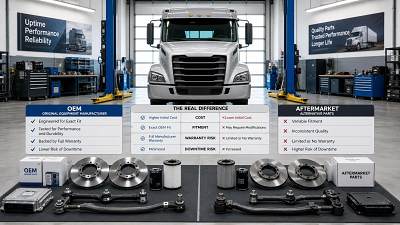
Price remains important, but a low purchase cost can easily be erased by labor hours, road failures, towing, delayed deliveries, and repeat replacements. The more useful metric is total operating impact. After-sales teams should compare parts using service life, installation reliability, fault recurrence, and downtime risk.
The table below summarizes key comparison points when evaluating a truck spare parts supplier with low maintenance.
This broader comparison is especially useful when servicing commercial vehicles across different routes and load conditions. A truck spare parts supplier with low maintenance should help maintenance teams reduce uncertainty, not just lower invoice totals.
Are there common mistakes when buying parts for long-term reliability?
Yes, and many of them are preventable. One common mistake is assuming that all visually similar parts perform the same. In heavy-duty truck operation, slight differences in metallurgy, sealing design, or manufacturing tolerance can lead to major differences in lifespan. Another mistake is choosing parts based only on current failure replacement, without reviewing the system conditions that caused the failure in the first place.
Maintenance teams also sometimes underestimate the cost of inconsistency. If one shipment performs well and the next has variable quality, technicians lose time diagnosing unusual wear or installation problems. This makes supplier stability just as important as product specification. That is why a truck spare parts supplier with low maintenance should be viewed as a long-term operational partner rather than a one-time vendor.
Another frequent mistake is separating procurement from workshop feedback. The best sourcing decisions often come from combining field data, technician observations, warranty records, and route-specific wear patterns. When these insights are shared with suppliers, buyers can refine specifications and select more suitable low-maintenance solutions.
How do low-maintenance parts improve service scheduling and workshop efficiency over time?
The long-term value goes beyond part longevity. When spare parts last longer and fail less unpredictably, workshops can move from reactive repairs toward planned maintenance. This improves technician utilization, parts inventory accuracy, and bay scheduling. It also reduces pressure caused by urgent breakdown repairs that interrupt routine service work.
For after-sales teams, low-maintenance parts simplify planning in several ways. First, service intervals become easier to forecast. Second, common repairs can be standardized across truck models or operating regions. Third, fewer emergency failures mean less need for expensive express procurement or temporary substitute parts. Over time, this creates a more stable maintenance rhythm and more consistent fleet availability.
This is especially valuable in international or multi-branch operations where procurement, service, and vehicle dispatch may be handled across different teams. A dependable truck spare parts supplier with low maintenance supports operational coordination by reducing the variability that often disrupts service schedules.
What questions should you ask before purchasing from a supplier?
Before placing orders, after-sales maintenance teams should clarify a few practical points that directly affect long-term downtime performance. These questions help identify whether a supplier can truly support low-maintenance operation rather than simply offer a broad product list.
- Which truck models, applications, and load conditions is this part designed for?
- What service interval or expected operating life is realistic in heavy-duty use?
- What are the most common field failure causes, and how are they prevented?
- Is there stable batch quality and traceability documentation?
- Can the supplier support technical consultation, replacement matching, and recurring order continuity?
Asking these questions early helps maintenance teams compare suppliers on operational value, not only on quotation speed. It also reduces the risk of buying parts that appear cost-effective but create hidden workshop and downtime costs later.
What is the practical takeaway for after-sales maintenance teams?
Reducing downtime over time is rarely about one dramatic upgrade. It usually comes from making better everyday decisions about component quality, fitment reliability, supplier consistency, and service planning. For after-sales teams in the road transport equipment industry, choosing a truck spare parts supplier with low maintenance is one of the clearest ways to improve long-term fleet performance.
The most effective approach is to evaluate spare parts by lifecycle impact: how often they need attention, how reliably they perform in real heavy truck conditions, and how well the supplier supports technical clarity and stable replenishment. Platforms that connect global manufacturers, suppliers, distributors, and buyers can help maintenance teams compare options more efficiently and identify partners that match their operational requirements.
If you need to confirm a specific sourcing direction, service interval target, product category, or cooperation method, it is best to first discuss truck model coverage, operating environment, expected maintenance cycle, batch consistency, and technical support capability. Those answers will do more to reduce downtime than price alone ever can.
Trending News
- How does operating weight affect the price of a new excavator?
- How to compare concrete mixer truck suppliers by total landed cost
- How axle load limits affect low bed trailer exports to Southeast Asia
- How to locate a truck exhaust system leak before replacing parts
- When does heavy equipment transport require a lowboy trailer?
Tag
Recommended News
 Truck Parts IndustryWhat causes a truck injector to fail prematurely?Truck injector failure can stem from fuel contamination, water, wiring faults, heat, or incorrect installation. Discover practical diagnostic steps to prevent repeat repairs.
 Truck Parts IndustryEU REACH Rule Takes Effect for Truck Rubber PartsEU REACH Rule takes effect for truck rubber parts exported to the EU. Learn how SCIP reporting, SVHC declarations, and supply chain compliance now impact truck manufacturers and suppliers.
 Truck Parts IndustryHow to Evaluate Commercial Vehicle Parts With Eco-Friendly Materials for Durability and ComplianceCommercial vehicle parts with eco-friendly materials require more than green claims. Learn how to assess durability, compliance, and supplier reliability for smarter sourcing.
 Truck Parts IndustryHow to Evaluate a Truck Parts Supplier Beyond Unit PriceTruck parts supplier selection should go beyond unit price. Learn how to assess quality, traceability, compliance, delivery, and support to reduce fleet risk and total cost.
 Truck Parts IndustryVietnam to Require QR Traceability Labels on Imported Heavy-Truck PartsVietnam to Require QR Traceability Labels on Imported Heavy-Truck Parts from Aug 1, 2026. Learn scope, VNQR-2025 rules, VITRAC links, and how to avoid port refusal and fines.
 Truck Parts IndustryHow to Evaluate a Truck Spare Parts Supplier for Long-Term Cost ControlTruck spare parts supplier selection affects far more than price. Learn how to compare quality, delivery, traceability, and hidden costs to protect fleet uptime and control long-term expenses.
 Truck Parts IndustryFuel Injection Pump Failure Signs and What They Mean for Engine PerformanceFuel injection pump failure signs can quickly reduce truck power, raise fuel use, and trigger hard starts. Learn what each symptom means and when to act before costly downtime.
 Truck Parts IndustryExcavator Attachment Selection for Demolition and Site PrepExcavator attachment selection for demolition and site prep: compare breakers, grapples, crushers, and buckets to boost productivity, safety, and ROI.
 Truck Parts IndustryTruck Engine Overhaul or Replacement: Which Costs Less Long Term?Truck engine overhaul or replacement? Compare long-term cost, downtime, fuel efficiency, and reliability to choose the smarter option for your fleet.
 Truck Parts IndustryHow to Choose Excavator Parts That Last LongerExcavator parts buying guide: learn how to choose excavator parts that last longer by comparing fit, material quality, operating conditions, and supplier reliability.
 Truck Parts IndustryAre Eco-Friendly Commercial Vehicle Parts Durable Enough for Daily Use?Commercial vehicle parts with eco-friendly materials can be durable for daily use—if tested right. Explore where they perform best, key risks, and smarter sourcing insights.
 Truck Parts IndustryTruck Parts OEM vs Aftermarket: Cost, Fit, and Warranty RisksTruck parts OEM vs aftermarket: compare true cost, fit accuracy, and warranty risks to reduce downtime, avoid disputes, and make smarter fleet sourcing decisions.
 Truck Parts IndustryTruck Spare Parts Buying Guide: How to Reduce Downtime and Fitment RiskTruck spare parts buying guide for fleet maintenance teams: learn how to reduce downtime, avoid fitment risk, verify suppliers, and make smarter sourcing decisions.
 Truck Parts IndustryHow to Evaluate a Truck Parts Supplier Beyond PriceTruck parts supplier selection should go beyond price. Learn how to compare quality, delivery, service, and total cost to reduce risk and keep fleets running efficiently.
 Truck Parts IndustryHeavy Truck Parts for Construction: Signs of a Reliable ManufacturerHeavy truck parts manufacturer for construction: learn how to identify reliable suppliers through quality control, traceability, testing, and support to reduce downtime and improve fleet safety.
 Truck Parts IndustryHow to Compare Truck Spare Parts Suppliers on Quality and Lead TimeTruck spare parts supplier comparison starts with quality and lead time. Learn how to assess consistency, delivery reliability, and sourcing fit for smarter purchases.
 Truck Parts IndustryEU REACH Sets PAH Limit for Heavy Truck Rubber PartsEU REACH sets a new PAH limit for heavy truck rubber parts, affecting brake hoses, bushings, and export compliance. Learn what suppliers must prepare now to avoid testing delays and customs risks.
 Truck Parts IndustryWhat to Check in a Truck Chassis Supplier Before Fleet ExpansionTruck chassis supplier selection can make or break fleet expansion. Learn what to check on quality, production, delivery, support, and total cost before requesting a quote.
 Truck Parts IndustryCold Storage Truck Parts That Matter Most for Temperature ControlCommercial vehicle parts for cold storage determine real temperature stability. Discover the key truck components that reduce spoilage, improve efficiency, and protect sensitive cargo.
 Truck Parts IndustryHow to Evaluate a Heavy Truck Parts Manufacturer for Long-Term Supply StabilityHeavy truck parts manufacturer selection starts with supply stability. Learn how to assess quality, capacity, lead times, and risk signals for smarter long-term sourcing.
 Truck Parts IndustryEU EPR Rules Extend to Commercial TrailersEU EPR rules now extend to commercial trailers, bringing new registration, reporting, and fee duties from 2027. See how exporters can prepare early to avoid customs delays.
 Truck Parts IndustryTruck Suspension Problems: Signs, Causes, and Fix OptionsTruck suspension issues can lead to tire wear, poor handling, and costly downtime. Learn the key signs, root causes, and best fix options for different truck applications.
 Truck Parts IndustryHow to Choose a Heavy Truck Parts Manufacturer for Construction FleetsHeavy truck parts manufacturer for construction selection starts with uptime, quality, and delivery. Learn how to compare suppliers, reduce fleet risk, and choose with confidence.
 Truck Parts IndustryUS Sets AEBS Rule for Imported Commercial TrailersUS sets AEBS rule for imported commercial trailers starting Oct. 1, 2026. Learn FMVSS No. 127A, SAE J2929, and key compliance steps to avoid CBP entry denial.
 Truck Parts IndustryHow to Choose Commercial Vehicle Parts That Reduce DowntimeCommercial vehicle parts selection can make or break fleet uptime. Learn how to choose parts that improve fit, quality, supply reliability, and lower total downtime cost.