2026 Q1 Transport Industry Tax & Finance Policy List Released
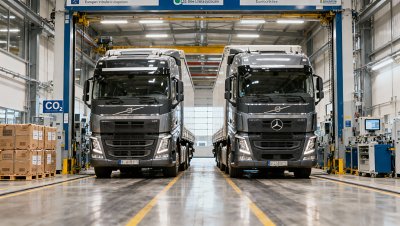
On April 25, 2026, the Ministry of Transport and the Ministry of Finance jointly released the Directory of Major National Fiscal, Tax, and Financial Preferential Policies Pertaining to the Transport Industry (First Quarter 2026). The update notably raises export credit insurance premium subsidies for heavy-duty trucks and special-purpose vehicles exported via the China-Europe Railway Express, the Western Land-Sea New Passage, and RCEP-related maritime routes—from 30% to 35%. Coverage now explicitly includes knock-down (KD) kits and chassis exports. This policy shift is directly relevant to exporters, OEMs, logistics service providers, and financial intermediaries engaged in cross-border heavy vehicle trade.
Event Overview
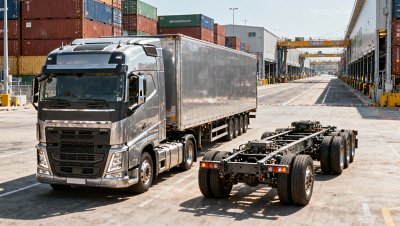
On April 25, 2026, the Ministry of Transport and the Ministry of Finance issued the Directory of Major National Fiscal, Tax, and Financial Preferential Policies Pertaining to the Transport Industry (First Quarter 2026). It specifies that the export credit insurance premium subsidy rate for heavy-duty trucks and special-purpose operation vehicles exported through the China-Europe Railway Express, the Western Land-Sea New Passage, and RCEP-affiliated shipping routes has been increased from 30% to 35%. The scope of eligible exports now extends to knock-down (KD) kits and chassis. No further implementation details—such as application procedures, eligibility verification timelines, or regional caps—have been publicly confirmed at this stage.
Industries Affected by This Policy Update
Direct Exporters (OEMs and Tier-1 Exporters)
These enterprises bear the upfront cost of export credit insurance premiums and are the primary beneficiaries of the 5-percentage-point increase. The higher subsidy directly improves gross margin on export contracts, especially where buyer credit terms are extended or local financing support is limited. Impact manifests in lower effective transaction costs and reduced counterparty risk exposure per unit shipped.
Supply Chain Service Providers (Export Credit Insurance Brokers & Logistics Integrators)
Firms facilitating export documentation, risk mitigation, and multimodal transport coordination may see increased demand for bundled services—including insurance advisory, compliance verification, and route-specific documentation support—as exporters seek to maximize subsidy eligibility. The expansion to KD kits and chassis introduces new compliance checkpoints related to classification, valuation, and origin tracing.
Aftermarket & CKD/KD Module Manufacturers
Manufacturers supplying sub-assemblies, modular components, or fully disassembled kits for overseas assembly are newly included under the subsidy framework. This may incentivize structural shifts toward more localized production partnerships abroad—but only if export documentation aligns precisely with the policy’s definition of “KD kit” and associated customs codes.
What Enterprises and Practitioners Should Monitor and Do Now
Track official implementation guidelines and eligibility criteria
The current directory lists the subsidy rate and coverage expansion but does not specify application windows, required documentation formats, or verification mechanisms. Enterprises should monitor announcements from the China Export & Credit Insurance Corporation (Sinosure) and local commerce departments for procedural clarity before adjusting quoting or contracting practices.
Verify product classification and shipment routing against subsidy conditions
Only exports routed via designated corridors (China-Europe Railway Express, Western Land-Sea New Passage, RCEP maritime routes) and meeting precise definitions for “heavy-duty truck,” “special-purpose vehicle,” “KD kit,” or “chassis” qualify. Companies should audit current export SKUs and logistics lanes to identify gaps—and avoid assuming automatic eligibility based on destination alone.
Distinguish between policy signal and operational readiness
Analysis来看, the 5% rate increase signals stronger state-level prioritization of heavy vehicle export competitiveness, particularly in infrastructure-linked trade corridors. However, from industry角度看, actual cash flow benefit depends on timely Sinosure claim processing and alignment with buyers’ financing structures—not just the headline rate change.
Prepare documentation workflows for KD/chassis shipments
Since KD kits and chassis are newly covered, exporters should review existing bill-of-materials, packing lists, and HS code declarations to ensure consistency with customs and insurance requirements. Early alignment with freight forwarders and Sinosure-accredited agents is advisable to avoid delays in subsidy claims.
Editorial Perspective / Industry Observation
Observation来看, this update is best understood as a targeted liquidity and risk-mitigation measure—not a broad-based stimulus. It reflects continued emphasis on corridor-specific trade facilitation rather than across-the-board export support. From industry角度, the inclusion of KD kits suggests a strategic pivot toward supporting overseas localization and joint venture manufacturing models, where component-level exports serve longer-term market entry objectives. Current more appropriate interpretation is that this is an enabling signal, not yet an operational lever: its real-world impact remains contingent on implementation fidelity, inter-agency coordination, and uptake by both Chinese exporters and foreign buyers.
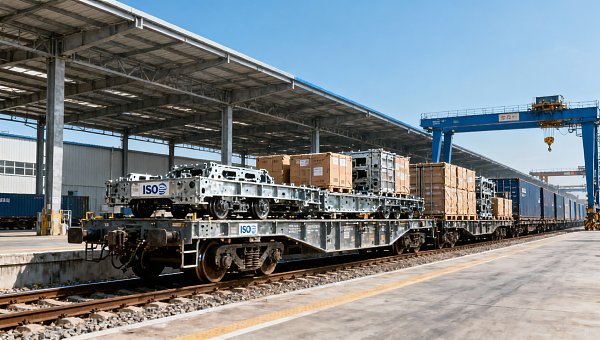
In summary, the 2026 Q1 policy list introduces a modest but operationally meaningful enhancement to export risk coverage for select transport equipment categories. Its significance lies less in scale and more in direction—reinforcing state-backed support for structured, corridor-aligned, and increasingly modular export strategies. At present, it is more accurately read as a calibrated adjustment to existing instruments than as a transformative shift in trade policy posture.
Source: Ministry of Transport of the People’s Republic of China, Ministry of Finance of the People’s Republic of China — Directory of Major National Fiscal, Tax, and Financial Preferential Policies Pertaining to the Transport Industry (First Quarter 2026), issued April 25, 2026.
Note: Implementation rules, application thresholds, and regional allocations remain pending official clarification and are subject to ongoing observation.
Trending News
- What documents are needed to export a low bed trailer to Southeast Asia?
- What to verify before choosing a delivery truck supplier for school transportation
- What an excavator manufacturer catalog should show before you compare models
- What to check before appointing a bulldozer distributor
- How to verify supplier reliability when sourcing bulldozers overseas
Tag
Recommended News
 Policy & RegulationsGermany Ends EV Subsidy ExtensionGermany ends EV subsidy extension, reshaping EV and commercial vehicle plans in Europe. See how importers, distributors, and Chinese NEV suppliers should respond.
 Policy & RegulationsEU Rule Sets LCA Certification for Truck ImportsEU Rule Sets LCA Certification for Truck Imports: learn how the new EU LCA and EPD compliance rule will affect truck approvals, export timelines, costs, and delivery planning.
 Policy & RegulationsEU Requires LCA Reports for Imported HDVs from Oct 2026EU LCA reports for imported HDVs become mandatory from Oct 2026. Learn how the new EU heavy-duty vehicle carbon compliance rule affects exporters, suppliers, costs, and delivery readiness.
 Policy & RegulationsChina Tightens Export Filing for New Energy Heavy TrucksChina Tightens Export Filing for New Energy Heavy Trucks: learn how new HS code rules and CNAS carbon-footprint reports may impact customs clearance, compliance, and delivery timelines.
 Policy & RegulationsEU Updates CO2 Rules for Heavy-Duty Vehicle ApprovalEU Updates CO2 Rules for Heavy-Duty Vehicle Approval: learn how new lifecycle carbon and battery due diligence requirements affect EU market access, approval timing, and compliance costs.
 Policy & RegulationsChina Customs Adds New Export Fields for Road Transport EquipmentChina Customs adds new export fields for road transport equipment from Aug 15, 2026. Learn how drive type and certification data may affect compliance, clearance speed, and export planning.
 Policy & RegulationsEU Tightens Truck WVTA Brake and Lighting TestsEU Tightens Truck WVTA Brake and Lighting Tests: learn how Regulation (EU) 2026/1387 reshapes brake response, headlamp compliance, certification timing, and EU market access.
 Policy & RegulationsEU Sets CO2 Rules for New Heavy Trucks from 2027EU Sets CO2 Rules for New Heavy Trucks from 2027: learn how new EU CO2 limits, OBD, and remote data upload requirements could reshape type approval, costs, and delivery planning.
 Policy & RegulationsEU Brings Forward Cybersecurity Approval for Heavy TrucksEU heavy truck cybersecurity approval moves to August 1, 2026. Learn how WVTA, UNECE R155, OTA and telematics rules will impact EU exports, type approval and delivery plans.
 Policy & RegulationsEU Moves Truck Cybersecurity WVTA Forward to Aug 1, 2026EU truck cybersecurity WVTA moves to Aug 1, 2026. Learn how UN R155 and EU 2022/1426 affect heavy truck type approval, exports, suppliers, and compliance planning.
 Policy & RegulationsEU Brings Forward WVTA Cybersecurity Approval for TrucksEU Brings Forward WVTA Cybersecurity Approval for Trucks: learn how the 2026 deadline impacts heavy truck exports, retrofit projects, supplier compliance, costs, and EU market-entry planning.
 Policy & RegulationsEU Brings Forward WVTA Cybersecurity Approval for Heavy TrucksEU heavy truck WVTA cybersecurity approval now starts on August 1, 2026. Learn how EU type approval, CSMS audits, ADAS, OTA, and registration risks affect exporters and manufacturers.
 Policy & RegulationsEU Cybersecurity Approval Rule Takes Effect for Heavy TrucksEU Cybersecurity Approval Rule now reshapes heavy trucks market access. Learn how CSMS, UNECE R155, and WVTA deadlines could impact certification, delivery, and EU export readiness.
 Policy & RegulationsEU Requires EN 15038 Declarations for Truck ImportsEU Requires EN 15038 Declarations for Truck Imports: learn how the new EU rule affects heavy truck customs clearance, compliance timing, and export readiness.
 Policy & RegulationsEU Rule Brings SCIP Filing to Imported Truck Battery PartsSCIP filing for imported truck battery parts becomes critical in the EU from Oct 1, 2026. Learn how the rule impacts heavy-duty truck exports, aftermarket parts, and customs compliance.
 Policy & RegulationsEU REACH Expands to Truck Battery PartsEU REACH expands to truck battery parts, covering lithium-ion battery modules, BMS units, and thermal systems. Learn how SCIP filing, SVHC disclosure, and EU export compliance may affect truck suppliers.
 Policy & RegulationsEU Sets Battery Footprint Rule for Heavy TrucksEU Sets Battery Footprint Rule for Heavy Trucks: learn how the 2027 EU battery carbon footprint requirement could impact type approval, customs clearance, and truck exports.
 Policy & RegulationsEU Requires Certified V2X Modules in Heavy TrucksEU Requires Certified V2X Modules in Heavy Trucks from July 22, 2026. Learn how UN R155 and ETSI EN 303 648 rules will impact EU type approval, registration, and exports.
 Policy & RegulationsEU Tightens V2X Approval for Heavy TrucksHeavy trucks entering the EU face tougher V2X approval from July 22, 2026. Learn how UNECE R155/R156 and EU Type Approval will affect registration, exports, and delivery readiness.
 Policy & RegulationsEU Rule Takes Effect: Heavy Trucks Need V2X from July 22, 2026Heavy trucks entering the EU from July 22, 2026 need V2X modules and UN R155 approval. Learn how this rule impacts compliance, certification, exports, and delivery.
 Policy & RegulationsEU Opens Euro 7 Transition for Heavy TrucksEU Opens Euro 7 Transition for Heavy Trucks: learn how new filing rules, battery carbon footprint declarations, and OBD II checks will impact EU truck exports and compliance planning.
 Policy & RegulationsEPA Update Removes Seven Chinese Diesel Engine ModelsEPA Update Removes Seven Chinese Diesel Engine Models: learn how this EPA compliance change could affect North American truck exports, sourcing, certification, and delivery planning.
 Policy & RegulationsEU Enforces Euro 7 for New Heavy TrucksEU Enforces Euro 7 for New Heavy Trucks: learn how stricter NOx, NH₃, and brake particle certification impacts EU market access, registration timing, and exporter compliance costs.
 Policy & RegulationsLight Duty Truck Manufacturer in USA: Key Compliance ChecksLight duty truck manufacturer in USA selection starts with compliance. Learn the key checks for FMVSS, emissions, load ratings, and traceability before you buy.
 Policy & RegulationsEU Enforces Euro 7 Upgrade for Heavy Truck ImportsEU Enforces Euro 7 Upgrade for Heavy Truck Imports: learn how new PN, NH3, brake and tire wear tests affect certification, customs clearance, and on-time EU delivery.