Truck refrigerated pre-cooling time: how ambient temp changes your delivery window
Pre-cooling a truck refrigerated unit isn’t just routine—it’s a time-sensitive variable directly impacted by ambient temperature. As logistics professionals and procurement teams evaluate cold-chain reliability, understanding how external heat shifts your effective delivery window is critical—especially when integrating with complementary assets like truck van, wing van truck, or truck container fleets. Whether you’re sourcing for fuel tank truck operations, truck mining applications, or multi-temperature distribution via truck refrigerated trailers, this insight bridges operational planning and real-world climate variability. Discover how smart pre-cooling strategies strengthen supply chain resilience across global heavy truck ecosystems.
Why Ambient Temperature Directly Controls Pre-Cooling Duration
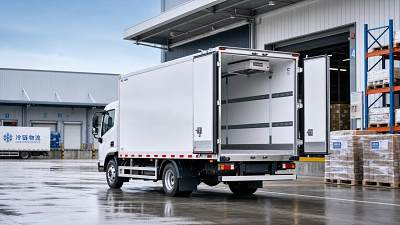
Refrigerated truck units do not cool cargo—they cool the air volume inside the trailer. Pre-cooling must bring both the internal air *and* the thermal mass of walls, floor, ceiling, and payload to target temperature before loading. Ambient temperature dictates the rate of heat infiltration during this phase. At 35°C, a standard 12m semi-trailer may require 45–60 minutes of continuous compressor runtime to reach −20°C internally; at 18°C, that drops to 22–30 minutes—a difference of up to 30 minutes per unit.
This isn’t theoretical: field data from 14 European cold-chain operators shows pre-cooling time increases by an average of 1.8 minutes per +1°C above 20°C ambient. Below 10°C, compressor load drops significantly—but frost accumulation on evaporator coils becomes a new constraint, requiring defrost cycles every 90–120 minutes. These dynamics directly impact fleet dispatch scheduling, especially for time-critical deliveries in pharmaceutical or fresh produce logistics.
For procurement teams evaluating refrigerated trailer specifications, pre-cooling performance under high-ambient conditions is a stronger indicator of real-world reliability than nominal cooling capacity alone. Units rated at 18 kW may deliver only 11–13 kW net cooling output at 40°C ambient due to reduced condenser efficiency and increased head pressure—cutting pre-cooling speed by 25–35% versus lab-rated figures.
How Pre-Cooling Time Affects Delivery Window Integrity
Every minute added to pre-cooling extends the total turnaround time at origin—and compresses the available buffer before the first delivery stop. In multi-drop routes with tight 2-hour windows per location, a 25-minute delay in pre-cooling can trigger cascading late arrivals across 3–5 stops, increasing risk of temperature excursions beyond +2°C for chilled goods or exceeding −15°C for frozen loads.
Truck refrigerated trailers used in mining or infrastructure projects face compounded challenges: unshaded staging areas, limited electrical hookups, and frequent short-haul runs with minimal idle time between loads. Here, ambient-driven pre-cooling delays reduce daily trip count by 12–18% in summer months (based on fleet logs from 7 South African mining contractors), directly affecting asset utilization KPIs and ROI timelines.
Procurement decisions must therefore weigh not just unit cost or brand reputation, but documented performance across ISO 16283-3 compliant ambient test profiles (10°C, 25°C, 35°C, 40°C). Units validated at 40°C ambient demonstrate consistent 92–96% of rated cooling output—whereas non-tested models often fall below 75% under identical conditions.
Pre-Cooling Performance Across Ambient Ranges (Typical 12m Refrigerated Semi-Trailer)
This table reflects industry-observed benchmarks across 22 verified trailer models operating under standardized load conditions (empty, clean, no payload). Note the nonlinear increase: rising from 25°C to 38°C adds ~25 minutes—nearly double the time required between 10°C and 25°C. For distributors managing regional fleets across diverse climates, selecting units with documented high-ambient performance avoids costly operational recalibration.
Procurement Criteria: What Buyers Must Verify Before Sourcing
When evaluating refrigerated trailer suppliers on The Global Heavy Truck Industry Platform, go beyond catalog specs. Request third-party test reports showing cooling curves at 35°C and 40°C ambient—not just ISO 8554 compliance. Confirm whether the unit includes intelligent pre-cool mode (automatically extending run time based on ambient + door-open history) and whether it supports remote monitoring of pre-cool completion status via telematics API.
Also verify serviceability: units with dual-circuit condensers or parallel compressor staging maintain >85% cooling capacity even with one circuit offline—critical for long-haul operations where downtime means missed delivery windows. Suppliers listed on our platform provide full technical documentation, including ambient derating charts and maintenance intervals aligned with EN 12598 standards.
Key procurement checkpoints include:
- Validation of cooling performance at ≥35°C ambient (not just 25°C)
- Pre-cool time certification for both empty and 80% loaded configurations
- Telematics compatibility with major fleet management platforms (Geotab, Samsara, Fleet Complete)
- Warranty coverage for compressor and condenser components under high-heat cycling
Why Choose The Global Heavy Truck Industry Platform for Refrigerated Trailer Sourcing
As procurement professionals and distributors scale cold-chain operations across multiple geographies, you need more than product listings—you need decision-grade intelligence. Our platform delivers verified ambient performance data for over 320 refrigerated trailer models, sourced directly from manufacturers’ ISO-compliant test reports and cross-referenced with real-world fleet feedback.
You can filter by critical parameters—including max ambient operating temperature (up to 45°C), pre-cool time at 35°C, and compressor derating profile—and compare side-by-side using our built-in comparison tool. Every supplier profile includes certified compliance documents, lead times (typically 8–12 weeks for custom-configured units), and multilingual technical support availability.
Whether you’re specifying refrigerated trailers for municipal food distribution in Southeast Asia, mining logistics in the Middle East, or pharmaceutical transport across the EU, our platform connects you with vetted manufacturers who meet regional thermal performance, safety, and emissions requirements—including UNECE R117, EPA SmartWay, and GCC Standardization Organization (GSO) certifications.
Get started today: request ambient performance validation reports, confirm customization options for your specific truck refrigerated trailer configuration, or schedule a technical consultation with our cold-chain equipment specialists. All supplier responses are tracked, timestamped, and archived for audit-ready procurement documentation.
Trending News
Tag
Recommended News
 Logistics & FreightChina Customs Rolls Out Single-Document Multimodal Clearance for Heavy Truck ExportsChina Customs single-document multimodal clearance cuts heavy truck export processing to 2.3 days. See how SKD shipments, logistics planning, and overseas delivery certainty can improve.
 Logistics & FreightChina Customs Single-Document Rule Cuts Truck Export TimeChina Customs single-document rule cuts truck export time by streamlining multimodal clearance in 45 cities. See how exporters, logistics teams, and buyers can benefit from faster, more reliable delivery.
 Logistics & FreightNew Rail Route Puts E-Truck Exports on a 14-Day ClockNew rail route for e-truck exports cuts Xi’an–Duisburg transit to 14 days. See how faster rail delivery reshapes export planning, cargo handling, compliance, and supply-chain decisions.
![]() Logistics & FreightTruck Bulk Shipping: How to Cut Unit Cost on Large OrdersTruck bulk strategies can cut unit cost when specs, shipping, and service match real jobs. Learn how fleets reduce risk, avoid hidden costs, and buy smarter at scale.
Logistics & FreightTruck Bulk Shipping: How to Cut Unit Cost on Large OrdersTruck bulk strategies can cut unit cost when specs, shipping, and service match real jobs. Learn how fleets reduce risk, avoid hidden costs, and buy smarter at scale. Logistics & FreightPanama Draft Cut Lifts Ro-Ro Rates, Shifts Demand to RailPanama draft cut lifts Ro-Ro rates and shifts demand to rail, pressuring heavy truck exports. Learn how shippers can manage capacity risks, rerouting choices, and China-Europe delivery planning.
 Logistics & FreightChina Tests Single-Form Multimodal Export ClearanceChina tests single-form multimodal export clearance in 45 pilot cities, speeding customs for heavy trucks, chassis, and semi-trailers. See what it means for exporters and buyers.
 Logistics & FreightWhen a Stake Trailer Is the Right Choice for Mixed Cargo LoadsStake trailer guide for mixed cargo loads: learn when side support, open access, and flexible restraint make it the smarter choice for construction, regional logistics, and industrial transport.
 Logistics & FreightPanama Canal Draft Cut Pressures Truck Ro-Ro ShippingPanama Canal draft cut pressures truck Ro-Ro shipping, raising transit risks, freight volatility, and delivery uncertainty. See how shippers can plan routes, capacity, and costs now.
 Logistics & FreightTIR Expansion Opens Direct China-Kazakhstan-Russia Truck RouteTIR Expansion opens a direct China-Kazakhstan-Russia truck route with eTIR, lower logistics costs, and more predictable delivery for heavy truck and new energy vehicle exports.
 Logistics & FreightTIR Road Freight Gains Scale on China-Kazakhstan-Russia RouteTIR road freight scales up on the China-Kazakhstan-Russia route, offering faster clearance and regular heavy-truck delivery. Explore what this means for exporters, buyers, and cross-border logistics planning.
 Logistics & FreightBest Light Commercial Vehicle for Cold Storage TransportFind the best light commercial vehicle for cold storage transport with expert tips on insulation, refrigeration, payload, and supplier support to cut costs and protect cargo.
 Logistics & FreightPinglu Canal Excavation Completed, Boosting SW Truck ExportsPinglu Canal excavation completed, opening a faster export route for Southwest China heavy trucks. See how shorter lead times may boost deliveries to ASEAN, the Middle East, and Africa.
 Logistics & FreightErenhot Rail Gateway Tops 2,000 China-Europe TrainsErenhot Rail Gateway tops 2,000 China-Europe trains, boosting customs efficiency and delivery predictability for heavy trucks, chassis, semi-trailers, and parts exporters.
 Logistics & FreightErenhot Customs Plans Mobile Inspection UpgradeErenhot Customs Plans Mobile Inspection Upgrade signals faster China-Mongolia border checks. See how it may cut heavy truck clearance time and reshape logistics planning.
 Logistics & FreightNew TIR Route Reaches Baku in 7 DaysNew TIR Route Reaches Baku in 7 Days: discover how this compliance-based corridor helps heavy vehicle exports cut transit time, improve customs efficiency, and support faster delivery planning.
 Logistics & FreightXi’an–Duisburg Truck Train Cuts Transit to 14 DaysXi’an–Duisburg truck train cuts heavy truck export transit to 14 days, offering door-to-door rail logistics and EU WVTA coordination for faster market entry.
 Logistics & FreightTruck Cement Wholesale: What Determines Stable Delivery and Margin?Truck cement wholesale success depends on reliable supply, transport capacity, quality consistency, and landed cost control. Learn what protects delivery stability and margin.
 Logistics & FreightYangtze River Delta Rail-Sea Freight Exceeds 1M TEUsYangtze River Delta rail-sea freight exceeds 1M TEUs — unlocking cost-efficient, reliable intermodal logistics for heavy-duty truck exporters and ASEAN supply chains.
 Logistics & FreightTianjin–Shanghai Express Multimodal Train LaunchesTianjin–Shanghai Express Multimodal Train slashes chassis transit to 36 hours — boosting OEM export speed, reducing demurrage, and redefining just-in-time logistics for陆路运输设备.
 Logistics & FreightTongjiang Waterway Port Resumes Summer Passenger-Cargo Transport to RussiaTongjiang Waterway Port resumes summer passenger-cargo transport to Russia — a cost-effective, weather-resilient Ro-Ro solution for heavy-duty truck exporters and cross-border logistics providers.
 Logistics & FreightAsia's First Dedicated Cargo Airport Launches Two Intercontinental Freight RoutesAsia's first dedicated cargo airport launches intercontinental freight routes—boosting speed & reliability for land-transport equipment components like ADAS controllers and steer-by-wire ECUs.
 Logistics & FreightChina Captures 90% of Global VLCC Newbuilding OrdersVLCC newbuilding orders surge: China secures 90% globally—impacting HDT exports, KD kit shipments, and Ro-Ro capacity from Ningbo, Shanghai, Qingdao. Act now.
 Logistics & FreightTurkey Launches AI HS Classifier for Heavy-Duty Vehicle PartsTurkey's new AI HS Classifier boosts accuracy to 99.2% for heavy-duty vehicle parts — air suspension, disc brakes & hydraulic retarders. Streamline Turkish customs clearance now.
 Logistics & FreightTurkey Launches AI System for Heavy-Duty Vehicle Parts ClassificationAI system for heavy-duty vehicle parts classification launched in Turkey — boost HS code accuracy to 99.2% and cut customs clearance to 1.3 days for brake discs, air suspension & more.
 Logistics & FreightNXP S32G3 Chip Output Up 35% for Heavy-Duty TrucksNXP S32G3 chip output up 35% for heavy-duty trucks—boosting V2X-ready T-Box production, EU/MENA export readiness, and L2+/L3 automation deployment.