Light Commercial Vehicles for Urban Delivery: Why Payload Flexibility Matters More Than Top Speed
In urban logistics, where narrow streets, frequent stops, and tight delivery windows define operational reality, light commercial vehicles for urban delivery are outpacing speed-centric designs — payload flexibility is now the decisive performance metric. Whether you're a procurement professional sourcing a light duty truck with automatic transmission, evaluating a commercial trucks manufacturer with global distribution, or a dealer seeking a light commercial vehicle for urban delivery, adaptability trumps velocity. Platforms like the Global Heavy Truck Industry Platform connect buyers with vetted suppliers — from heavy truck chassis manufacturers with R&D capability to dump truck suppliers for construction sites — ensuring real-world versatility meets tomorrow’s last-mile demands.
Why Payload Flexibility Defines Urban Delivery Efficiency
Urban delivery routes rarely demand top speeds above 60 km/h — yet they routinely require rapid reconfiguration between parcel boxes, refrigerated units, flatbeds, and modular cargo cages. A rigid 3.5-ton GVW chassis may meet legal weight limits but fail when payload distribution shifts mid-shift due to mixed-load orders. Real-world fleet operators report up to 22% downtime per week caused by mismatched bodywork-to-chassis integration — not engine failure.
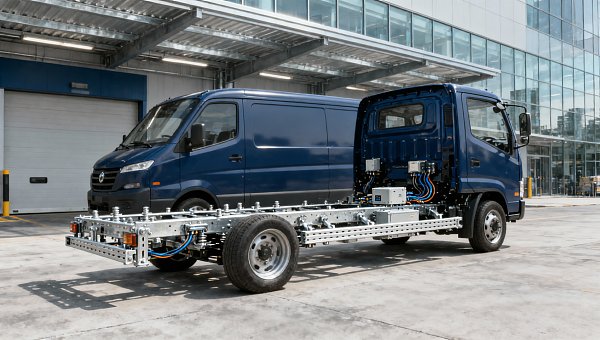
Payload flexibility encompasses three interdependent dimensions: structural modularity (e.g., bolt-on mounting rails compatible with ISO 1161 container interfaces), electrical readiness (pre-wired CAN bus ports for telematics and refrigeration controllers), and dynamic load balancing (adaptive suspension tuning across 800–2,500 kg payload ranges). These features reduce vehicle re-specification cycles from 4–6 weeks to under 72 hours.
Unlike highway freight, urban operations face micro-environments: cobblestone alleys in historic districts, steep gradients in hillside municipalities, and curbside congestion requiring repeated 0–20 km/h acceleration bursts. Here, torque delivery at 1,200–2,400 rpm matters more than peak horsepower — and payload adaptability directly affects drivetrain thermal management, battery regeneration efficiency, and brake wear consistency over 150+ daily stop-start events.
How Light Commercial Vehicle Payload Systems Compare Across Key Use Cases
Selecting the right light commercial vehicle for urban delivery requires mapping payload architecture to mission-critical variables: average order density (parcels per km), vertical loading frequency (ground-level vs. elevated dock), and regulatory compliance scope (EU Directive 2019/1242, U.S. EPA Tier 4 Final, China GB 17691-2018). The table below compares four common configurations used by logistics providers across Europe, North America, and Southeast Asia.
The modular chassis configuration delivers highest long-term TCO — especially for distributors managing seasonal demand spikes (e.g., holiday parcel volumes increasing 3–5× baseline). Its 2–4 hour reconfiguration window enables same-day fleet role-switching: morning refrigerated deliveries → afternoon flatbed hardware runs → evening courier parcels. Fixed-body variants incur higher lifecycle costs due to forced early retirement when route mix changes.
Procurement Checklist: 5 Non-Negotiable Payload Flexibility Criteria
When evaluating light commercial vehicles for urban delivery, procurement professionals and dealers must verify these five technical and commercial criteria — each tied to measurable service-level outcomes:
- Standardized mounting interface: Confirmed ISO 1161 or DIN 30722 rail spacing (±1.5 mm tolerance) enabling third-party body fitment without chassis modification.
- Electrical architecture compatibility: Pre-installed 12V/24V dual-battery circuits with CAN FD (2 Mbps) gateway supporting OEM telematics and aftermarket refrigeration controllers.
- Dynamic payload rating validation: Suspension system certified across full 800–2,500 kg range with ≤5% camber change at maximum load — verified via supplier test reports (not brochure claims).
- Global certification alignment: ECE R100 (electric drive), UN Regulation 13-H (braking), and regional type-approval documentation available within 5 business days of inquiry.
- Aftermarket support ecosystem: Minimum of 3 certified bodybuilders listed per region on the Global Heavy Truck Industry Platform, with documented lead times ≤10 working days for custom configurations.
Dealers assessing commercial trucks manufacturers should cross-reference these criteria against actual field data — not spec sheets. For example, one European OEM reduced warranty claims related to body-mount fatigue by 68% after adopting ISO-aligned rail systems in Q3 2023. That data is publicly accessible via the platform’s supplier verification dashboard.
Why the Global Heavy Truck Industry Platform Accelerates Your Payload-Focused Sourcing
Sourcing light commercial vehicles for urban delivery isn’t about comparing brochures — it’s about validating real-world payload adaptability across your exact operating conditions. The Global Heavy Truck Industry Platform eliminates guesswork through three integrated capabilities:
First, its Smart Match Engine filters 1,200+ light truck listings by payload modularity parameters: rail spacing, electrical port count, suspension type, and regional certification status — returning only vehicles pre-verified for your target markets (e.g., EU homologation + ASEAN safety compliance).
Second, its Supplier Validation Hub provides auditable evidence: factory test reports for dynamic load testing, CAD-compatible mounting diagrams, and lead-time commitments backed by contractual SLAs — all accessible before contact initiation.
Third, its Application Support Portal connects you directly with engineers from chassis manufacturers and certified bodybuilders — enabling joint design reviews for custom payload configurations within 48 business hours. This cuts typical specification-to-quote cycle from 3–4 weeks to under 5 working days.
Get Started With Payload-Optimized Sourcing Today
Whether you’re finalizing Q4 fleet expansion, evaluating alternatives to aging diesel vans, or building a distributor network for modular urban delivery solutions — the Global Heavy Truck Industry Platform delivers actionable intelligence, not just listings.
Contact our industry specialists to: confirm payload compatibility for your specific route profiles; compare certified bodybuilder lead times across 12 global regions; review OEM engineering documentation for dynamic load validation; or request sample configurations for pilot deployment. All consultations include multilingual technical support and no-cost access to the platform’s full market intelligence suite.
Tag
Recommended News
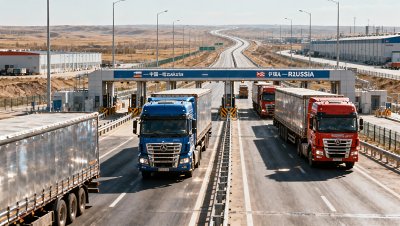
 Logistics & FreightTIR Road Freight Gains Scale on China-Kazakhstan-Russia RouteTIR road freight scales up on the China-Kazakhstan-Russia route, offering faster clearance and regular heavy-truck delivery. Explore what this means for exporters, buyers, and cross-border logistics planning.
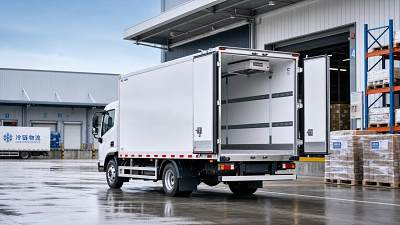
 Logistics & FreightBest Light Commercial Vehicle for Cold Storage TransportFind the best light commercial vehicle for cold storage transport with expert tips on insulation, refrigeration, payload, and supplier support to cut costs and protect cargo.
 Logistics & FreightPinglu Canal Excavation Completed, Boosting SW Truck ExportsPinglu Canal excavation completed, opening a faster export route for Southwest China heavy trucks. See how shorter lead times may boost deliveries to ASEAN, the Middle East, and Africa.
 Logistics & FreightErenhot Rail Gateway Tops 2,000 China-Europe TrainsErenhot Rail Gateway tops 2,000 China-Europe trains, boosting customs efficiency and delivery predictability for heavy trucks, chassis, semi-trailers, and parts exporters.
 Logistics & FreightErenhot Customs Plans Mobile Inspection UpgradeErenhot Customs Plans Mobile Inspection Upgrade signals faster China-Mongolia border checks. See how it may cut heavy truck clearance time and reshape logistics planning.
 Logistics & FreightNew TIR Route Reaches Baku in 7 DaysNew TIR Route Reaches Baku in 7 Days: discover how this compliance-based corridor helps heavy vehicle exports cut transit time, improve customs efficiency, and support faster delivery planning.
 Logistics & FreightXi’an–Duisburg Truck Train Cuts Transit to 14 DaysXi’an–Duisburg truck train cuts heavy truck export transit to 14 days, offering door-to-door rail logistics and EU WVTA coordination for faster market entry.
 Logistics & FreightTruck Cement Wholesale: What Determines Stable Delivery and Margin?Truck cement wholesale success depends on reliable supply, transport capacity, quality consistency, and landed cost control. Learn what protects delivery stability and margin.
 Logistics & FreightYangtze River Delta Rail-Sea Freight Exceeds 1M TEUsYangtze River Delta rail-sea freight exceeds 1M TEUs — unlocking cost-efficient, reliable intermodal logistics for heavy-duty truck exporters and ASEAN supply chains.
 Logistics & FreightTianjin–Shanghai Express Multimodal Train LaunchesTianjin–Shanghai Express Multimodal Train slashes chassis transit to 36 hours — boosting OEM export speed, reducing demurrage, and redefining just-in-time logistics for陆路运输设备.
 Logistics & FreightTongjiang Waterway Port Resumes Summer Passenger-Cargo Transport to RussiaTongjiang Waterway Port resumes summer passenger-cargo transport to Russia — a cost-effective, weather-resilient Ro-Ro solution for heavy-duty truck exporters and cross-border logistics providers.
 Logistics & FreightAsia's First Dedicated Cargo Airport Launches Two Intercontinental Freight RoutesAsia's first dedicated cargo airport launches intercontinental freight routes—boosting speed & reliability for land-transport equipment components like ADAS controllers and steer-by-wire ECUs.
 Logistics & FreightChina Captures 90% of Global VLCC Newbuilding OrdersVLCC newbuilding orders surge: China secures 90% globally—impacting HDT exports, KD kit shipments, and Ro-Ro capacity from Ningbo, Shanghai, Qingdao. Act now.
 Logistics & FreightTurkey Launches AI HS Classifier for Heavy-Duty Vehicle PartsTurkey's new AI HS Classifier boosts accuracy to 99.2% for heavy-duty vehicle parts — air suspension, disc brakes & hydraulic retarders. Streamline Turkish customs clearance now.
 Logistics & FreightTurkey Launches AI System for Heavy-Duty Vehicle Parts ClassificationAI system for heavy-duty vehicle parts classification launched in Turkey — boost HS code accuracy to 99.2% and cut customs clearance to 1.3 days for brake discs, air suspension & more.
 Logistics & FreightNXP S32G3 Chip Output Up 35% for Heavy-Duty TrucksNXP S32G3 chip output up 35% for heavy-duty trucks—boosting V2X-ready T-Box production, EU/MENA export readiness, and L2+/L3 automation deployment.
 Logistics & FreightAsia's First Dedicated Cargo Airport Launches Two Intercontinental Freight RoutesLand transport equipment exporters: Ezhou’s new cargo airport launches Chicago & Frankfurt air routes—7-day delivery for heavy-duty truck components, modular air freight, green channel access.
 Logistics & FreightPakistan Opens 6 Iran-Bound Land Corridors, Cutting China Heavy-Truck Transit to 6 HoursPakistan opens 6 Iran-bound land corridors—cutting China heavy-truck transit to just 6 hours. Boost BS VI truck exports, slash logistics costs & accelerate CPEC freight.
 Hits 103 Trains in One Month") Logistics & FreightCentral Asia Railway (Wuhan) Hits 103 Trains in One MonthCentral Asia Railway (Wuhan) hits 103 trains in April 2026 — traction vehicles, concrete mixer chassis & low-bed semi-trailers drive 37% of exports. Fast, reliable overland transport for Central Asia & Caspian markets.
Logistics & FreightCentral Asia Railway (Wuhan) Hits 103 Trains in One MonthCentral Asia Railway (Wuhan) hits 103 trains in April 2026 — traction vehicles, concrete mixer chassis & low-bed semi-trailers drive 37% of exports. Fast, reliable overland transport for Central Asia & Caspian markets. Logistics & FreightErenhot Highway Port Launches 24-Hour Freight ClearanceErenhot Highway Port now offers 24-hour freight clearance—boosting speed & reliability for heavy-duty truck exporters, cross-border logistics, and Mongolian distributors.
 Logistics & FreightErlianhot Highway Port Launches 24-Hour Freight ClearanceErlianhot Highway Port now offers 24-hour freight clearance — China’s first round-the-clock land port for Mongolia-bound heavy-duty vehicles and construction equipment. Faster, more predictable cross-border logistics await.
 Hits 103 Trains in One Month") Logistics & FreightCentral Asia Railway (Wuhan) Hits 103 Trains in One MonthCentral Asia Railway (Wuhan) hits 103 trains in April 2026 — a record boost for land transport equipment exporters, freight forwarders & EU/Central Asian buyers.
Logistics & FreightCentral Asia Railway (Wuhan) Hits 103 Trains in One MonthCentral Asia Railway (Wuhan) hits 103 trains in April 2026 — a record boost for land transport equipment exporters, freight forwarders & EU/Central Asian buyers. Logistics & FreightBest Flatbed Trailer Supplier Options for Logistics TransportationFind the best flatbed trailer supplier for logistics transportation with expert tips on load capacity, durability, compliance, and supplier support to improve fleet efficiency.
 Logistics & FreightErenhot Highway Port Launches 24-Hour Freight Clearance for MongoliaErenhot Highway Port launches 24-hour freight clearance for Mongolia — boosting speed, reliability & TIR-compliant exports of heavy vehicles and machinery.
 Logistics & FreightChina–Central Asia Customs Sign E-Release Mutual Recognition MOUChina–Central Asia e-release MOU streamlines road transport equipment clearance—tractors, semi-trailers & special vehicles now benefit from mutual recognition, faster borders & lower logistics costs.