How High-Strength Flatbed Trailers Reduce Cargo Risk on Long Routes
For quality control and safety managers, long-haul cargo security depends heavily on trailer strength and stability. Choosing a flatbed trailer supplier with high strength standards can significantly reduce load shifting, structural stress, and damage risks over extended routes. This article explores how high-strength flatbed trailers improve transport safety, support compliance, and help protect valuable cargo in demanding road conditions.
In long-distance road transport, cargo loss rarely results from one dramatic failure alone. More often, damage builds gradually through deck flex, frame fatigue, uneven load distribution, poor lashing points, and vibration over 500 to 2,000 km routes. For teams responsible for inspection, acceptance, and operational safety, trailer strength is not just a specification on paper. It directly affects claims exposure, loading discipline, downtime, and legal risk.
That is why many buyers now evaluate not only trailer price and payload, but also whether a flatbed trailer supplier with high strength manufacturing capability can support route-specific performance, quality traceability, and after-sales response. On a global B2B platform serving the heavy truck and transport equipment sector, this supplier screening process has become a practical way to reduce procurement uncertainty and improve cargo protection outcomes.
Why Trailer Strength Matters More on Long Routes
A flatbed trailer working on a 50 km regional shuttle and one running 1,200 km across mixed road conditions face very different stress profiles. On long routes, repeated braking, lane changes, crosswinds, road joints, potholes, and elevation changes create cumulative dynamic loads. Even when cargo weight remains within nominal capacity, the trailer frame can experience cyclic stress well above static loading assumptions.
For quality control teams, this means the real risk is not limited to overload. A structurally weak or poorly reinforced flatbed can twist under concentrated cargo, causing lashing tension to change during transit. Once restraint force drops by even 10% to 20%, the chance of micro-movement increases. Over several hundred kilometers, that movement can damage packaged goods, deform steel products, or create unsafe load shift conditions.
Safety managers also need to consider the interaction between trailer strength and braking stability. A trailer with better torsional rigidity keeps axle alignment more consistent, especially during emergency braking or evasive maneuvers. This can help reduce lateral sway, uneven tire wear, and load transfer that may otherwise compromise vehicle control during long-haul operations.
Key long-haul stress factors
- Repeated vibration cycles over 8 to 14 hours of daily operation
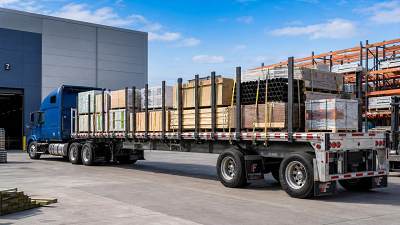
- Concentrated point loads from machinery, coils, pipes, or precast materials
- Higher exposure to uneven roads, ramps, and sharp corrective steering inputs
- Load securing fatigue caused by shifting deck geometry or flexing side structures
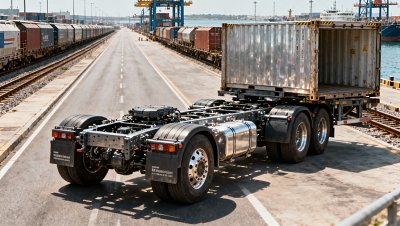
A flatbed trailer supplier with high strength design standards typically addresses these issues through optimized beam sections, higher-tensile steel usage in critical areas, improved cross-member spacing, and reinforced gooseneck or suspension connection zones. These details matter because the most common long-haul failures often begin at weld transitions, stress concentration points, and unsupported deck spans.
From a procurement standpoint, strength should be evaluated as a route-risk control measure rather than a simple durability feature. The trailer that costs slightly more at purchase can often lower cargo incidents, reduce inspection rework, and improve loading consistency across a fleet operating in logistics, construction support, mining supply, or municipal engineering transport.
How High-Strength Flatbed Design Reduces Cargo Damage
Cargo protection begins with structural consistency. When the deck remains stable under distributed and concentrated loads, the cargo stays closer to its original secured position. This is especially important for loads above 20 tons, oversized equipment, bundled steel, and palletized industrial components, where small shifts can create edge damage, strap loosening, or center-of-gravity imbalance.
A high-strength trailer does not simply mean thicker steel everywhere. In most effective designs, the benefit comes from targeted reinforcement and material selection. Main beams, cross-members, kingpin plate zones, and suspension mounting points are engineered to handle repeated load cycles while controlling tare weight. For safety managers, this balance matters because overbuilt but poorly balanced trailers can create other handling issues.
Another major protection factor is deck deflection control. Excessive deck sag changes tie-down geometry and creates uneven support under cargo. For example, long steel bundles or prefabricated components spanning multiple support points can experience local stress if the deck deforms too much. A stronger structure helps keep bearing surfaces more uniform throughout the trip.
Design elements linked to lower cargo risk
The table below highlights how common high-strength design features affect cargo security on extended routes. These are practical evaluation points when comparing suppliers in the road transport equipment market.
The key takeaway is that cargo safety improves when structure, load securing, and running stability work together. Buyers should therefore ask a flatbed trailer supplier with high strength capability not only about rated payload, but also about deck support layout, reinforcement logic, and intended route conditions.
Common cargo categories that benefit most
- Steel products and coils, where movement can create serious imbalance
- Construction machinery with high point loads and uneven center of gravity
- Large palletized industrial goods sensitive to vibration and edge collapse
- Precast, pipe, and long-format components that require even support over 10 to 13 meters
In these applications, stronger trailer construction can reduce corrective stops, re-tightening frequency, and driver intervention. For fleets running cross-border or remote corridor transport, avoiding even one cargo incident can save days of delay and substantial claims handling effort.
Inspection Standards and Supplier Evaluation for QC Teams
For QC personnel, selecting a flatbed trailer supplier with high strength credentials requires more than reviewing a brochure. The evaluation should combine design review, production process checks, and physical inspection criteria. In practical B2B sourcing, especially across borders, this structured approach helps reduce the gap between catalog claims and delivered performance.
A good starting point is to define 4 core review areas: material consistency, welding quality, dimensional control, and load-securing functionality. These are the areas most likely to influence long-route cargo safety. If any one of them is weak, overall trailer performance can decline despite an acceptable payload rating.
Buyers on global heavy truck and transport equipment platforms often compare multiple suppliers in parallel. That process becomes more effective when teams use a checklist with measurable thresholds, such as tolerances, inspection frequency, coating quality, and documentation completeness. This supports faster qualification and clearer internal approval decisions.
Supplier evaluation checklist
The following table can be used as a practical reference when screening suppliers for long-haul flatbed procurement.
This type of checklist helps QC teams make decisions based on operational relevance, not just appearance. A supplier that documents material flow, maintains stable production procedures, and welcomes factory audit questions is often better positioned to support repeat orders and lower field complaints.
What to ask before placing an order
- What payload range is recommended for continuous long-route operation: 30 tons, 40 tons, or higher?
- Which zones receive reinforcement for concentrated load applications?
- How many tie-down points are standard, and can the layout be adjusted?
- What is the usual production lead time, such as 20–35 days or 4–6 weeks?
- Can pre-shipment inspection records, dimensional reports, or test photos be shared?
On an international B2B sourcing platform, these questions also help narrow the supplier pool faster. Instead of comparing dozens of listings only by price, buyers can focus on suppliers that align with route severity, cargo type, and internal compliance expectations.
Operational Practices That Maximize Safety After Purchase
Even the best high-strength trailer cannot fully control cargo risk if loading and inspection practices are weak. Safety performance depends on the combination of trailer design, load planning, restraint method, and en-route checks. For this reason, quality and safety managers should align procurement standards with operating procedures from day one.
A practical rule is to establish a 3-stage control process: pre-loading inspection, departure verification, and in-transit recheck. On routes longer than 300 km, many fleets schedule the first lashing recheck within the initial 50 to 100 km, when settlement is most likely to occur. High-strength trailers reduce movement, but they do not eliminate the need for this discipline.
Another important factor is load distribution. Cargo should be placed to avoid excessive concentration over unsupported deck zones or uneven axle loading. A strong trailer tolerates demanding use better, but repeated poor loading can still accelerate wear, fatigue, and securing problems. This is particularly true in mixed-use fleets where different cargo categories are loaded on the same trailer model.
Recommended control workflow
- Inspect deck condition, anchor points, visible weld zones, tire condition, and suspension area before loading.
- Confirm cargo center of gravity, support points, and tie-down method based on weight and shape.
- Verify strap or chain tension before departure and document with photos if required.
- Perform an early route check after 50–100 km, then repeat at major rest intervals.
- Review any movement, deck marks, or securing anomalies after unloading to improve the next job.
This 5-step workflow is especially useful for transport involving machinery, structural steel, and infrastructure materials. When linked with a flatbed trailer supplier with high strength product capability, it creates a more complete control system that covers both equipment quality and field execution.
Maintenance points that affect cargo safety
Preventive maintenance intervals should reflect route severity and load class. For trailers in heavy weekly use, many operators inspect lashing points, deck fasteners, and suspension mounting areas every 2 to 4 weeks, with deeper structural review at longer service intervals. The purpose is not only to preserve the trailer, but to prevent cargo-securing performance from degrading unnoticed.
Safety managers should also track recurring signs such as uneven deck wear, repeated tie-down replacement in the same zone, visible coating damage around welded joints, or abnormal tire wear. These indicators may suggest alignment issues, local deformation, or stress concentration that could increase cargo instability over time.
How to Choose the Right Supplier Through a Global B2B Platform
For cross-border buyers, the challenge is not the lack of options, but the difficulty of identifying which supplier can consistently deliver the required strength, documentation, and service support. A specialized heavy truck and transport equipment platform helps by concentrating manufacturers, component suppliers, product categories, and buying resources in one digital environment.
This matters for procurement teams because supplier evaluation often involves multiple decision layers. Technical staff focus on structure and safety. Purchasing teams compare lead time and commercial terms. Management wants supply continuity and market visibility. A platform built around the commercial vehicle and heavy equipment industry can help these stakeholders compare relevant information more efficiently.
When searching for a flatbed trailer supplier with high strength capability, buyers benefit from filtering by product category, application scenario, and supplier responsiveness. They can also use industry news, product directories, and buying guides to better understand market norms in trailers, semi-trailers, truck chassis, and spare parts before entering negotiations.
Decision factors beyond the initial quotation
The table below outlines practical decision factors for B2B sourcing of high-strength flatbed trailers.
For many buyers, the best result comes from combining digital comparison with a disciplined technical review. The platform approach is particularly useful when fleets need to compare suppliers across several regions, product ranges, or configuration types without losing focus on quality control requirements.
FAQ for quality and safety buyers
A common question is whether higher strength always means heavier tare weight. Not necessarily. Well-designed trailers use reinforcement selectively, so buyers should ask where additional strength is placed and how it affects payload efficiency.
Another frequent question concerns order quantity. Many suppliers support both sample or pilot orders and larger fleet procurement, but lead time can vary depending on axle configuration, deck length, and custom lashing layout. Buyers should confirm whether standard builds and route-specific modifications follow the same production schedule.
A third question is how to compare similar products from different suppliers. Start with 4 dimensions: structural design logic, inspection transparency, route suitability, and response speed. This usually gives a more accurate picture than comparing price alone.
High-strength flatbed trailers reduce cargo risk by controlling deck deflection, improving frame stability, supporting secure lashing, and maintaining more predictable behavior over long routes. For quality control and safety managers, the right procurement decision can lower cargo damage exposure, strengthen compliance practices, and improve operational consistency across demanding transport tasks.
If your team is evaluating a flatbed trailer supplier with high strength manufacturing standards, a specialized global heavy truck industry platform can help you compare products, assess suppliers, and identify solutions aligned with your route conditions and cargo profile. Contact us today to get tailored sourcing support, request product details, or explore more long-haul trailer solutions for safer cargo transport.
Trending News
Tag
Recommended News
 Logistics & FreightChina Customs Rolls Out Single-Document Multimodal Clearance for Heavy Truck ExportsChina Customs single-document multimodal clearance cuts heavy truck export processing to 2.3 days. See how SKD shipments, logistics planning, and overseas delivery certainty can improve.
 Logistics & FreightChina Customs Single-Document Rule Cuts Truck Export TimeChina Customs single-document rule cuts truck export time by streamlining multimodal clearance in 45 cities. See how exporters, logistics teams, and buyers can benefit from faster, more reliable delivery.
 Logistics & FreightNew Rail Route Puts E-Truck Exports on a 14-Day ClockNew rail route for e-truck exports cuts Xi’an–Duisburg transit to 14 days. See how faster rail delivery reshapes export planning, cargo handling, compliance, and supply-chain decisions.
![]() Logistics & FreightTruck Bulk Shipping: How to Cut Unit Cost on Large OrdersTruck bulk strategies can cut unit cost when specs, shipping, and service match real jobs. Learn how fleets reduce risk, avoid hidden costs, and buy smarter at scale.
Logistics & FreightTruck Bulk Shipping: How to Cut Unit Cost on Large OrdersTruck bulk strategies can cut unit cost when specs, shipping, and service match real jobs. Learn how fleets reduce risk, avoid hidden costs, and buy smarter at scale. Logistics & FreightPanama Draft Cut Lifts Ro-Ro Rates, Shifts Demand to RailPanama draft cut lifts Ro-Ro rates and shifts demand to rail, pressuring heavy truck exports. Learn how shippers can manage capacity risks, rerouting choices, and China-Europe delivery planning.
 Logistics & FreightChina Tests Single-Form Multimodal Export ClearanceChina tests single-form multimodal export clearance in 45 pilot cities, speeding customs for heavy trucks, chassis, and semi-trailers. See what it means for exporters and buyers.
 Logistics & FreightWhen a Stake Trailer Is the Right Choice for Mixed Cargo LoadsStake trailer guide for mixed cargo loads: learn when side support, open access, and flexible restraint make it the smarter choice for construction, regional logistics, and industrial transport.
 Logistics & FreightPanama Canal Draft Cut Pressures Truck Ro-Ro ShippingPanama Canal draft cut pressures truck Ro-Ro shipping, raising transit risks, freight volatility, and delivery uncertainty. See how shippers can plan routes, capacity, and costs now.
 Logistics & FreightTIR Expansion Opens Direct China-Kazakhstan-Russia Truck RouteTIR Expansion opens a direct China-Kazakhstan-Russia truck route with eTIR, lower logistics costs, and more predictable delivery for heavy truck and new energy vehicle exports.
 Logistics & FreightTIR Road Freight Gains Scale on China-Kazakhstan-Russia RouteTIR road freight scales up on the China-Kazakhstan-Russia route, offering faster clearance and regular heavy-truck delivery. Explore what this means for exporters, buyers, and cross-border logistics planning.
 Logistics & FreightBest Light Commercial Vehicle for Cold Storage TransportFind the best light commercial vehicle for cold storage transport with expert tips on insulation, refrigeration, payload, and supplier support to cut costs and protect cargo.
 Logistics & FreightPinglu Canal Excavation Completed, Boosting SW Truck ExportsPinglu Canal excavation completed, opening a faster export route for Southwest China heavy trucks. See how shorter lead times may boost deliveries to ASEAN, the Middle East, and Africa.
 Logistics & FreightErenhot Rail Gateway Tops 2,000 China-Europe TrainsErenhot Rail Gateway tops 2,000 China-Europe trains, boosting customs efficiency and delivery predictability for heavy trucks, chassis, semi-trailers, and parts exporters.
 Logistics & FreightErenhot Customs Plans Mobile Inspection UpgradeErenhot Customs Plans Mobile Inspection Upgrade signals faster China-Mongolia border checks. See how it may cut heavy truck clearance time and reshape logistics planning.
 Logistics & FreightNew TIR Route Reaches Baku in 7 DaysNew TIR Route Reaches Baku in 7 Days: discover how this compliance-based corridor helps heavy vehicle exports cut transit time, improve customs efficiency, and support faster delivery planning.
 Logistics & FreightXi’an–Duisburg Truck Train Cuts Transit to 14 DaysXi’an–Duisburg truck train cuts heavy truck export transit to 14 days, offering door-to-door rail logistics and EU WVTA coordination for faster market entry.
 Logistics & FreightTruck Cement Wholesale: What Determines Stable Delivery and Margin?Truck cement wholesale success depends on reliable supply, transport capacity, quality consistency, and landed cost control. Learn what protects delivery stability and margin.
 Logistics & FreightYangtze River Delta Rail-Sea Freight Exceeds 1M TEUsYangtze River Delta rail-sea freight exceeds 1M TEUs — unlocking cost-efficient, reliable intermodal logistics for heavy-duty truck exporters and ASEAN supply chains.
 Logistics & FreightTianjin–Shanghai Express Multimodal Train LaunchesTianjin–Shanghai Express Multimodal Train slashes chassis transit to 36 hours — boosting OEM export speed, reducing demurrage, and redefining just-in-time logistics for陆路运输设备.
 Logistics & FreightTongjiang Waterway Port Resumes Summer Passenger-Cargo Transport to RussiaTongjiang Waterway Port resumes summer passenger-cargo transport to Russia — a cost-effective, weather-resilient Ro-Ro solution for heavy-duty truck exporters and cross-border logistics providers.
 Logistics & FreightAsia's First Dedicated Cargo Airport Launches Two Intercontinental Freight RoutesAsia's first dedicated cargo airport launches intercontinental freight routes—boosting speed & reliability for land-transport equipment components like ADAS controllers and steer-by-wire ECUs.
 Logistics & FreightChina Captures 90% of Global VLCC Newbuilding OrdersVLCC newbuilding orders surge: China secures 90% globally—impacting HDT exports, KD kit shipments, and Ro-Ro capacity from Ningbo, Shanghai, Qingdao. Act now.
 Logistics & FreightTurkey Launches AI HS Classifier for Heavy-Duty Vehicle PartsTurkey's new AI HS Classifier boosts accuracy to 99.2% for heavy-duty vehicle parts — air suspension, disc brakes & hydraulic retarders. Streamline Turkish customs clearance now.
 Logistics & FreightTurkey Launches AI System for Heavy-Duty Vehicle Parts ClassificationAI system for heavy-duty vehicle parts classification launched in Turkey — boost HS code accuracy to 99.2% and cut customs clearance to 1.3 days for brake discs, air suspension & more.
 Logistics & FreightNXP S32G3 Chip Output Up 35% for Heavy-Duty TrucksNXP S32G3 chip output up 35% for heavy-duty trucks—boosting V2X-ready T-Box production, EU/MENA export readiness, and L2+/L3 automation deployment.