TC521 Launches Revision of EV Commercial Vehicle V2X Standard
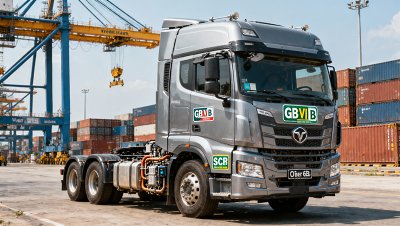
On April 16, 2026, the National Automotive Standardization Technical Committee (TC521) initiated the revision of the mandatory national standard Technical Requirements for Intelligent Connected Systems of Electric Commercial Vehicles. This update directly concerns manufacturers and exporters of electric heavy-duty trucks, autonomous concrete mixers, and unmanned container carriers—particularly those targeting EU, Middle East, and Southeast Asian markets, where compliance affects type-approval pathways and regulatory costs.
Event Overview
The National Automotive Standardization Technical Committee (TC521) officially launched the revision process for the mandatory national standard GB/T XXXXX—Technical Requirements for Intelligent Connected Systems of Electric Commercial Vehicles—on April 16, 2026. The revision will strengthen requirements in three areas: V2X communication interoperability, cybersecurity assurance levels, and data localization interface specifications. No draft text or timeline for public consultation has been released as of the initiation date.
Industries Affected
Electric commercial vehicle OEMs and Tier-1 system suppliers
These entities are directly responsible for product design, integration, and certification. The revised standard’s updated V2X and cybersecurity clauses may require hardware redesign (e.g., certified secure onboard units), software revalidation, and new interface documentation—impacting development timelines and BOM cost structures.
Export-oriented vehicle integrators and CKD/SKD assemblers
Firms assembling or certifying vehicles for export to the EU, Middle East, or Southeast Asia must align with both domestic type-approval and destination-market technical regulations. The revision may narrow compatibility margins between China’s national requirements and regional frameworks (e.g., EU UNECE R155/R156), increasing conformity assessment effort per market.
Cybersecurity validation service providers and testing labs
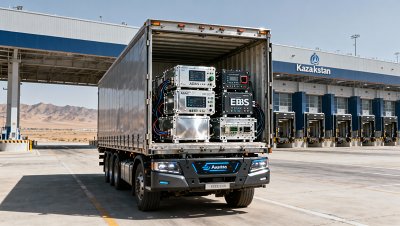
With heightened cybersecurity level requirements, demand for accredited penetration testing, secure boot verification, and V2X protocol conformance testing is likely to rise. Labs currently not certified for automotive-grade cybersecurity assessments may face reduced eligibility for future standard-compliance testing contracts.
What Enterprises and Practitioners Should Monitor and Do Now
Track official TC521 announcements and draft release schedule
The revision process remains in its earliest phase. Stakeholders should subscribe to TC521’s official notifications and monitor the Standardization Administration of China (SAC) portal for the draft proposal release, expected no earlier than Q3 2026. Early access to the draft enables preliminary gap analysis against current product architectures.
Map V2X and cybersecurity dependencies across key export markets
Compare the upcoming Chinese standard’s V2X stack (e.g., DSRC vs. C-V2X profile support) and data interface definitions against EU’s EN 302 637 series, UAE’s RTA smart vehicle framework, and ASEAN’s emerging ADAS/V2X guidelines. Prioritize harmonization efforts where overlaps exist—and flag divergence points requiring dual-certification paths.
Distinguish policy signal from enforceable requirement
This initiation signals regulatory intent—not immediate compliance obligation. The final standard will only take effect upon formal publication and transition period announcement. Until then, existing GB/T versions remain valid; however, new model certifications submitted after the effective date will be subject to the revised version.
Review supplier contracts and firmware update capabilities
Assess whether current vehicle control units, telematics control units (TCUs), and OTA platforms support field-upgradable V2X stacks and auditable cybersecurity modules. Where gaps exist, initiate procurement or co-development discussions with suppliers now—especially for components with long lead times (e.g., ASIL-B+ secure microcontrollers).
Editorial Perspective / Industry Observation
From an industry perspective, this revision is best understood as a forward-looking alignment move—not an enforcement trigger. Analysis来看, it reflects China’s strategic prioritization of interoperability and data sovereignty in intelligent transportation infrastructure, particularly as domestic V2X pilot zones expand and cross-border logistics electrification accelerates. Observation来看, the emphasis on data localization interfaces suggests growing scrutiny of cloud-based fleet management systems handling operational data outside China. Current more appropriate interpretation is that this is a preparatory signal: it does not yet mandate changes, but it clearly narrows the technical envelope for next-generation electric commercial vehicle platforms intended for global deployment.
Concluding this update carries procedural weight rather than immediate legal force. Its significance lies in shaping R&D roadmaps, supply chain investments, and international certification strategies over the 2026–2028 horizon. It is more accurately viewed as a calibration point in China’s broader mobility standards ecosystem—indicating direction, not deadline.
Information Source: Official announcement by the National Automotive Standardization Technical Committee (TC521), dated April 16, 2026. Draft content, implementation timeline, and transitional provisions remain pending and are subject to ongoing standardization process updates.
Trending News
- Huanggang Port Freight Operations Cease, Shenzhen-Hong Kong Cross-Border Logistics Shifts to 'East-In-East-Out, West-In-West-Out'
- Erenhot-Mongolia 24-Hour Freight Clearance Boosts Trucking Efficiency
- All 27 Cross-River Bridges of the Pinglu Canal Completed
- Nanning IRP Launches Smart EV Freight Charging & Swapping Station
- Vietnam to Enforce China's Tier 6B Emission Standard for Imported Medium/Heavy Trucks from Q3 2026
Tag
Recommended News
 Policy & RegulationsVietnam to Enforce China's Tier 6B Emission Standard for Imported Medium/Heavy Trucks from Q3 2026Vietnam to enforce China's Tier 6B emission standard for imported medium/heavy trucks from Q3 2026 — critical for exporters, certifiers & distributors. Act now.
 Policy & RegulationsEU Draft Rules Mandate V2X for Imported Commercial Trucks from 2027V2X for imported commercial trucks becomes mandatory in the EU from 2027—learn how EU draft rules impact exporters, OEMs & certification providers.
 Policy & RegulationsHow ISO Certification Reduces Risk When Choosing a Heavy Truck Chassis ManufacturerChoose a heavy truck chassis manufacturer with ISO certification to reduce compliance, quality, and safety risks. Learn how certified processes improve traceability and supplier reliability.
 Policy & RegulationsNew Railway Cargo Rules Take Effect May 1, 2026New Railway Cargo Rules (2026) mandate 72h pre-submission for oversized cargo—critical for wind power, heavy machinery & multimodal logistics exporters. Act now!
 Policy & RegulationsKazakhstan Extends Zero Tariff on China-Europe Express Truck Parts to 2027Kazakhstan extends zero tariff on China-Europe Express truck parts to 2027—now covering 12 intelligent control components. Boost your export edge in陆路运输设备.
 Policy & RegulationsNew Railway Freight Rules Effective May 1, 2026: 72-Hour Pre-Submission for Oversize CargoNew railway freight rules (effective May 1, 2026) require 72-hour pre-submission for oversize cargo — critical for land transport equipment shippers, EPC contractors & heavy-lift logistics providers.
 Policy & RegulationsKazakhstan Extends Zero Tariff on China’s Rail Truck Parts to 2027Kazakhstan extends zero tariff on China’s rail truck parts to 2027 — now covering 12 intelligent control system components. Boost your Central Asia market access & pricing edge.
 Policy & RegulationsNew Railway Freight Rules Effective May 1, 2026: 72-Hour Pre-Submission for Oversize CargoNew railway freight rules (effective May 1, 2026) require 72-hour pre-submission for oversize cargo — critical for land transport equipment shippers, EPC contractors & heavy-lift logistics providers.
 Policy & RegulationsKazakhstan Extends Zero Tariff on China’s Rail Truck Parts to 2027Kazakhstan extends zero tariff on China’s rail truck parts to 2027 — now covering 12 intelligent control system components. Boost your Central Asia market access & pricing edge.
 Policy & RegulationsNew Railway Freight Rules Effective May 1, 2026: 72-Hour Pre-Submission for Oversize CargoNew railway freight rules (effective May 1, 2026) require 72-hour pre-submission for oversize cargo — critical for land transport equipment shippers, EPC contractors & heavy-lift logistics providers.
 Policy & RegulationsKazakhstan Extends Zero Tariff on China’s Rail Truck Parts to 2027Kazakhstan extends zero tariff on China’s rail truck parts to 2027 — now covering 12 intelligent control system components. Boost your Central Asia market access & pricing edge.
 Policy & RegulationsNew Railway Freight Rules Effective May 1, 2026: 72-Hour Pre-Submission for Oversize CargoNew railway freight rules (effective May 1, 2026) require 72-hour pre-submission for oversize cargo — critical for land transport equipment shippers, EPC contractors & heavy-lift logistics providers.
 Policy & RegulationsKazakhstan Extends Zero Tariff on China’s Rail Truck Parts to 2027Kazakhstan extends zero tariff on China’s rail truck parts to 2027 — now covering 12 intelligent control system components. Boost your Central Asia market access & pricing edge.
 Policy & RegulationsNew Railway Freight Rules Effective May 1, 2026: 72-Hour Pre-Submission for Oversize CargoNew railway freight rules (effective May 1, 2026) require 72-hour pre-submission for oversize cargo — critical for land transport equipment shippers, EPC contractors & heavy-lift logistics providers.
 Policy & RegulationsKazakhstan Extends Zero Tariff on China’s Rail Truck Parts to 2027Kazakhstan extends zero tariff on China’s rail truck parts to 2027 — now covering 12 intelligent control system components. Boost your Central Asia market access & pricing edge.
 Policy & RegulationsTruck Chassis Supplier in Europe: Key Compliance Points Before OrderingTruck chassis supplier in Europe: learn the key compliance checks before ordering, from documents and axle loads to body integration and safety, to reduce risk and source with confidence.
 Policy & RegulationsNew Railway Cargo Rules Effective May 1, 2026: 72-Hour Pre-Submission for Oversized LoadsNew railway cargo rules (2026) require 72-hour pre-submission for oversized land transport equipment—critical for exporters, manufacturers & freight forwarders on China-Europe/Asia rail corridors.
 Policy & RegulationsLow Bed Trailer Export to Southeast Asia: Key Compliance Points to KnowLow bed trailer export to Southeast Asia requires more than pricing. Discover key compliance points on axle loads, certifications, road standards, and supplier evaluation for safer, faster sourcing.
 Policy & RegulationsEU Mandates ISO 27145-2 Compliance for Heavy-Duty Trucks from May 2026EU mandates ISO 27145-2 compliance for heavy-duty trucks from May 2026 — ensure your exports meet remote diagnostics, type approval & after-sales requirements.
 Policy & RegulationsNew China Railway Freight Rules Take Effect May 1, 2026New China railway freight rules (2026) mandate transparent pricing & service standards for land transport equipment — boosting predictability for China-Europe rail shippers.
 Policy & RegulationsHow to Evaluate a Truck Chassis Supplier in Europe for Compliance and StabilityTruck chassis supplier in Europe selection starts with compliance and stability. Discover a practical checklist to compare suppliers, reduce sourcing risk, and choose reliable long-term partners.
 Policy & RegulationsWhat Sets a Truck Trailer Exporter Apart in Regulated MarketsTruck trailer exporter selection in regulated markets goes beyond price. Learn how compliance, documentation, traceability, and service reduce risk and improve sourcing decisions.
 Policy & RegulationsNew Railway Cargo Regulations Take Effect May 1, 2026New Railway Cargo Regulations (2026) impact rail freight exporters, forwarders & importers—key for China-Europe/Asia rail logistics. Act now to ensure compliance.
 Policy & RegulationsNew Railway Cargo Rules Take Effect May 1, 2026New Railway Cargo Rules (effective May 1, 2026) reshape rail freight compliance for exporters, logistics providers & manufacturers—key updates on fees, safety, and data sharing.
 Policy & RegulationsHuanggang Port Freight Closure Shapes Shenzhen-HK Logistics PatternHuanggang Port freight closure reshapes Shenzhen-HK logistics — key implications for truck & special-purpose vehicle exporters, customs brokers, and ASEAN/Middle East supply chains.