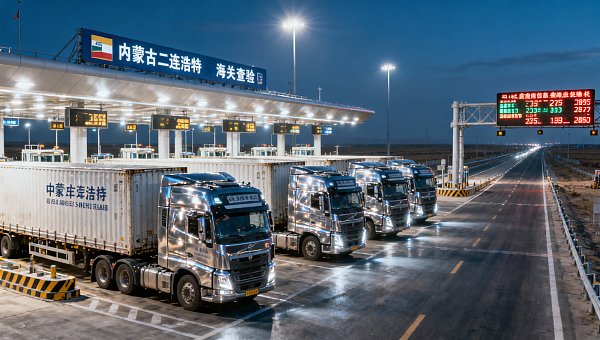
Erlianhot Highway Port Goes 24/7 Freight Clearance
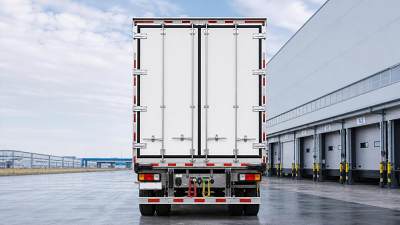
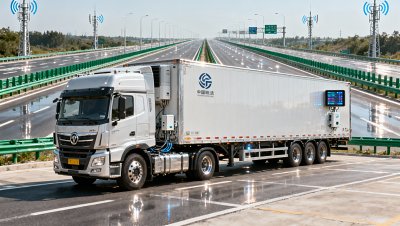
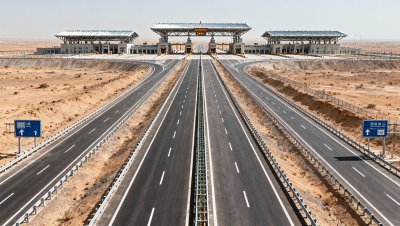
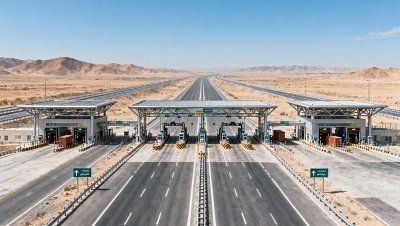
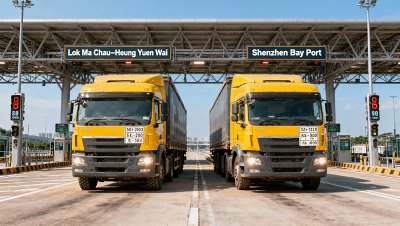
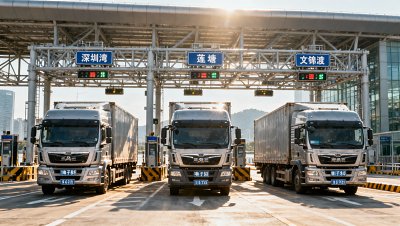
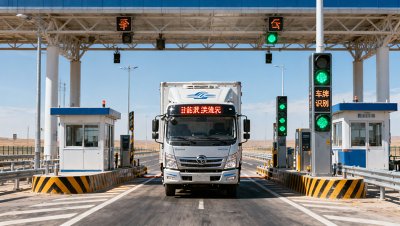
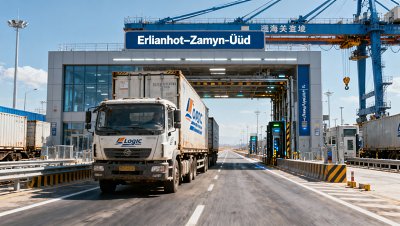
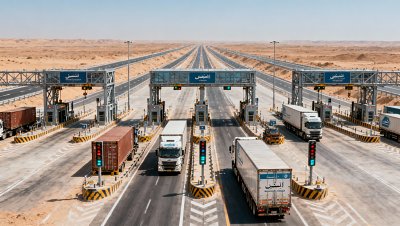
Starting April 1, 2026, Erlianhot Highway Port in Inner Mongolia has formally implemented year-round, 24/7 freight clearance for cargo bound for Mongolia—ending a six-month trial phase. This development directly impacts exporters of heavy-duty trucks, specialized chassis, semi-trailers, and refrigerated trailers serving Mongolia and the Eurasian Economic Union (EAEU), with reported export lead time reductions of 35% and significantly lower customs uncertainty.
Event Overview
Effective April 1, 2026, Erlianhot Highway Port transitioned from a six-month trial to full-time, 365-day × 24-hour freight clearance for Mongolia-bound cargo. The port handles over 70% of Mongolia’s daily consumer goods transported by land. Official data indicates a 57.3% year-on-year increase in regulated freight volume and a 70.1% rise in registered transport vehicles.
Industries Affected
Direct Exporters (Heavy-Duty Vehicle & Trailer Manufacturers)
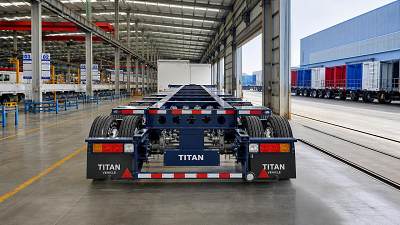
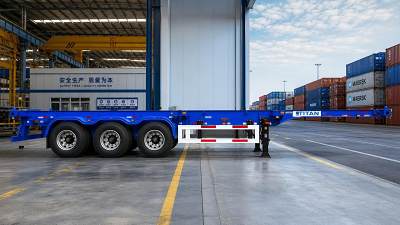
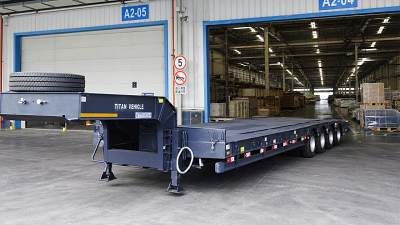
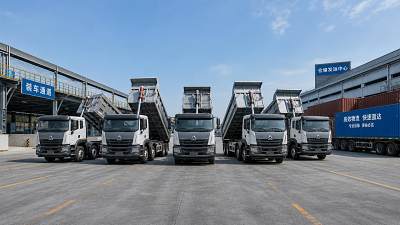
Manufacturers exporting heavy-duty trucks, semi-trailers, cold-chain trailers, and specialized chassis to Mongolia and EAEU countries face shorter delivery cycles and more predictable border processing. The 35% reduction in export lead time directly improves order fulfillment timelines and working capital turnover.
Supply Chain Service Providers (Customs Brokers, Cross-Border Logistics Operators)
Service providers handling documentation, inspection coordination, and real-time vehicle tracking now operate under a stable, round-the-clock regulatory framework. Increased transport vehicle volume (+70.1%) signals higher demand for compliant, timely support—but also raises operational pressure on documentation accuracy and shift coverage.
Domestic Component Suppliers (Chassis, Axle, Refrigeration System Producers)
Suppliers integrated into OEM export supply chains may experience more frequent and evenly distributed order releases, as downstream assemblers adjust production planning to align with reliable outbound logistics windows. However, this depends on actual order flow—not just port capacity.
Wholesale Distributors & Regional Trading Companies (Mongolia-Focused)
Distributors managing inventory for Mongolian markets benefit from reduced stockout risk and lower safety stock requirements, given improved delivery predictability. Yet their advantage is contingent on consistent utilization of the 24/7 channel—not merely its availability.
What Enterprises and Practitioners Should Monitor and Do Now
Track official implementation guidance beyond the announcement
The formalization of 24/7 clearance follows a six-month trial. Current policy documents do not specify whether all vehicle categories (e.g., oversized or hazardous cargo) are equally covered, nor whether staffing, inspection protocols, or electronic declaration systems have been fully scaled. Enterprises should monitor subsequent notices from the General Administration of Customs and the Inner Mongolia Entry-Exit Frontier Inspection Station.
Verify eligibility and procedural requirements for priority clearance lanes
While 24/7 operation is confirmed, access to expedited processing—such as dedicated lanes for certified exporters or pre-inspected shipments—is not stated in available information. Companies should confirm with local customs agents whether their vehicle types, cargo classifications, or certification status qualify for additional time savings beyond baseline 24/7 availability.
Assess internal readiness for off-shift coordination
24/7 port operation requires alignment across loading schedules, driver dispatch, and documentation submission windows. Exporters and logistics partners should review current SOPs: Are warehouse shifts, customs declaration teams, and driver rest-cycle planning adapted to support night/early-morning departures and arrivals? Gaps here may offset gains from port-level efficiency.
Monitor actual throughput vs. capacity claims
A 70.1% increase in registered transport vehicles reflects growth in filings—not necessarily completed clearances per hour. Enterprises should benchmark real-world clearance durations (e.g., average gate-to-gate time) over Q2 2026 before revising delivery commitments or inventory models.
Editorial Perspective / Industry Observation
From an industry perspective, this milestone is best understood as an infrastructure signal—not yet a fully realized operational outcome. The shift to permanent 24/7 clearance confirms long-term commitment to strengthening Sino-Mongolian land trade capacity, especially for high-value, time-sensitive equipment exports. However, its practical impact remains conditional: it depends on sustained cross-agency coordination (customs, quarantine, traffic control), system stability during peak loads, and adoption rates among exporters. For now, it represents a necessary enabler—not a guaranteed accelerator.
Observation shows that while the policy change lowers structural uncertainty, it does not eliminate execution-level variables such as document discrepancies, vehicle non-compliance, or seasonal road conditions in southern Mongolia. Therefore, the port’s new status is more accurately interpreted as a foundational upgrade—one that expands headroom for efficiency, but still requires disciplined operational follow-through from stakeholders.
Current attention should focus less on the headline and more on how consistently and equitably the 24/7 framework is applied across cargo types, operator categories, and time bands.
Conclusion: Erlianhot’s 24/7 freight clearance marks a meaningful step toward institutionalizing reliability in China–Mongolia overland trade. Its primary value lies in reducing planning friction—not in automatically compressing end-to-end lead times. Stakeholders are better served treating it as a capability to be actively leveraged, rather than a condition to be passively assumed.
Information Sources: Official announcement issued by the General Administration of Customs of the People’s Republic of China and the Inner Mongolia Autonomous Region Department of Commerce, effective April 1, 2026. Note: Ongoing monitoring is recommended for implementation details—including inspection frequency, digital platform updates, and eligibility criteria for priority processing—which remain subject to further clarification.
Trending News
- Are Energy-Saving Excavators Worth It for Long-Term Operations?
- Dump Truck Supplier With Quick Delivery: What to Verify First
- Choosing Commercial Vehicle Parts for Cold Storage Reliability
- How ISO Certification Reduces Supplier Risk in Heavy Truck Chassis
- Cab Chassis Truck for Fire Department: Key Fitment Points
Tag
Recommended News
 Logistics & FreightChoosing Commercial Vehicle Parts for Cold Storage ReliabilityCommercial vehicle parts for cold storage are key to reefer reliability. Learn how to choose durable, compatible parts that reduce downtime, protect cargo, and improve fleet performance.
 Logistics & Freight27 Bridges Over Pinglu Canal Completed, Accelerating Southwest Equipment ExportsPinglu Canal's 27 bridges completed—boosting陆路运输设备 exports to ASEAN, Middle East & Africa. Discover logistics advantages for heavy machinery, mining vehicles & concrete mixers.
 Logistics & FreightChina Launches 24-Hour Full-Truckload Delivery for Overseas BuyersFull-truckload delivery from China now guarantees 24-hour land transport for overseas buyers — transforming procurement, inventory, and supply chain resilience for陆路运输设备 exporters and importers.
 Logistics & FreightSix New Iran-Pakistan Land Crossings Opened, Land Clearance Cut to 6 HoursSix new Iran-Pakistan land crossings slash cargo clearance to just 6 hours—boosting efficiency for heavy-duty trucks, semi-trailers & CKD/SKD kits export.
 Logistics & FreightNanjing Launches First Wind Power Equipment Shipping Route to PakistanWind power equipment shipping route from Nanjing to Pakistan launched—key logistics upgrade for CPEC renewable projects, heavy transport & EPC contractors.
 Logistics & FreightIran-Pakistan Launch 6 Cross-Border Roads, 3 New Land PortsIran-Pakistan launch 6 cross-border roads & 3 new land ports—boosting overland logistics, heavy-duty truck demand, and Central Asia–Gulf corridor efficiency.
 Logistics & FreightTruck Spare Parts Supplier in Europe: How to Avoid Cross-Border DelaysTruck spare parts supplier in Europe guide: learn how to reduce cross-border delays, improve parts sourcing, and keep fleet repairs fast with smarter supplier selection.
 Logistics & FreightFlatbed Trailer Supplier for Logistics Transportation: Key Load FactorsFlatbed trailer supplier for logistics transportation: learn key load factors like weight distribution, cargo size, and road conditions to choose safer, cost-efficient trailers.
 Logistics & FreightHuanggang Port Freight Operations Cease, Shenzhen-Hong Kong Cross-Border Logistics Shifts to 'East-In-East-Out, West-In-West-Out'Huanggang Port freight operations cease May 2026—Shenzhen-Hong Kong logistics shifts to 'East-In-East-Out, West-In-West-Out'. Key for陆路运输设备 stakeholders: update vehicle specs, optimize routes, ensure compliance now.
 Logistics & FreightAll 27 Cross-River Bridges of the Pinglu Canal CompletedAll 27 cross-river bridges of the Pinglu Canal are now complete — enabling 49-ton heavy-duty truck transport 24/7 between Yangtze manufacturing hubs and Beibu Gulf Port.
 Logistics & FreightNew Railway Cargo Transport Rules Effective May 1, 2026New Railway Cargo Transport Rules (2026): 72-hour advance submission required for oversized, overweight & special-purpose freight — ensure compliance & avoid delays.
 Logistics & FreightSemi Trailer Manufacturer for Logistics: What Impacts Turnaround EfficiencySemi trailer manufacturer for logistics selection shapes turnaround efficiency through build quality, customization, lead time control, and after-sales support—learn what drives faster, more reliable fleet deployment.
 Logistics & FreightHong Kong–Shenzhen Cross-Border Freight Shifts: Huanggang Closure Marks New EraHong Kong–Shenzhen cross-border freight shifts: Huanggang Port closure reshapes road transport logistics—discover impacts, alternatives & smart clearance must-dos.
 Logistics & FreightPinglu Canal Bridges Completed: 55-Ton Trucks Now PermittedPinglu Canal Bridges completed: 55-ton trucks now permitted—unlock faster, cost-efficient land transport for RCEP exporters, heavy-truck makers & logistics providers in Southwest China.
 Logistics & FreightErenhot-Mongolia 24-Hour Freight Clearance Boosts Auto & Fresh Produce TransitErenhot-Mongolia 24-hour freight clearance slashes auto & fresh produce transit time to <15 mins—boosting JIT delivery for OEMs, parts suppliers & cold-chain logistics.
 Logistics & FreightSemi Trailer OEM Lead Times: What Affects Delivery More Than CapacitySemi trailer OEM lead times depend on sourcing, engineering changes, compliance, and shipping—not just capacity. Learn what delays delivery and how to choose a reliable OEM partner.
 Logistics & FreightHow a Truck Cement Supplier Affects Site Delivery EfficiencyTruck cement supplier performance can make or break site delivery efficiency. Learn how reliable dispatch, fleet control, and coordination reduce delays, cut costs, and keep projects on schedule.
 Logistics & FreightPinglu Canal Bridges Completed: Heavy-Duty Transport UpgradedPinglu Canal Bridges completed: Heavy-duty transport upgraded to 49-ton capacity—boosting logistics for mining trucks, concrete mixers & port tractors to Qinzhou Port and ASEAN.
 Logistics & FreightHuanggang Port Freight Operations Cease, Shenzhen-HK Logistics Shifts to Zoned ModelHuanggang Port freight operations cease Dec 2025—Shenzhen-HK land logistics shifts to zoned model. Critical for automotive, NEV, and cross-border supply chains.
 Logistics & FreightErlianhot-Mongolia 24-Hour Freight Clearance Boosts Truck Transit by 40%Erlianhot-Mongolia 24-hour freight clearance cuts truck transit time by 40% — boosting cold-chain, auto parts & light commercial vehicle exports.
 Logistics & FreightIran-Pakistan Launch 6 Cross-Border Roads, 3 New PortsIran-Pakistan launch 6 cross-border roads & 3 new ports—boosting land freight efficiency for heavy-duty trucks, semi-trailers, and intelligent tractor units across Asia.
 Logistics & FreightSemi Trailer Manufacturer for Logistics: What Affects Long-Term ValueSemi trailer manufacturer for logistics: discover what drives long-term value, from durability and compliance to lower downtime and smarter fleet ROI.
 Logistics & FreightHow a Semi Trailer Manufacturer for Logistics Impacts Delivery EfficiencySemi trailer manufacturer for logistics decisions shape delivery speed, uptime, and cargo safety. Learn how the right supplier improves fleet efficiency and lowers project delays.
 Logistics & FreightIs a Dump Truck Supplier With Quick Delivery Worth the PremiumDump truck supplier with quick delivery: is the premium worth it? Learn when faster lead times cut downtime, protect project schedules, and deliver better total value.
 Logistics & FreightPinglu Canal Bridges Completed: Heavy-Duty Transport UpgradePinglu Canal Bridges completed: 27 heavy-duty bridges now enable 55-tonne transport for wind, mining & construction equipment exports to RCEP markets.