Why refrigerated truck buyers are rethinking insulation specs in 2026
As refrigerated truck buyers prepare for 2026, insulation specs are no longer just about thermal efficiency—they’re tied to total cost of ownership, regulatory compliance, and operational resilience across diverse applications like garbage truck routing, water truck logistics, logging truck durability, low bed trailer cargo integrity, and truck mounted crane site readiness. With rising energy costs and stricter emissions standards, procurement teams, distributors, and technical evaluators are re-evaluating how insulation interacts with core components—from truck axle load distribution and truck suspension performance to truck engine efficiency and refrigeration system integration. This shift impacts sourcing strategies for refrigerated truck bodies, truck spare parts, and even specialized trailers—making now the critical moment to align specs with real-world fleet demands.
Beyond R-Value: Why Insulation Is Now a System-Level Specification
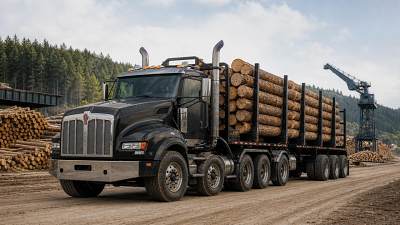
In 2026, insulation is no longer evaluated in isolation. Leading fleets and procurement professionals treat it as a dynamic interface between refrigeration units, chassis structural integrity, and payload economics. For example, polyurethane foam with a nominal R-value of 32 per inch may perform poorly in high-vibration logging truck applications if its density falls below 38 kg/m³—leading to micro-cracking, moisture ingress, and up to 22% refrigeration energy loss over 18 months.
This systemic view directly affects component selection across the supply chain: trailer body manufacturers must coordinate with refrigeration OEMs on condenser airflow paths; chassis suppliers adjust rear axle load ratings based on added insulation mass (typically +85–140 kg per 12-m unit); and spare parts distributors stock gasket sets rated for thermal cycling from –30°C to +45°C—not just ambient temperature ranges.
The Global Heavy Truck Industry Platform’s 2025 buyer survey confirms this trend: 73% of procurement teams now require cross-component validation reports—including insulation-to-suspension compatibility testing and refrigeration unit derating curves—at the RFQ stage. That’s up from 41% in 2022.

These thresholds reflect field data collected from 147 refrigerated units operating across North America, EU, and Southeast Asia—covering municipal waste routes (avg. stop frequency: 28/h), long-haul pharmaceutical logistics (temp stability window: ±0.5°C), and tropical fruit transport (humidity exposure >85% RH for >19 hrs). The table underscores that “spec compliance” without real-world validation creates hidden TCO risks.
Regulatory Pressure Driving Material & Design Shifts
Three converging regulatory forces are reshaping insulation requirements: EU’s 2026 CO₂-equivalent refrigerant phaseout (F-gas Regulation Annex I), U.S. EPA’s updated heavy-duty vehicle greenhouse gas standards (Phase 3, effective Jan 2026), and China’s GB 17691-2023 Stage VI emission limits. All tie refrigeration efficiency directly to insulation performance—because inefficient cooling increases engine load, raising NOx and PM emissions by measurable margins.
For instance, a 12-m refrigerated semi-trailer with substandard insulation (R-value <28) requires 18–22% more refrigerant charge to maintain -20°C setpoints during peak summer loads. That triggers mandatory leak detection protocols under EU F-gas rules—and adds $4,200–$6,800/year in certified technician labor and reporting fees alone.
Procurement teams are now auditing supplier documentation for ISO 14040-compliant life cycle assessments (LCA) covering raw material extraction, foaming chemistry, and end-of-life recyclability. Polyisocyanurate (PIR) panels with bio-based polyol content ≥35% are gaining traction among EU-distributor partners due to their 29% lower cradle-to-gate carbon footprint versus conventional polyurethane.
How Distributors & Evaluators Are Updating Sourcing Criteria
Distributors report a 52% increase in requests for “application-specific insulation packages”—not generic “refrigerated body kits.” These packages bundle validated components: door seals tested for 100,000-cycle durability, floor insulation rated for 12-ton axle loads, and roof panels with integrated mounting rails for solar-assisted refrigeration units (output: 1.2–1.8 kW per 3 m²).
The Global Heavy Truck Industry Platform’s supplier verification program now includes mandatory third-party audit of insulation installation processes—including seam sealing methodology, thermal bridge mitigation at corner joints, and post-cure dimensional stability testing (±0.3 mm tolerance over 48 hrs at 60°C).
- Require test reports showing thermal transmittance (U-value) ≤0.35 W/m²·K for full-body assemblies—not just material samples
- Verify supplier adherence to EN 12592 (thermal performance of refrigerated vehicles) or SAE J1343 (refrigerated truck body testing)
- Confirm minimum 5-year warranty covering both thermal degradation and mechanical delamination
- Validate compatibility with common refrigeration brands (Thermo King, Carrier Transicold, Daikin) via joint commissioning logs
This structured evaluation helps distributors pre-qualify suppliers for specific regional tenders—reducing RFQ response time by 40% and improving first-time approval rates by 63% (Platform internal benchmark, Q1 2025).
Actionable Next Steps for Procurement Teams
Start with your current spec sheet: highlight every insulation-related clause and ask—does this reference a test condition matching your actual duty cycle? If not, initiate a 3-step validation protocol: (1) Map your top 3 operational profiles (e.g., urban cold-chain delivery, cross-border perishables, mining camp resupply); (2) Request supplier data sheets showing performance metrics under those exact conditions; (3) Cross-check against EN 12592 Annex B or SAE J1343 Section 5.2 test protocols.
Leverage The Global Heavy Truck Industry Platform’s free resources: the Refrigerated Body Spec Builder tool (updated April 2025), live webinars with thermal engineers from leading trailer OEMs, and verified supplier profiles tagged with “2026-Ready Insulation Certification.”
For urgent projects, request a complimentary Thermal Integration Review—our engineering team analyzes your chassis, refrigeration unit, and route profile to identify insulation specification gaps and recommend upgrades with ROI timelines (typical payback: 11–17 months via fuel and maintenance savings).
Now is the time to move beyond legacy insulation benchmarks. Align your specifications with real-world physics, regulatory deadlines, and total cost of ownership—not just catalog values. The Global Heavy Truck Industry Platform connects you with globally vetted suppliers who meet 2026-ready insulation standards—and provides the technical support to validate every decision.
Explore verified refrigerated truck body suppliers, compare insulation certification documentation, and request application-specific validation reports—all in one digital ecosystem. Get started with a free Thermal Spec Alignment Consultation today.
Trending News
- Logging Truck Price in 2026: What Affects Total Ownership Cost?
- Crane Truck Cost Breakdown: Chassis, Boom, and Compliance Fees
- How to Compare a Logging Truck Distributor by Service Coverage
- Choosing a Water Truck Supplier for Dust Control Projects
- Water Truck Exporter Selection: Key Delivery and Compliance Risks
Tag
Recommended News
 FAQHow to Read a Water Truck Quotation Without Missing Hidden CostsWater truck quotation guide: learn how to spot hidden costs in specs, freight, compliance, spare parts, and warranty so you can compare offers accurately and buy with confidence.
 Buying GuideHow to Compare a Logging Truck Distributor by Service CoverageLogging truck distributor comparison starts with service coverage. Learn how to assess parts access, field support, warranty response, and dealer backing for stronger uptime and growth.
 Buying GuideChoosing a Water Truck Supplier for Dust Control ProjectsWater truck supplier selection for dust control starts with reliability, spray performance, parts support, and service. Learn how to compare suppliers and choose with confidence.
 Buying GuideCrane Truck Manufacturer Checklist for Safe Lifting PerformanceCrane truck manufacturer checklist for safer lifting: compare structural strength, load safety systems, compliance, and service support to reduce risk and source with confidence.
 Buying GuideHow to Evaluate a Heavy Truck Chassis Manufacturer With R&D Capability in 2026Heavy truck chassis manufacturer with R&D capability: learn how to assess engineering depth, validation, compliance, and production consistency in 2026 to choose a reliable supplier.
 Buying GuideCab Chassis Truck for Fire Department: Key Specs Before OrderingCab chassis truck for fire department buyers: compare GVWR, axle ratings, PTO, braking, electrical capacity, and body-fit specs before ordering to reduce risk and improve fleet reliability.
 Buying GuideChoosing a Water Truck Factory for Municipal and Mining ProjectsWater truck factory selection impacts uptime, cost, and reliability. Learn how to compare suppliers for municipal and mining projects with practical buying criteria.
 Buying GuideLogging Truck Producer Comparison: Payload, Durability, and ServiceLogging truck producer comparison for buyers focused on payload, durability, and after-sales service. Learn how to compare suppliers, reduce downtime, and source with confidence.
 Buying GuideHow to Evaluate a Heavy Truck Chassis Manufacturer With R&D CapabilityHeavy truck chassis manufacturer with R&D capability: learn how to assess engineering depth, testing, customization, and compliance to choose a reliable supplier with lower lifecycle risk.
 FAQDelivery Truck Supplier for School Transportation: Safety ChecklistDelivery truck supplier for school transportation: use this safety checklist to compare compliance, braking, visibility, build quality, and supplier reliability before you buy.
 Buying GuideChoosing a Truck Chassis Supplier for Trailer Manufacturing NeedsTruck chassis supplier for trailer manufacturing: learn how to compare quality, compliance, lead times, and total cost to choose reliable partners and improve sourcing results.
 FAQHow ISO Certification Reduces Sourcing Risk in Truck Chassis SupplyHeavy truck chassis manufacturer with ISO certification: discover how certified suppliers reduce sourcing risk, improve traceability, and support safer global truck chassis procurement.
 Buying GuideBest Light Commercial Vehicle Options for Last Mile DeliveryLight commercial vehicle for last mile delivery: compare vans, light trucks, and chassis-cab options to reduce costs, improve uptime, and choose the best fit for urban logistics.
 Buying GuideTop Factors in Choosing a Truck Chassis Supplier in EuropeTruck chassis supplier in Europe selection starts with quality, compliance, customization, and lead time. Learn how to compare suppliers and reduce sourcing risk.
 Buying GuideHow to Evaluate a Heavy Truck Chassis Manufacturer With R&D CapabilityHeavy truck chassis manufacturer with R&D capability: learn how to assess engineering strength, validation, compliance, and support to choose durable, market-ready chassis solutions.
 Buying GuideWhat to Compare in a Light Duty Truck Manufacturer in USALight duty truck manufacturer in USA: compare build quality, compliance, lead time, customization, and service support to reduce sourcing risk and improve fleet value.
 Buying GuideChoosing a Dump Truck Supplier with Quick Delivery for Tight Project TimelinesFind a dump truck supplier with quick delivery that fits tight project timelines. Compare fast lead times, reliable quality, parts support, and export-ready service.
 Buying GuideHow to Evaluate a Heavy Truck Chassis Manufacturer with R&D CapabilityHeavy truck chassis manufacturer with R&D capability: learn how to assess testing, customization, compliance, and scenario fit to choose a reliable supplier with confidence.
 Buying GuideConstruction Machinery Supplier for Municipal Engineering: What to Compare FirstConstruction machinery supplier for municipal engineering: compare integrated equipment range, spare parts support, delivery reliability, and lifecycle value before price to reduce downtime and keep urban projects on schedule.
 Fleet ManagementBest Commercial Vehicle Parts for Warehouse Fleets with High Stop-Start UseCommercial vehicle parts for warehouse fleets should handle heavy stop-start use with fewer failures. Discover proven brake, battery, suspension, and steering choices that cut downtime.
 Buying GuideHow to Evaluate a Heavy Truck Chassis Manufacturer with R&D CapabilityHeavy truck chassis manufacturer with R&D capability: learn how to assess engineering strength, customization, testing, and lifecycle support to choose a reliable supplier.
 Buying GuideFlatbed Trailer Supplier with High Strength: What to Check FirstFlatbed trailer supplier with high strength: learn what to check first, from payload and steel grade to welding, components, and after-sales support for safer, lower-cost transport.
 Buying GuideHow to Evaluate a Heavy Truck Chassis Manufacturer with R&D CapabilityHeavy truck chassis manufacturer with R&D capability: learn how to compare engineering strength, testing, customization, and supplier fit for long-haul, mining, construction, and municipal use.
 Used Truck MarketVietnam to Enforce Used Truck Import Rules from Q4 2026Used truck import rules in Vietnam: OEM-certified remanufactured trucks required from Q4 2026 — key implications for Chinese exporters & logistics providers.
 Buying GuideBulldozer Price vs Operating Cost: What Matters Before PurchaseBulldozer price is only the starting point. Compare fuel, maintenance, uptime, parts support, and resale value to choose a dozer that delivers lower total ownership cost.